Watching raptor migration
Ridges, coastlines, and rising air concentrate migrating hawks, eagles, falcons, and vultures. Learn the site's season, scan in a repeatable pattern, identify shape before plumage, and keep personal notes separate from an official count.
Last updated
Let the site explain the flight
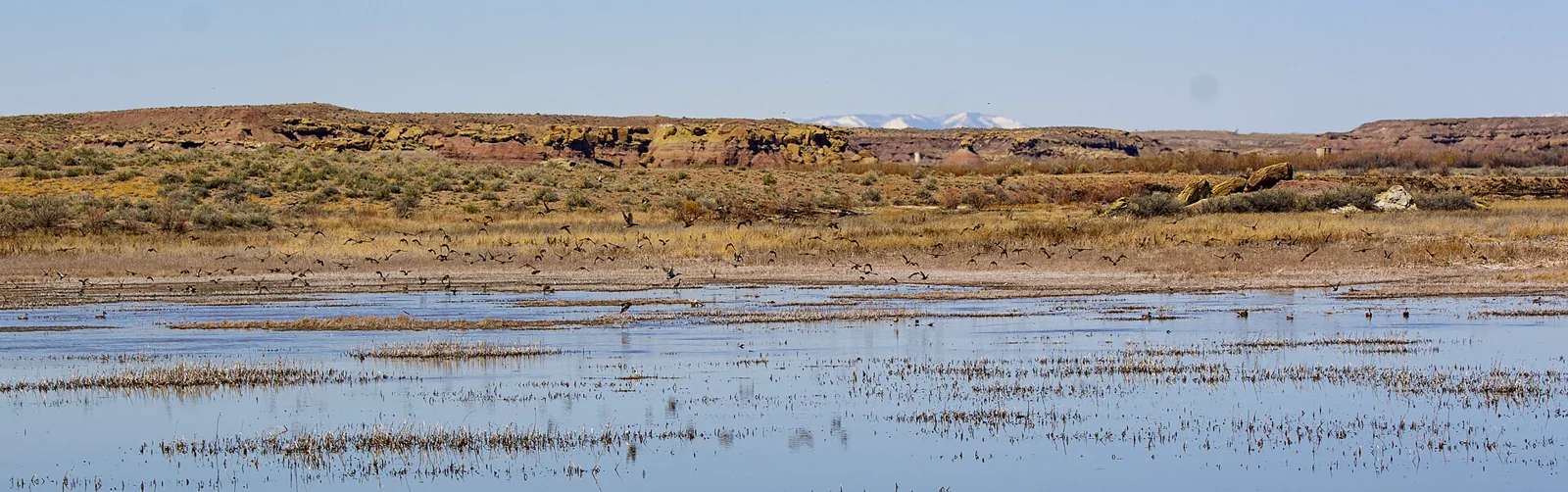
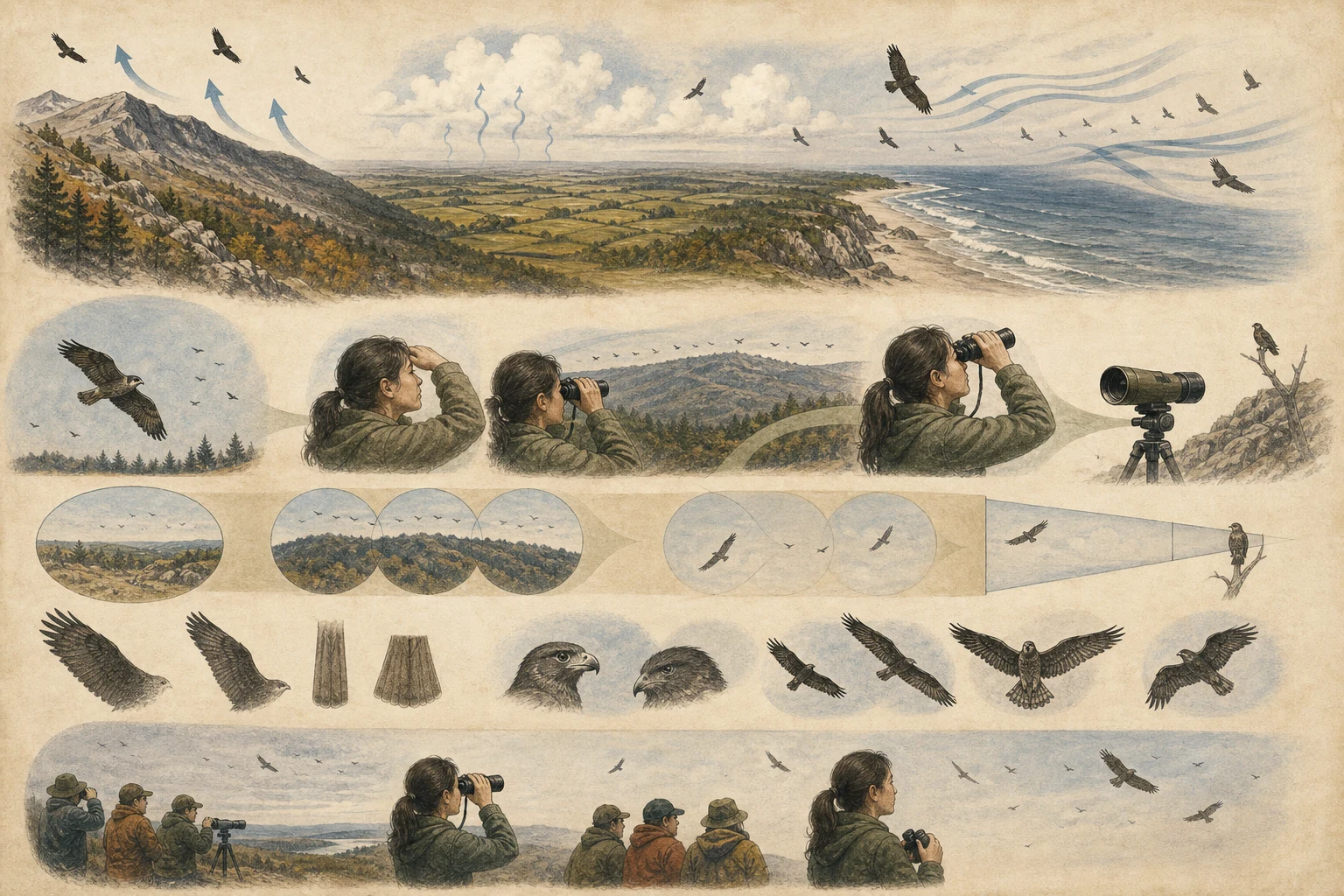
Migrating raptors conserve energy by riding invisible currents shaped by topography and weather. Along long mountain spines and canyon rims, crosswinds striking the slope deflect upward into steady lift that carries accipiters, eagles, and falcons at eye level; over sun-warmed valleys and coastal peninsulas, rising columns of warm air (thermals) draw broad-winged hawks and vultures into swirling kettles before they peel off into long glides. Check the lookout's seasonal calendar before visiting—broad-winged hawks peak in early autumn while rough-legged hawks and golden eagles pass much later—and note how shifting winds move the flight line closer or farther from the ridge. [1][2][4][5]
- Match your visit to the site's seasonal calendar and the wind directions that push birds along the ridge or coast.
- Watch over sun-warmed slopes and dark forest openings where rising thermals gather soaring raptors into kettles.
- Listen to experienced lookout counters to learn where birds typically first appear against the terrain.
Scan in layers
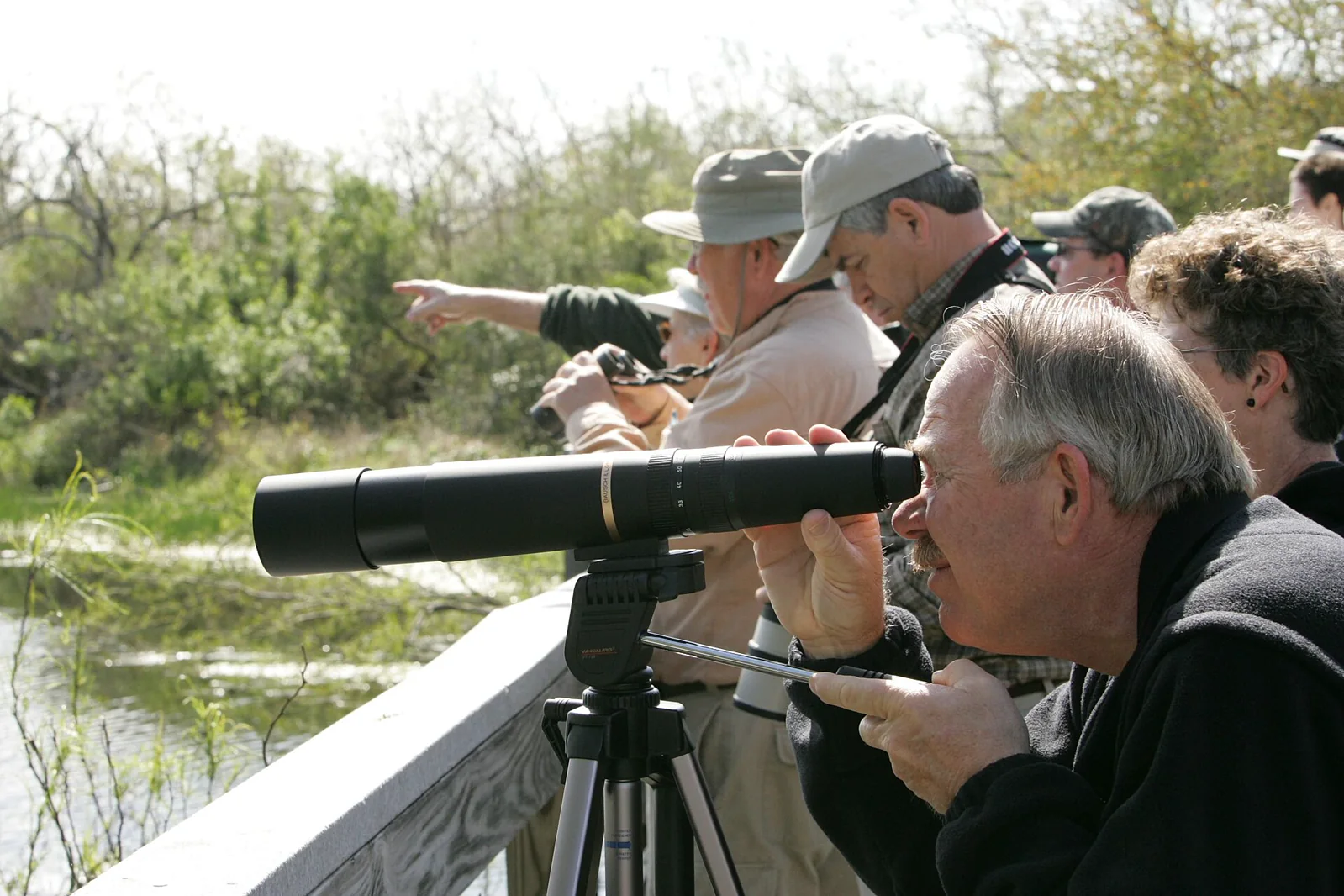
Staring into empty blue overhead sky fatigues your eyes and misses birds slipping past below the ridge crest. Build a systematic scanning routine anchored to distant landmarks—a fire tower, a saddle gap, a prominent rock outcrop, or a cumulus cloud base. Sweep slowly from left to right along the horizon and tree line with 8x or 10x binoculars, then step one binocular field higher and sweep back, checking cumulus clouds where high-circling kettles form like specks of pepper. Use a spotting scope to study a distant bird once found, rather than for your primary search. [1][2][3]
- Anchor your binocular scans to specific horizon landmarks such as ridge saddles, towers, and cloud bases.
- Sweep in overlapping horizontal bands from below the ridge line up into high cumulus clouds.
- Use 8x or 10x binoculars to find moving specks first, reserving the spotting scope for distant confirmation.
Identify structure before color
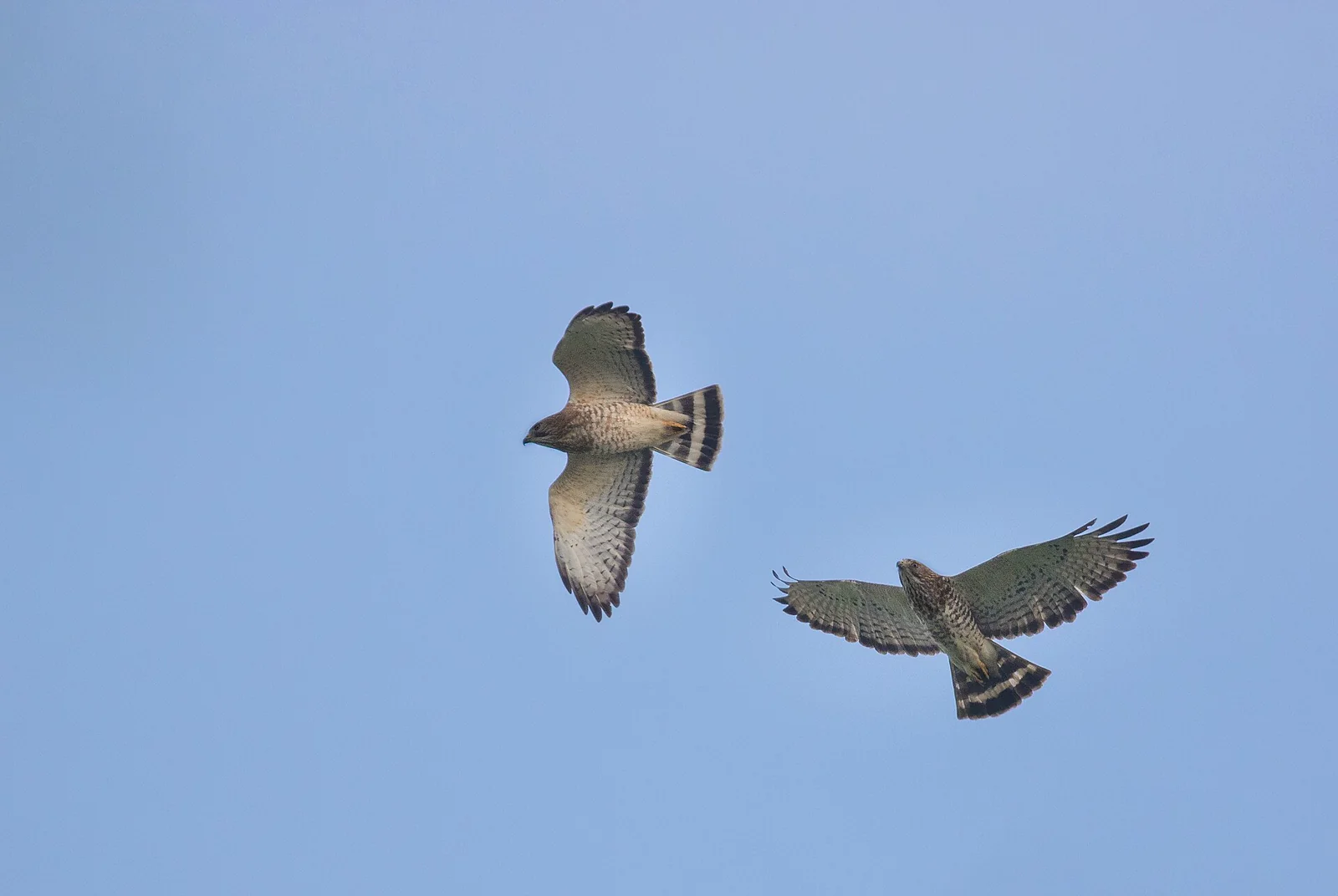
Against bright sky or autumn haze, belly bands and eye color disappear long before silhouette and wingbeat cadence. Place each raptor into its structural group first: buteos show broad, rounded wings and short, fanned tails for thermal soaring; accipiters such as Cooper's and sharp-shinned hawks fly with a characteristic flap-flap-glide rhythm, short rounded wings, and long barred tails; falcons power forward on sleek, pointed wings; and harriers, ospreys, and vultures hold their wings in distinct dihedral, crooked-M, or teetering V angles. When a distant speck remains too high for species marks, record it honestly as unknown accipiter, buteo, or raptor. [2][3][4]
- Judge wing breadth, wingtip shape, tail length, and head projection before looking for plumage colors.
- Check head-on wing angle—flat in eagles and Cooper's hawks, bowed or crooked in ospreys, and V-shaped in vultures and harriers.
- Record distant birds at the genus or group level (such as accipiter sp. or buteo sp.) when plumage is indistinct.
Support, do not duplicate, the count
Established hawkwatch lookouts follow strict standard protocols—such as those of the Hawk Migration Association of North America—to separate true one-way migrants from resident red-tailed hawks or ravens hunting the slope, and to record hourly wind, cloud cover, and observer effort. When visiting an active count station, listen to how the official counter calls out landmarks and ask whether they welcome extra eyes on a particular quadrant of sky. If you keep a personal eBird checklist from the lookout, note in your comments that an official hawkwatch count was in progress so regional compilers know how the tallies relate. [1][2][4][5]
- Ask the official site counter before calling out birds so you do not interrupt active tallying or weather logging.
- Separate resident hunting raptors that circle back into the valley from birds making steady directional passage.
- Note on personal checklists when you are observing alongside an official standardized hawkwatch station.
Related guides
Get Fauna and identify it in the field.
Where this guide comes from
Source-checked editorial guide. Last updated . This guide teaches identification and field skills; it is not a substitute for expert verification when it matters.