Shorebird observation basics
Shorebirds change plumage and often feed in mixed flocks, so begin with size and structure, then add behavior and habitat. Use tide and flock response to choose a viewing position that preserves feeding and resting space.
Last updated
Start with structure and comparison
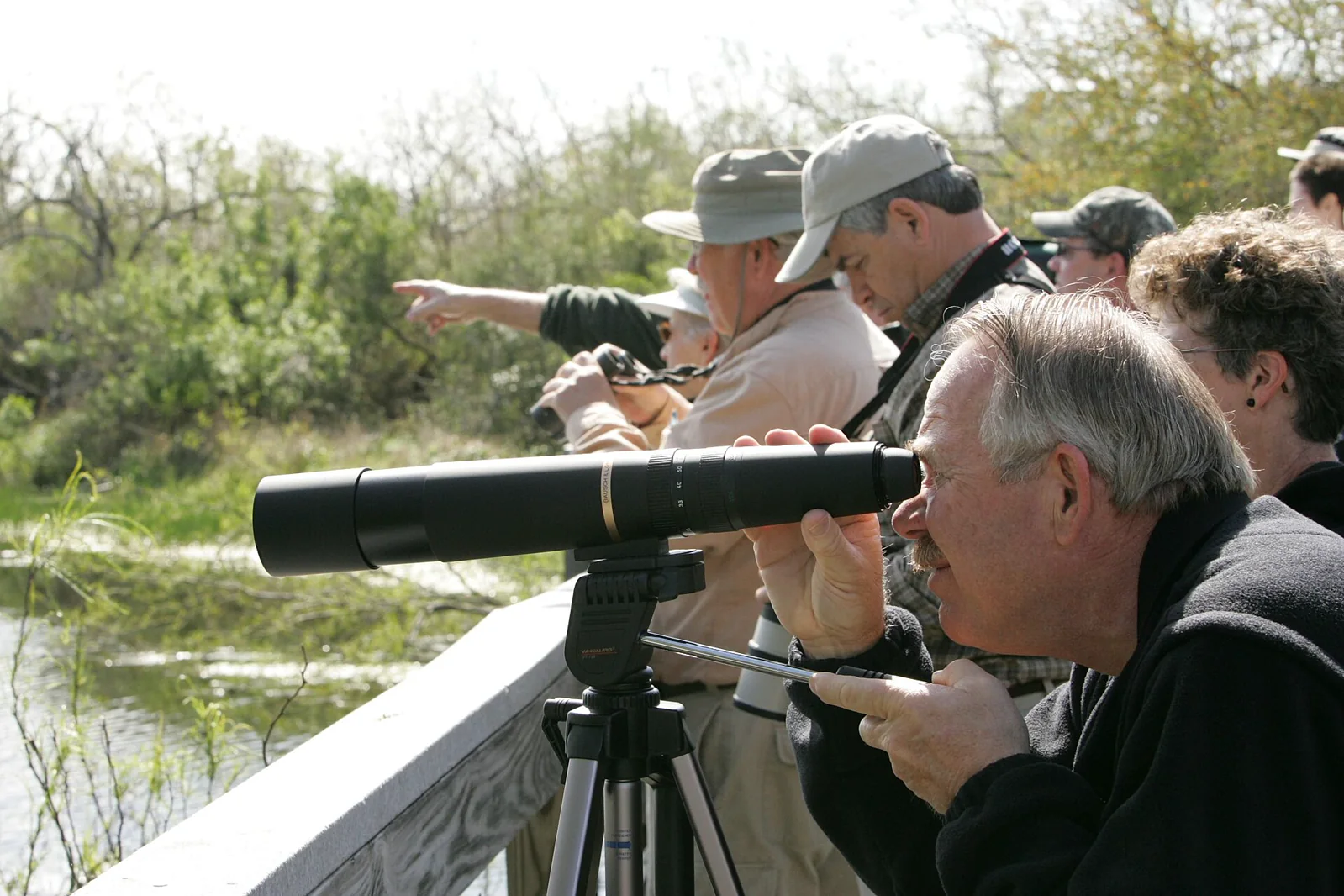
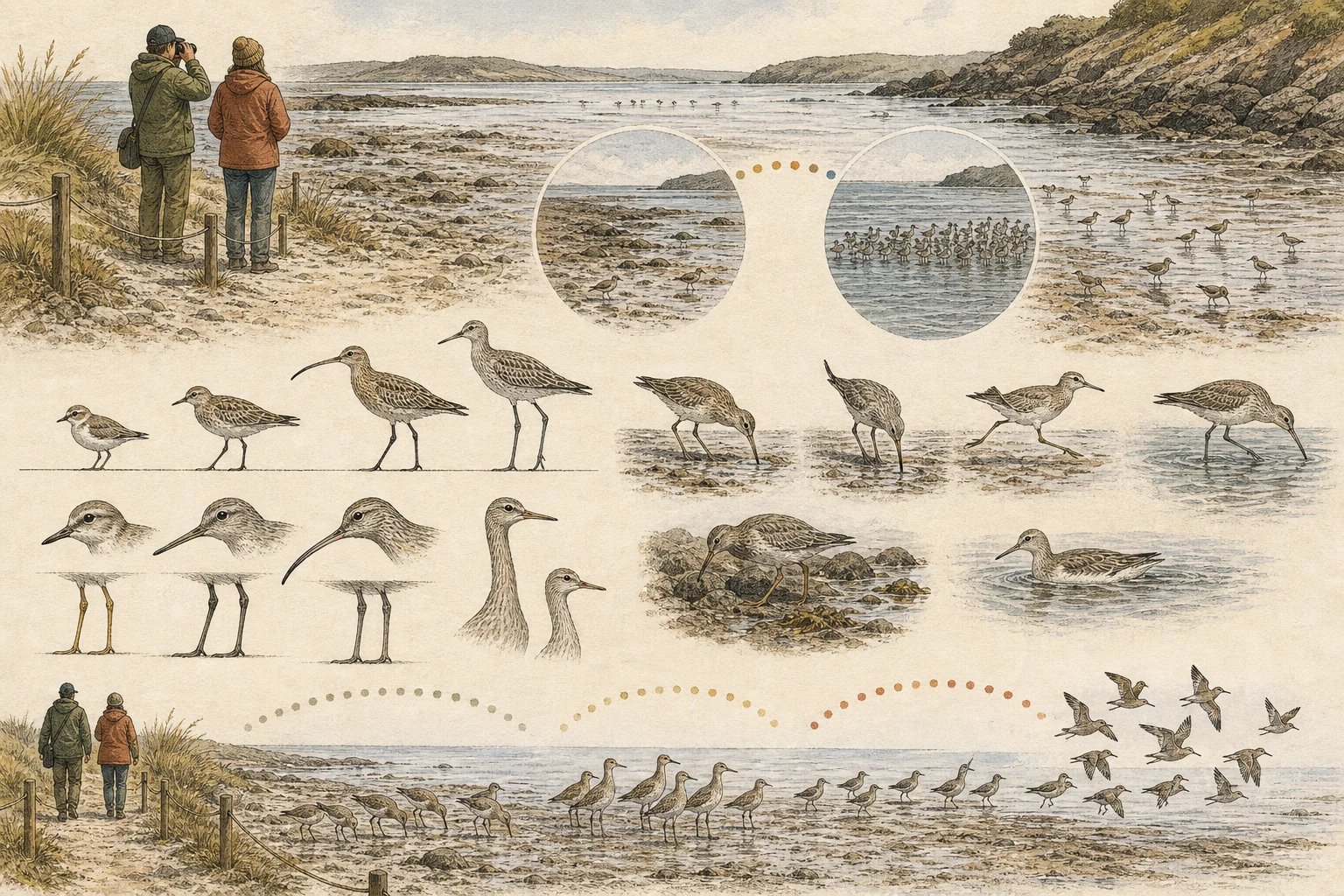
Because shorebirds molt from bright breeding rusts and blacks into muted gray winter feathers—and juveniles wear scaly fresh plumage of their own—silhouette and proportion are far more reliable than color alone. Pick a familiar species standing nearby in the mixed flock, such as a dunlin, killdeer, or greater yellowlegs, and use it as a living measuring stick. Compare whether the mystery bird is smaller or bulkier, whether its legs are long and stilt-like or short and crouched, how its bill length compares to head width, whether the bill is straight, decurved, or upturned, and how far the folded wingtips project past the tail. [2][4][5]
- Measure an unfamiliar shorebird directly against a known flock neighbor to judge body bulk and leg height.
- Compare bill length against the width of the bird's head and note whether the tip is straight, drooped, or upturned.
- Check wingtip-to-tail projection and leg color once the bird steps out of deep mud into shallow water.
Watch how the bird feeds
Even at long scope range, foraging rhythm separates major shorebird groups before you see a single feather fringe. Plovers dash forward a few steps, freeze upright to scan with large eyes, and snatch surface invertebrates with a single quick peck. Dowitchers and snipes probe soft mud vertically with a rapid sewing-machine motion, while avocets sweep upturned bills side to side through shallow water and turnstones flip shells and wrack along rocky tidelines. Note the water depth—dry sand, wet film, ankle-deep shallows, or belly-deep wading—alongside the feeding action, remembering that birds adjust technique when prey changes. [2][4][5]
- Contrast the stop-run-peck visual hunting of plovers with the steady probing or picking of sandpipers.
- Watch for vertical sewing-machine bill probing in soft mud versus side-to-side sweeping or surface picking.
- Record where the bird feeds relative to the water's edge, from dry wrack lines out to belly-deep shallows.
Use tide as part of the habitat
Along tidal coasts and estuaries, the moon sets the schedule for both birds and observers. As a falling tide begins to uncover slick mudflats and mussel beds, shorebirds spread out along the receding water edge to feed ravenously; as a rising tide floods the flats, flocks are pushed landward into denser concentrations on upper beaches, saltmarsh islands, and gravel spits to rest through high water. Check local tide tables before heading out, position yourself safely above the high-water mark ahead of the incoming tide, and let the rising water bring birds gradually into scope range. [1][5]
- Check local tide tables and arrive on a rising or falling tide when birds move between flats and high-tide roosts.
- Set up your scope above the high-water line so incoming tides bring foraging birds closer naturally.
- Never walk out onto isolated sandbars or occupy the last dry gravel spit needed by roosting flocks at high tide.
Let flock response set the distance
Many migrating shorebirds travel thousands of kilometers between Arctic tundra and southern hemisphere mudflats, relying on brief coastal stopovers to rebuild fat reserves and rest during high tide. Every time a flock is flushed into flight by an approaching walker, photographer, or off-leash dog, the birds burn critical fuel they cannot easily replace. Watch the nearest edges of the flock through your binoculars: if birds stop probing, raise their heads with stretched necks, give sharp alarm whistles, or begin walking parallel to the water away from you, freeze immediately and back up until feeding resumes. [3][5]
- Watch for early alert signals—stretched necks, paused probing, and sideways walking—long before birds take wing.
- Sit or kneel on the beach profile to reduce your silhouette and let foraging flocks pass unbothered.
- Obey all seasonal beach ropes and dog restrictions around high-tide roosts and beach-nesting plovers or terns.
Related guides
Get Fauna and identify it in the field.
Where this guide comes from
Source-checked editorial guide. Last updated . This guide teaches identification and field skills; it is not a substitute for expert verification when it matters.