Bird migration 101
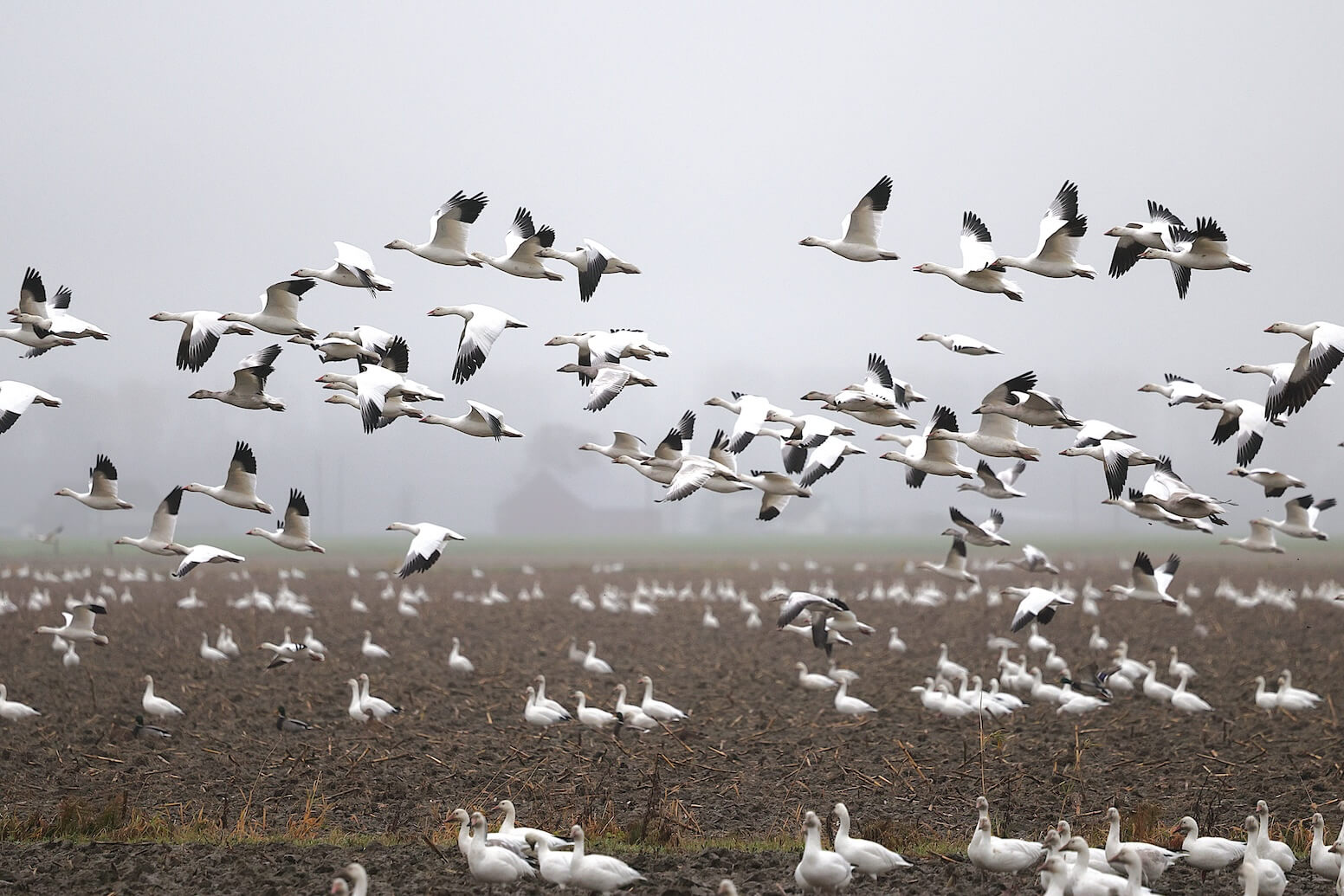
Each spring and fall, many North American birds move between breeding and nonbreeding ranges. Much songbird migration happens at night, while other groups move by day.
Last updated
The four flyways
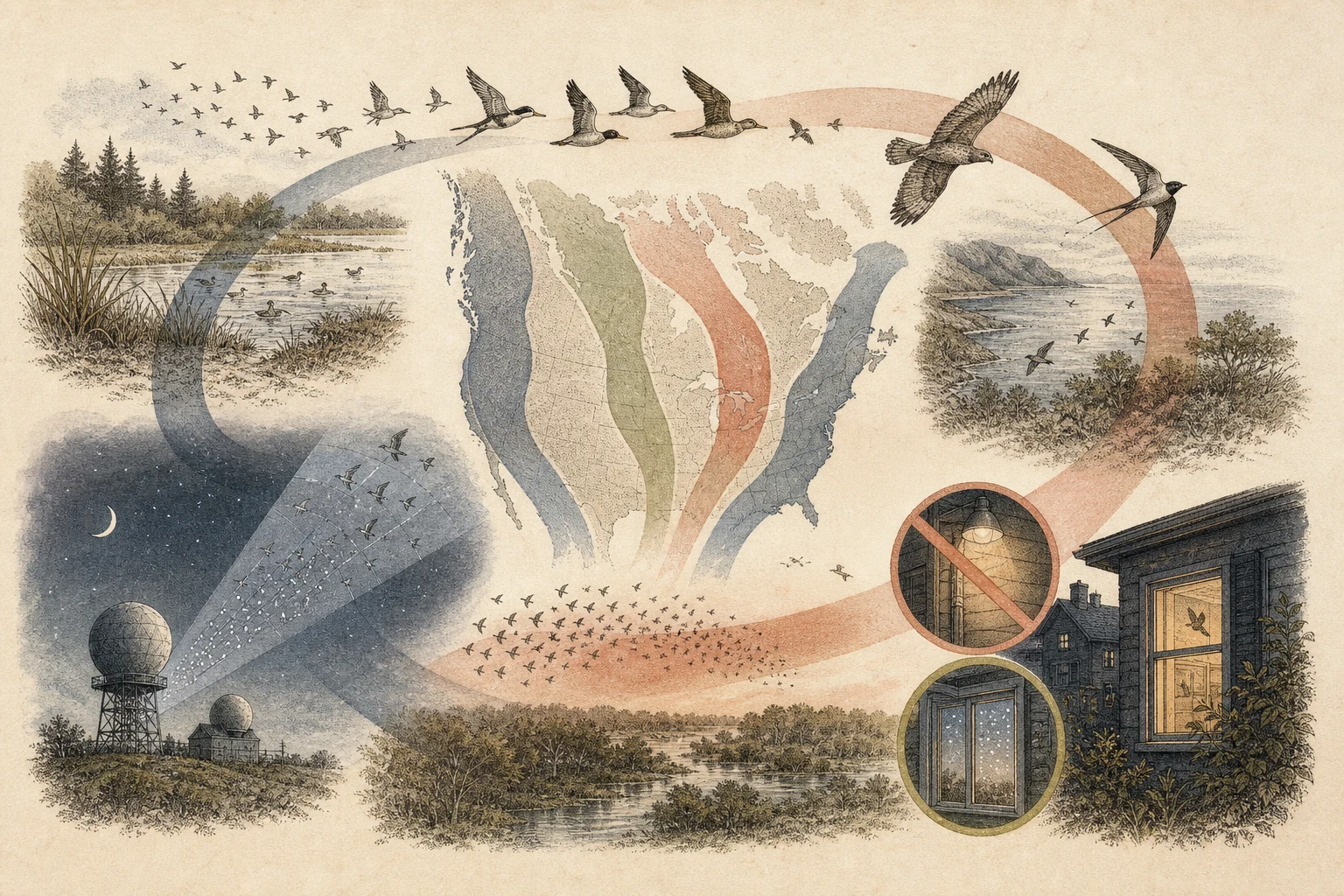
The Atlantic, Mississippi, Central, and Pacific flyways are broad North American administrative and conservation units shaped around major coastlines, river valleys, plains, and mountain chains, especially useful for managing waterfowl and shorebirds. Treat them as regional shorthand rather than narrow, walled aerial highways. Many warblers, thrushes, and sparrows migrate on broad continental fronts or follow loop routes that use one region in spring and another in autumn, so always pair flyway context with species-specific range maps. [1][4]
- Four North American administrative regions: Atlantic, Mississippi, Central, and Pacific
- Waterfowl and shorebirds often follow coastlines and wetland corridors closely; many songbirds move across broad fronts
- Check species-specific seasonal bar charts for your county rather than relying on a continent-wide map
When it happens
BirdCast's live dashboard runs March 1–June 15 and August 1–November 15. Those dates describe the dashboard data feed, not biological start and end dates; migration timing varies by species, latitude, and year. Early waterfowl and short-distance migrants may move in February, shorebirds can head south again by late June or July, and late raptors and waterfowl continue moving well into December. [3]
- Spring: roughly March 1 – June 15
- Fall: roughly August 1 – November 15
- Peaks within those windows vary by latitude and species
Most of it is at night
Many songbirds, shorebirds, and cuckoos migrate after dark, when cooler air reduces overheating and dehydration, winds are often calmer, and diurnal raptors are not hunting; hawks, eagles, cranes, swallows, and some waterfowl migrate primarily by day using thermals or visual landmarks. In the contiguous United States, BirdCast uses weather surveillance radar to estimate the traffic rate and altitude of nocturnal migrants passing overhead, though its county totals do not identify individual species or cover regions outside the radar network. [2][3]
- Check BirdCast after sunset during spring and fall to see whether a heavy nocturnal flight is passing over your county
- Morning stopover birding in parks and woodlots is often richest after a night of high radar traffic or a frontal boundary
- Daytime migration watches work best at hawk ridges, coastal headlands, and lake shorelines
What it asks of you
Artificial night lighting attracts and disorients nocturnally migrating birds, drawing them into built environments where daytime glass reflections and transparent panes cause hundreds of millions of fatal building collisions each year. During spring and autumn migration windows, participating in Lights Out—turning off nonessential exterior floodlights and upper-story interior lighting between 11 p.m. and 6 a.m., drawing blinds, and applying external visual markers spaced no more than 2 by 2 inches across window glass—directly reduces mortality. [5][6]
- Turn off nonessential outdoor and upper-story indoor lights from 11 p.m. to 6 a.m. during spring and fall migration
- Close curtains or blinds at night so interior light does not spill outward
- Treat home and office windows with exterior patterns or screens that break up sky and tree reflections
Get Fauna and identify it in the field.
Where this guide comes from
Source-checked editorial guide. Last updated . This guide teaches identification and field skills; it is not a substitute for expert verification when it matters.
- U.S. Fish & Wildlife Service — Migratory Bird Program Administrative Flyways ↗
- Cornell Lab of Ornithology (All About Birds) — The Basics of Bird Migration ↗
- BirdCast — Local Migration Dashboard ↗
- Cornell Lab of Ornithology — The flyways birds use ↗
- BirdCast — Lights Out ↗
- U.S. Fish & Wildlife Service — Bird collisions with building glass ↗