Watching waterfowl without flushing flocks
A flock that remains feeding, preening, or resting offers better study than one forced into the air. Approach through screened public routes, stop at the first alert response, identify by structure and behavior, and count in repeatable blocks.
Last updated
Use concealment the site already provides
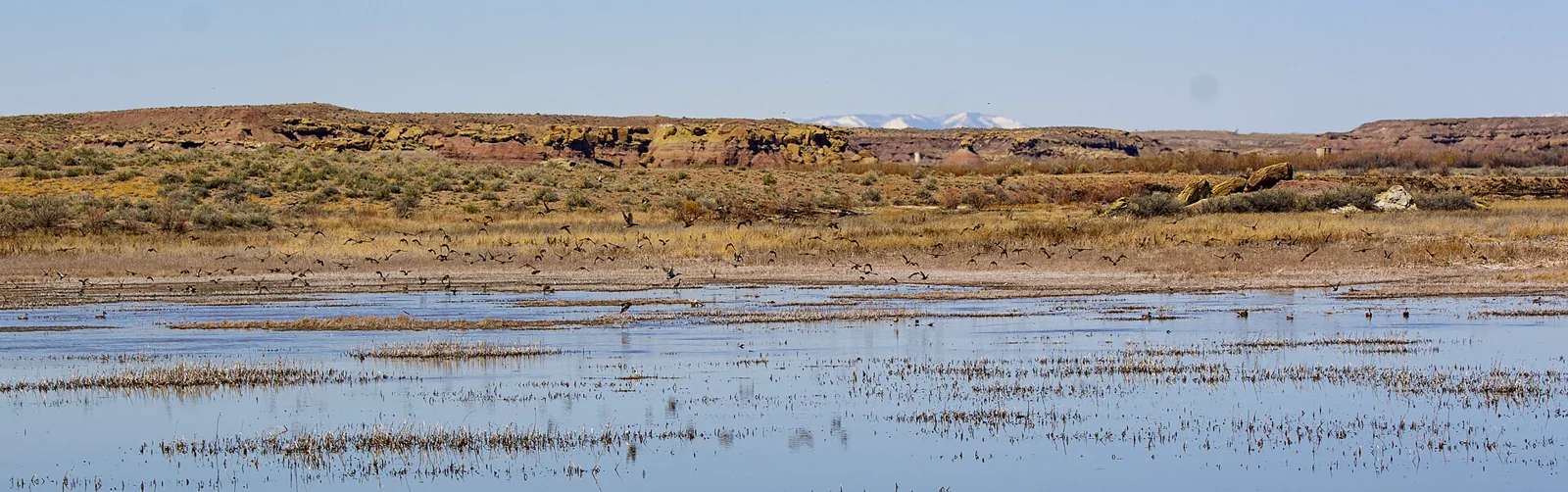
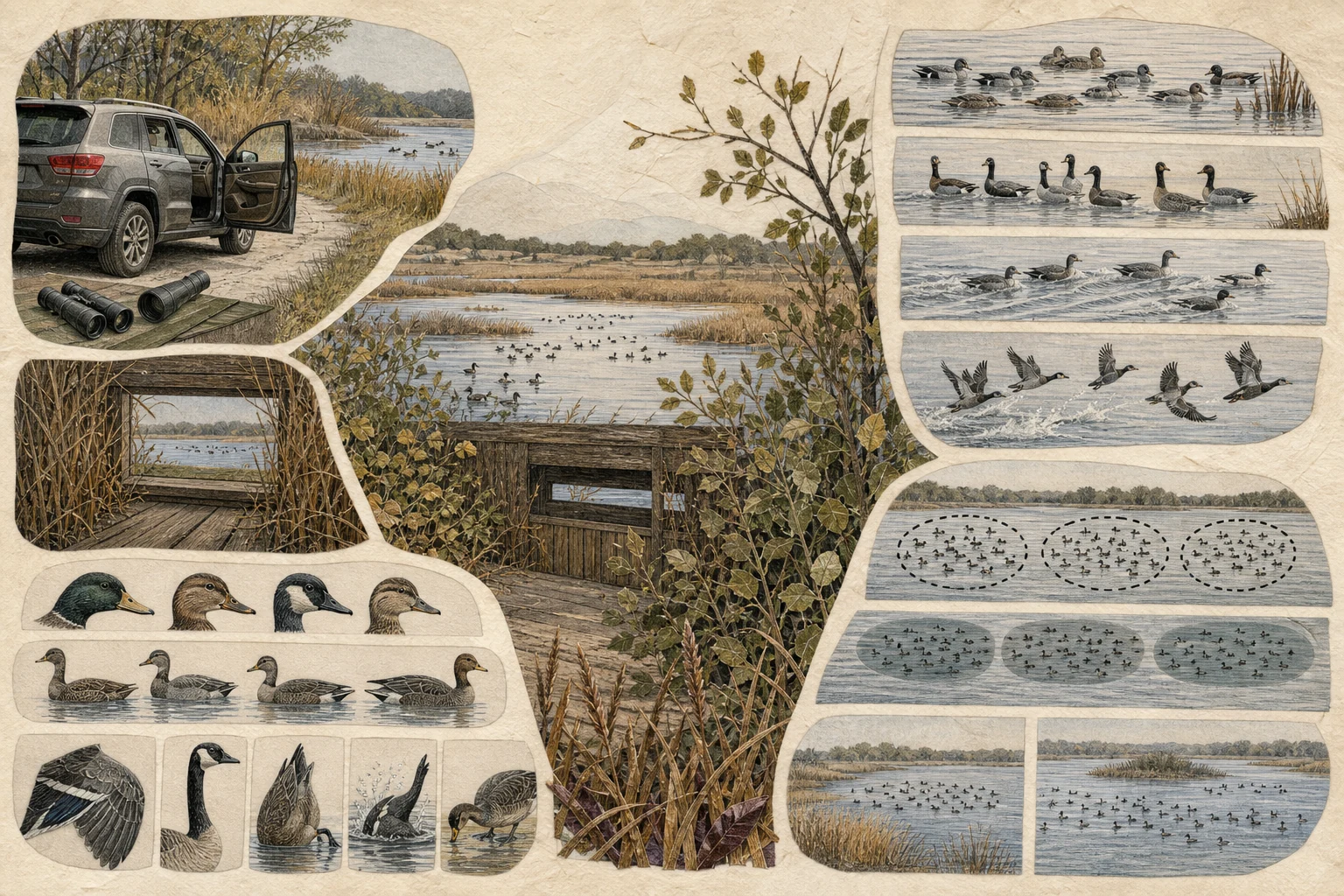
Waterfowl on open impoundments, reservoirs, and estuaries are acutely sensitive to upright human figures silhouette-walking along a dike crest. Where a refuge provides a graveled auto tour loop, stay inside your car and rest a window mount or beanbag on the lowered glass; the vehicle acts as a rolling blind that ducks and geese largely ignore until a door swings open. At pedestrian wetlands, approach viewing hides, wooden blinds, and reed-screened boardwalks quietly, and adjust your tripod legs and scope before stepping up to the viewing slot. Never step past seasonal closure signs or walk out onto exposed mud banks just to shorten the optical distance. [3][4]
- Use your parked vehicle as a mobile blind on refuge auto routes instead of stepping out onto the road shoulder.
- Adjust tripod height and optics behind vegetation screens before moving into a blind window or overlook.
- Avoid walking along exposed levee crests where your silhouette stands against the sky above resting flocks.
Read the flock's early warnings
A raft of diving ducks or a grazing flock of geese telegraphs discomfort well before a single wing beats. Watch the nearest birds as you settle into position: when dabbling pintails or teal stop tipping up, raise their heads with stiff, vertical necks, bunch tightly together, and begin paddling steadily toward the far marsh edge, you have reached their disturbance threshold. Treat that first synchronized head-up posture as your stop sign—freeze, sit or kneel to break your outline, and step back if they do not resume feeding or preening within a minute. Flushing distance shifts with hunting season, wind chill, and species, so let the birds' posture govern your approach. [3][4]
- Watch the nearest edge of the flock for synchronized head-raising, paused feeding, and steady swimming away.
- Freeze and lower your profile immediately when birds shift from relaxed preening or dabbling to alert vigilance.
- Remember that cold weather and migratory fatigue make every forced flight costly for wintering waterfowl.
Identify without asking birds to fly
You do not need to see upperwing speculum patches in flight to separate waterfowl accurately on the water. Start with overall silhouette and how the bird rides: dabbling ducks such as mallards, gadwalls, and wigeons float high with buoyant tails and tip forward in shallows, whereas diving ducks like canvasbacks, scaup, and goldeneyes sit low with sloped or rounded heads and vanish cleanly beneath the surface. Ask Cornell Lab's classic field question—where is the white?—and map bright patches on the breast, flank, neck ring, bill band, forehead, or undertail coverts. Scan methodically from one end of a sleeping raft to the other so oddballs like a Eurasian wigeon or tufted duck stand out. [1][3]
- Separate high-riding dabbling ducks that tip up in shallows from low-sitting diving ducks that submerge completely.
- Map the exact placement of bright white patches on the head, bill, neck, chest, flanks, and tail.
- Compare forehead slope and bill profile—such as the long wedge of a canvasback versus the steep forehead of a redhead.
Count and feed responsibly
When thousands of snow geese, wigeons, or coots carpet a wetland, counting one by one is impossible before the raft shifts. Instead, carefully count 10, 20, or 50 birds in a representative cluster through your binoculars or scope, note how much visual space that block occupies, and sweep that mental grid across the rest of the flock. Repeat the block count from left to right and right to left, then record a clean estimate on your checklist while subtracting groups that merely hop between adjacent pools. Never toss bread, corn, or crackers to bring ducks closer: artificial handouts cause nutritional harm, pollute shallow water, and crowd birds into disease-prone knots. [2][5]
- Count a tight group of 10, 20, or 50 birds carefully, then step that visual block across the remainder of the raft.
- Track groups flying between neighboring impoundments so circulating birds are not added twice to your total.
- Never throw bread or grain to attract waterfowl, which degrades water quality and spreads avian disease.
Related guides
Get Fauna and identify it in the field.
Where this guide comes from
Source-checked editorial guide. Last updated . This guide teaches identification and field skills; it is not a substitute for expert verification when it matters.