Choosing and using a spotting scope
A useful spotting scope is a stable system, not just a powerful lens. Match brightness, weight, eye relief, body angle, and tripod height to where and how you actually observe.
Last updated
Choose the whole viewing system
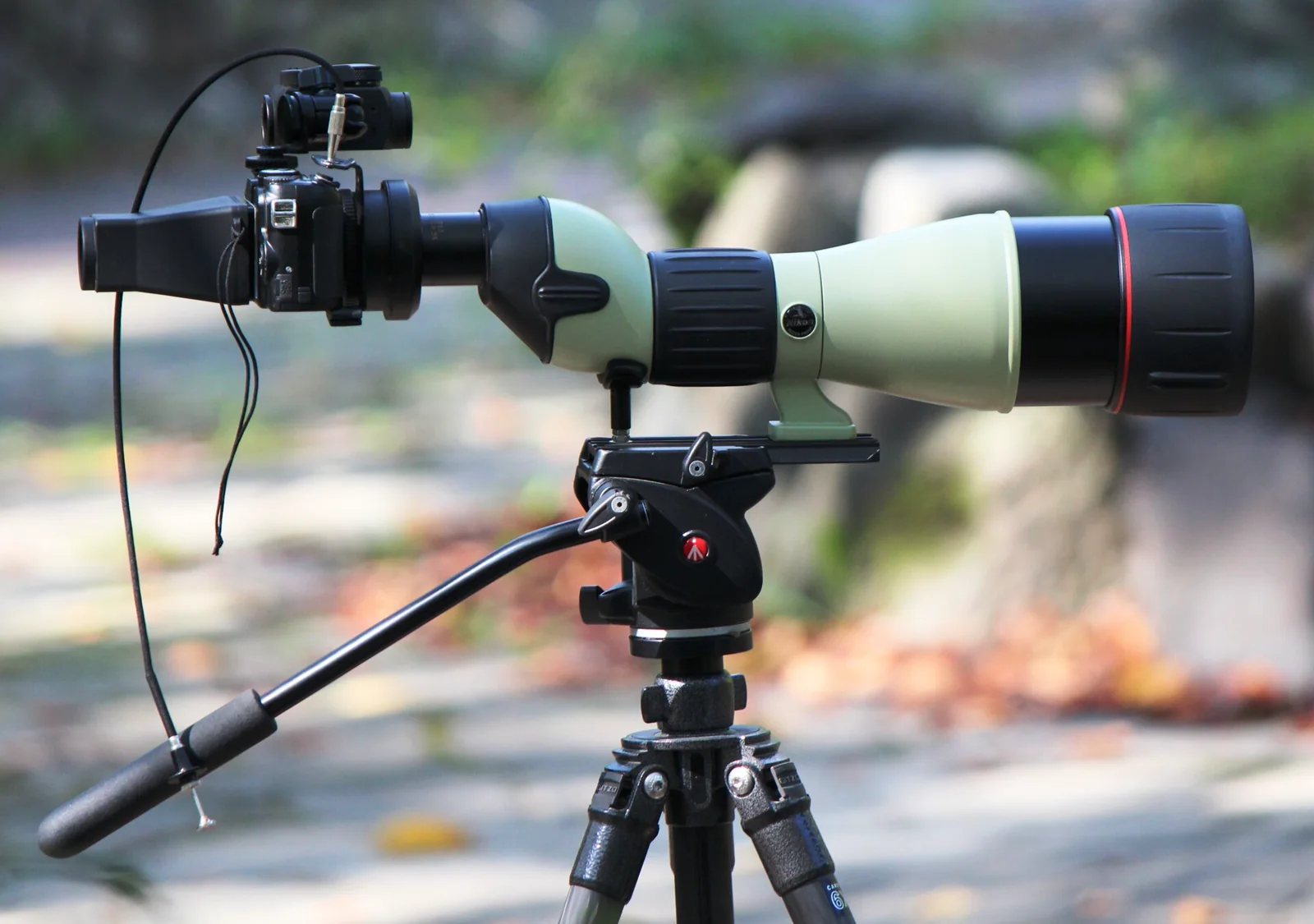
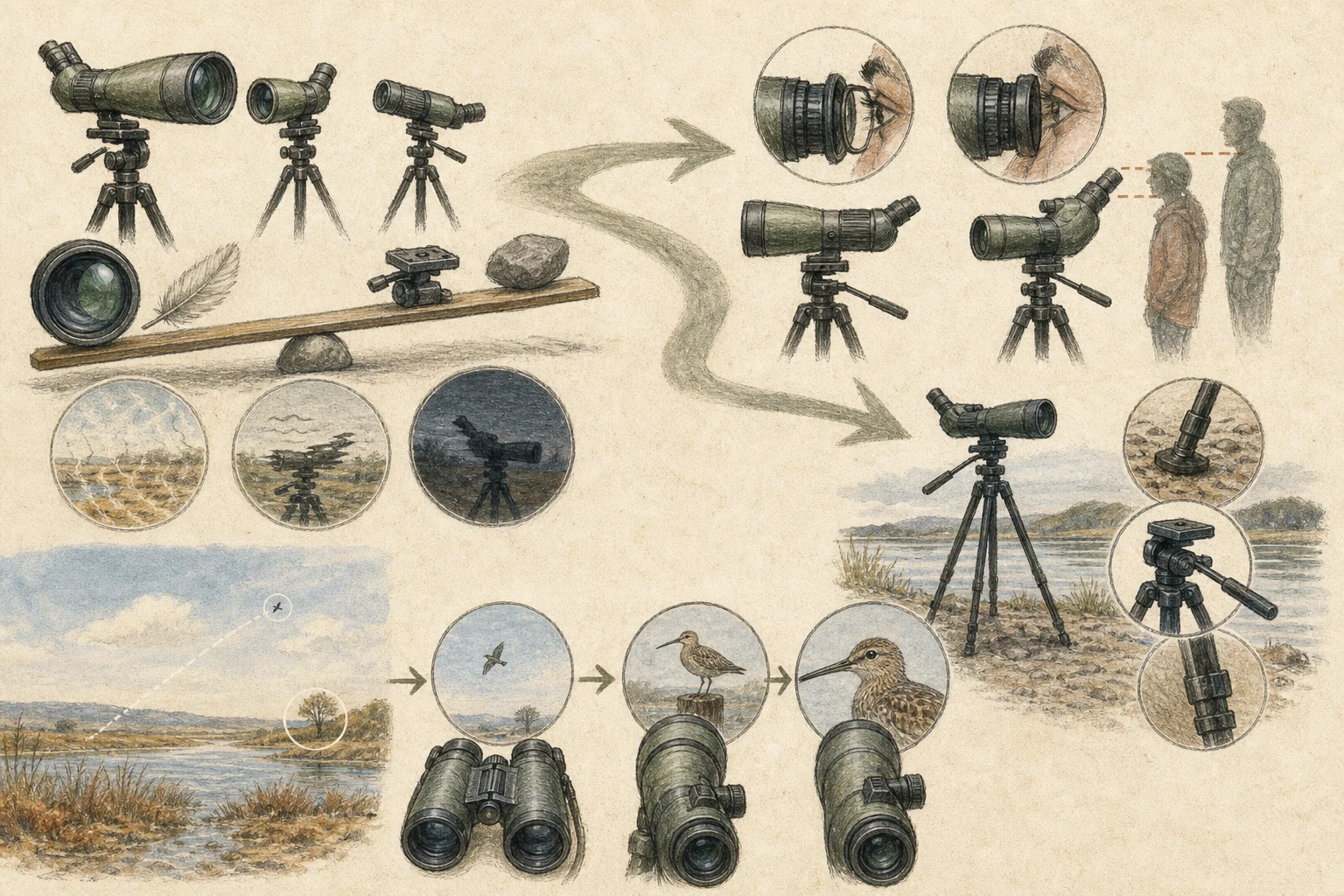
A spotting scope is only as sharp as the support beneath it. While an 80- or 85-millimeter objective lens gathers extra twilight for scanning scoters on gray winter swells or elk across a wind-scoured valley, that extra glass adds weight that demands a sturdier tripod and fluid head. High magnification cannot rescue detail lost to wind vibration, rising heat shimmer over sun-baked mudflats, or failing light. Compare the scope, head, and legs as a single kit before buying, and favor the combination you will gladly carry half a mile down a dike trail or onto a coastal headland where distant birds and mammals actually linger. [1][2][3]
- Evaluate the scope body, eyepiece, tripod legs, and fluid head together as one integrated optical system.
- Balance objective lens size and light-gathering power against the total weight you are willing to carry on trails.
- Remember that atmospheric shimmer and wind shake limit usable detail far earlier than raw magnification numbers.
Fit the eyepiece and body angle
Long eye relief—often 17 millimeters or more with twist-up or fold-down eyecups—matters immediately for observers who keep eyeglasses or sunglasses on against water glare, because a cramped viewing distance shrinks the field into a frustrating tunnel. Straight-through scope bodies align naturally with your line of sight when tracking a flying loon or scanning along a narrow shoreline, whereas angled bodies let you use a lower, stiffer tripod setting and look upward toward cliff-nesting peregrines without craning your neck. Angled eyepieces are also much easier for two or more observers of different heights to share without constantly raising the center column. [1][2][4]
- Test twist-up eyecups with your own glasses on to confirm you can see the entire circular field of view.
- Choose a straight body for quick eye-to-target alignment or an angled body for lower tripod height and group sharing.
- Check how smoothly the zoom ring and focus wheel turn when your hands are cold or gloved in the field.
Set a stable, shareable position
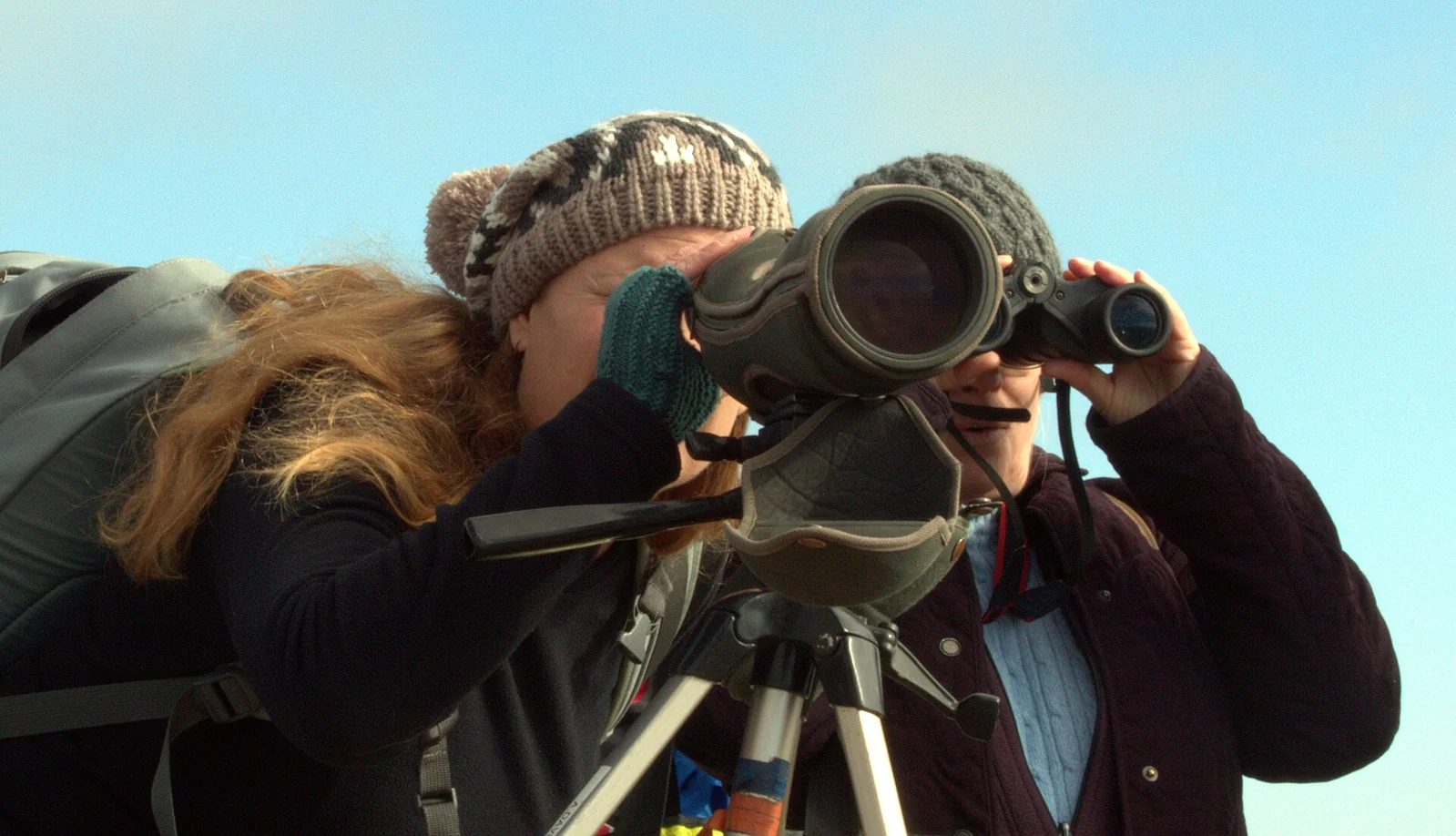
Plant the tripod feet firmly in soil, gravel, or boardwalk cracks with one leg pointed forward toward the viewing zone, and extend the thicker upper leg sections before raising a thin center post that catches the wind. Adjust the pan-and-tilt tension so the scope glides smoothly when following a foraging curlew yet stays locked the instant you take your hands away. When birding with companions, set an angled scope to the eye level of the shortest person in the group; taller observers can simply bend their knees for a turn at the eyepiece without touching the leg locks and knocking a distant bird out of the frame. [1][2]
- Extend the thickest upper tripod leg sections first and avoid raising a narrow center column in windy conditions.
- Lock the mounting plate and balance the pan-head tension before taking your hands off the scope.
- Set an angled scope for the shortest viewer in a group so taller observers can bend without resetting the legs.
Acquire first, magnify second
Sweeping a marsh or rocky shoreline at 60x magnification turns the scene into a dizzying blur of reeds and water. Instead, find the animal first with your unaided eyes and 8x or 10x binoculars, then note a distinctive foreground marker—a bleached driftwood snag, a channel buoy, or a vertical reed clump—directly above or below the subject. Sight along the scope barrel at its lowest zoom setting (usually 20x or 25x), bring that landmark into the wide field, and sharpen the focus wheel. Only after the bird is centered and crisp should you dial up magnification to inspect bill shape, primary projection, or leg color as air clarity allows. [1][3][5]
- Pinpoint the animal and a neighboring landmark in binoculars before looking through the spotting scope.
- Aim and focus at the lowest magnification setting where the field of view is widest and brightest.
- Dial up zoom gradually, stopping as soon as heat wave distortion or dimness softens feather and fur edges.
Related guides
Get Fauna and identify it in the field.
Where this guide comes from
Source-checked editorial guide. Last updated . This guide teaches identification and field skills; it is not a substitute for expert verification when it matters.