Moth watching with a light sheet
A taut white sheet and stationary light can create an observation surface after dark. Choose a lawful sheltered site, keep the session short and attended, photograph settled visitors, and switch off fully when the watch ends.
Last updated
Choose a lawful, low-conflict site
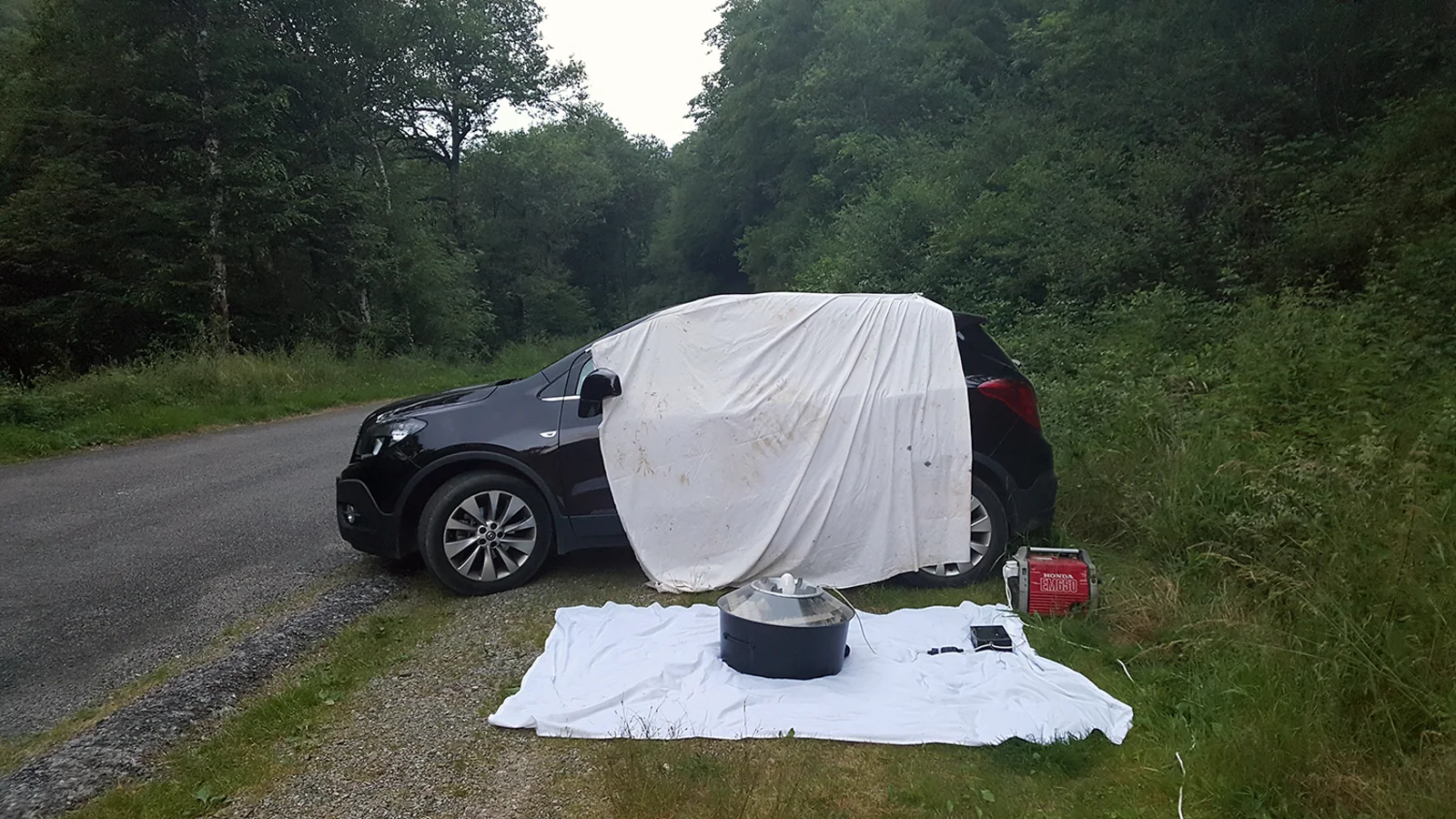
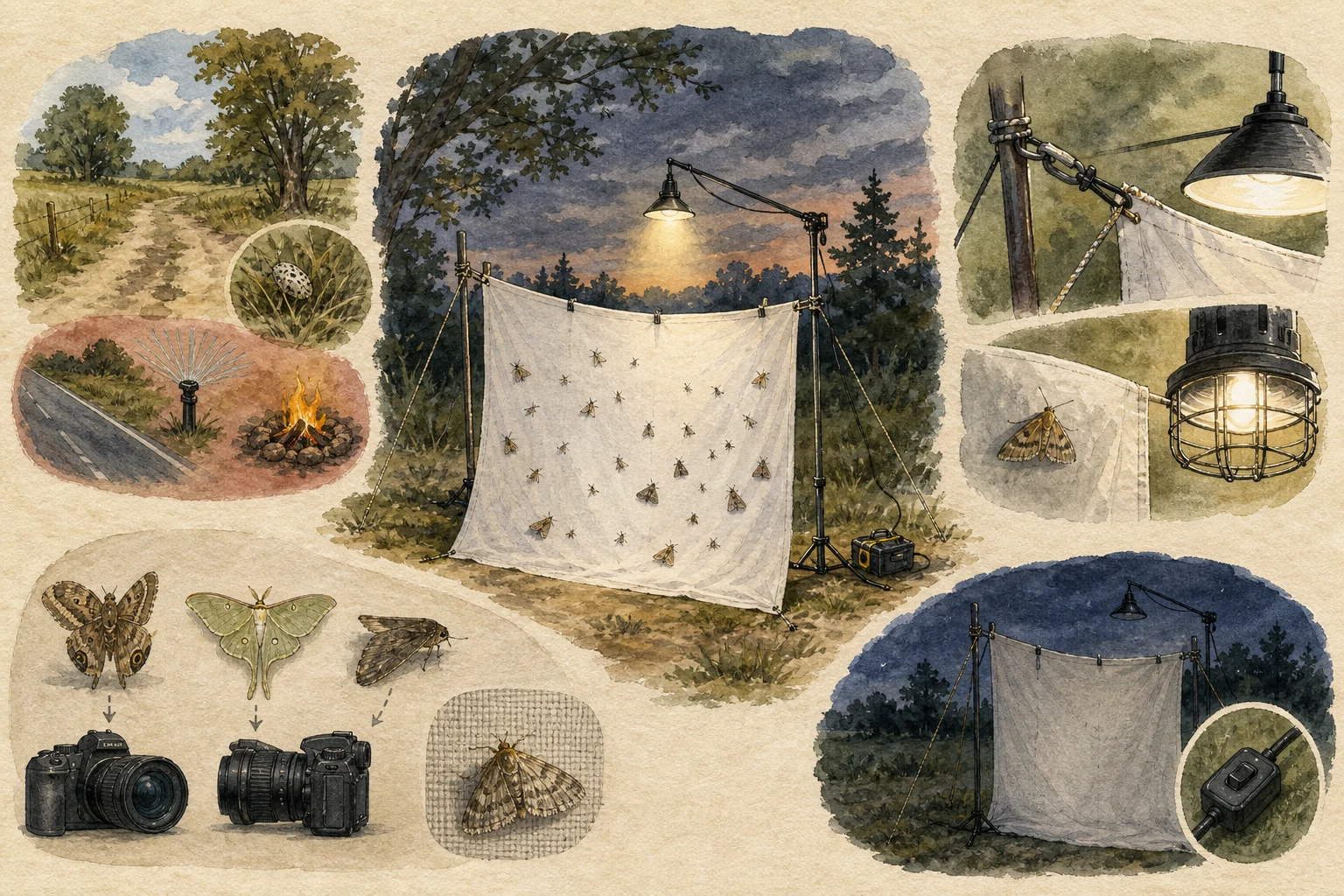
Before hanging a sheet or plugging in a lamp, confirm that night access and artificial lighting are permitted by the landowner or park manager. A wind-sheltered woodland edge, garden clearing, or meadow border facing diverse native trees and shrubs usually draws far more moths than an open lawn, especially on warm, humid, overcast evenings with little moonlight. Position the sheet away from roads, footpaths, and neighbor windows so the glow does not dazzle drivers or intrude on homes, and keep away from known bat roosts or nesting bird boxes where bright light could disrupt evening activity. [1][2][3]
- Secure landowner or park permission first and choose a warm, calm, humid evening with minimal wind or moon glare.
- Face the sheet toward varied native trees, shrubs, and herbaceous edges while shielding roads and neighboring windows.
- Check the ground in daylight for tripping hazards, ant mounds, and wet spots before setting up cords and stands.
Make a simple observation surface
Stretch a clean white bedsheet taut between two trees, porch posts, or a portable frame so the fabric does not flap in the breeze, and let the bottom edge drape forward onto the ground as a landing apron for beetles, caddisflies, and heavy-bodied sphinx or silk moths that drop short of the vertical cloth. Hang a stationary ultraviolet (UV) LED bar, blacklight tube, or porch bulb a few inches in front of the center of the sheet. Stake down battery packs and extension cords, keep hot bulbs protected from rain spatter and direct fabric contact, and wear UV-blocking glasses if working closely around ultraviolet lamps. [1][2][3]
- Pull the white sheet taut and spread a bottom apron flat on the ground to catch insects that drop below the light.
- Suspend the lamp slightly in front of the upper middle of the cloth and weight all corners against gusts.
- Protect hot bulbs from rain drops and wear UV-filtering eyewear when inspecting insects near ultraviolet sources.
Photograph settled visitors in place
When a geometrid, underwing, or prominent moth spirals in, let it finish fluttering and settle into its natural resting posture on the cotton weave before bringing your camera or hand lens close. Hold your lens strictly parallel to the plane of the forewings so the entire wing pattern from thorax to outer fringe is tack-sharp, then capture a side profile showing upturned labial palps, tufted thoracic crests, feathered antennae, and leg hairiness. Wait until the sheet texture or a printed millimeter scale at the edge of the cloth gives size context, and upload each individual insect as its own separate observation with lamp type and weather noted. [2][3][5]
- Wait for newly arrived moths to settle into their natural resting posture before bringing a lens close.
- Align your camera back parallel to the wing surface for a sharp dorsal shot, then add a side view of palps and crests.
- Include a millimeter scale on the sheet margin and keep each individual moth in its own separate record.
End the attraction deliberately
Artificial nighttime lighting pulls nocturnal pollinators, parasitoids, and prey out of their normal foraging and mating routines, and leaving a bright sheet illuminated until dawn exposes exhausted insects sitting on the white cloth to early-morning birds, hornets, and hot sun. Keep your light-sheet watch to an attended one- to three-hour window rather than running an unmonitored beacon all night. When you finish, switch the lamp off completely and leave the sheet hanging in the dark for a little while—or gently shake remaining insects into shaded leaf litter and foliage before packing up—so every visitor can disperse safely under cover of darkness. [1][4]
- Run the light sheet as an attended evening session rather than leaving lamps burning unattended until dawn.
- Switch the lamp off well before sunrise so settled moths can fly back into cover before diurnal birds wake.
- Check the ground apron and folds carefully before packing the cloth so no resting insects are crushed.
Related guides
Get Fauna and identify it in the field.
Where this guide comes from
Source-checked editorial guide. Last updated . This guide teaches identification and field skills; it is not a substitute for expert verification when it matters.