Phenotypic plasticity explained
Light, temperature, nutrition, predators, water, and social conditions can alter development, physiology, morphology, or behavior without changing an individual's DNA sequence. A reaction norm describes the phenotype a genotype produces across environments. Genotypes can differ in those norms, providing variation on which evolution can act.
Last updated
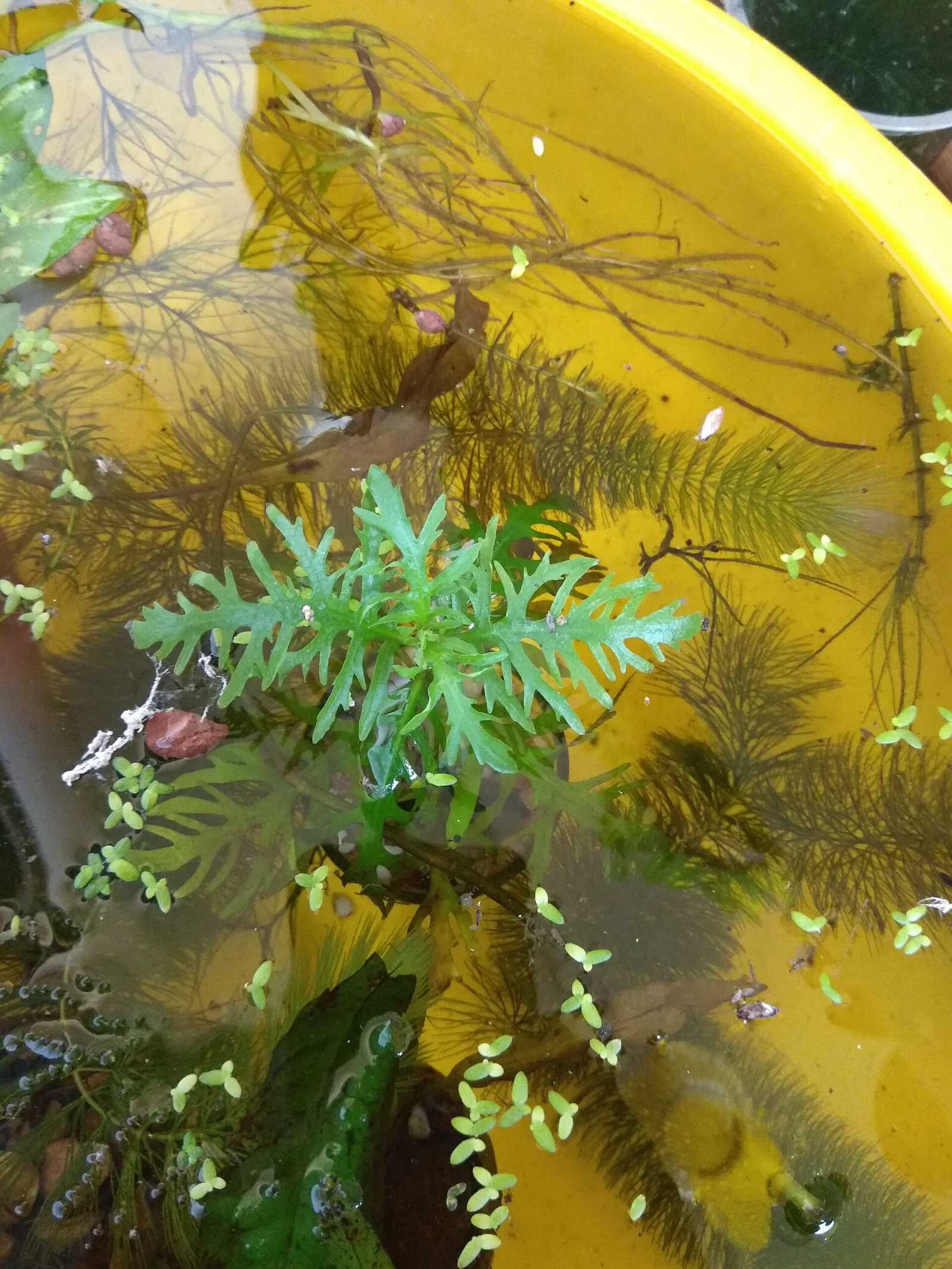
One genotype can have a reaction norm
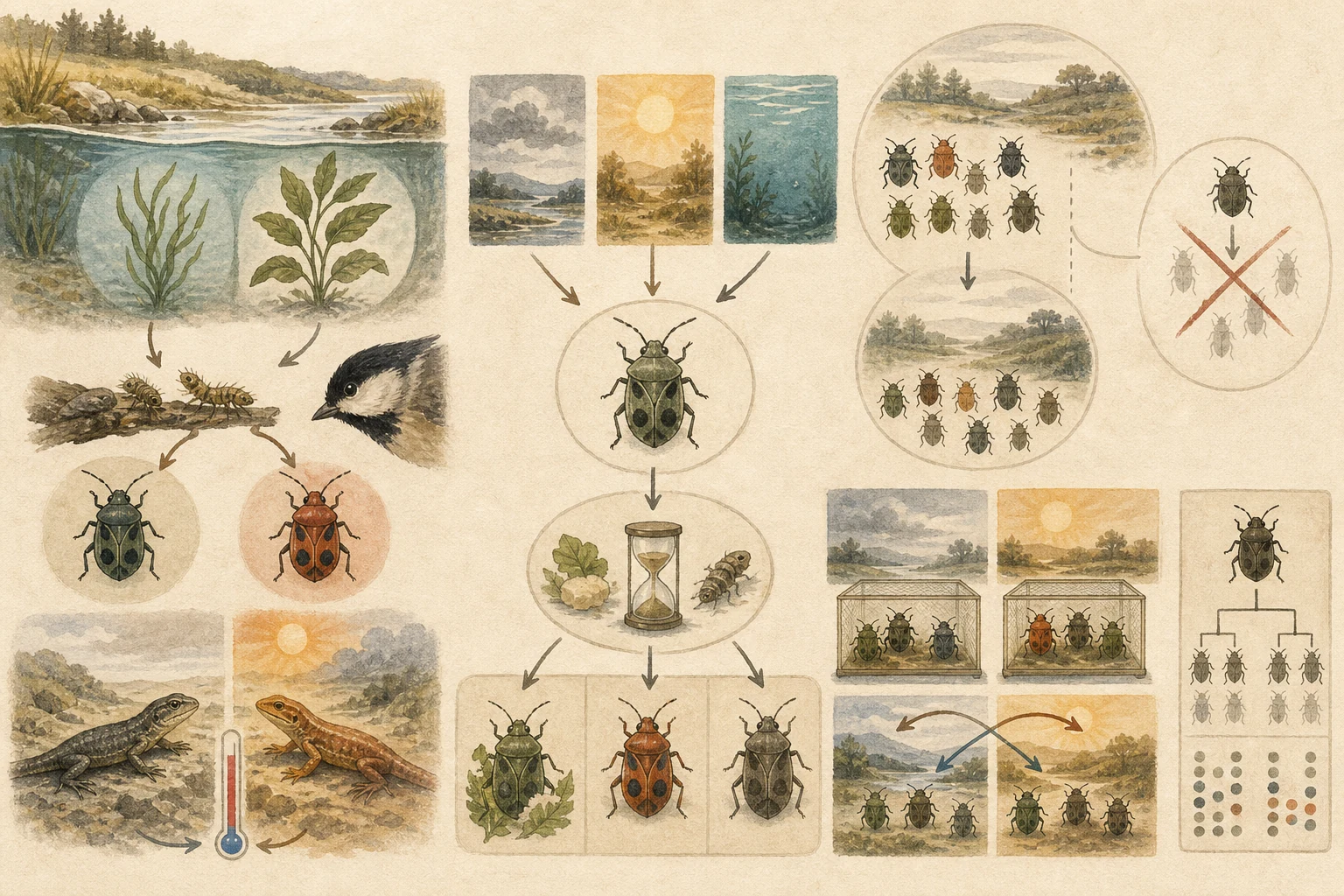
A reaction norm is the curve or profile of phenotypes that a single genotype produces across a range of environmental conditions. Amphibious plants such as water wisteria (Hygrophila difformis) grow finely dissected, feathery submerged leaves that facilitate underwater gas exchange, then switch to broad, thicker, stomatal-bearing leaves on shoots that rise into open air—all with the exact same DNA sequence. Freshwater Daphnia water fleas grow protective neck teeth and helmets when exposed to chemical kairomones from predatory midges, and tadpoles adjust tail depth and developmental speed in the presence of dragonfly nymphs. Some plastic shifts reverse seasonally, whereas developmental switches lock in during early growth. [1][2]
- A reaction norm describes how a single genotype alters its anatomy, physiology, or behavior across an environmental gradient.
- Amphibious plants like water wisteria produce feathery leaves underwater and broad leaves in air from the same genetic individual.
- Developmental plasticity fixes traits like defensive armor early in life, whereas physiological acclimation can reverse with the seasons.
Plasticity is not genetic evolution within an individual
When an individual plant, insect, or vertebrate adjusts its leaf thickness, thermal tolerance, or foraging behavior during its lifetime, it is expressing phenotypic plasticity rather than evolving a new genome on the spot. Biological evolution requires changes in heritable allele frequencies across generations within a population. Even so, plasticity and evolution are deeply connected: different genotypes within a wild population often have steeper, flatter, or shifted reaction norms, and natural selection acts on that heritable variation to reshape how strongly future generations respond to environmental cues. Adaptive plasticity can buy a population time to survive a sudden environmental shift until genetic adaptation catches up. [1][3]
- Individual trait adjustments within a lifetime are plastic responses, whereas evolution is generational change in population allele frequencies.
- Because genotypes differ in the slope and height of their reaction norms, the capacity for plasticity can itself evolve by natural selection.
- Plasticity can either buffer genotypes from selection or allow a population to persist in a new habitat long enough for genetic adaptation to occur.
Responses carry information, costs, and limits
Phenotypic plasticity is neither free nor infinitely flexible. Producing an effective plastic response requires sensory machinery to detect an environmental cue—such as daylength, temperature, shading, or predator odor—and enough developmental time and metabolic resources to build the matching tissue before conditions change. If the lag between cue perception and tissue remodeling is longer than the environmental fluctuation, the organism pays the physiological cost of switching while ending up mismatched to the new state. Rapid anthropogenic climate warming and unseasonable heatwaves can also decouple historical cues like photoperiod from actual spring frost or prey emergence dates, turning once-adaptive plasticity into a liability. [2][4]
- Adaptive plasticity depends on environmental cues remaining reliable predictors of the conditions an organism will soon face.
- Building new tissues or maintaining sensory and regulatory pathways imposes metabolic costs and developmental time lags.
- Unprecedented climate extremes or decoupled seasonal cues can exceed physiological limits and render plastic responses maladaptive.
Separate environmental and genetic explanations
When plants on a windswept alpine ridge grow as ground-hugging cushions while conspecifics in a sheltered valley grow upright stems, field observation alone cannot tell how much of that difference is genetic adaptation versus environmental plasticity. To disentangle the two, evolutionary ecologists use common-garden experiments—raising seeds or offspring from both habitats side by side under uniform conditions—and reciprocal transplants that move genotypes between ridge and valley sites. Even in controlled experiments, researchers must account for maternal provisioning, seed weight, and early-life carryover effects before attributing trait differences in the wild to fixed genetic divergence or immediate environment. [3][4]
- Common-garden and reciprocal-transplant experiments test whether population differences persist when individuals share the same environment.
- Wild phenotypes usually reflect an interaction between local genetic divergence and environmentally induced plasticity.
- Maternal nutrition and early developmental conditions can carry over into adulthood and mimic genetic differences if not controlled.
Related guides
Get Fauna and identify it in the field.
Where this guide comes from
Source-checked editorial guide. Last updated . This guide teaches identification and field skills; it is not a substitute for expert verification when it matters.
- Philosophical transactions of the Royal Society of London. Series B, Biological sciences — Beyond buying time: the role of plasticity in phenotypic adaptation to rapid environmental change ↗
- Genetics — Phenotypic Plasticity: From Theory and Genetics to Current and Future Challenges ↗
- Heredity — Constraints on the evolution of phenotypic plasticity: limits and costs of phenotype and plasticity ↗
- Annals of botany — Characterization, costs, cues and future perspectives of phenotypic plasticity ↗