How day length shapes animal seasons
Photoreceptors and biological clocks measure light-dark patterns, endocrine pathways translate them into seasonal change, and supplementary cues fine-tune the response; latitude and climate alter how useful the signal is.
Last updated
A reliable astronomical cue
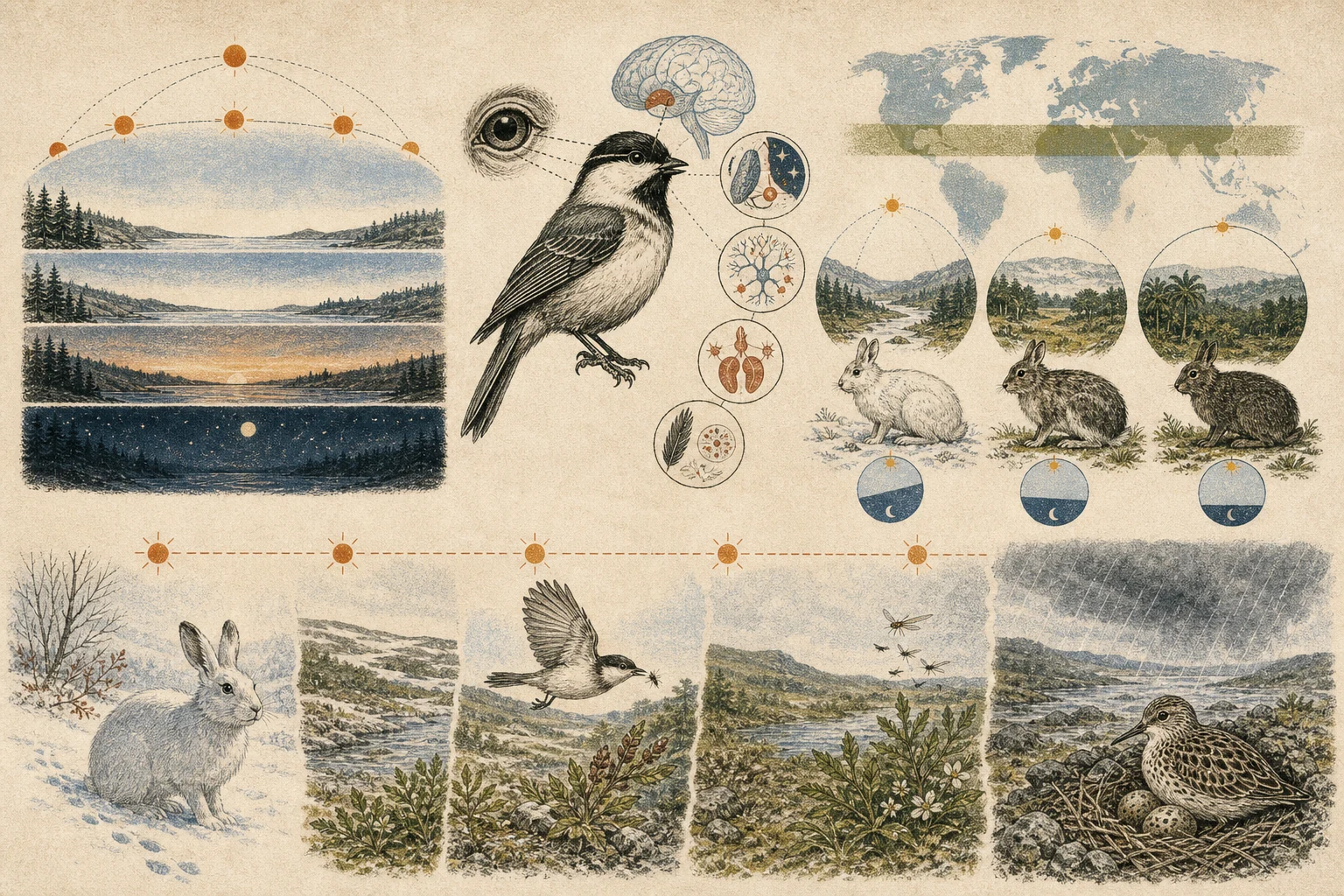
Air temperature can surge during a January thaw or plunge during a May frost, making local weather a noisy guide for physiological transformations that take weeks to complete. By contrast, the astronomical progression of day length—photoperiod—repeats on the exact same calendar schedule every year at a given latitude. Because growing new feathers, maturing gonads, accumulating migratory fat, or entering insect diapause requires advance preparation, many animals use changing day and night length as an initial predictive cue. Importantly, an animal's response depends not just on today's hours of daylight, but on whether days are lengthening or shortening and on its prior photoperiodic history. [1][2]
- Distinguish initial predictive cues like day length from short-term local modifiers like a warm afternoon.
- Remember that twelve hours of light in March and twelve hours in September trigger opposite seasonal states because prior light history differs.
- Look for early photoperiod-driven preparations—such as pre-migratory restlessness, territorial song, or early coat shedding—weeks before weather peaks.
Night length becomes a body signal
Converting hours of daylight into seasonal physiology requires a sensory detector, an internal clock, and an endocrine messenger, and different animal lineages wire those parts differently. In mammals, light captured by specialized retinal ganglion cells entrains the master circadian pacemaker in the suprachiasmatic nucleus, which regulates how many hours the pineal gland secretes melatonin each night; that nocturnal melatonin duration signals winter versus summer to pituitary-thyroid and reproductive hormone cascades. Birds, by contrast, also detect light through deep-brain photoreceptors in the hypothalamus without needing the eyes or melatonin duration alone, while insects and fishes employ their own circadian and neuroendocrine relays. [2][3]
- In mammals, the nightly duration of pineal melatonin secretion translates day-night length into a seasonal hormone signal.
- Birds use deep-brain photoreceptors in the hypothalamus in addition to eyes and pineal rhythms to read lengthening spring days.
- Avoid generalizing one vertebrate hormone diagram to insects or fishes, which use distinct photoreceptor and endocrine pathways.
Latitude changes the value of the clock
How heavily an animal relies on photoperiod depends on where it lives along the globe's latitudinal gradient. Across temperate and boreal zones, dramatic annual swings between winter and summer daylight provide a crisp seasonal calendar, though continuous polar daylight or darkness near the solstices challenges daily rhythms. Closer to the equator, day length varies by only minutes across the year, yet some tropical birds and insects still detect those subtle shifts while integrating rainfall, leaf flush, and food pulses. Even within a single widespread species, northern and southern populations often evolve different critical day-length thresholds and combine photoperiod with local temperature, snow cover, and nutrition. [3][4]
- Compare conspecific populations at different latitudes, which frequently initiate breeding or molt at different day-length thresholds.
- Treat temperature, food abundance, and social stimulation as supplementary cues that fine-tune the window opened by photoperiod.
- In tropical and arid regions, watch how rainfall and food pulses interact with subtle astronomical cues to time reproduction.
A stable cue can meet a shifting climate
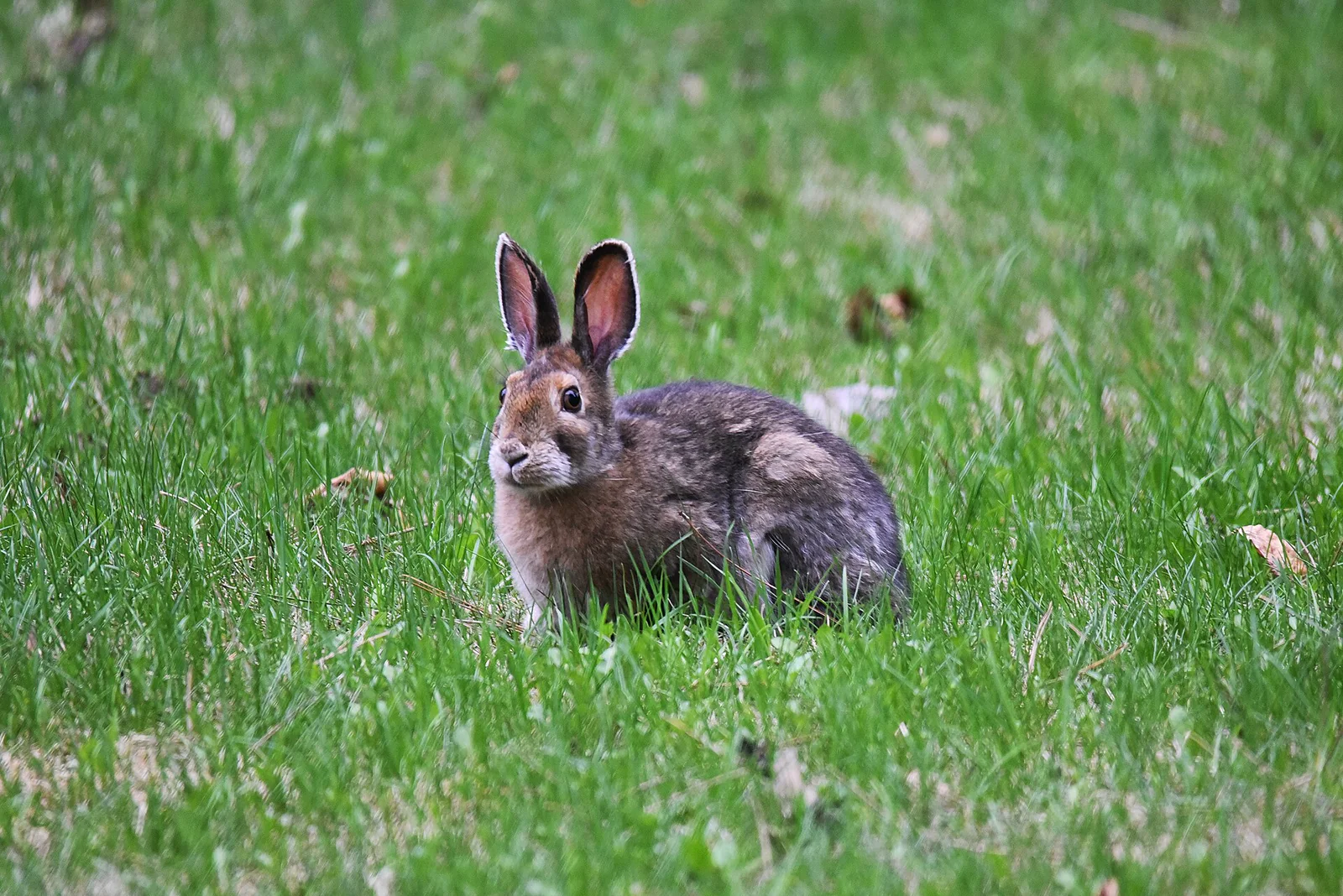
Because Earth's orbital geometry does not change as the atmosphere warms, a seasonal schedule locked tightly to photoperiod can fall out of step with temperature-driven shifts in snowmelt, budburst, or caterpillar emergence. A vivid field example occurs in snowshoe hares and other seasonally white mammals: molt timing is largely governed by photoperiod, so when spring snowpack melts weeks earlier than historical norms, white hares stand out starkly against brown bare ground, increasing predation risk. When recording seasonal phenology in your field notebook, always log calendar date, latitude, local snow or leaf cover, and molt or life-history stage together so mismatches can be tracked. [1][4][5]
- Watch snowshoe hares, ptarmigan, and weasels in spring and autumn to document coat color relative to actual local snow cover.
- Record both the calendar date (which fixes photoperiod at your latitude) and local plant or insect phenology on spring surveys.
- Recognize that species vary in how much temperature flexibility they have to adjust photoperiod-timed molt, arrival, or breeding.
Related guides
Get Fauna and identify it in the field.
Where this guide comes from
Source-checked editorial guide. Last updated . This guide teaches identification and field skills; it is not a substitute for expert verification when it matters.
- Endocrinology — Light and Hormones in Seasonal Regulation of Reproduction and Mood ↗
- Frontiers in neuroendocrinology — Influence of photoperiod on hormones, behavior, and immune function ↗
- Philosophical transactions of the Royal Society of London. Series B, Biological sciences — Tracking the seasons: the internal calendars of vertebrates ↗
- Proceedings. Biological sciences — Annual rhythms that underlie phenology: biological time-keeping meets environmental change ↗
- Proceedings of the National Academy of Sciences of the United States of America — Camouflage mismatch in seasonal coat color due to decreased snow duration ↗