Hibernation, torpor, and dormancy
Dormancy is a broad reduction in activity or development. Torpor is a regulated fall in metabolism and often body temperature; hibernation usually describes a seasonal strategy built from prolonged torpor bouts and periodic arousals, though usage differs by source.
Last updated
Use the terms as a nested map
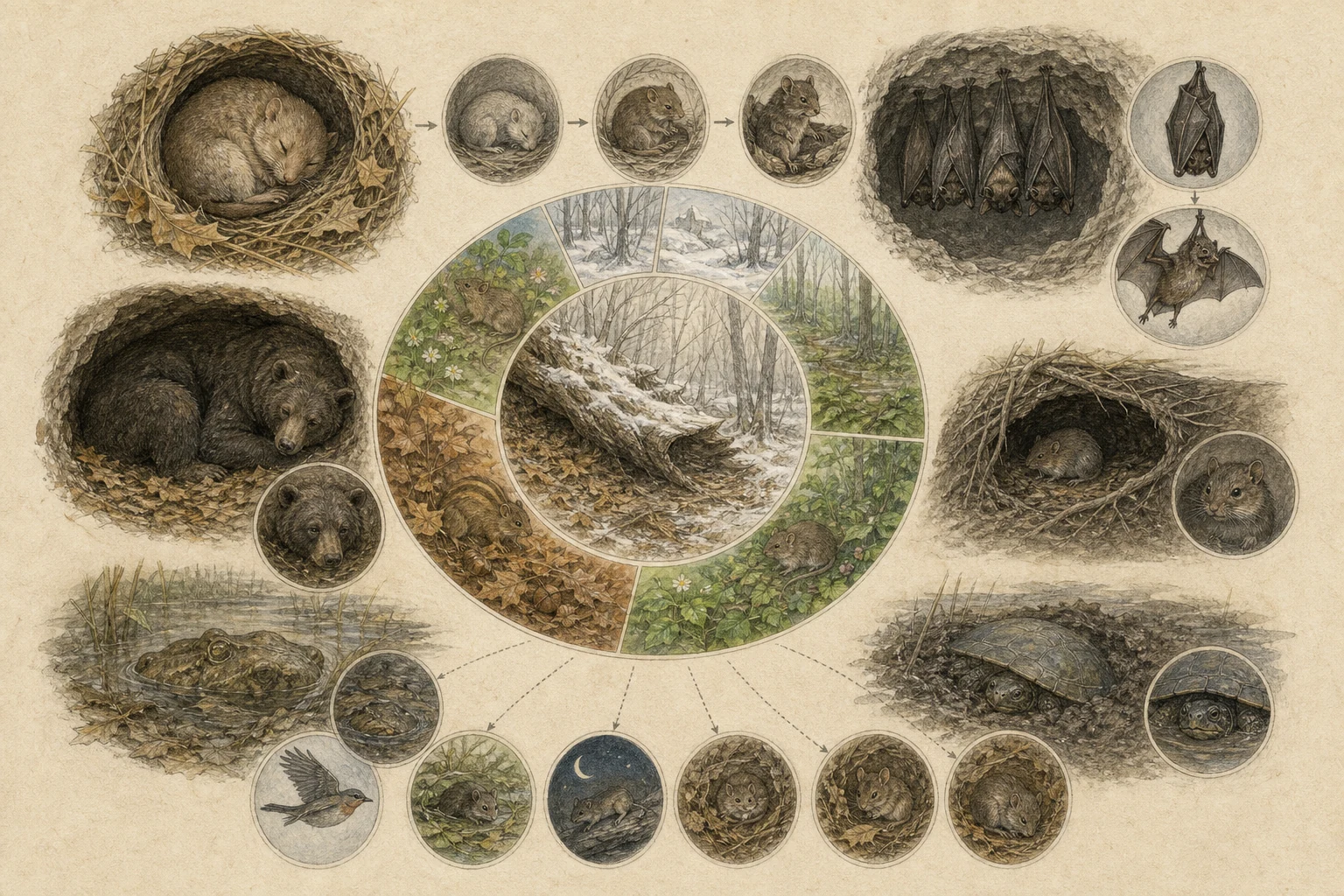
Because field guides and textbooks sometimes use winter-survival words interchangeably, it helps to picture them as nested physiological categories. Dormancy is the broadest umbrella, covering any state in which an organism suspends or sharply slows normal activity, growth, or development during harsh seasons. Within endothermic mammals and birds, torpor refers specifically to a controlled, reversible drop in metabolic rate, heart rate, and usually body temperature. Daily torpor lasts for hours—as in hummingbirds or bats resting on a cold spring day—whereas hibernation strings multi-day or multi-week torpor bouts across an entire winter season. [1][2][4]
- Dormancy is the broad umbrella; torpor is the regulated physiological drop in metabolism; hibernation is a multi-week seasonal strategy.
- Daily heterotherms (such as hummingbirds and many small rodents) enter brief torpor overnight and resume foraging the next morning.
- Keep terminology tied to your source, as physiologists and park educators sometimes frame bear winter denning differently.
Hibernation contains active transitions
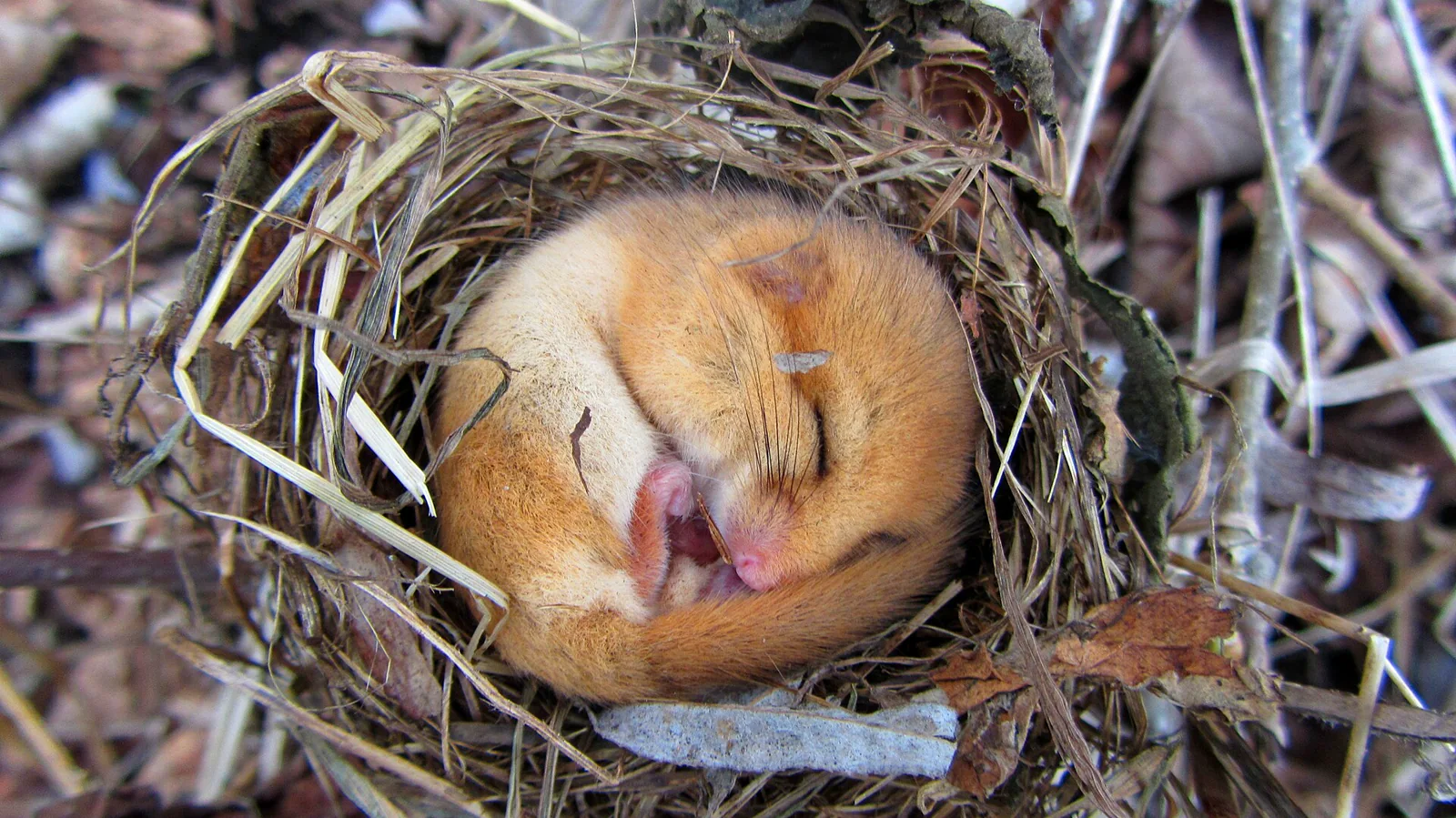
A hibernating hazel dormouse, ground squirrel, or little brown bat is not locked in a single unbroken sleep from November to April. Instead, deep torpor bouts are punctuated by periodic physiological arousals every few days or weeks, during which the animal shivers and burns brown fat to raise its body temperature back to active levels for a few hours—allowing it to excrete waste, drink, shift roost position, or mount an immune response. Although these brief arousals occupy a tiny fraction of the winter clock, they consume the vast majority of a small mammal's winter fat budget, which is why fungal infections like white-nose syndrome prove fatal by triggering too-frequent arousals. [2][3][5]
- Most hibernating small mammals and bats cycle between multi-day torpor bouts and brief, energetically expensive warm arousals.
- White-nose syndrome kills hibernating bats primarily by making them arouse too often and exhaust stored winter fat before spring.
- Occasional mid-winter flights by bats on mild evenings often reflect normal arousal and drinking or roost-switching behavior.
Different animals reduce costs differently
Mammals solve the winter energy crunch at markedly different body temperatures depending on body mass and thermal insulation. A hibernating bat or arctic ground squirrel lets its core temperature plunge close to the ambient temperature of its cave or burrow, slashing metabolic rate by more than 90 percent. Bears in winter dens, by contrast, lower their body temperature by only a few degrees Celsius—allowing a mother to gestate, give birth, and nurse cubs—yet still cut metabolic rate, heart rate, and respiration dramatically while recycling urea into protein without urinating for months. Ectothermic reptiles, amphibians, and insects rely on cold-season brumation or diapause governed by ambient temperatures. [1][4][5]
- Small hibernators drop core body temperature near ambient roost temperature, whereas bears cut metabolism deeply with only a modest temperature drop.
- Denning bears do not eat, drink, urinate, or defecate for months, recycling nitrogen wastes physiologically while maintaining muscle mass.
- Because bears stay relatively warm inside winter dens, they can arouse and react much faster than a cold-torpid bat or dormouse.
Read winter absence cautiously
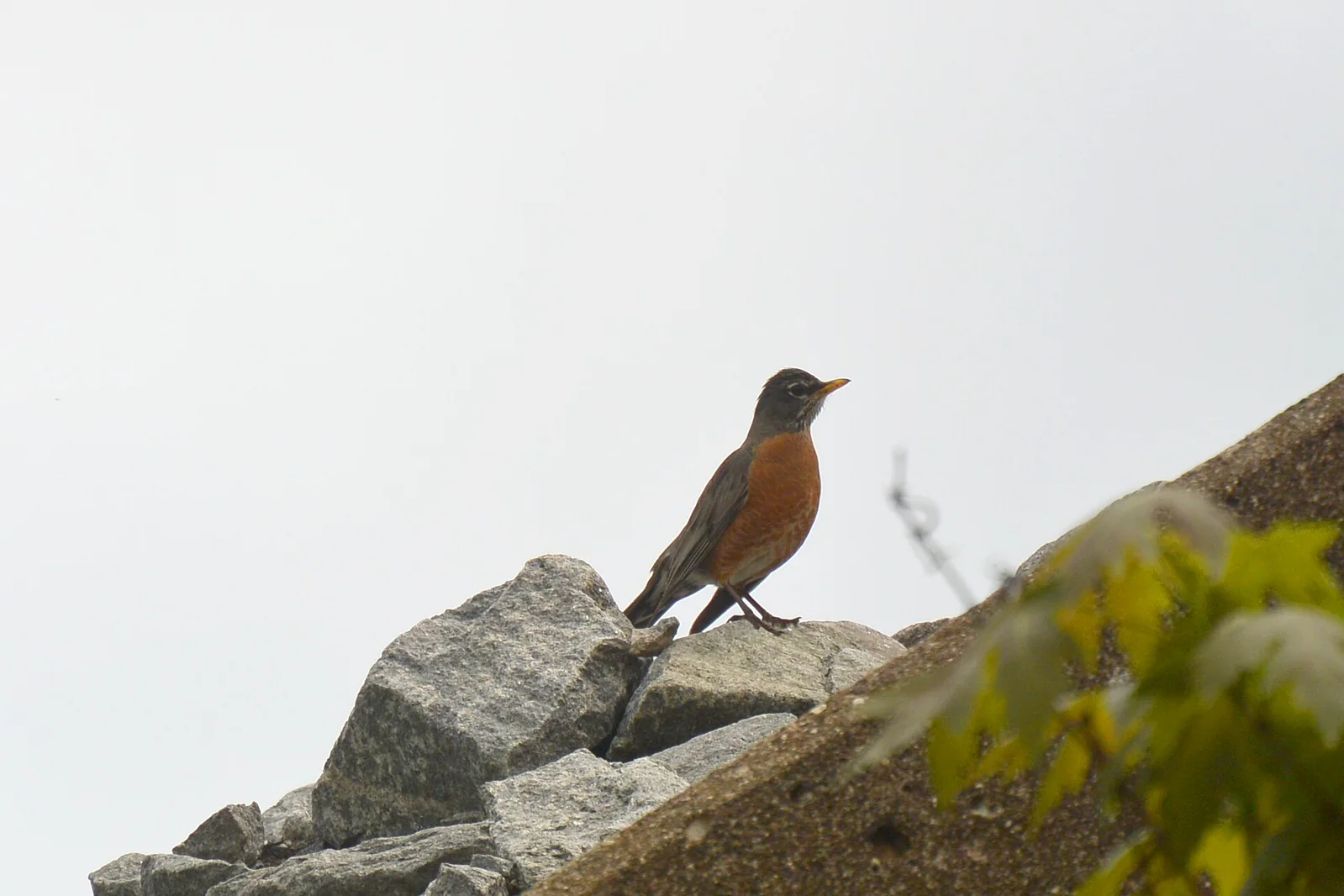
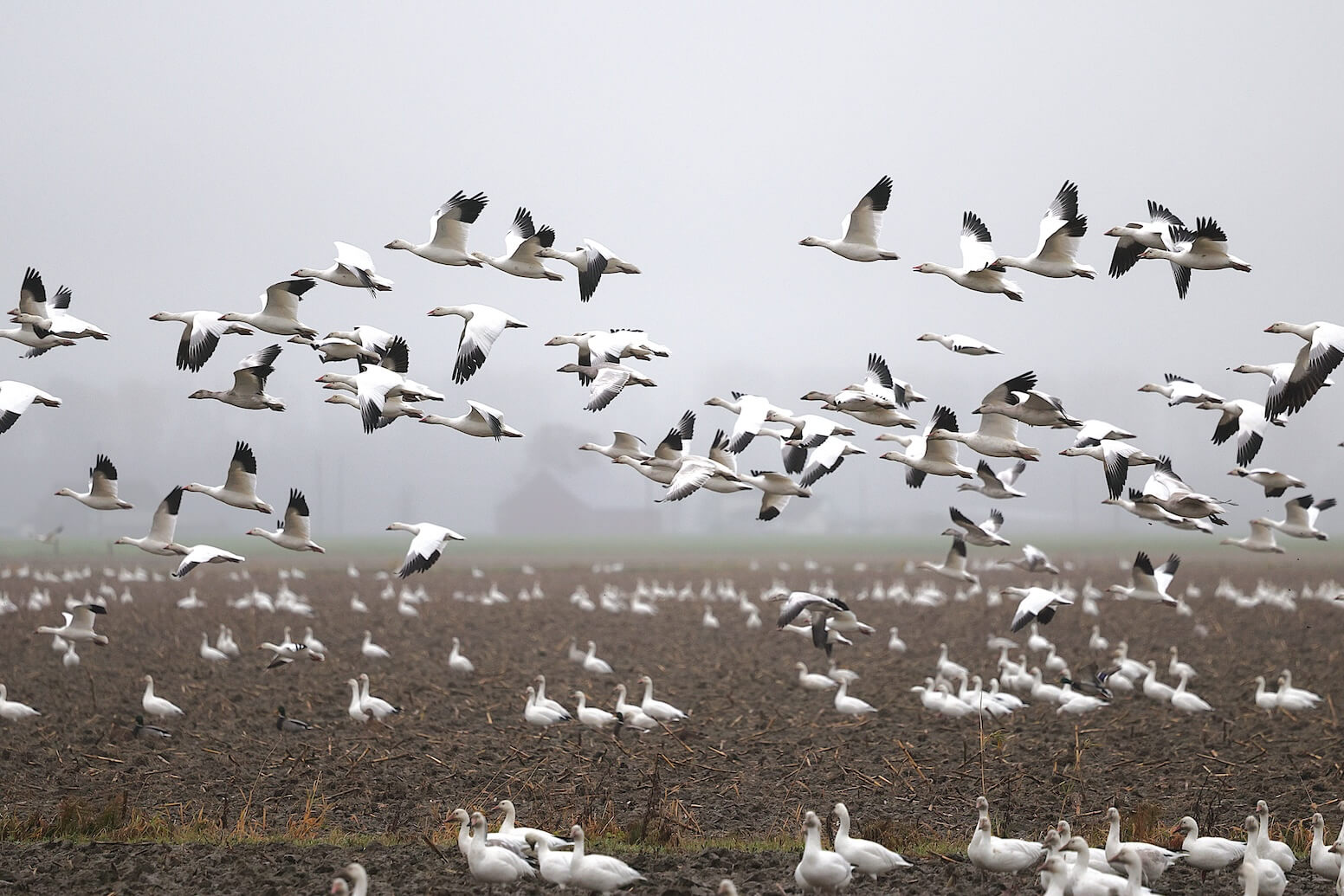
When a familiar summer mammal or bird vanishes from a woodland trail in December, hibernation is only one of several possibilities. The species may have migrated south, shifted to nocturnal or subnivean (under-snow) foraging, moved into sheltered cavities, or begun using brief daily torpor while still emerging during midday thaws. Check regional natural-history accounts before assuming an unseen animal is hibernating. Most importantly, treat every winter cave, mine, hollow tree, brush pile, and snow den as a strict hands-off zone: shining lights, making noise, or entering a hibernaculum forces unscheduled arousals that can starve wildlife before spring. [2][3][5]
- Field check: distinguish true seasonal hibernators (woodchucks, jumping mice, bats) from winter-active animals shelter-bound during storms (tree squirrels, beavers).
- Obey all seasonal cave and mine closures and decontamination rules to protect hibernating bats from disturbance and fungal spores.
- Never prod or warm a cold, sluggish mammal or reptile found in a winter shelter—leave cover intact and step away quietly.
Related guides
Get Fauna and identify it in the field.
Where this guide comes from
Source-checked editorial guide. Last updated . This guide teaches identification and field skills; it is not a substitute for expert verification when it matters.