Domestication vs. taming
Habituation, learning, handling, and conditioning can reduce one individual's fear of people without changing its ancestry. Domestication reshapes populations through selection, drift, management, and adaptation to human-created niches. Domestic individuals can be wary or aggressive, and tame individuals can remain members of wild lineages.
Last updated
The individual–population distinction is central
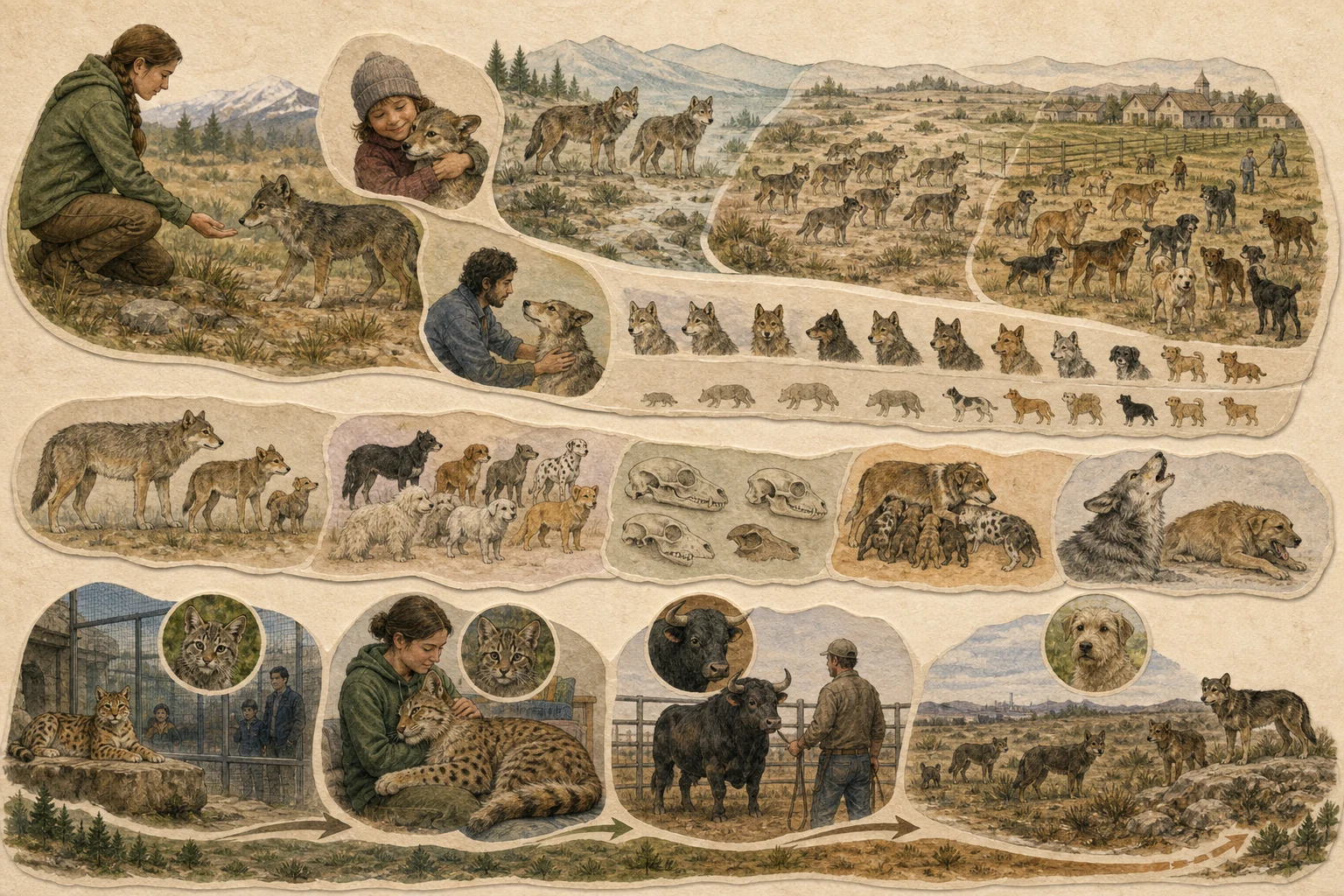
The sharpest boundary between taming and domestication is the biological level at which change occurs. Taming is an ontogenetic behavioral adjustment within a single animal's lifetime: through early socialization, habituation, hand-feeding, or conditioning, an individual wolf, hawk, or elephant learns to tolerate human proximity without changing its DNA or the genetic makeup of its offspring. Domestication, by contrast, is a multigenerational evolutionary process in which a population accumulates heritable genetic changes in morphology, physiology, reproduction, and behavior across many generations of living and breeding in a human-shaped niche. A hand-reared wild animal remains genetically wild; an unsocialized domestic dog or cat remains genetically domestic. [1][2]
- Taming is an acquired behavioral tolerance in one individual's lifetime and is not passed genetically to offspring.
- Domestication is a heritable, population-level evolutionary transformation across many generations of association with humans.
- Outward calmness around people cannot by itself tell you whether an animal belongs to a wild or domesticated lineage.
Domestication is an evolutionary relationship
Archaeologists, geneticists, and evolutionary biologists recognise that domestication did not always begin with humans deliberately capturing wild stock and planning a breeding program. In commensal pathways—exemplified by ancestral wolves scavenging near paleolithic camps or wildcats hunting rodents around early grain stores—animals first adapted to human-modified habitats under natural selection for reduced flight distance before intentional husbandry ever began. Prey and directed pathways involved herd management or deliberate transport. Across all pathways, domestication represents a sustained, multigenerational coevolutionary relationship in which human land use, food provisioning, and selective breeding reshape a lineage's evolutionary trajectory. [1][3]
- Early domestication often began via commensal attraction to human food waste or crops before deliberate selective breeding started.
- Domestication reshapes population genetics through both unconscious selection in human environments and intentional breeding choices.
- Plants, livestock, companion animals, and even yeast or silkworms followed different ecological pathways into domestication.
There is no universal domestic checklist
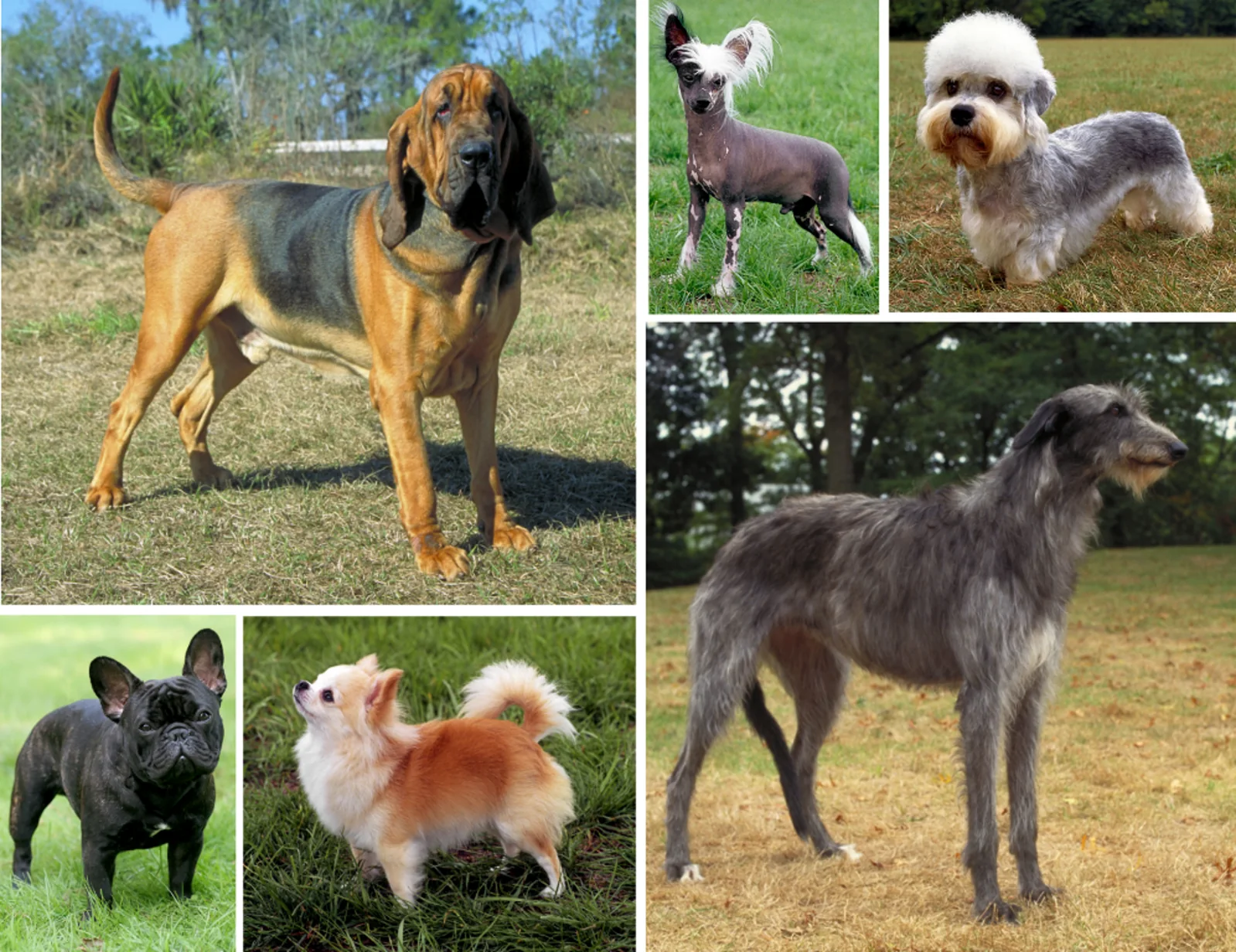
Many domestic mammals—including dogs, pigs, goats, cattle, and rabbits—display recurring traits such as piebald coat spotting, floppy ears, shorter snouts, altered estrous cycles, and reduced hypothalamic–pituitary–adrenal stress reactivity compared with their wild progenitors. While often grouped as a ‘domestication syndrome,’ recent comparative and developmental research shows that these traits do not appear as one mandatory genetic package across all domesticates, nor are they explained by a single universal mechanism like neural crest cell deficits alone. Moreover, the dramatic skull, size, and coat differences seen across modern dog breeds largely reflect intense Victorian and modern breed selection imposed thousands of years after initial domestication. [3][4]
- Traits like spotted coats, floppy ears, and shifted breeding seasons occur in several domestic mammals but do not form a universal checklist.
- Modern comparative studies challenge the idea that one single developmental mechanism explains all domestication traits across taxa.
- Extreme differences among modern dog breeds mostly arose from recent artificial breed selection rather than the earliest stages of domestication.
Captive, feral, tame, and domestic are different axes
Interpreting animals in the field or in human care requires keeping four independent axes straight: evolutionary ancestry (wild versus domestic), individual behavior (wary versus tame), current living state (free-living versus captive), and population management. A peregrine falcon bred in a conservation hatchery or a tiger born in a zoo is captive-bred but genetically wild. Conversely, free-roaming mustangs, brumbies, street dogs, or island house cats are feral—free-living animals descended from domesticated ancestors. Over many generations in the wild, feral populations experience renewed natural selection on foraging and survival, yet they carry the genetic and morphological imprint of their domestic ancestry. [2][4]
- Captive-bred wildlife in zoos or conservation programs retain wild evolutionary ancestry despite living under human care.
- Feral animals are free-living individuals or populations descended from domesticated ancestors, such as feral pigs, cats, or horses.
- Always separate an animal's evolutionary lineage, its current living environment, and its learned behavior toward people.
Related guides
Get Fauna and identify it in the field.
Where this guide comes from
Source-checked editorial guide. Last updated . This guide teaches identification and field skills; it is not a substitute for expert verification when it matters.
- Proceedings of the National Academy of Sciences of the United States of America — Core questions in domestication research ↗
- Proceedings of the National Academy of Sciences of the United States of America — From wild animals to domestic pets, an evolutionary view of domestication ↗
- Philosophical transactions of the Royal Society of London. Series B, Biological sciences — Seeking consensus on the domestication concept ↗
- Proceedings. Biological sciences — Shared reproductive disruption, not neural crest or tameness, explains the domestication syndrome ↗