Observing spiders without handling
Spiders can be studied closely without capture. Use magnification, patient angles, web architecture, posture, habitat, and time of activity as evidence, while treating each clue as suggestive rather than decisive on its own.
Last updated
Let distance do the handling
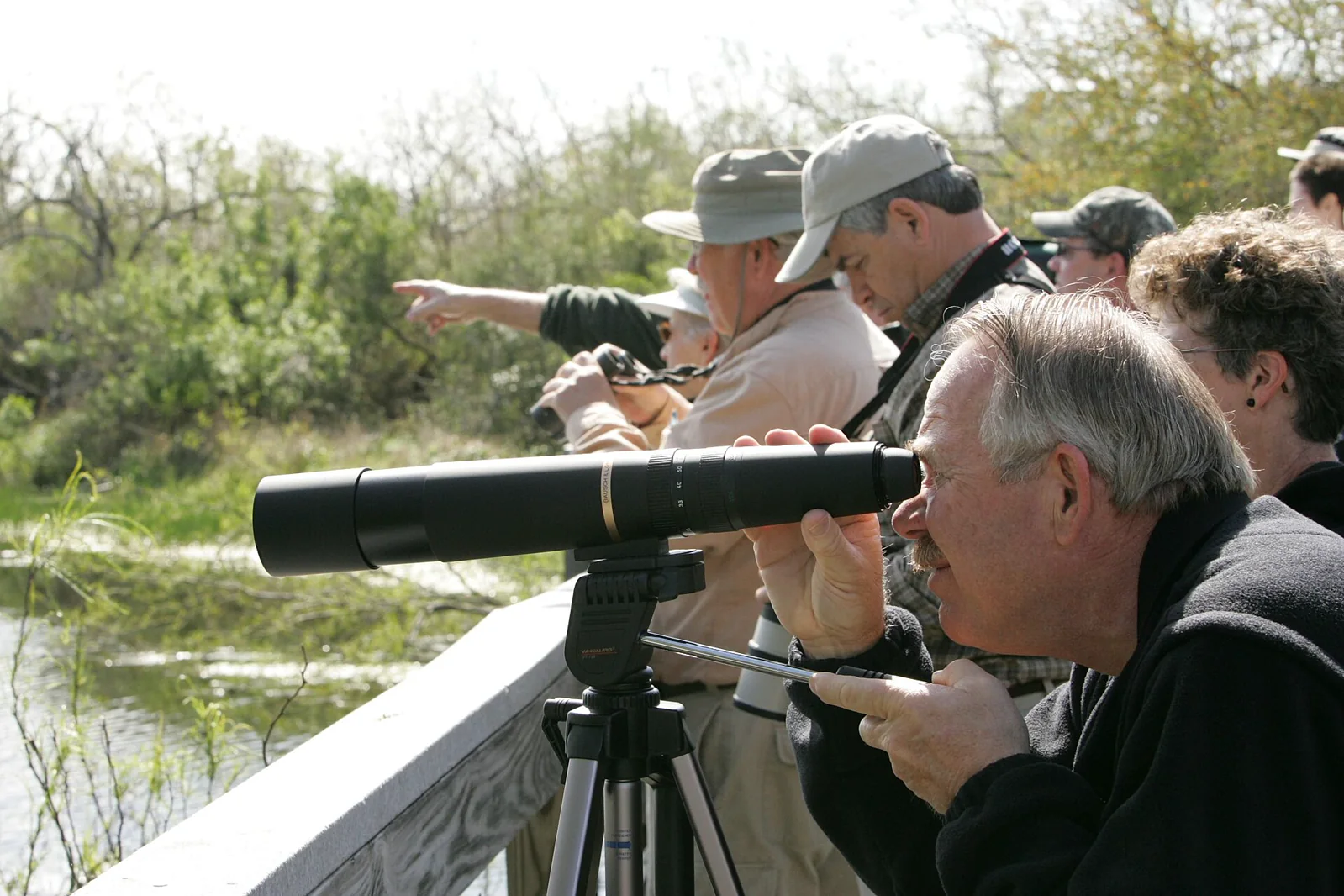
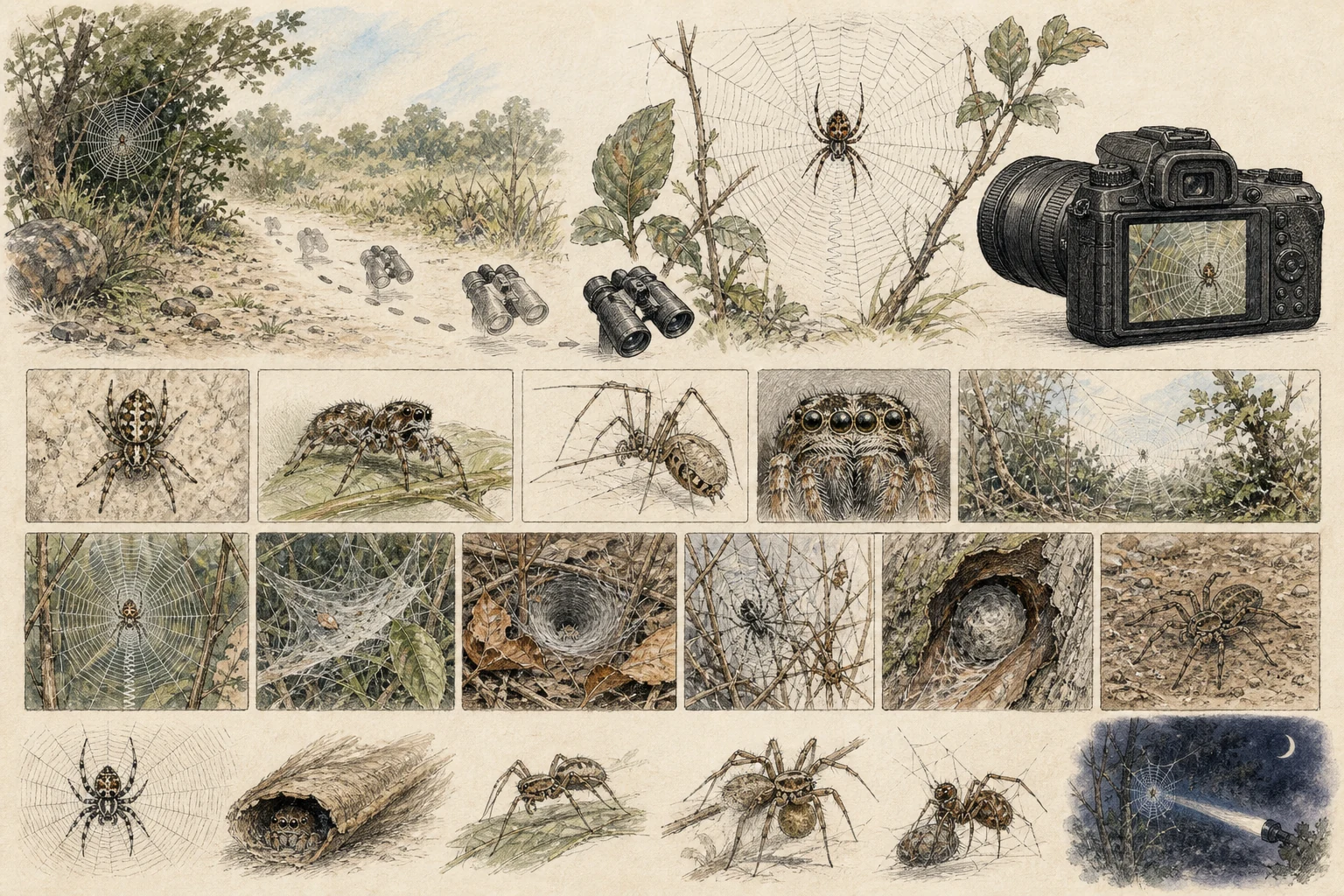
Never pick up, pin down, prod with a grass stem, or corner a free-living spider to inspect its markings. Spiders rely on subtle substrate vibrations to detect both prey and predators, and heavy footsteps or a shadow falling across an orb web will quickly send the resident dropping on a dragline into the grass. Approach slowly until you are within the working distance of close-focusing binoculars or a macro lens while the spider keeps its normal resting stance. Keep your fingers out of hollow logs, rock crevices, bark flaps, and leaf litter, and always leave the animal an unobstructed retreat. [1][4][5]
- Use close-focusing binoculars or a macro camera lens instead of touching, pinning, or cupping the spider.
- Step lightly and avoid casting a sudden shadow or breathing directly onto delicate silk signal lines.
- Keep hands out of rock crevices, woodpiles, and bark crevices where defensive bites can happen.
Photograph body and setting
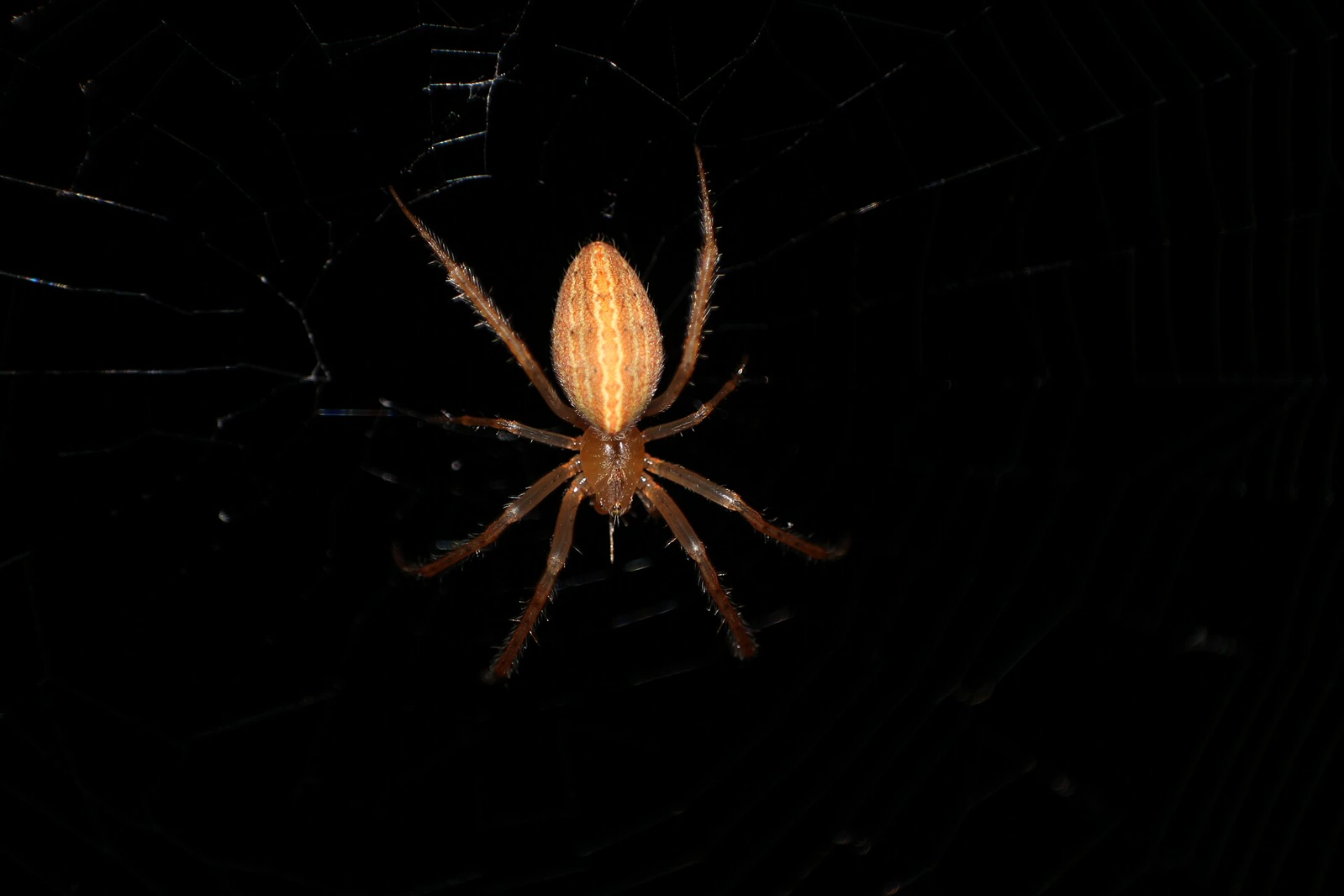
When the spider's position allows, capture a clean dorsal view looking straight down at the cephalothorax (prosoma) and abdomen (opisthosoma), followed by a side profile showing leg proportions, spines, and visible spinnerets. If a jumping spider, wolf spider, or crab spider faces your lens, a sharp anterior view of its eye rows—such as the oversized headlamp median eyes of Salticidae or the three-tiered arrangement of Lycosidae—often pins down the family immediately. Finish with a wider habitat shot showing the host flower, stone wall, or shoreline substrate, holding a small scale beside the web rather than touching the silk. [1][2][5]
- Capture a top-down view of the carapace and abdomen pattern alongside a side profile of legs and spinnerets.
- Frame the eye arrangement from the front when possible, as eye rows separate major spider families reliably.
- Hold a millimeter ruler outside the web frame and photograph the broader microhabitat context.
Read webs as supporting evidence
Web architecture reveals how a spider makes its living: vertical geometric orbs intercept flying insects, horizontal dome or sheet webs knock down jumpers in woodland understory, dense funnel webs extend from tubular grass or rock retreats, and irregular cobweb tangles anchor under overhangs with sticky gumfooted lines. Meanwhile, wolf spiders, jumping spiders, and crab spiders hunt on foot or by ambush without building capture webs at all. Record the web's tilt, open or closed hub, zigzag silk bands (stabilimenta), and hidden signal thread leading to a curled leaf retreat, while remembering that unrelated genera can weave remarkably similar silk designs. [2][3][4]
- Classify the silk structure—vertical orb, horizontal sheet, funnel with tubular retreat, or three-dimensional tangle.
- Trace any taut signal line from the web hub to a folded leaf or bark crevice where the builder waits.
- Treat web architecture as a helpful family clue rather than a stand-alone species identification.
Watch behavior without staging it
Patient hands-off watching uncovers behaviors that vanish the instant a spider is disturbed: an orb-weaver plucking radial threads to locate a trapped midge, a female wolf spider carrying a spherical silk egg sac attached to her spinnerets or newly hatched spiderlings riding on her abdomen, or a goldenrod crab spider sitting motionless inside a blossom. After dark, sweeping a dim headlamp beam held near eye level across damp meadows will catch the emerald eyeshine of prowling wolf spiders. Never toss insects into a web to force a strike, and leave silk retreats, egg sacs, and loose bark exactly as you found them. [1][3][4]
- Note natural behaviors such as hub posture, silk wrapping, prey transport, or maternal egg-sac care.
- Hold a dim flashlight near temple level at night to spot the tiny green tapetal eye reflections of ground hunters.
- Refrain from tossing prey into webs or peeling back silk retreats and bark shelters.
Related guides
Get Fauna and identify it in the field.
Where this guide comes from
Source-checked editorial guide. Last updated . This guide teaches identification and field skills; it is not a substitute for expert verification when it matters.