Observing cleaning symbioses
Watch for a repeatable station, client posing, cleaner inspection, body regions visited, bout duration, jolts or chases, and partner turnover; describe the interaction before assigning a benefit to both species.
Last updated
Recognize a cleaning sequence
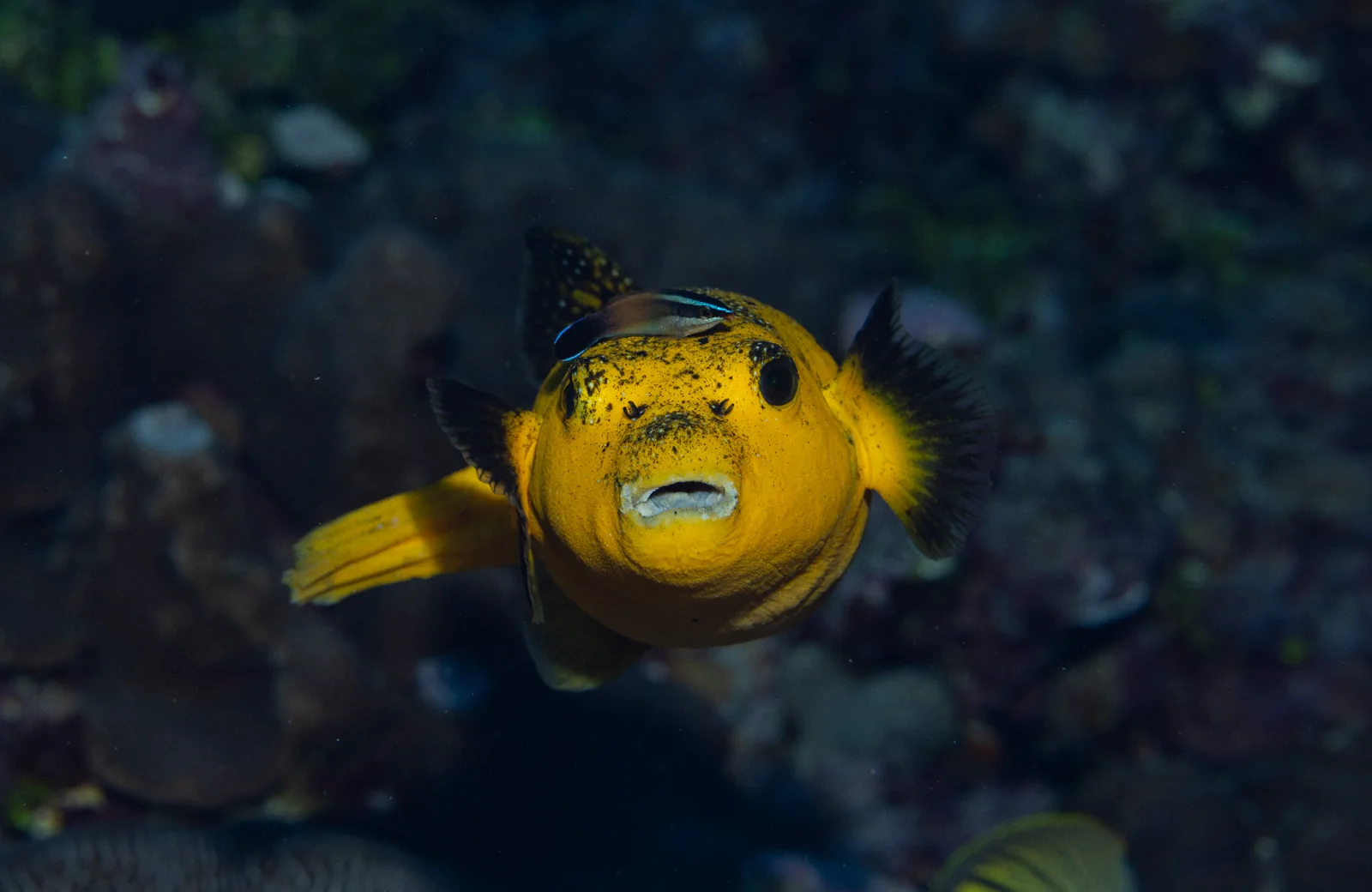
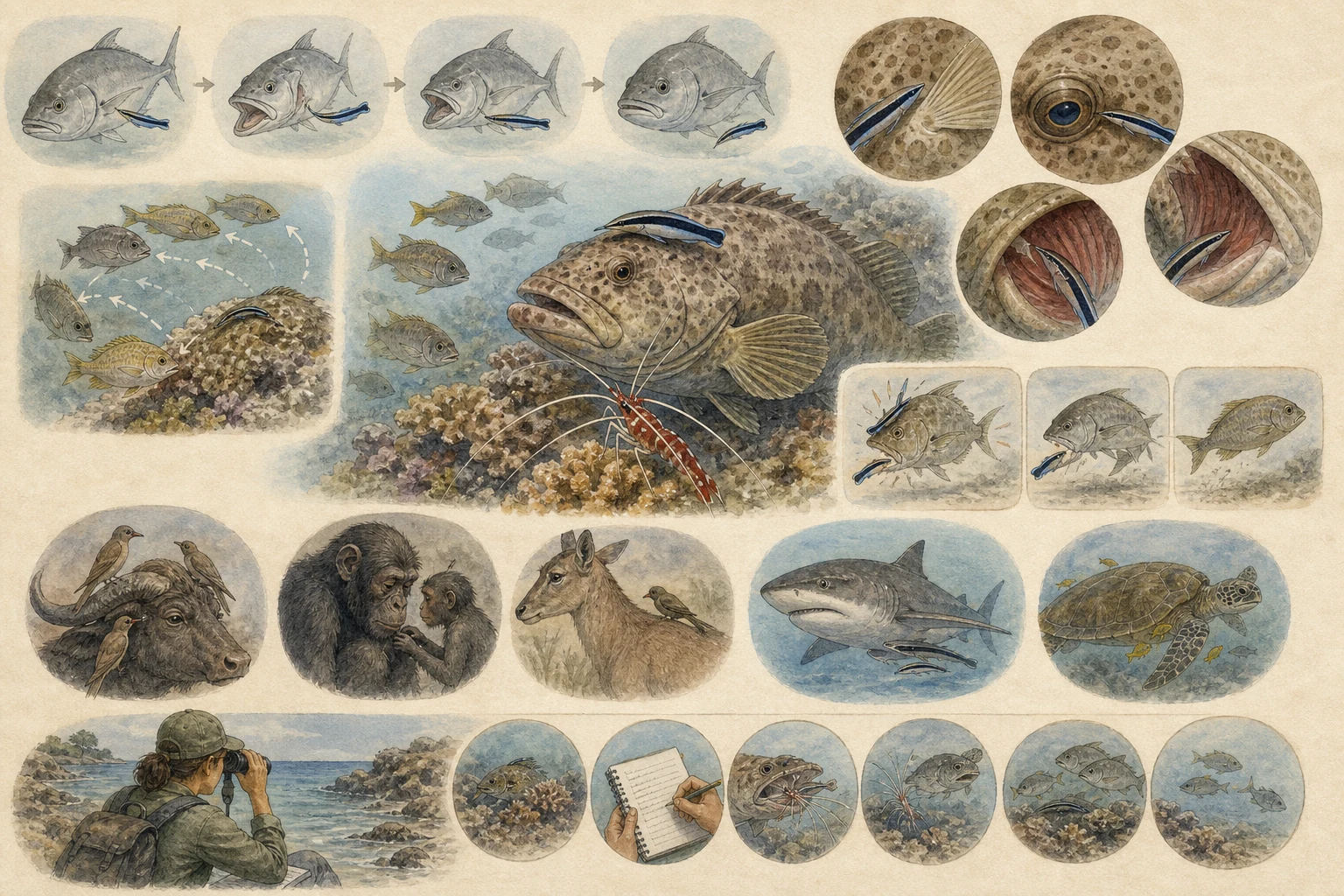
Hovering with a mask and snorkel above a coral head or sponge prominence, you can recognize an active cleaning station by a repeatable choreography rather than a single fleeting nip. A visiting client fish—such as a pufferfish, parrotfish, or grouper—swims up to a specific landmark, brakes to a halt, flares its pectoral fins, tilts head-up or tail-down, and holds its mouth or gill covers ajar. Resident cleaner wrasses or long-antennaed cleaner shrimp such as Lysmata amboinensis and Periclimenes yucatanicus then dance out to inspect the client's skin, fin membranes, and gill arches while waiting clients sometimes queue nearby. Observing the complete sequence of approach, solicitation pose, systematic inspection, and calm departure separates true cleaning from ordinary reef foraging. [1][2]
- Look for fixed coral heads, sponges, or anemones where multiple fish species pause and adopt rigid, fin-flared postures.
- Watch for cleaner shrimp rocking their bodies or waving white antennae before stepping onto a posing client.
- Require the full sequence of client solicitation pose, close contact inspection, and departure before logging a cleaning bout.
Mutualism describes an average outcome
Although cleaning is a textbook mutualism on average—clients shed blood-feeding gnathiid isopods and necrotic tissue while cleaners earn a concentrated meal—conflict sits just beneath the surface of every visit. Several cleaner fishes actually prefer energy-rich protective client mucus over ectoparasites, and when a cleaner cheats by biting healthy mucus or living skin, the client recoils with a sharp body jolt and may chase the cleaner or swim off to a competing station on the next visit. Biological-market studies show that cleaners adjust service quality depending on whether nearby bystanders are watching, whether the client is a resident with alternative station options, or whether the client is a predator capable of swallowing the cleaner whole. [2][3]
- Count sharp client body jolts during an inspection, which often mark moments when a cleaner nipped healthy mucus instead of a parasite.
- Note how clients respond to a jolt—by tolerating it, chasing the cleaner, or departing immediately for another station.
- Compare how cleaners behave toward predatory clients versus harmless herbivorous clients, including extra tactile pelvic-fin stroking.
Cleaning evolved in different lineages
Dedicated reef wrasses, gobies, and anemone shrimp are the most specialized cleaners, yet ectoparasite and debris removal has evolved repeatedly across marine, freshwater, and terrestrial communities. Juvenile bluehead wrasses and angelfishes clean mostly when young before shifting diets as adults; certain freshwater fishes nip parasites in clear streams; and on land, oxpeckers, caracaras, Cattle Egrets, and tick-picking birds or social mammals engage in analogous interactions with ungulates and tortoises. Because superficial picking can also represent wound-feeding, blood-drinking, scale-eating, or routine allogrooming, always identify the species and life stage of both partners before interpreting what is being removed. [1][4]
- Note the life stage of fish cleaners, since many reef species act as facultative cleaners only while juvenile.
- On land, watch whether birds on large mammals are plucking ticks and flies or pecking at open sores and earwax.
- Distinguish interspecific cleaning symbiosis from social allogrooming among members of the same primate or ungulate group.
Record a bout without interrupting it
Because cleaner-client negotiations depend on perceived predation risk and bystander audiences, an approaching diver or shore observer who crowds the station quickly alters the interaction. Float or stand motionless at a respectful distance, let the station return to baseline traffic, and time each bout from initial client pose to departure. Log the cleaner and client species, relative body sizes, which partner initiated contact, body zones inspected, number of client jolts, whether cleaners used tactile fin-stroking, and how many waiting clients queued nearby. Compare several consecutive visits at the same station rather than cherry-picking one dramatic open-mouth gill inspection. [3][4]
- Hold a stationary position well back from the coral head or perch so waiting clients do not abort their approach queue.
- Log bout duration in seconds, body regions inspected, jolt count, and which partner terminated the interaction.
- Never feed reef fish or touch station substrates, which disrupts natural hunger levels and territorial station fidelity.
Related guides
Get Fauna and identify it in the field.
Where this guide comes from
Source-checked editorial guide. Last updated . This guide teaches identification and field skills; it is not a substitute for expert verification when it matters.
- Philosophical transactions of the Royal Society of London. Series B, Biological sciences — A marine cleaning mutualism provides new insights in biological market dynamics ↗
- Biology letters — The cleaner shrimp Lysmata amboinensis adjusts its behaviour towards predatory versus non-predatory clients ↗
- Royal Society open science — Comparative behavioural observations demonstrate the 'cleaner' shrimp Periclimenes yucatanicus engages in true symbiotic cleaning interactions ↗
- Frontiers in behavioral neuroscience — The Neurobiology of Mutualistic Behavior: The Cleanerfish Swims into the Spotlight ↗