Food webs and trophic levels
A food chain is one pathway through a feeding network; a food web joins many such pathways. Trophic levels summarize distance from primary production, but omnivores, detritus, changing diets, and cross-habitat subsidies make real organisms harder to place than a simple pyramid suggests.
Last updated
Trace pathways, then reconnect them
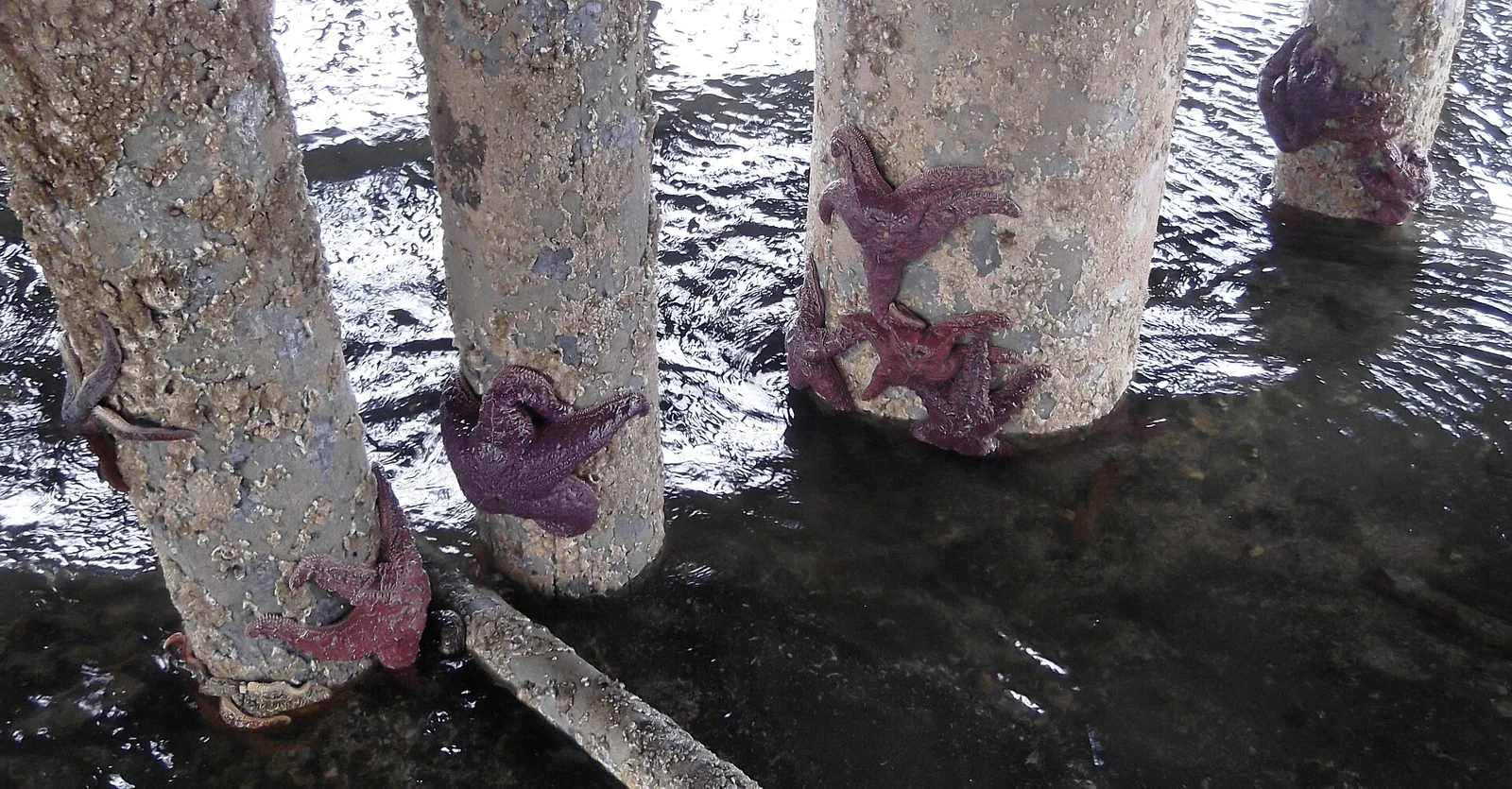
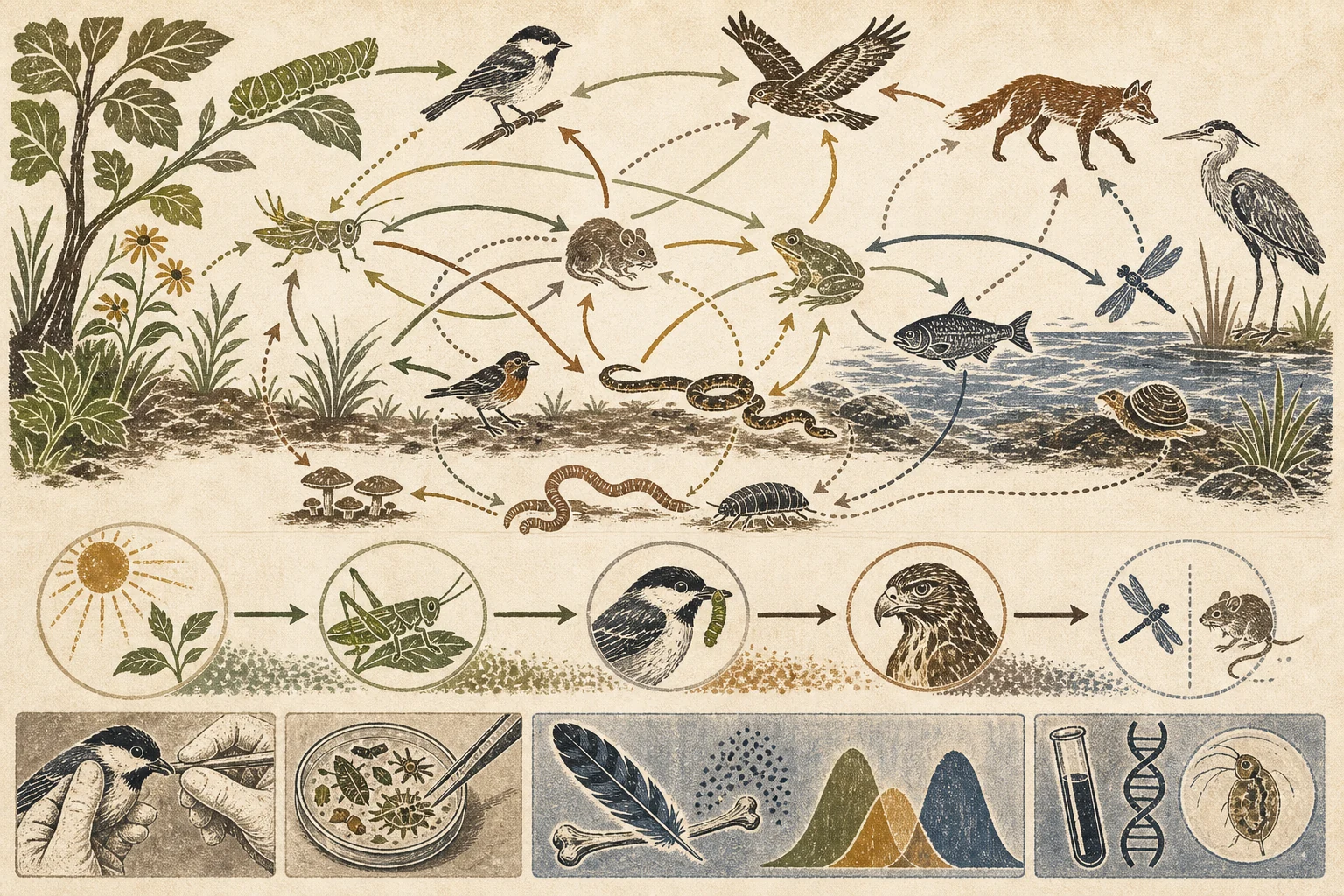
A textbook food chain—such as marsh grass eaten by a periwinkle snail, which is eaten by a blue crab, which is taken by a great blue heron—isolates one feeding thread so you can follow a single path of energy transfer. In a real salt marsh, woodland, or rocky intertidal zone, dozens of such chains braid together into a food web that includes alternative prey, generalist predators, parasites, scavengers, and cross-boundary subsidies like emerging aquatic midges eaten by forest warblers. By ecological convention, arrows point from the organism being eaten toward the consumer that gains the energy, though checking a diagram's legend first is always wise. [1][2][3]
- Food-web arrows point in the direction energy and matter travel: from the resource (plant or prey) to the consumer.
- A single linear food chain is an excerpt pulled from a much wider, interconnected food web.
- Field check: notice cross-habitat links, such as stream stoneflies feeding riparian spiders or marine wrack feeding beach amphipods.
Treat trophic level as a position, not a rank
Trophic levels measure how many feeding steps separate an organism from primary production: photosynthetic plants and algae occupy level one, herbivores that graze them sit at level two, and carnivores that eat those herbivores sit at level three or higher. In the field, however, very few wild animals stay neatly inside a single integer box. A grizzly bear, red fox, or bluegill sunfish feeds as an omnivore across multiple trophic levels at once, while a frog shifts from an algae-scraping tadpole to a carnivorous adult and a songbird switches from winter seeds to summer caterpillars—making trophic position a dynamic, often fractional measure. [2][3][5]
- Omnivores feed across multiple trophic levels—such as a fox eating both meadow voles and autumn blackberries.
- Many amphibians, fishes, and insects shift trophic position completely as they grow from larvae or juveniles into adults.
- Common trap: treating 'apex predator' or trophic level as a fixed species badge rather than a context-dependent ecological position.
Energy flows while nutrients cycle
Every food web is governed by a fundamental asymmetry between energy and chemical nutrients. Sunlight captured by green plants, kelp, and phytoplankton—or chemical energy fixed at deep-sea vents—flows one way through the web: at each feeding transfer, organisms burn most of their assimilated energy for movement, body heat, and cellular upkeep, losing it as metabolic heat so that far less biomass can be supported at higher trophic levels. Carbon, nitrogen, and phosphorus, by contrast, cycle repeatedly. Fungi, bacteria, and detritivores such as millipedes, earthworms, and estuarine amphipods break down dead leaves, carcasses, and waste from every level, returning mineral nutrients to primary producers. [1][3][4][5]
- Energy flows one way and dissipates as metabolic heat at each step, explaining why top predators are rarer than herbivores.
- Decomposers and detritivores process dead organic matter from every trophic level rather than sitting only at the top or bottom.
- In shaded forest streams and deep estuaries, dead leaf litter (detritus) often powers more of the food web than live grazing.
Ask what evidence built the web
When you read a published food-web diagram or record feeding observations in your own journal, ask how the links were established. Direct field watching and stomach-content analysis reveal exact prey species but overrepresent hard, indigestible parts like beetle elytra, fish otoliths, and mammal bones while missing rapidly digested soft-bodied worms or larvae. DNA metabarcoding of scat or gut samples can detect those soft prey items, whereas stable-isotope ratios of nitrogen and carbon in feathers or muscle integrate an animal's average trophic position and basal carbon source over weeks or months. Combining direct field sightings with awareness of these methods keeps your interpretation grounded. [2][6]
- Field check: when logging a predation event or owl pellet, record the exact prey item, life stage, habitat, and date.
- Stomach and pellet analyses show recent meals with hard parts; stable isotopes measure longer-term average trophic position.
- An absent arrow in a simplified food-web diagram usually reflects study scope or seasonal sampling rather than proof that two species never interact.
Related guides
Get Fauna and identify it in the field.
Where this guide comes from
Source-checked editorial guide. Last updated . This guide teaches identification and field skills; it is not a substitute for expert verification when it matters.