Documenting animal behavior with an ethogram
Build a short behavior catalog, define each entry so another observer can recognize it, choose a sampling rule, pilot the sheet, and record uncertainty instead of guessing at an animal's motive.
Last updated
Define actions, not interpretations
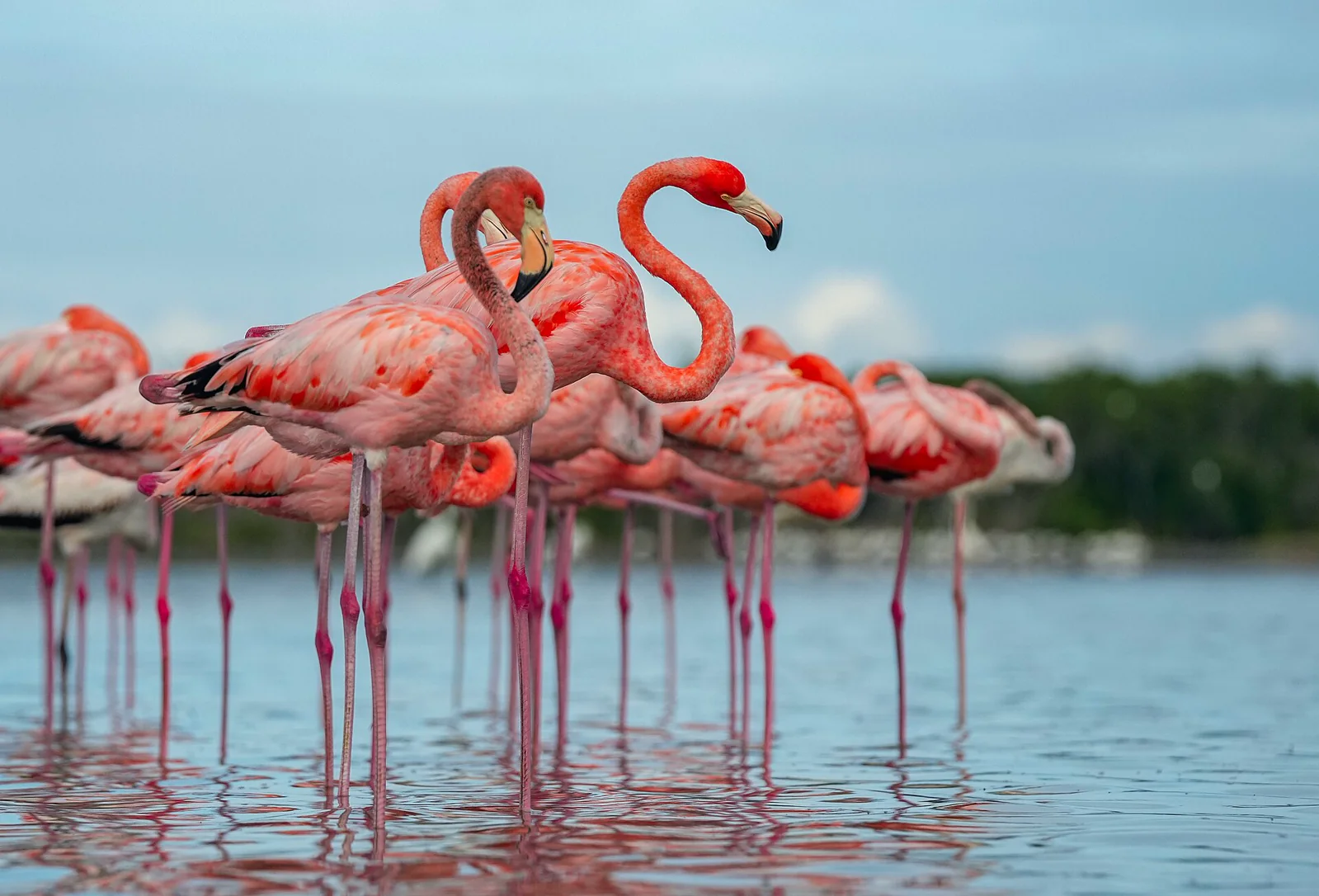
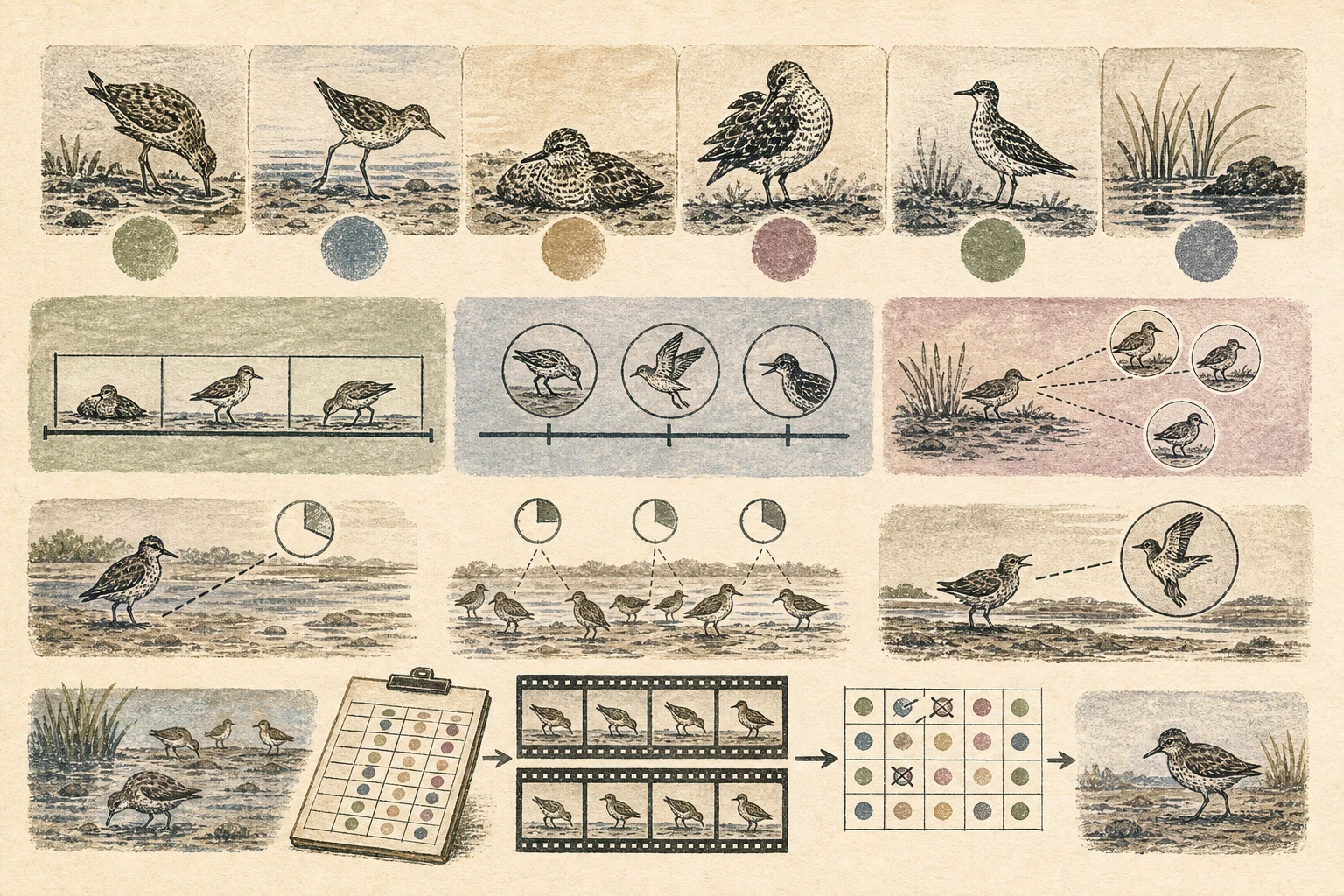
Whether you are watching chickadees at a winter feeder or foraging shorebirds along a mudflat, begin with a concise behavior list such as feeding, traveling, resting, preening, scanning, and out of view. Give each category an observable mechanical boundary that a second person standing beside you could apply without hesitation: writing that a shorebird has its bill probe-deep in wet sediment or is swallowing prey is testable, whereas writing that the bird looks hungry or anxious guesses at an internal state. Keep categories mutually exclusive at the same level of analysis so an animal cannot be scored in two competing postures simultaneously, and maintain a separate margin column for unusual movements before revising the formal catalog. [1][2]
- Write each behavior rule around visible body parts, posture, and physical contact with food, substrate, or companions.
- Include an explicit out-of-view or occluded code so tall grass or foliage never forces a guess.
- Keep raw descriptive notes for novel postures separate from your fixed tally categories during a session.
Separate states from events
Field behavior splits naturally into sustained states that occupy measurable spans of time—such as a harbor seal hauling out on a rock ledge, a duck paddling across a cove, or a squirrel caching acorns—and brief events that occur almost as points in time, such as a single bill peck, a wing flick, a territorial lunge, or a sharp alarm chip. That structural distinction governs how you record the animal. Instantaneous scan ticks spaced every thirty or sixty seconds estimate the proportion of sampled moments spent in ongoing states, whereas continuous recording tracks true bout durations and counts the exact frequency of rapid events. Never treat the number of interval scan ticks as a true count of separate behavioral bouts. [2][3]
- Score long-duration activities like resting, foraging, or locomotion as states measured by time or interval presence.
- Log sudden, momentary actions such as strikes, vocalizations, jumps, or head-bobs as discrete events per unit of observation time.
- Avoid converting interval checkmarks into bout counts, because one continuous rest can span several consecutive scans.
Choose who and when before watching
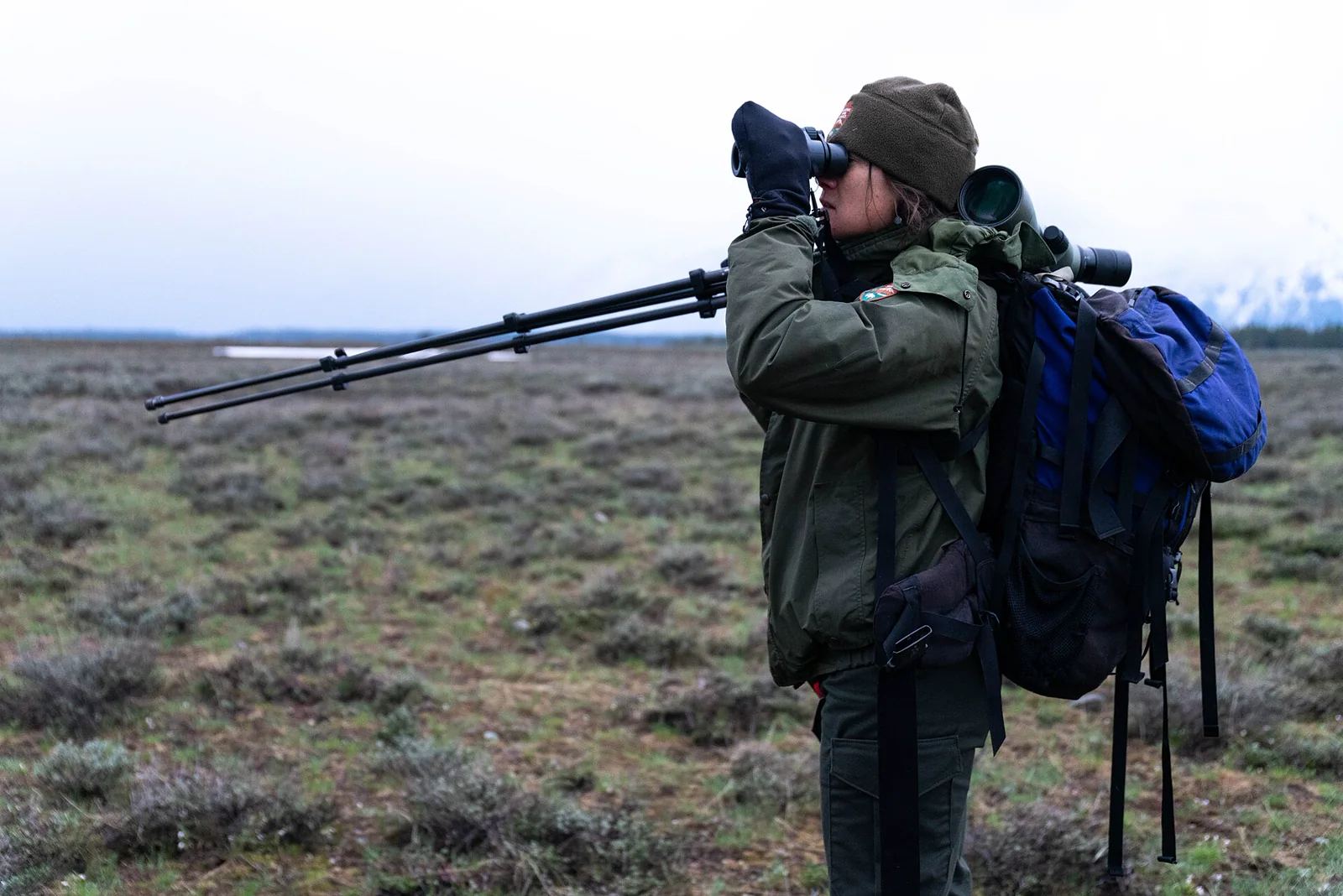
Before raising your binoculars at a pond margin or colonial rookery, decide how subjects and time windows will be selected so your attention is not hijacked by whichever animal makes the biggest splash. Focal sampling follows one recognizable individual across a predetermined duration; scan sampling sweeps rapidly across a whole flock or herd at fixed clock marks to record each member's current state; behavior or event sampling watches the group specifically for conspicuous interactions such as food theft or courtship displays. Informal ad libitum jottings help during initial reconnaissance, but they inevitably overrepresent loud, dramatic actions. Lock in your session length, scan interval, time of day, and subject-switching rule before the stopwatch starts. [3][4]
- Use focal-animal sampling with a timer when you need durations, sequences, or rates for one identifiable subject.
- Use periodic scan sweeps across a flock or herd to compare how a group partitions time across habitats or hours.
- Set a clear rule in advance for what to do if your focal animal disappears into cover before the session ends.
Pilot, calibrate, and keep uncertainty
Take your draft datasheet outdoors for a short trial run—twenty minutes beside a tidepool or park lawn is enough to expose ambiguous definitions and clunky shorthand codes. When working with a partner, watch the same focal bird or mammal independently for ten minutes, compare every timestamped line, and tighten the wording wherever your scores diverged rather than negotiating consensus after the fact. On every sheet, log start and end times, subject identity cues, viewing distance, optical gear, weather, and any human or predator disturbance. Whenever branches, heat shimmer, or angle of view obscure the action, mark occluded or unknown immediately; honest gaps in a field log are far easier to analyze than invented precision. [1][4]
- Run a short practice session with two observers scoring the same animal silently to test whether your definitions agree.
- Record observation metadata including clock window, weather, distance, and passing disturbances at the top of every page.
- Use distinct codes for animal out of view versus observer not actively sampling so effort stays transparent.
Related guides
Get Fauna and identify it in the field.
Where this guide comes from
Source-checked editorial guide. Last updated . This guide teaches identification and field skills; it is not a substitute for expert verification when it matters.