Watching pond life
A pond is several habitats stacked together. Watch the surface, open water, vegetation, bottom, bank, and air in turn, and a seemingly still patch becomes a web of movement.
Last updated
Divide the pond into places
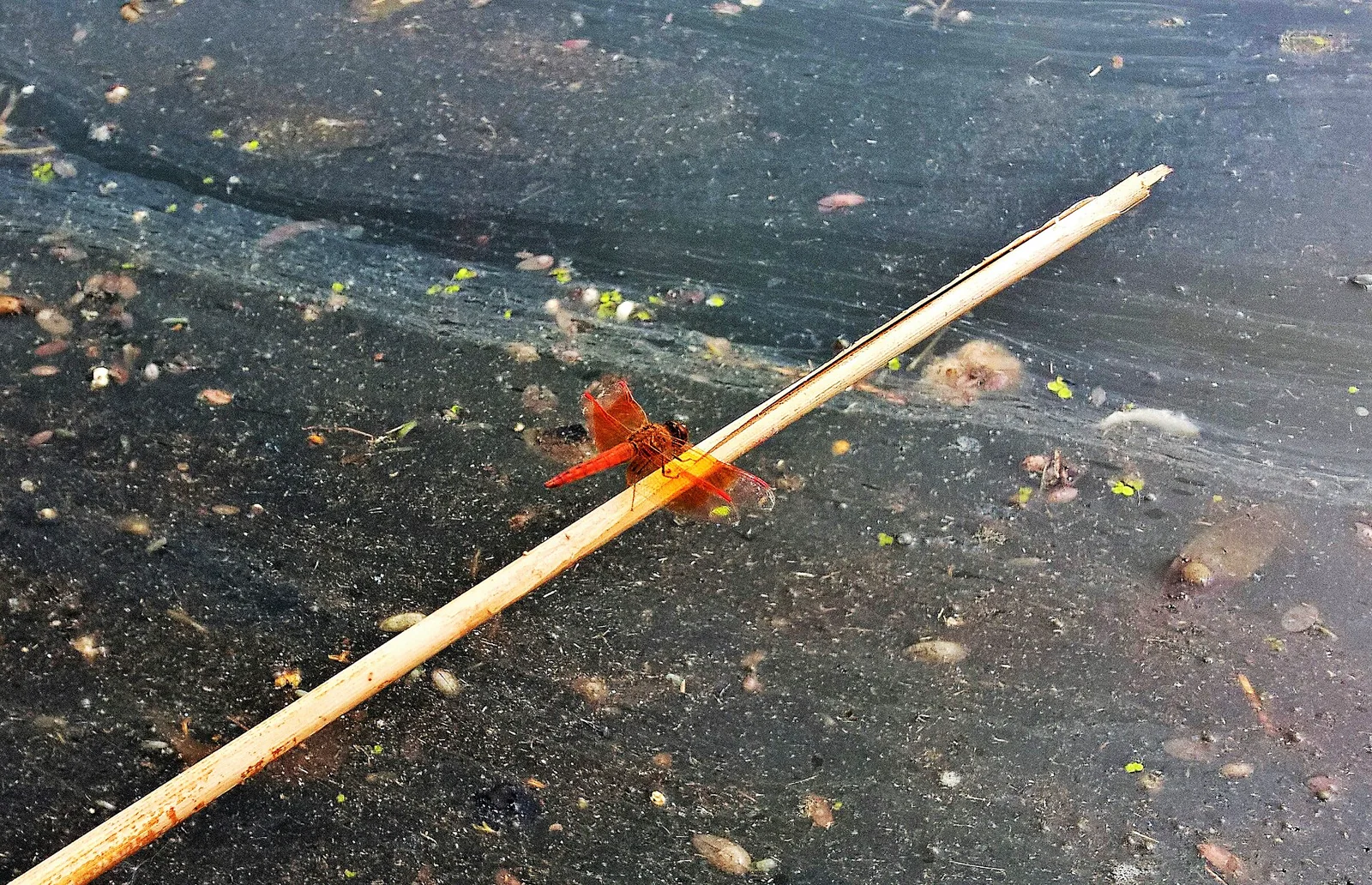
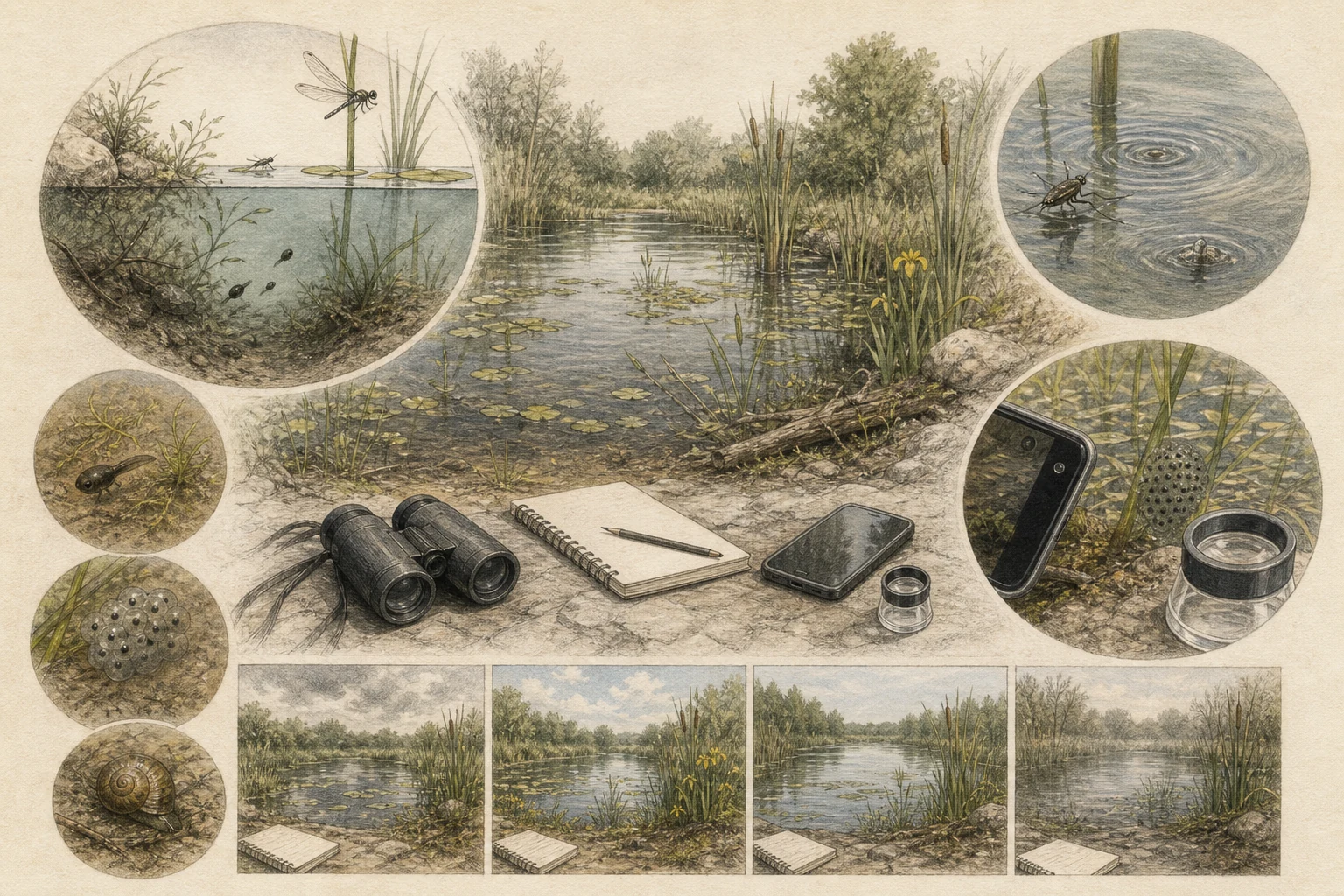
Begin with a slow scan from dry ground before stepping close to the water's edge. A freshwater pond is a vertical stack of distinct microhabitats: the warm bank shelters basking turtles, frogs, and hunting spiders; emergent reeds and cattails provide sturdy perches and molting ladders for damselflies and dragonflies; the surface film supports water striders, whirligig beetles, and floating duckweed; and the open water column and silty bottom host contrasting communities of swimmers and decomposers. Working through those zones in order reveals far more life than staring at the middle of the pond and waiting for a splash. [1][2][3][4]
- Air and emergent stems: hunting dragonflies, damselflies, emerging nymphs, and perching marsh birds
- Surface film and open water: water striders, floating leaves, rising air-breathers, and free-swimming larvae
- Shallows, margin, and bottom: grazing tadpoles, pulmonate snails, amphibian egg masses, and detritus-feeding macroinvertebrates
Let movement reveal the animal
Hold your gaze on one sunlit gap between stems long enough for small, periodic movements to repeat. A faint ring on the surface film might come from a predaceous diving beetle renewing the air bubble beneath its wing covers, a frog's nostrils breaking the mirror, or a larval salamander lunging in the shallows. Watch how an organism propels itself, where it retreats when a shadow passes, and how it uses submerged stems or silt; locomotion and microhabitat narrow a field identification much more reliably than color distorted by surface glare and refraction. [1][2][3]
- Follow one individual through a full cycle of breathing, foraging, or perching instead of chasing every ripple
- Note propulsion style—sculling legs, undulating tail, jetting abdomen, or skating on surface tension
- Log the exact depth zone and plant substrate before reaching for a taxonomic name
Look closely without sampling
Close-focus binoculars, a macro lens, or a hand magnifier used from a stable bank can resolve gill tufts, wing pads, and shell whorls without lifting aquatic animals out of the medium they breathe in. Photograph amphibian egg masses, caddisfly cases, snails, and submerged rosettes exactly where they sit; avoid dipping jars, raking bottom sediment, or uprooting marginal vegetation unless you are working under an authorized biological survey. Benthic macroinvertebrate and amphibian communities are sensitive to siltation, crushed cover, and transferred pathogens, and many public wetlands prohibit unpermitted collection. [2][3][4]
- Use close-focus binoculars or a camera from dry ground to inspect gills, shells, and wing pads in place
- Leave submerged wood, leaf packs, and gelatinous egg masses untouched so dissolved oxygen and shelter stay intact
- Avoid dipping containers or stirring bottom silt, which clouds the viewing window and stresses gill-breathing larvae
Make repeat visits comparable
Return to the exact same bankside marker across the year and record date, hour, cloud cover, wind, water level against a fixed rock or stem, and which marginal plants are in leaf or flower. Spending a standardized five minutes scanning each pond zone turns even a quiet winter or drought visit into structured ecological data rather than an empty walk. Over a season, those comparable notes trace frog calling and tadpole metamorphosis, odonate emergence on reed stems, summer drawdowns, and autumn leaf-pack buildup that no single outing can capture. [3][4][5]
- Anchor every visit to the same bank viewpoint and a fixed five-minute watch per habitat zone
- Track water level against a permanent stone or bank edge alongside air temperature and surface wind
- Look for seasonal transitions such as shed nymphal skins on reeds, shrinking summer margins, and fresh autumn leaf litter
Related guides
Get Fauna and identify it in the field.
Where this guide comes from
Source-checked editorial guide. Last updated . This guide teaches identification and field skills; it is not a substitute for expert verification when it matters.