Observing ants at work
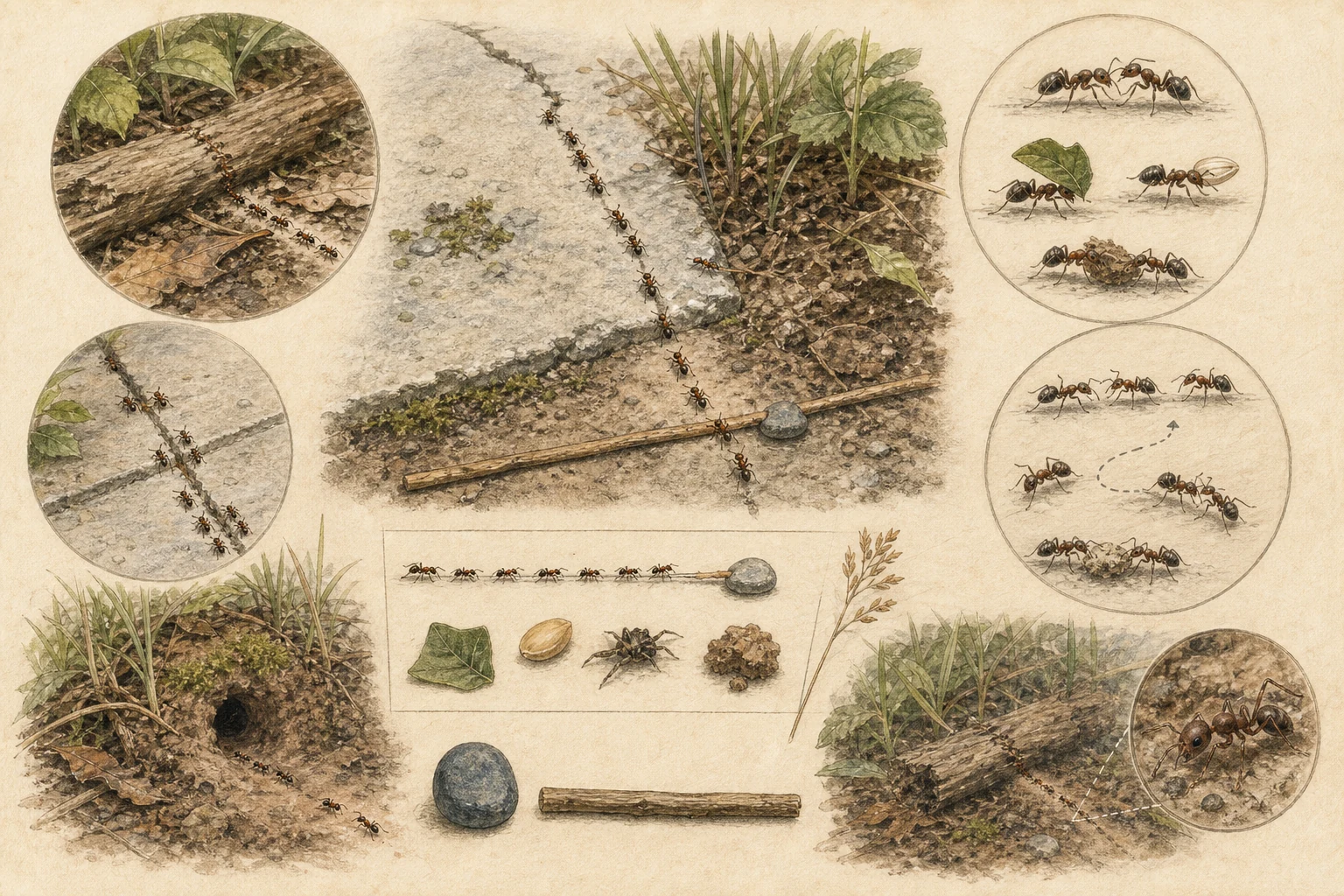
An ant trail is a moving record of colony decisions. Choose one short section, note direction and traffic, distinguish carried materials, time a repeatable sample, and leave pheromone paths, workers, prey, and nest entrances untouched.
Last updated
Find a trail without changing it
Scan sunny sidewalk seams, fallen oak trunks, sandy pine barrens, and tree bark furrows for steady two-way streams of workers, then kneel well to one side so your boots and shadow do not fall across the line. Many ant species lay down volatile trail pheromones from abdominal glands to guide nestmates between food sources and the colony entrance; scuffing soil across the path, rubbing a finger over the bark, or exhaling heavily onto the column scrambles those chemical cues and triggers defensive alarm signals. Watch the natural foraging economy as it is rather than dropping sugar or crumbs that artificially distort recruitment. [1][2][5]
- Kneel beside the foraging column without stepping on, shading, or breathing directly across the active path.
- Leave the substrate untouched so volatile pheromone trails laid down by scouts remain intact.
- Observe natural food harvesting rather than placing artificial baits when documenting wild foraging behavior.
Choose one repeatable window
Trying to watch an entire ten-meter foraging highway at once blurs individual actions into chaos. Instead, pick a single landmark beside the column—a quartz pebble, a bark crevice, or a fallen pine needle—to serve as an imaginary finish line, and count how many workers cross that line heading toward the nest and away from the nest during a timed two- or five-minute window. Log the time of day, air or surface shade condition, substrate type, and whether rain has fallen recently. Repeating that exact two-minute count in morning coolness and afternoon heat reveals how strongly surface temperature governs colony work schedules. [2][4][5]
- Use a natural pebble or bark crack beside the trail as a fixed reference line for timed traffic counts.
- Tally inbound and outbound workers separately over a set two- or five-minute interval.
- Record surface shade, air temperature, and time of day so you can compare activity across morning and afternoon.
Describe tasks before interpreting them
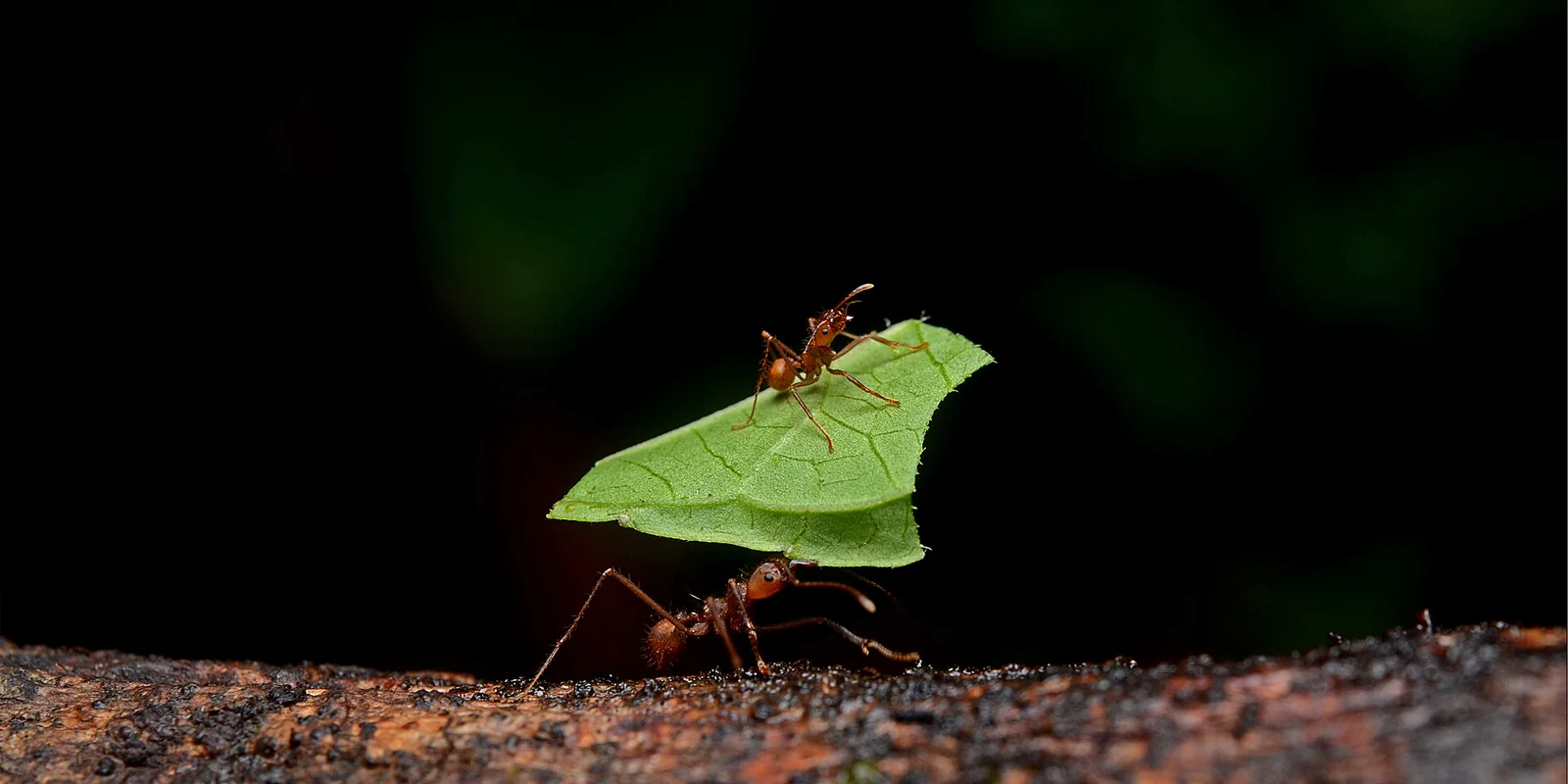
Look closely through a hand lens or macro camera at what inbound and outbound workers are actually doing. Harvester ants may return carrying husked grass seeds while outbound workers drop chaff piles at the midden edge; leafcutter workers hoist freshly cut leaf crescents overhead while tiny hitchhiking minima workers ride on the leaf fragments; wood ants and carpenter ants haul caterpillars, dead beetles, or invisible crops full of honeydew gathered from tended aphids high in the canopy. Note when two meeting ants pause to tap antennae or press open mandibles together in liquid food sharing (trophallaxis), describing the visible exchange before guessing its exact meaning. [1][2][3]
- Identify carried loads—whole seeds, cut leaf fragments, insect prey, excavated sand pellets, or brood.
- Notice size polymorphism among workers, from slender scouts and foragers to broad-headed majors.
- Watch head-on encounters for brief antennal tapping or longer mandible-to-mandible liquid food sharing.
Protect the trail and your record
Ant identification to genus or species often hinges on side-profile details such as the number of waist nodes (one petiole node or two, petiole plus postpetiole), the contour of the thorax, and spines on the propodeum. Shoot crisp lateral and dorsal macro frames of single workers traveling along the edge of the column, add a wider shot of the nest crater or trunk trail, and place a millimeter scale parallel to the path without blocking traffic. Never flip flat stones over a colony, poke sticks into mound entrances, or linger where fire ants, harvester ants, or bull ants begin climbing your shoes. [1][3][5]
- Aim for a sharp side-profile macro photo showing the thorax contour and whether the waist has one or two nodes.
- Photograph the nest entrance architecture—such as a pebble crater, thatch mound, or bark hole—without excavating it.
- Check your shoes and cuffs frequently and step back calmly if workers fan out in defensive alarm postures.
Related guides
Get Fauna and identify it in the field.
Where this guide comes from
Source-checked editorial guide. Last updated . This guide teaches identification and field skills; it is not a substitute for expert verification when it matters.