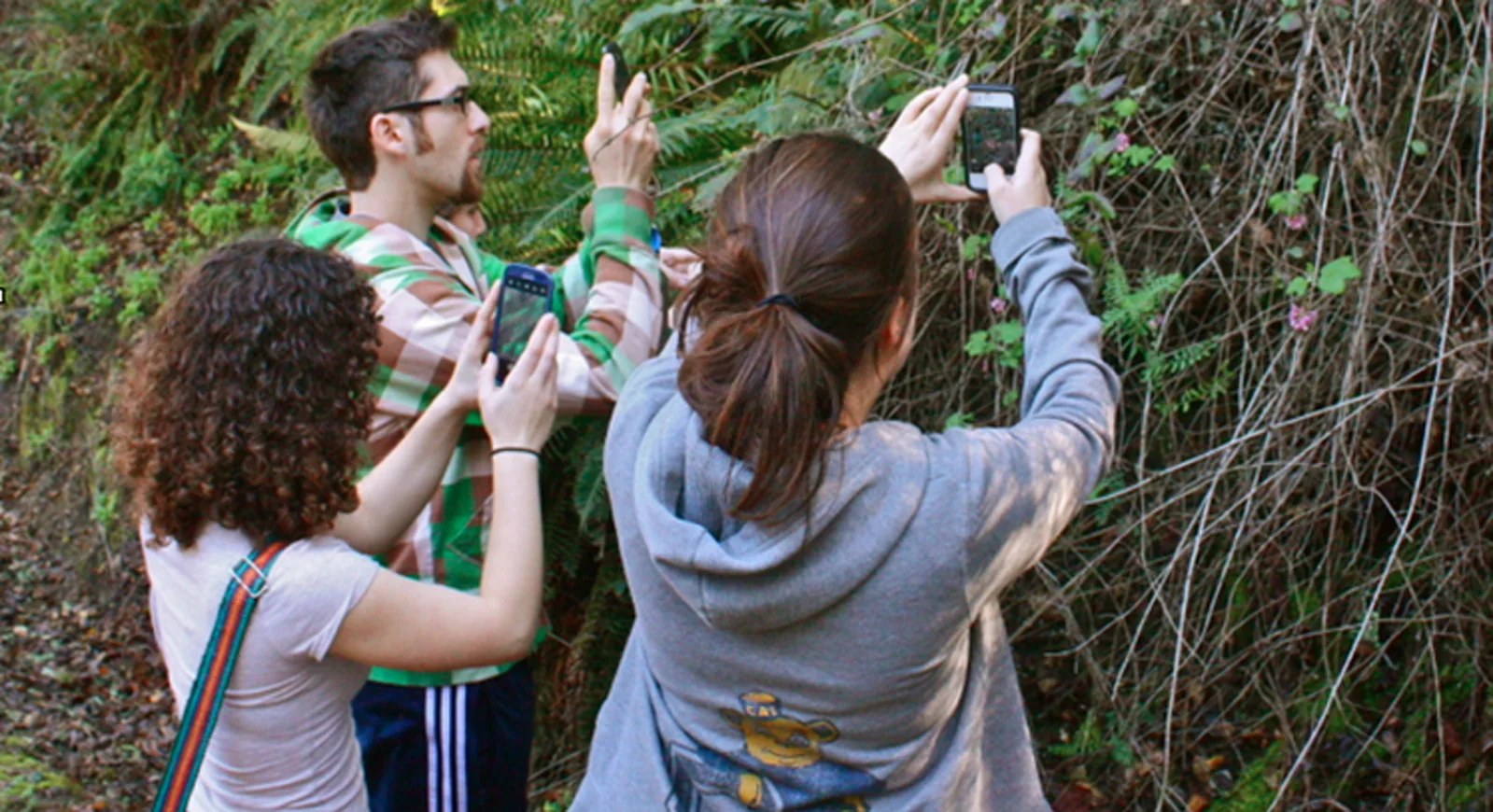
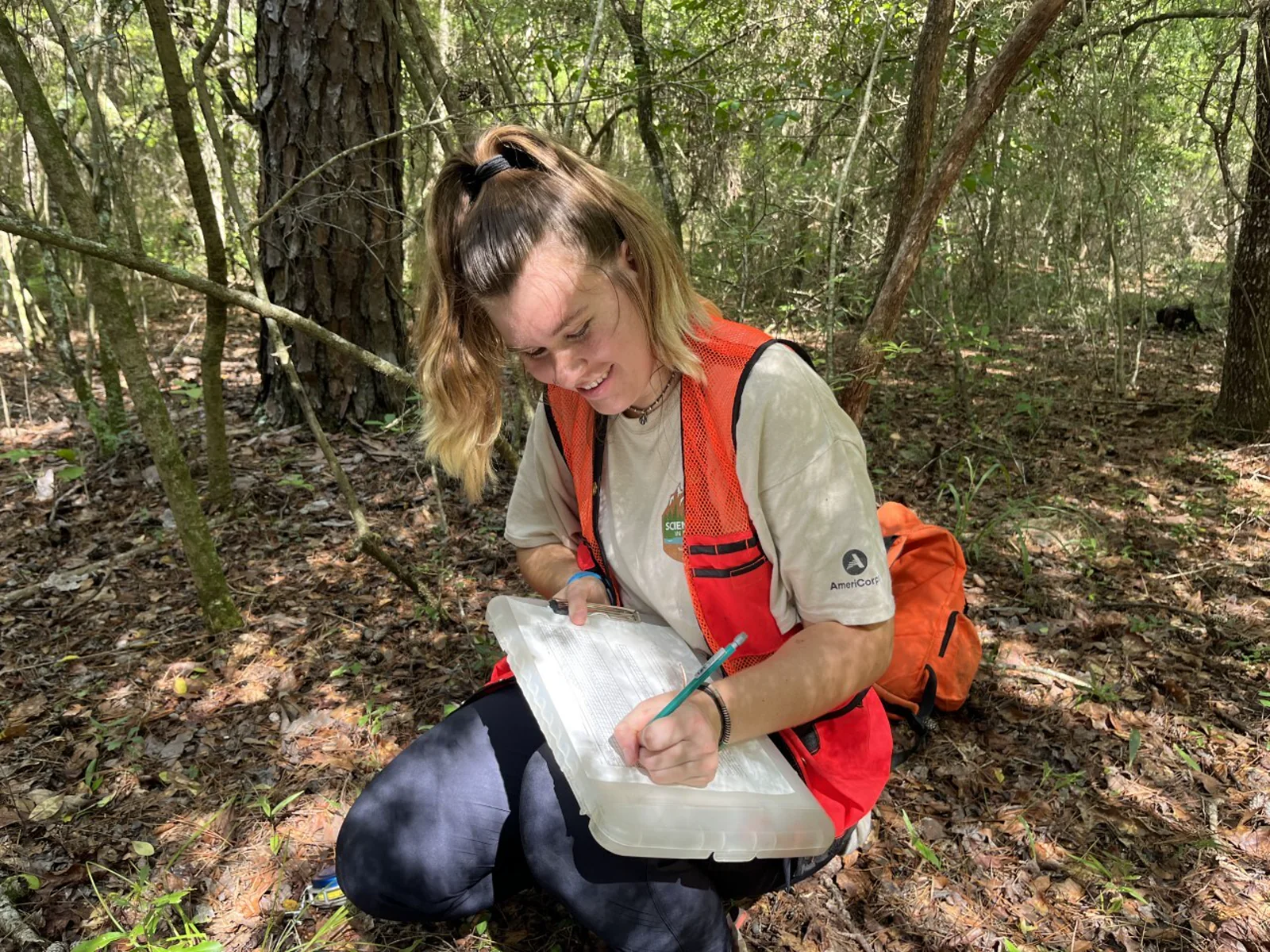
Running a fixed-point bird count
A point count is useful because the observer, place, and clock stay still. Define the protocol before starting, record first detections by sight or sound without double-counting, log conditions, and repeat the same design rather than adjusting it to the day's birds.
Last updated
Write the protocol before the first count
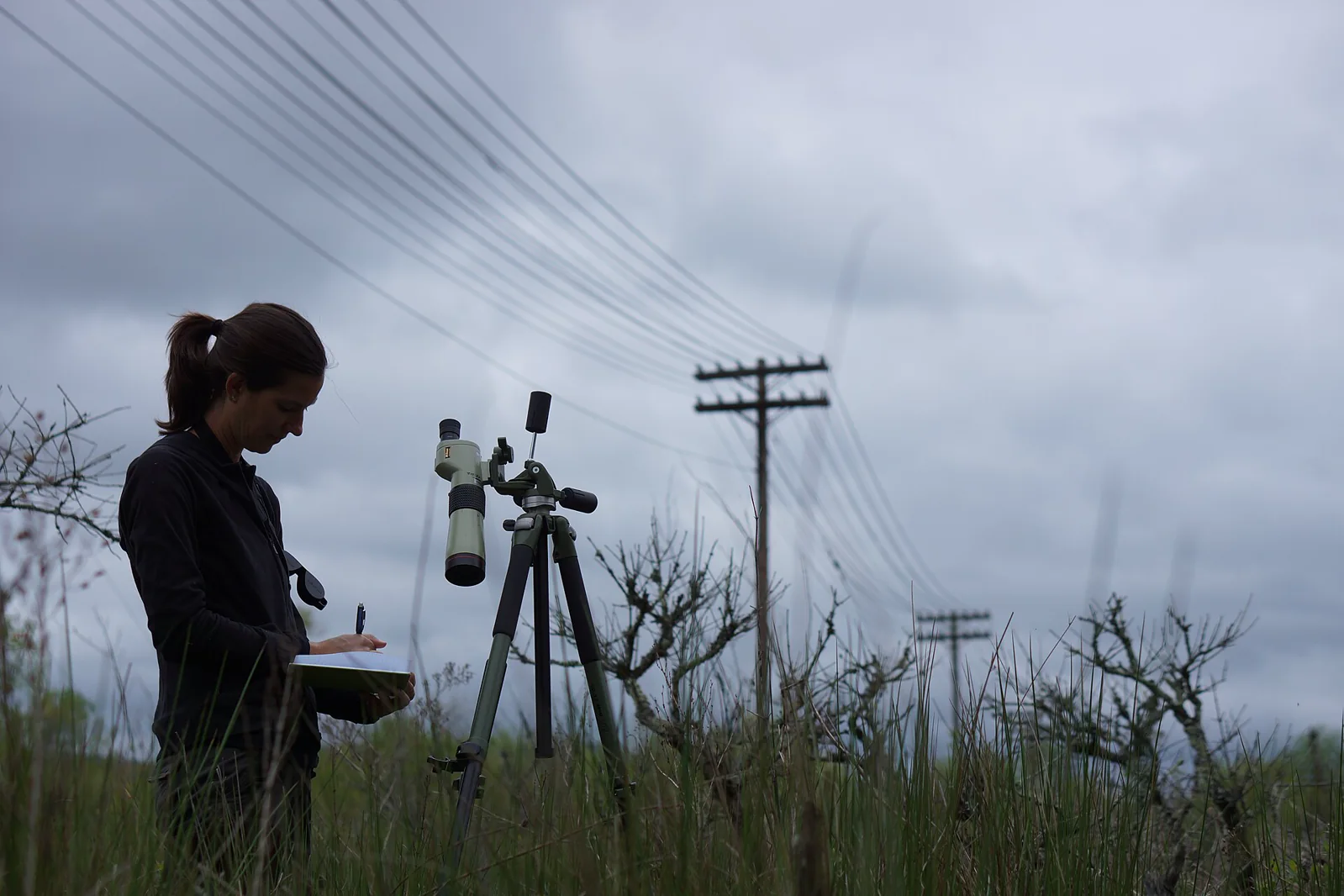
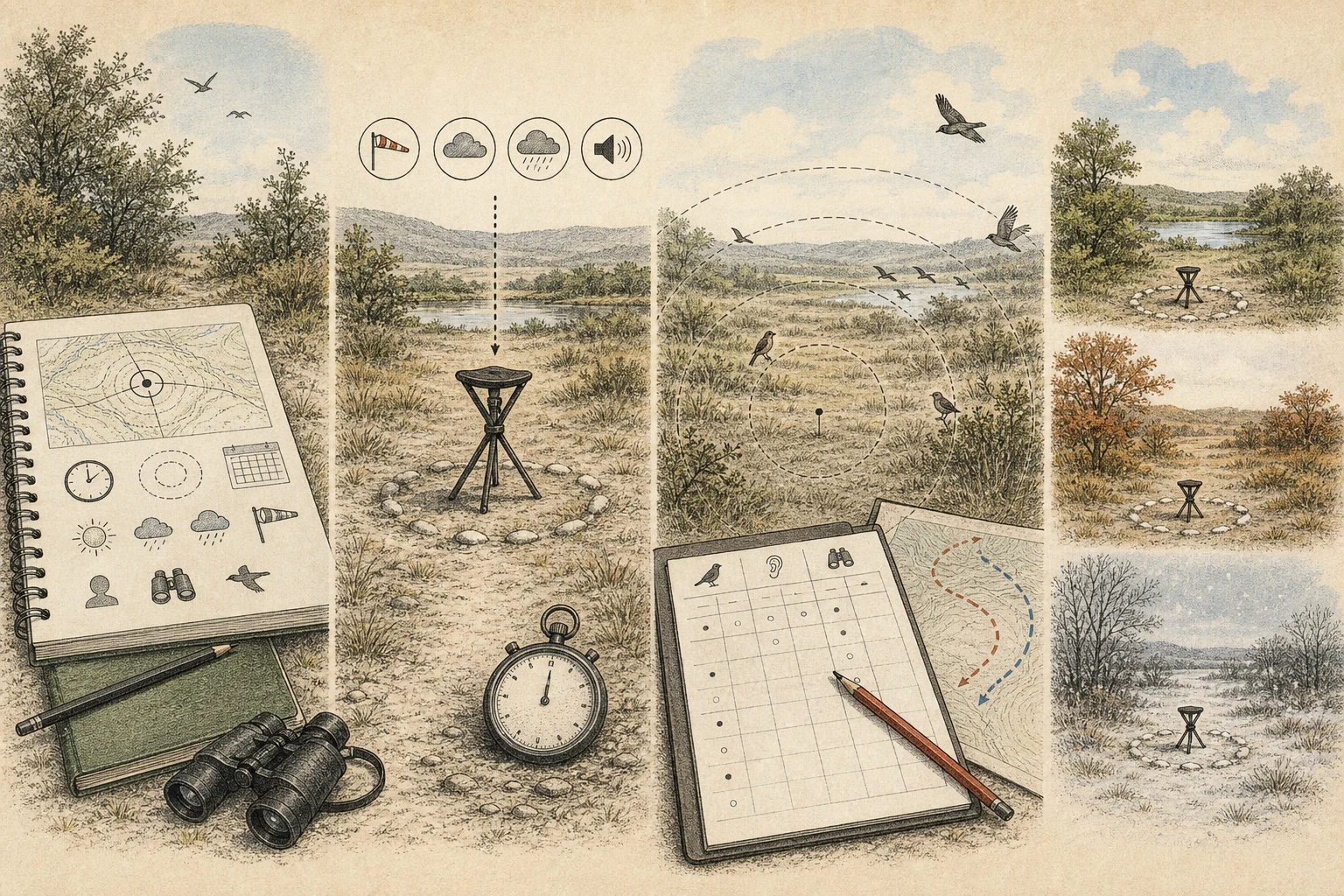
Standing still at one chosen spot—a meadow fencepost, a woodland trail junction, or a marsh boardwalk corner—reveals the pulse of a habitat in a way roaming walks never can, because your own footsteps stop driving the encounter rate. Before your first morning out, lock in the simple rules that will keep every visit comparable: the exact standing spot, a fixed duration (often 5 or 10 minutes), a landmark at 50 meters to separate nearby birds from distant singers, a morning time window relative to sunrise, and a rule to postpone if high winds or rain drown out bird song. If you participate in an organized survey, follow its exact field sheet. [1][2][4]
- Pick a permanent landmark spot and a fixed count duration—such as 5 or 10 minutes—before starting your series.
- Identify natural trees or posts at roughly 50 meters to separate close habitat users from distant singers.
- Skip or reschedule counts when strong wind, steady rain, or heavy fog suppresses normal vocal activity.
Arrive, settle, and start cleanly
As you walk up to your count station, near-edge towhees, wrens, or thrushes may flush into cover or go briefly silent. Step quietly onto your mark, ready your notebook and binoculars, and wait two or three silent minutes before starting the clock so the surrounding woods or marsh settle back into normal rhythm. Jot down the start time, sky cover, breeze level, and any background stream or road noise that could mask high-pitched warbler songs, then start a silent timer. Stay planted on your spot for the entire count window rather than stepping down the trail to chase a mystery call. [1][2][3]
- Pause quietly at the point for a couple of minutes before starting the timer so disturbed birds settle down.
- Note start time, wind, cloud cover, and ambient noise that could affect how far songs carry.
- Stay at your fixed spot until the timer ends; inspect mystery birds down the trail only after the count finishes.
Record the first detection
Once the timer starts, listen and scan in slow circles, logging each individual bird the first time you detect it by song, call, or sight. A quick bullseye sketch in your notebook—with your point at the center and a 50-meter ring around it—makes it easy to jot a species code and arrow where a song sparrow sings in the alders or a red-eyed vireo moves through the canopy, preventing you from tallying the same moving bird twice when it calls again two minutes later. Tag birds flying high overhead without landing as flyovers, and record any glimpsed bird you cannot clinch at its honest group level, such as woodpecker sp. or Empidonax sp. [1][3][5]
- Sketch a simple bullseye map of your point to track moving singers and avoid counting the same bird twice.
- Note whether each bird was first detected by song, call, or sight, and whether it was inside or beyond your radius.
- Mark high-passing gulls, swallows, or raptors as flyovers so birds actively using the local patch stay clear.
Repeat without over-interpreting
The magic of a fixed point emerges when you return to the exact same post at the same hour past sunrise across the seasons or in successive springs. Even on a quiet morning when only three chickadees and a crow call, save the complete count rather than throwing it out: quiet days are real part of the seasonal pattern. Keep in mind while reviewing your notes that a point count measures how many birds were detectable during those ten minutes—not an absolute census of every silent incubating female sitting tight on a nest nearby—so treat changes from week to week as shifts in both bird presence and singing behavior. [3][4][5]
- Revisit the station at the same morning window relative to sunrise so daily singing peaks stay comparable.
- Save quiet, low-count mornings faithfully rather than discarding sessions that felt slow.
- Remember that point counts track vocal and visible activity alongside presence, as incubating or silent birds often go undetected.
Related guides
Get Fauna and identify it in the field.
Where this guide comes from
Source-checked editorial guide. Last updated . This guide teaches identification and field skills; it is not a substitute for expert verification when it matters.