Building a backyard species list
Define the place, record each encounter with date and evidence, revisit different microhabitats and times, and distinguish cultivated organisms from wild ones. A list becomes more informative when effort and uncertainty stay attached to every observation.
Last updated
Define what the list includes
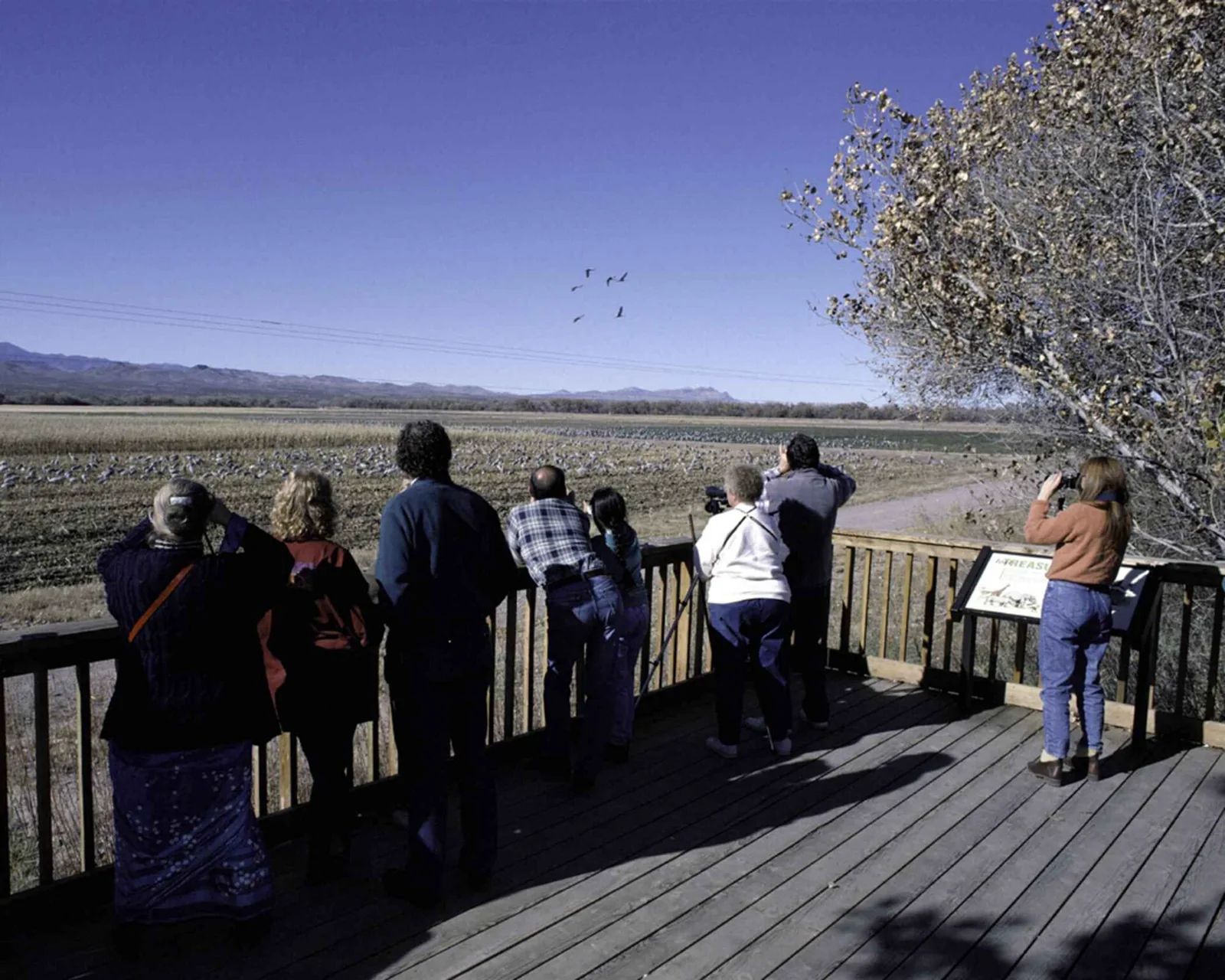
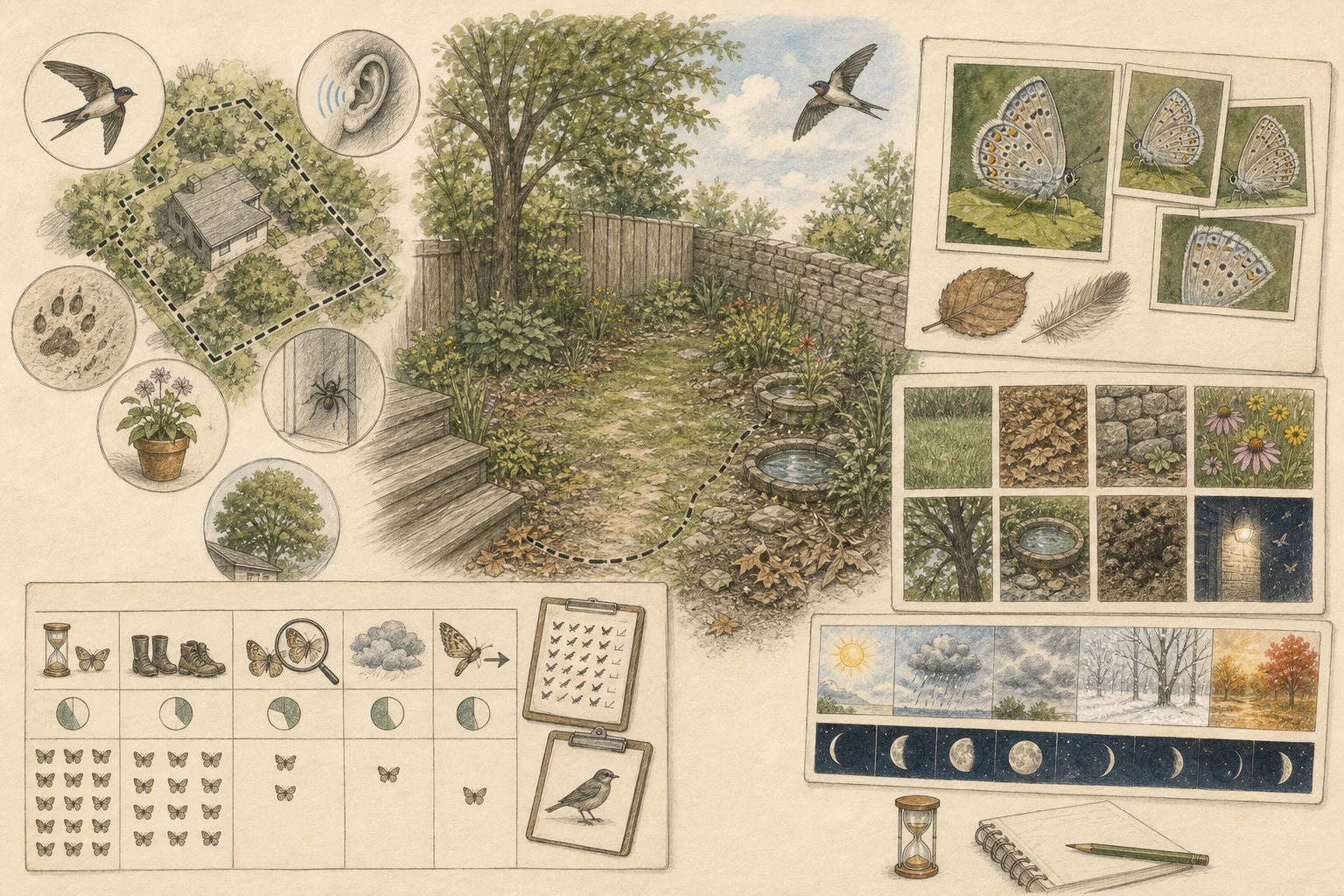
Before logging your first mourning dove or bumblebee, sketch a clear boundary for your yard or balcony patch and decide how you will treat borderline encounters. Will a red-tailed hawk soaring high overhead or a great horned owl hooting from a neighbor's tall spruce go on the main property list or a separate 'heard and flyover' column? Will you include intentionally planted garden perennials alongside wild weeds, fungi, and visiting insects? Writing down those simple house rules up front keeps your list consistent years later, and treating each sighting as a single dated encounter at one place matches the structure used by iNaturalist and eBird. [1][5]
- Set a clear property boundary and decide up front how to tag flyover birds, distant calls, and neighboring trees.
- Separate wild, self-sustaining visitors and spontaneous plants from cultivated garden flowers or planted shrubs.
- Treat each recorded sighting as one specific organism encountered at a single date, time, and microhabitat.
Build records, not just names
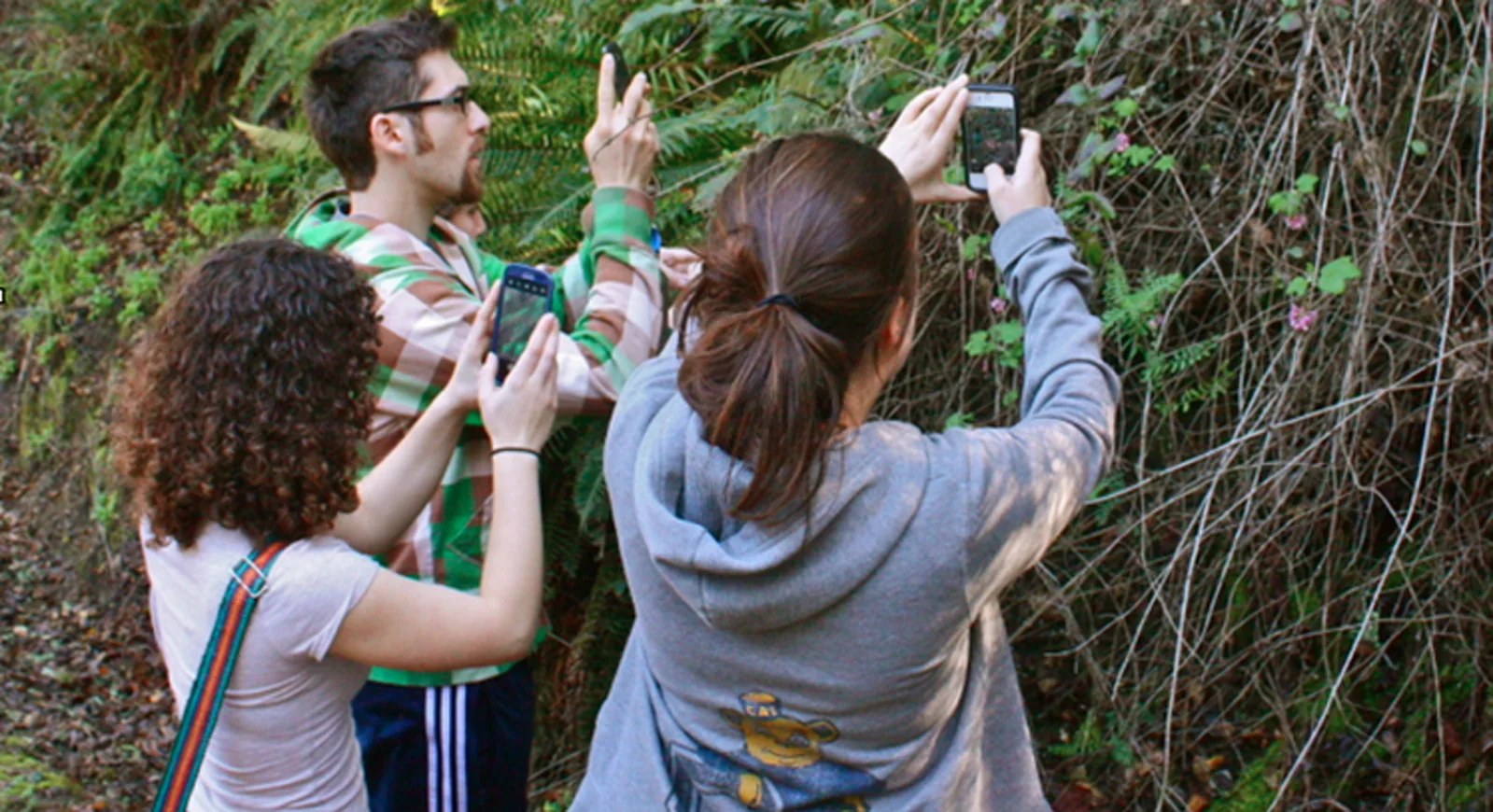
A bare checklist of common names cannot be reviewed when you later learn that two nearly identical chickadees, sweat bees, or wood sorrels share your region. Whenever you add or revisit a species, attach the date, time of day, exact yard microhabitat—such as under the cedar mulch, on goldenrod blossoms, or at the birdbath rim—and a voucher photograph or sound clip. Bundle multiple angles of the same individual mushroom or beetle into a single observation rather than scattering them across separate entries, flag garden plantings honestly as cultivated, and leave tricky invertebrates at family or genus level until clear diagnostic traits are visible. [1][2]
- Pair every species entry with a date, yard microhabitat note, and voucher photographs or audio recordings.
- Group multiple angles of the same individual organism into one observation rather than separate entries.
- Park difficult insects, spiders, or fungi at family or genus level when species traits are not clearly visible.
Repeat small searches across the yard
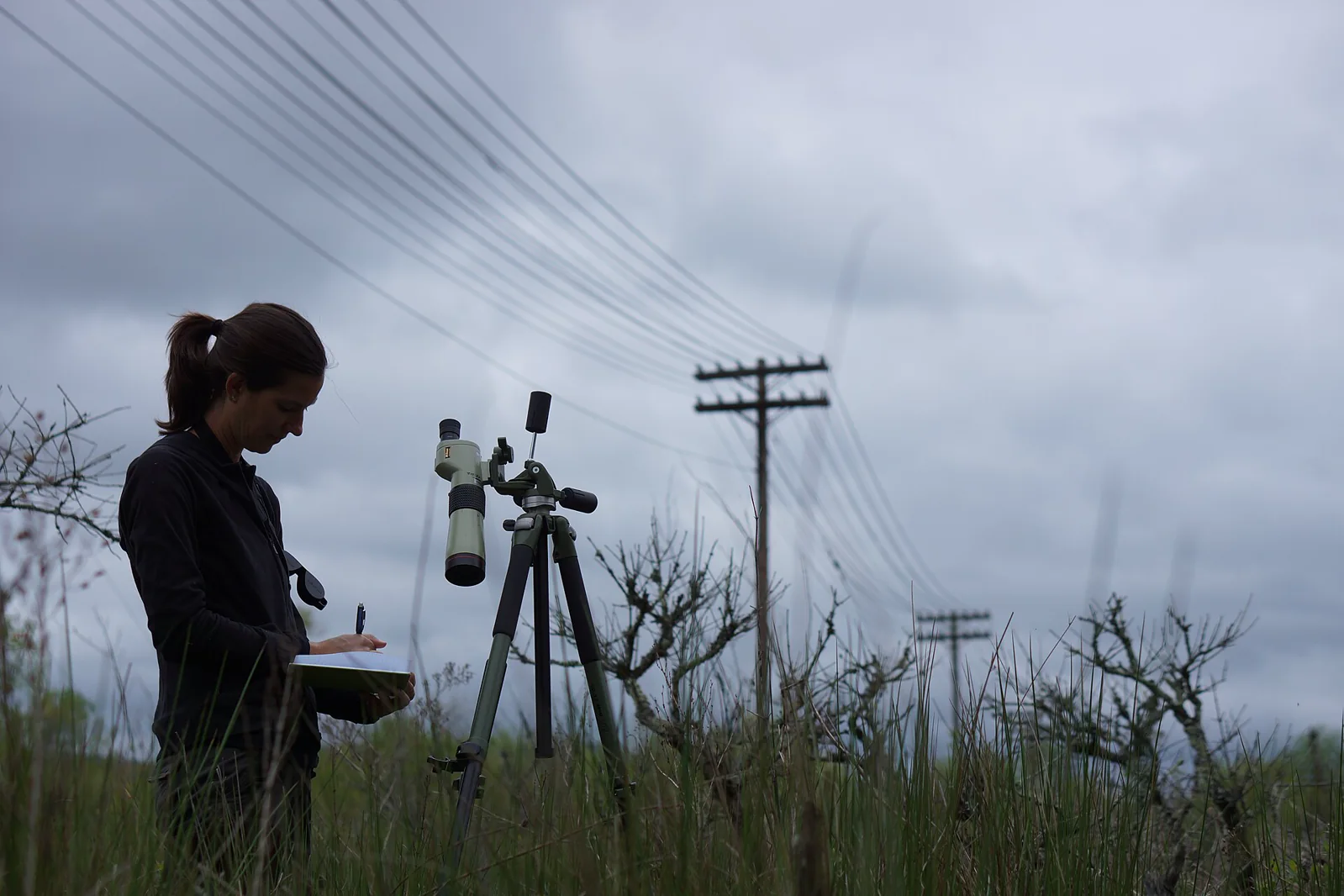
A yard watched only through a kitchen window at breakfast will look like a four-species habitat even when dozens of organisms share the lot. Rotate short, fifteen-minute searches across different microhabitats and hours: lift a damp stepping-stone edge for slugs and ground beetles after rain, inspect native flower heads at midday for hoverflies and solitary bees, listen from the porch at dusk for migrating thrushes or bats, and check the porch lamp on a warm summer night for geometrid moths and lacewings. If you track phenology on a lilac or milkweed patch, mark the exact stem so leaf-out, bloom, and seed burst belong to the same individual all year. [4][5]
- Rotate short 15-minute watches across shaded leaf litter, sunny flowers, tree bark, water dishes, and porch lights.
- Sample different hours and weather windows, including damp mornings after rain and warm, humid evenings.
- Follow the same individual shrub or perennial patch through the year to track leaf-out, flowering, and fruiting.
Separate list growth from ecological change
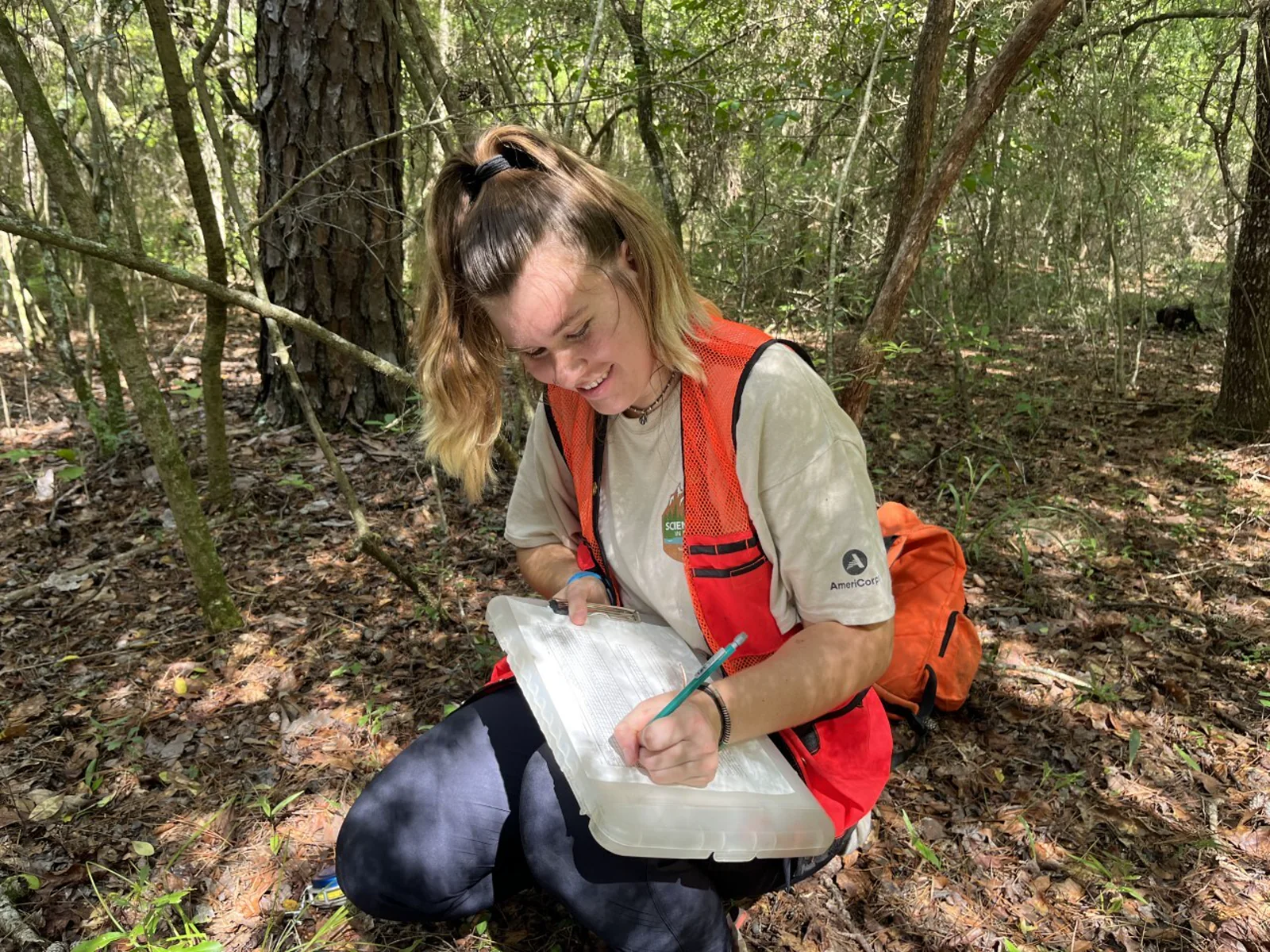
During the first year or two of keeping a yard list, your species total climbs rapidly mostly because your own eyes, ears, and field habits are sharpening. Spotting your first Cooper's hawk or ruby-throated hummingbird in year three might reflect a real habitat change—like native shrubs maturing—or simply that you happened to sit outside with binoculars on an April afternoon. To make year-to-year comparisons meaningful, log occasional complete timed bird counts where you record every species detected and how many minutes you watched, keeping those structured snapshots distinct from casual kitchen-window highlights. [3][4][5]
- Recognize that early list growth often reflects sharper observer skills and new search times rather than new arrivals.
- Run occasional timed 15- or 20-minute complete bird counts so effort stays comparable from season to season.
- Remember that failing to spot a secretive species on a casual afternoon never proves it was absent from the yard.
Related guides
Get Fauna and identify it in the field.
Where this guide comes from
Source-checked editorial guide. Last updated . This guide teaches identification and field skills; it is not a substitute for expert verification when it matters.