Indicator species explained
An indicator species is monitored because a defined attribute—presence, abundance, chemistry, condition, or reproduction—has an established relationship with an environmental question. Its meaning depends on the stressor, place, timescale, sampling method, and supporting evidence.
Last updated
Define the message before the messenger
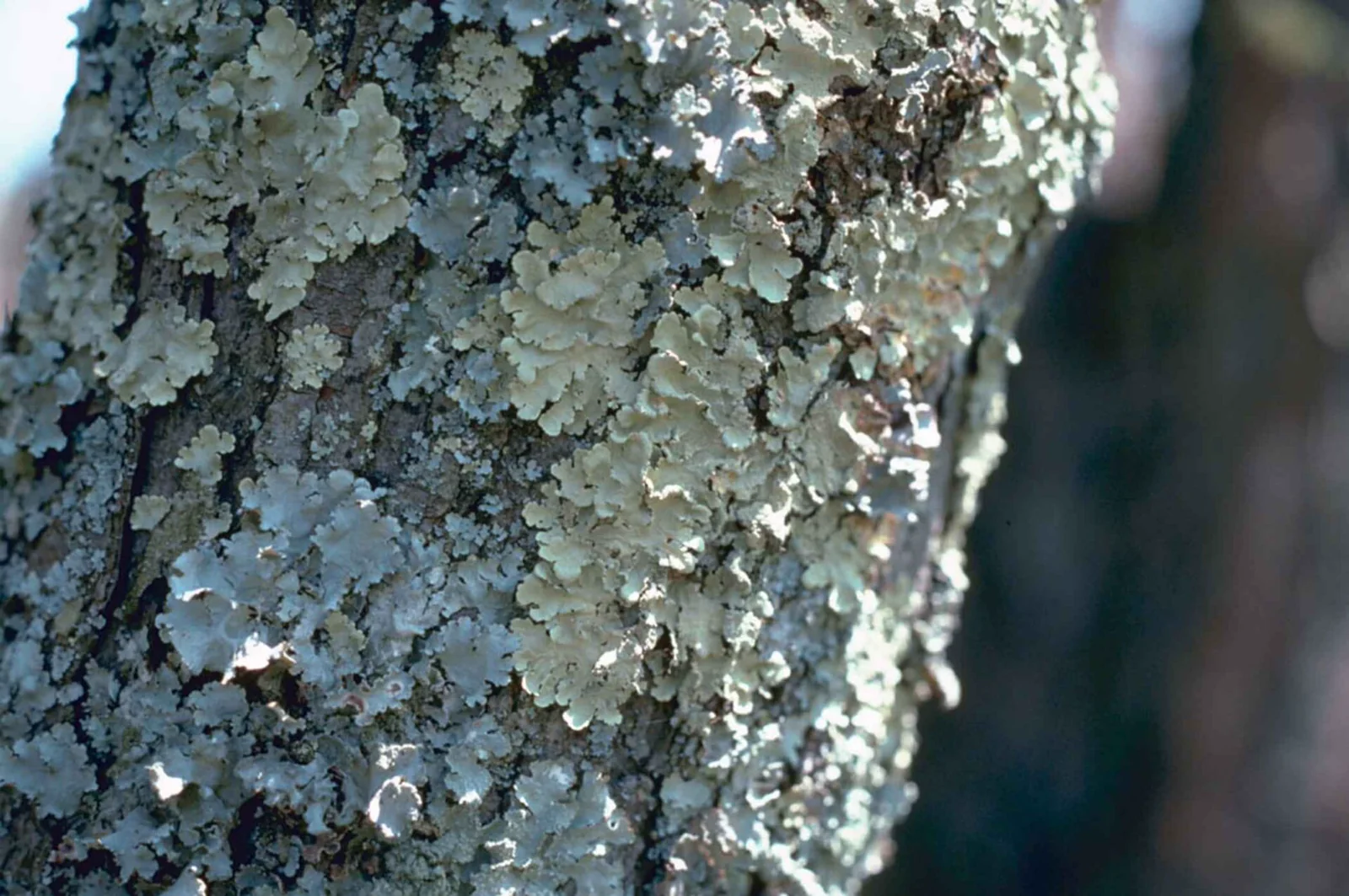
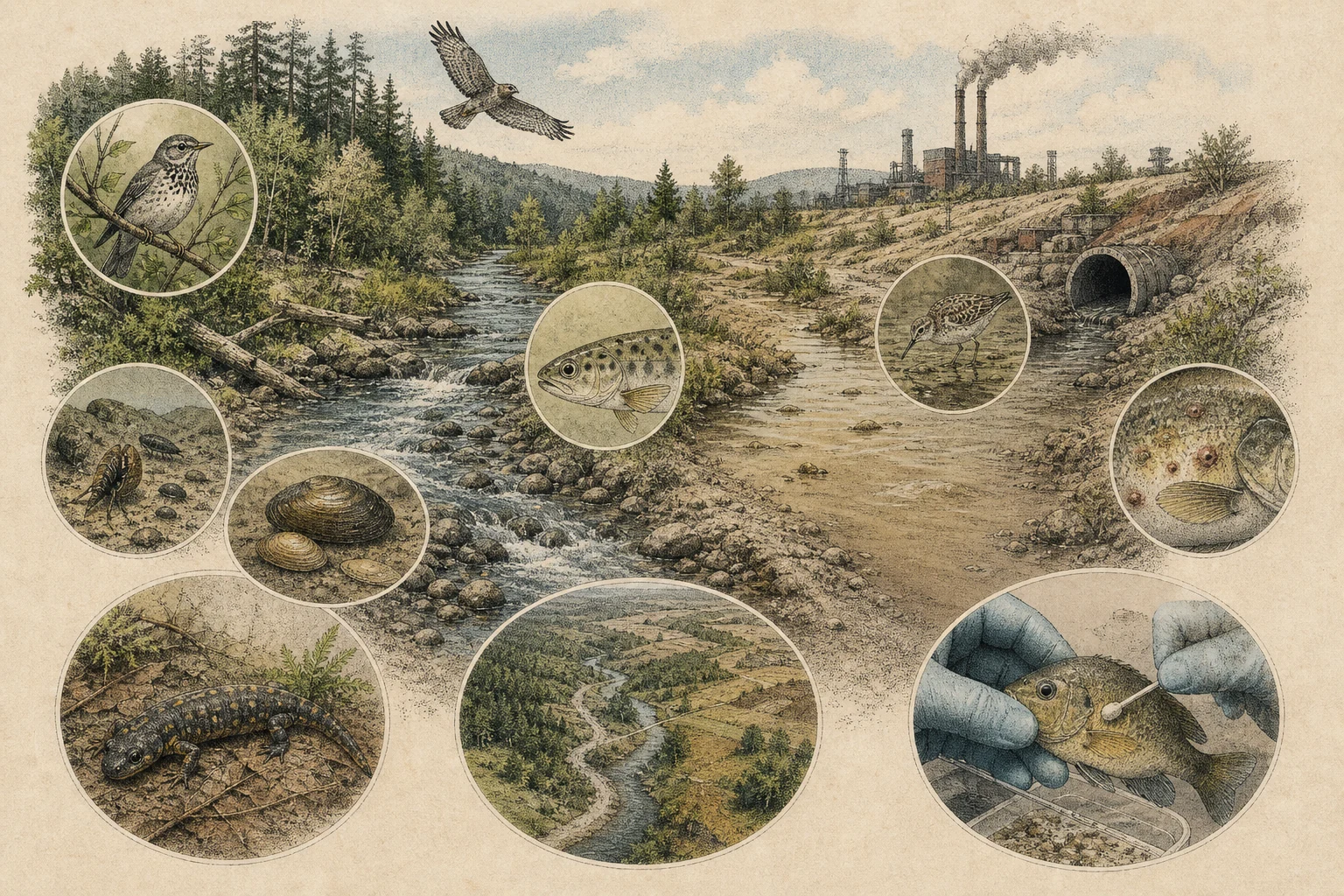
No wild plant, lichen, or animal is a universal thermometer for 'ecosystem health' in the abstract; a biological indicator is always selected to answer a specific environmental question in a defined habitat. Because epiphytic lichens absorb water and nutrients directly from the atmosphere without protective cuticles or roots, air-quality programs monitor sensitive fruticose and foliose lichens to track sulfur and nitrogen deposition. In freshwater wetlands and streams, dragonfly larvae are sampled to measure bioavailable mercury in aquatic food webs, while benthic macroinvertebrate communities—especially stoneflies, mayflies, and caddisflies—reflect dissolved oxygen, sediment load, and stream habitat integrity. [1][2][5]
- Every bioindicator is tied to a specific stressor or condition—such as epiphytic lichens for air pollutants or stream insects for water quality.
- Dragonfly nymphs serve as national sentinel bioindicators for mercury contamination across U.S. park wetlands and streams.
- Common trap: claiming a single sighting of a frog, lichen, or mayfly proves an entire watershed or forest is 'pristine.'
Choose a measurable response
Simply noting whether an indicator species is present or absent is often the crudest way to use it. Structured biomonitoring programs define a precise, repeatable metric before fieldwork begins: the relative abundance of pollution-intolerant Ephemeroptera, Plecoptera, and Trichoptera (EPT taxa) in a stream riffle sample, chemical concentrations of heavy metals in larval tissue, visible ozone stippling on bioindicator plant leaves, or shifts in lichen community richness from nitrogen-sensitive to nitrogen-loving species on tree bark. According to U.S. EPA evaluation guidelines, a strong indicator links clearly to the stressor, responds predictably with low measurement error, and can be compared against established reference baselines. [2][3][4]
- Bioindicator metrics include community composition (such as stream EPT richness), tissue chemistry, growth form, and visible foliar injury.
- High nitrogen deposition can shift bark lichen communities toward nitrophilous species rather than simply wiping out all lichens.
- Field check: note the growth form and bark substrate when photographing lichens, as acidic conifer bark and buffered hardwood bark host different communities naturally.
Account for alternative explanations
Even a well-calibrated indicator species responds to natural habitat variation alongside human stressors, which is why a missing species on a single walk never diagnoses pollution on its own. A sensitive stonefly nymph may be absent from a stream reach because the substrate is naturally sandy and slow-flowing rather than rocky and riffled, because adults have already emerged for the season, or because your kick-net missed microhabitats. Likewise, a tolerant midge or aquatic worm occurs naturally in healthy, muddy pond bottoms as well as in degraded streams. Monitoring programs therefore calibrate bioindicators against matched regional reference sites and repeated seasonal sampling. [2][4][5]
- Natural differences in substrate, water velocity, elevation, tree bark pH, and season strongly shape which indicator species occur at a site.
- Finding a pollution-tolerant organism (such as a midge larva or pouch snail) does not prove pollution—tolerant taxa live in clean waters too.
- Biomonitoring compares a test site against regional reference sites of the same habitat type and season.
Prefer a suite over a mascot
Because different organisms respond on different timescales and trophic levels—phytoplankton and periphyton react to nutrient spikes in days, benthic macroinvertebrates integrate stream conditions over months, and fish communities reflect multi-year habitat connectivity—modern ecological assessments rely on a complementary suite of indicators rather than a single mascot species. National aquatic and marine monitoring programs pair biological assemblages with direct physical and chemical measurements such as dissolved oxygen, conductivity, nutrient chemistry, and riparian cover. When you observe indicator taxa in the field, log their microhabitat, abundance, and associated species honestly as natural-history context rather than a standalone water- or air-quality test. [1][3][5][6]
- Comprehensive assessments combine biological communities (algae, invertebrates, fish) with physical habitat and water- or air-chemistry data.
- Different indicator groups track different timescales, from rapid algal blooms to multi-year shifts in fish or perennial lichen communities.
- Field check: record the full assemblage of organisms you see under a stream cobble or on a tree trunk rather than focusing on a single species.
Related guides
Get Fauna and identify it in the field.
Where this guide comes from
Source-checked editorial guide. Last updated . This guide teaches identification and field skills; it is not a substitute for expert verification when it matters.
- National Park Service — Bioindicators and air pollution ↗
- U.S. Environmental Protection Agency — Choosing indicator species ↗
- NOAA — National Marine Ecosystem Status indicators ↗
- U.S. Environmental Protection Agency — Evaluation guidelines for ecological indicators ↗
- National Park Service — Aquatic invertebrates as stream indicators ↗
- U.S. Environmental Protection Agency — Indicators used in national aquatic surveys ↗