How insect metamorphosis works
Metamorphosis is not one butterfly trick. Insects follow several developmental patterns, and the immature stage may live in a different habitat, eat different food, or resemble the adult to very different degrees.
Last updated
Growth requires a series of molts
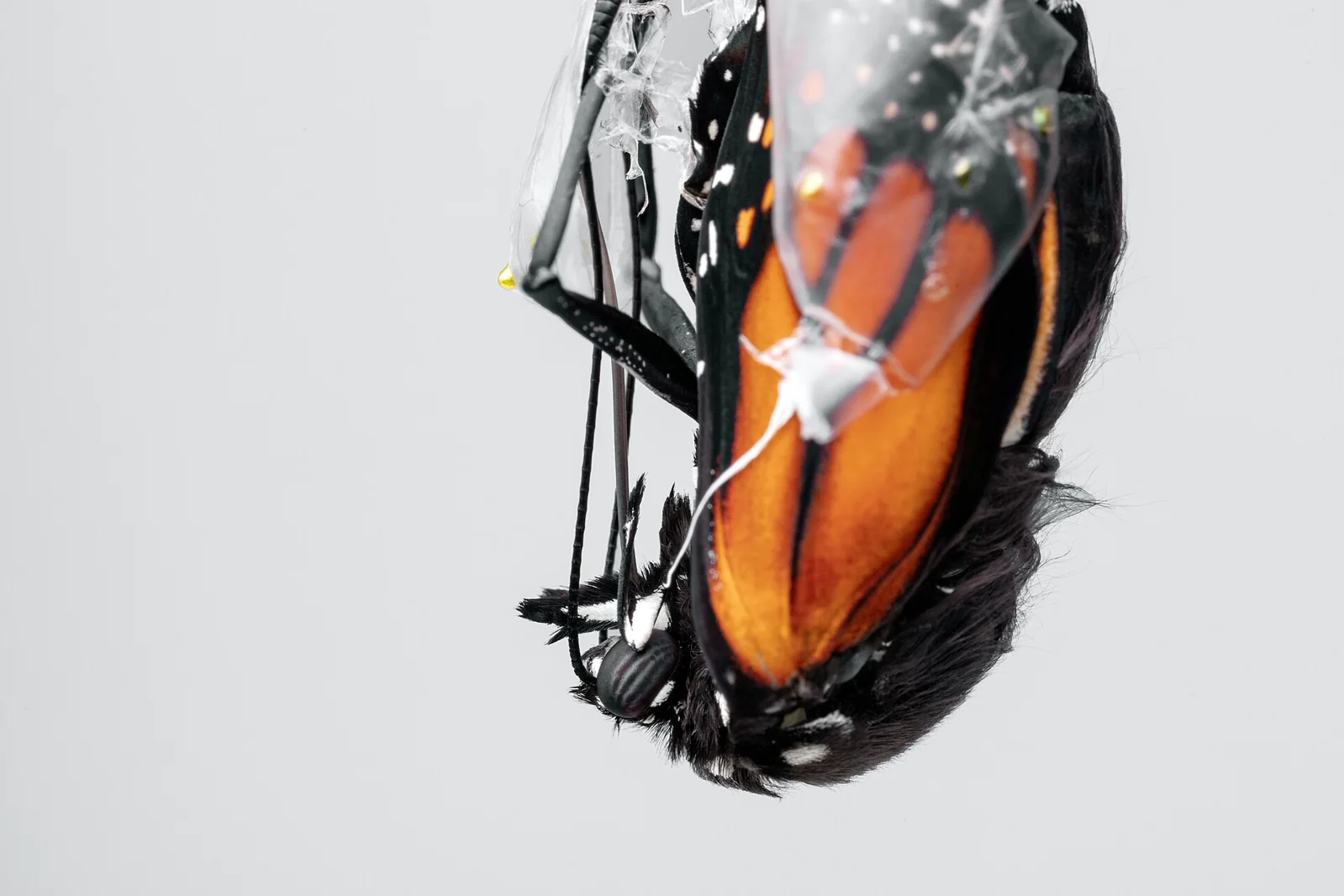
Because an insect's chitinous exoskeleton is rigid once hardened, growth happens in stepped intervals separated by molting—a process called ecdysis, in which the animal splits its old cuticle, pulls itself free, and inflates the soft new skin before it tans and stiffens. Each stage between molts is an instar. In almost all winged insects, only the final adult stage flies, though mayflies pass through a unique winged subimago stage that molts one last time. Primitively wingless insects such as silverfish follow an ametabolous pattern, hatching as miniature versions of the adult and continuing to molt even after reaching sexual maturity. [1][3][4][6]
- Each developmental stage between exoskeleton molts is called an instar, ending at the final adult molt
- Functional wings belong strictly to adult insects, with mayfly subimagos as the famous winged pre-adult exception
- Ametabolous insects such as silverfish hatch without metamorphosis and continue molting even as adults
Complete metamorphosis separates four stages
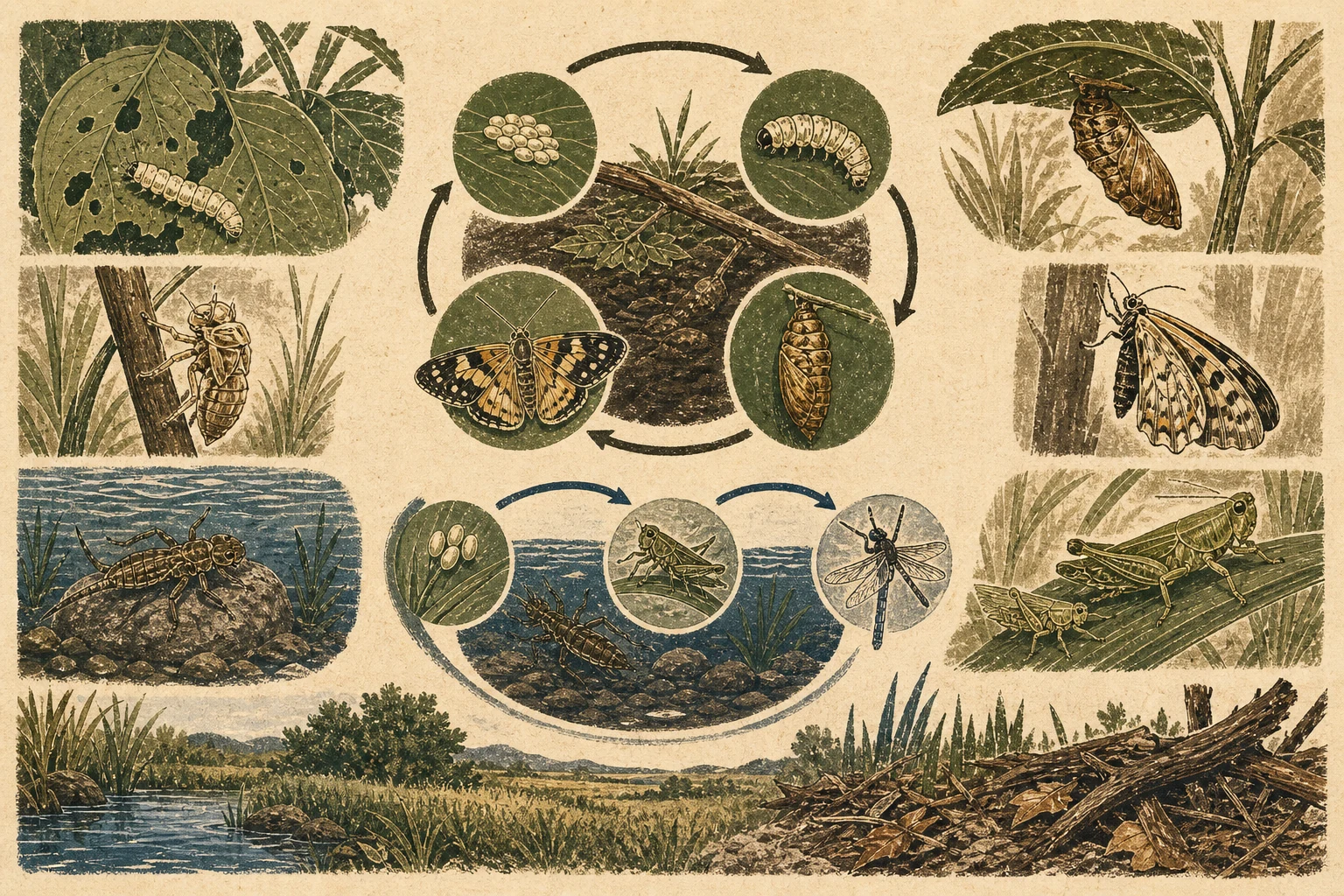
Over 80 percent of described insect species—including beetles, butterflies and moths, flies, fleas, and ants, bees, and wasps—undergo holometabolous or complete metamorphosis across four distinct stages: egg, larva, pupa, and adult. The worm-like larva—whether a leaf-chewing caterpillar, soil-dwelling scarab white grub, or fly maggot—is specialized for feeding and accumulating reserves, with future wings developing invisibly inside the body as imaginal discs. Inside the pupa, chrysalis, or silk cocoon, larval tissues are extensively remodeled into the winged, reproductive adult, allowing juvenile and adult stages to exploit completely different foods and habitats without competing. [1][2][3][4]
- Complete metamorphosis separates feeding larvae from reproducing adults via a non-feeding pupal stage
- Caterpillars, beetle grubs, and fly maggots develop future wings internally until the pupal transformation
- Different larval and adult diets let a species use soil roots or leaves when young and floral nectar as an adult
Incomplete metamorphosis has no pupa
Grasshoppers, crickets, cicadas, true bugs, mantises, cockroaches, dragonflies, damselflies, and stoneflies develop through hemimetabolous or incomplete metamorphosis: egg, nymph, and adult, with no pupal stage. Terrestrial nymphs such as grasshoppers and stink bugs often share the adult's host plants and body plan, acquiring compound eyes and progressively larger external wing pads across successive instars. Aquatic nymphs—sometimes called naiads—of dragonflies, mayflies, and stoneflies breathe through gills and hunt or graze underwater for months or years before crawling onto a stem or boulder to molt directly into an airborne adult. [1][2][3][5]
- External wing pads grow larger across successive nymphal instars and unfurl into full wings at the final molt
- Grasshopper and true-bug nymphs often live alongside adults on the same host plants and eat similar food
- Aquatic nymphs of dragonflies, damselflies, and stoneflies spend most of their lives underwater before emerging
Find the transition without interfering
In the field, metamorphosis leaves diagnostic clues everywhere: characteristic leaf-feeding notches and frass below caterpillars, pale freshly molted nymphs sitting beside their split exuviae, empty cicada or dragonfly shells clinging to bark and reeds, and soft, pale teneral adults hanging motionless while hemolymph pumps into crumpled wings. Record the life stage, host plant or substrate, and date for every sighting. Never pull a molting insect free of its old skin or touch a teneral adult's expanding wings, as any pressure before the cuticle hardens causes permanent deformity. [1][2][4][5]
- Shed nymphal skins—exuviae—left on reed stems and tree trunks offer durable proof of local emergence
- Newly emerged teneral adults hang quietly with soft, pale bodies while fluid inflates their wings
- Never touch or reposition a molting insect or chrysalis, because damaged soft wings cannot expand or heal
Related guides
Get Fauna and identify it in the field.
Where this guide comes from
Source-checked editorial guide. Last updated . This guide teaches identification and field skills; it is not a substitute for expert verification when it matters.
- National Park Service — Insect life cycles ↗
- Smithsonian National Museum of Natural History — Insect Zoo tour ↗
- University of Florida IFAS Extension — Introduction to insects ↗
- University of Minnesota Extension — White grubs ↗
- U.S. Geological Survey — Aquatic macroinvertebrate life cycles ↗
- University of Florida IFAS Extension — Ametabolous silverfish development ↗