Keystone species and ecosystem engineers
A keystone species has effects on community structure that are large relative to its abundance. An ecosystem engineer changes the physical environment in ways that alter resources for other organisms. The concepts overlap in beavers, but they are not synonyms.
Last updated
Keystone describes interaction strength
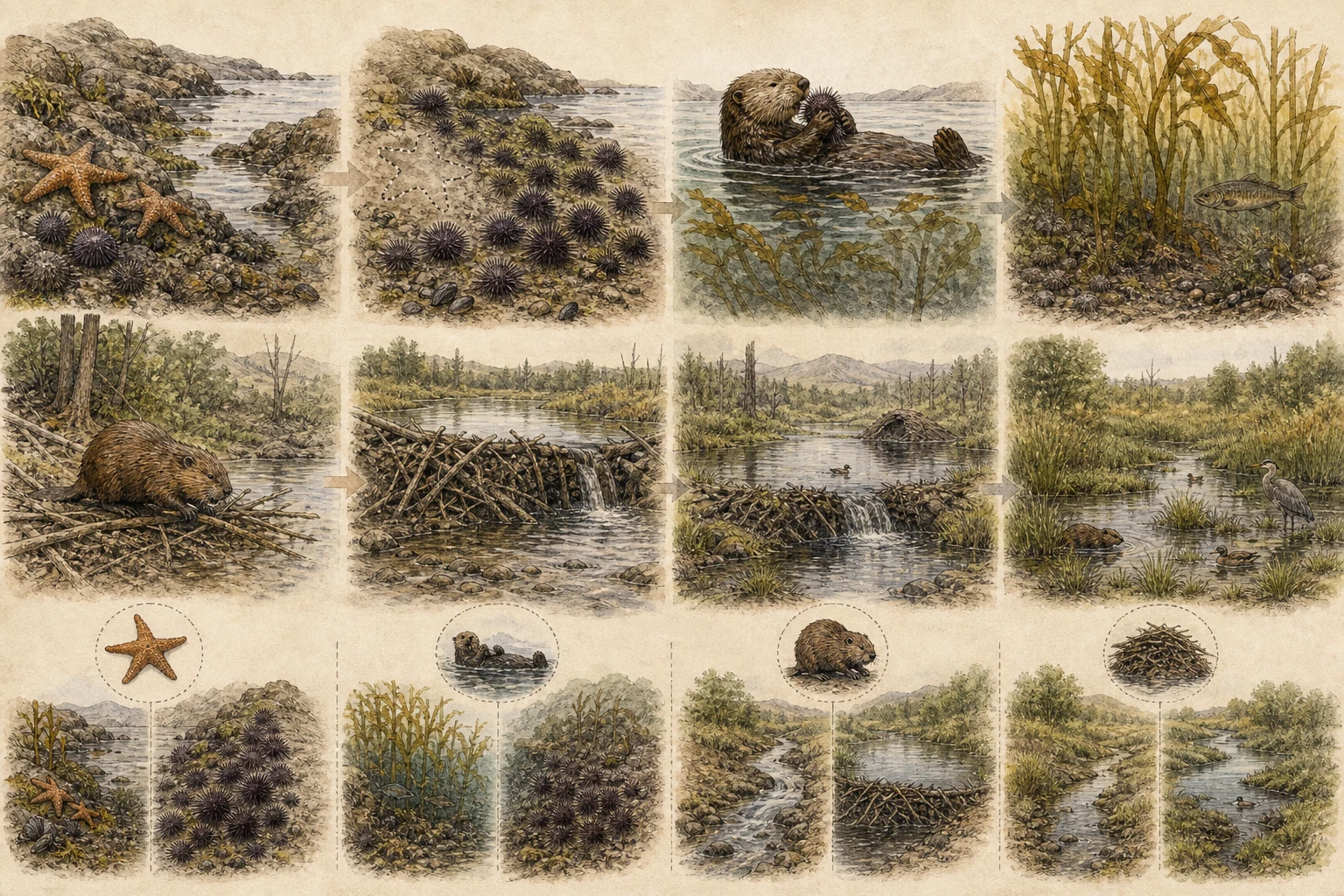
Ecologist Robert Paine coined the term 'keystone species' after experimentally removing ochre sea stars (Pisaster ochraceus) from rocky intertidal plots in Washington State: without sea stars preying on California mussels, the mussels monopolized rock space and crowded out barnacles, chitons, limpets, and algae. In nearshore Pacific waters, sea otters play a similarly disproportionate role by eating herbivorous sea urchins that would otherwise graze kelp forests down to bare rock barrens. The defining test of a keystone species is not sheer biomass or numbers, but an ecological impact on community structure that is large relative to its low or moderate abundance. [1][2][4][5]
- A keystone species exerts a community-wide impact that is disproportionately large compared to its own abundance or biomass.
- Classic keystone predators—such as ochre sea stars and sea otters—maintain diversity by keeping one dominant prey species from monopolizing space or grazing.
- Common trap: calling dominant, high-biomass organisms (like Douglas-fir trees or reef corals) keystone species rather than foundation species.
Engineering changes the physical setting
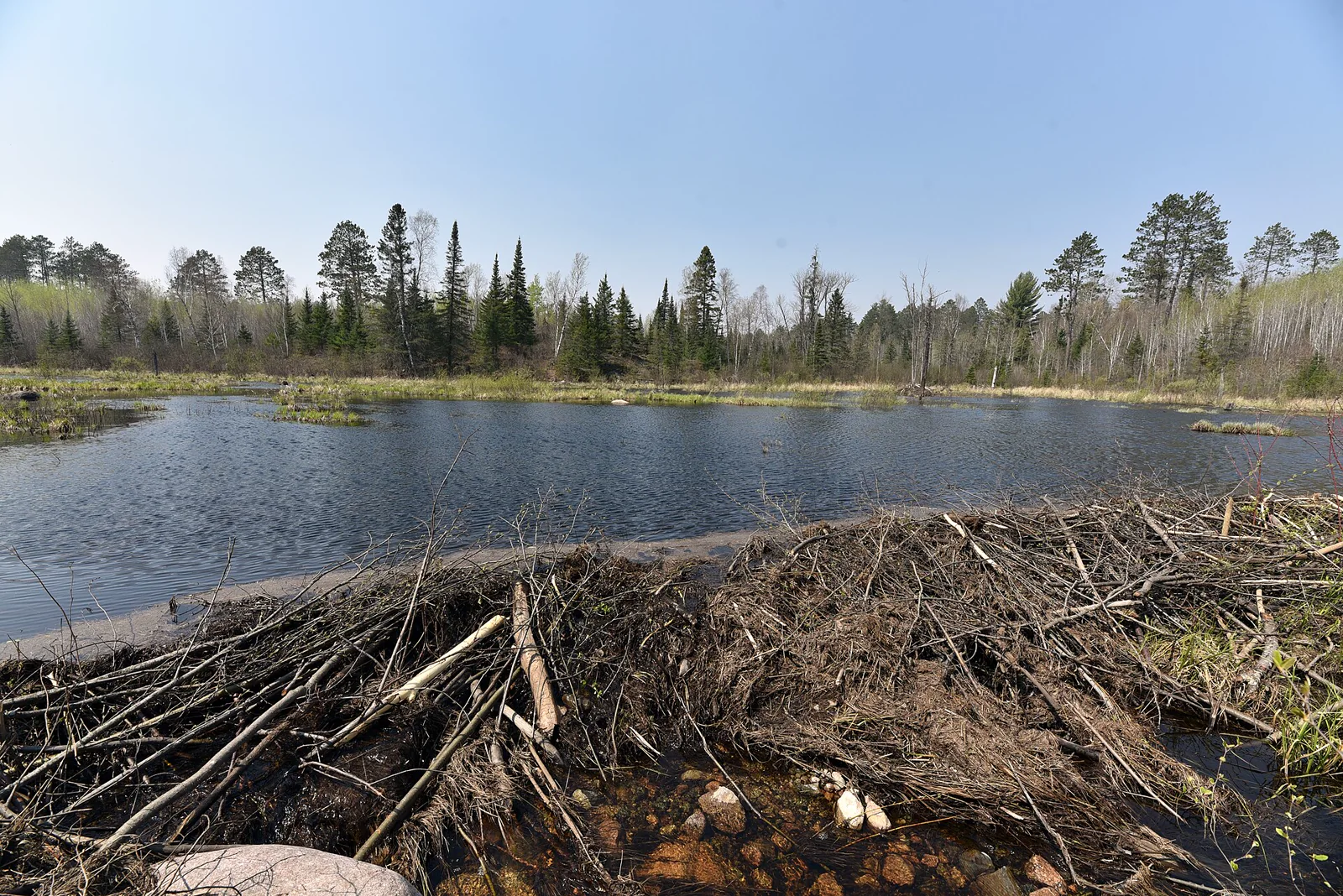
An ecosystem engineer is an organism that creates, significantly modifies, maintains, or destroys physical habitat, thereby regulating the availability of water, light, sediment, or shelter for other species. North American and Eurasian beavers are textbook allogenic engineers: by felling streamside aspens and willows and weaving branch-and-mud dams across channels, they slow stream velocity, raise local water tables, trap nutrient-rich sediment, and flood valley bottoms into complex pond-and-meadow mosaics used by amphibians, waterfowl, juvenile salmonids, and aquatic plants. Elsewhere, woodpeckers excavating tree cavities, prairie dogs digging burrow towns, and reef-building corals act as physical habitat engineers. [2][3][6]
- Allogenic engineers (like beavers and burrowing mammals) rework external materials such as wood, mud, and soil into new habitats.
- Autogenic engineers (like forest trees, kelp, and corals) modify the physical environment through their own living and dead body structures.
- Field check: at a beaver pond, note standing dead snags, sediment benches, and calm backwaters created by the dam.
The labels can overlap without merging
Because 'keystone species' measures disproportionate interaction strength relative to abundance while 'ecosystem engineer' describes physical habitat modification, the two labels ask different ecological questions that sometimes overlap in the same animal. A beaver colony in Acadia or Yellowstone is simultaneously an ecosystem engineer (because its dams physically impound water and reshape stream geomorphology) and a keystone species (where that engineering reorganizes the entire valley community despite beavers making up a tiny fraction of animal biomass). By contrast, a sea otter is a keystone predator without building physical structures, and an abundant earthworm or dominant tree engineers habitat through sheer numbers rather than low-abundance disproportion. [1][2][3][5]
- Beavers qualify as both ecosystem engineers (physical dam building) and keystone species (disproportionate community-wide effect).
- A keystone predator or mutualist does not have to physically modify habitat to hold a community together.
- Keep foundation species (abundant habitat-forming trees, kelps, or grasses) distinct from low-abundance keystone species.
Look for comparisons and mechanisms
In conservation campaigns and popular nature writing, 'keystone' is often stretched until it means little more than 'a charismatic animal we care about.' In field ecology, however, both keystone status and ecosystem engineering are testable, context-dependent claims tied to a specific habitat, spatial scale, and mechanism. A predator that acts as a keystone on wave-exposed headlands may have a much smaller effect in sheltered sandy bays, and a beaver dam built in a steep bedrock canyon floods far less ground than one in a broad alluvial meadow. In your field notes, record the observable physical modification or feeding link and compare adjacent sites with and without the organism. [1][2][4][6]
- Field check: compare an active or abandoned beaver meadow, woodpecker snag, or prairie-dog town with an unmodified patch nearby.
- Whether a species functions as a keystone can shift from one habitat type, prey density, or geographic region to another.
- Describe the specific mechanism—predation on a dominant competitor, dammed water, excavated cavities—rather than using 'keystone' as a vague compliment.
Related guides
Get Fauna and identify it in the field.
Where this guide comes from
Source-checked editorial guide. Last updated . This guide teaches identification and field skills; it is not a substitute for expert verification when it matters.
- Nature Education — Keystone species ↗
- Nature Education — Species with a large impact on community structure ↗
- National Park Service — Acadia's beaver as keystone species and engineer ↗
- National Park Service — Sea otters and nearshore ecosystems ↗
- U.S. Geological Survey — Keystone species definition ↗
- National Park Service — Beaver habitat modification in Yellowstone ↗