Ecological traps explained
Animals and other organisms use evolved cues to select habitat, food, or breeding sites. Rapid environmental change can separate those cues from the conditions they once predicted. A formal ecological trap requires evidence that the organism prefers, or does not avoid, the option and suffers lower fitness there than in another available option.
Last updated
Cues and quality have become mismatched
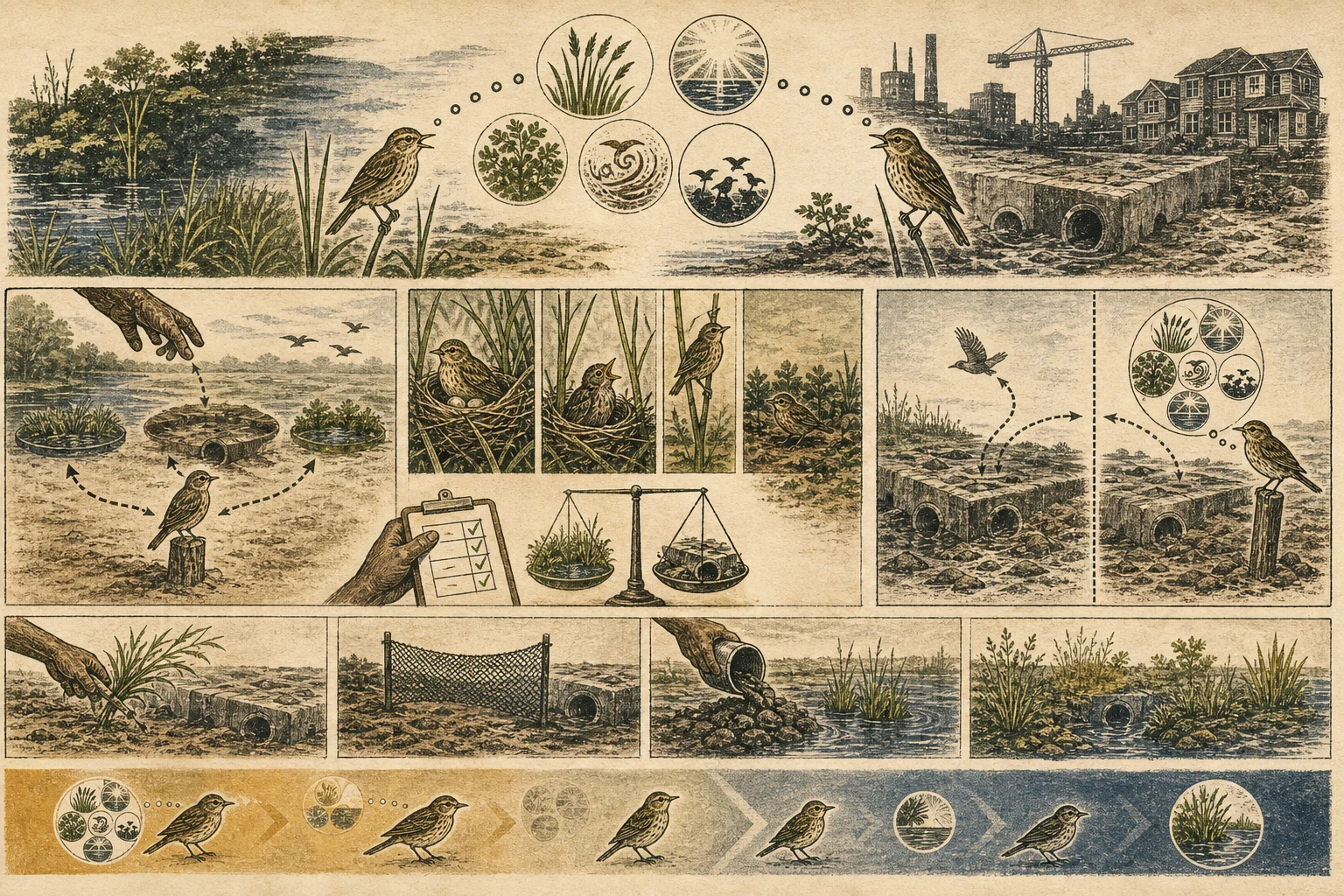
Wild organisms cannot directly preview their future lifetime survival or fledgling count when prospecting for a home; instead, they rely on proximate environmental cues such as canopy density, polarized light reflection, soil moisture, chemical odors, or the presence of conspecifics. When rapid human land-use change, novel structures, exotic vegetation, or climate shifts alter the landscape, a once-reliable cue can become uncoupled from actual survival and reproductive success. Aquatic insects drawn to lay eggs on smooth asphalt roads or dark solar panels that polarize light more strongly than pond water, or songbirds settling in lush-looking exotic shrubs where nest predators thrive, illustrate how evolved decision rules can misfire in novel environments. [1][2]
- Organisms select habitats using immediate sensory cues—like light polarization, vegetation structure, or scent—rather than direct knowledge of survival.
- Rapid human landscape changes can make a hazardous or barren site display stronger attractive cues than high-quality natural habitat.
- An ecological trap is driven by a mismatched behavioral choice rule, not merely by the presence of danger in a habitat.
Three pieces of evidence are needed
Demonstrating a formal ecological trap in the field requires three distinct lines of evidence: organisms must have realistic access to alternative habitats, they must show preference—or at least equal preference in an equal-preference trap—for one option over better alternatives, and individuals choosing that option must suffer lower survival or reproductive success. Field biologists test these criteria by tracking settlement order, territory density, nest initiation, clutch size, chick body condition, and fledging rates across contrasting habitats. Without data on both behavioral preference and comparative fitness, a dangerous roadside, power line, or polluted wetland is more accurately described as a mortality source or degraded habitat than a proven trap. [1][3]
- Proving an ecological trap requires measuring habitat availability, behavioral preference, and resulting survival or reproduction.
- In a severe preference trap, organisms actively choose the lower-fitness habitat over safer available alternatives nearby.
- High mortality at a road, window, or lamp documents a hazard, but does not by itself prove maladaptive habitat preference.
Traps differ from ecological sinks
Ecological traps and source–sink dynamics overlap but ask different questions. A sink is a demographic category: local reproduction falls short of local mortality, so the population persists there only if immigrants keep arriving from productive source habitats. Animals often enter ordinary sinks only after dominant individuals fill the best territories and push subordinates into marginal ground. An ecological trap adds a behavioral twist—settlers choose the poor habitat first or equally despite better options standing open. Even well-intentioned conservation projects, such as placing nest boxes for tree swallows in intensively farmed landscapes where pesticides or mowing later depress chick survival, can inadvertently create traps if settlement cues outpace food supply and safety. [2][4]
- An ordinary sink habitat has negative local population growth, but animals may only settle there when better territories are full.
- An ecological trap is a sink that organisms actively prefer or treat as equal to higher-quality available habitats.
- High occupancy or dense nesting in a restored or artificial site can mask poor fledgling survival if demographics are not monitored.
Management can change cues or outcomes
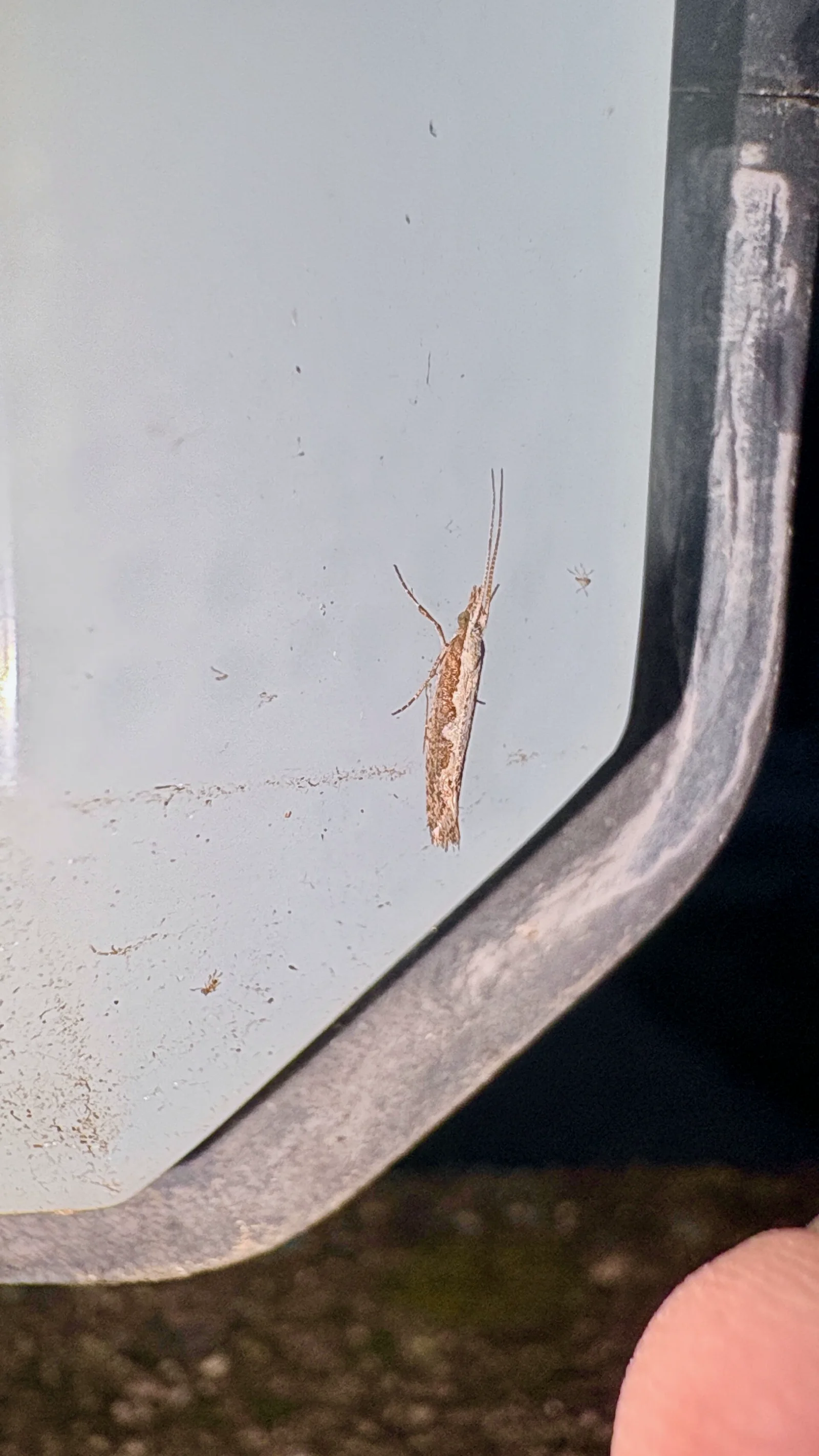
Once researchers identify the mechanism behind an ecological trap, conservation managers can intervene from two directions: upgrading the site's actual survival and reproductive value—for instance, delaying hay harvest until grassland birds fledge or reducing pesticide exposure around nest boxes—or dulling the misleading cue that lures wildlife in, such as modifying polarized light reflection on artificial surfaces or removing invasive shrubs that concentrate nest predators. Over time, wild populations may also weaken a trap through behavioral learning or natural selection on cue preferences. A single moth resting on a street lamp housing shows nocturnal phototaxis, yet establishing a population-level trap still requires testing alternative habitats and fitness outcomes. [3][4]
- Managers can disarm an ecological trap either by removing the hazard to boost survival or by muting the deceptive sensory cue.
- Delaying mowing in hayfields or relocating nest boxes away from intensive agriculture turns a potential trap back into productive habitat.
- Observing an insect at an artificial light shows attraction, not how that attraction compares with alternative habitats or lifetime fitness.
Related guides
Get Fauna and identify it in the field.
Where this guide comes from
Source-checked editorial guide. Last updated . This guide teaches identification and field skills; it is not a substitute for expert verification when it matters.
- Proceedings. Biological sciences — Ecological traps: current evidence and future directions ↗
- Ecological applications : a publication of the Ecological Society of America — Habitat selection and the perceptual trap ↗
- Proceedings. Biological sciences — How the type of anthropogenic change alters the consequences of ecological traps ↗
- Ecology and evolution — Nonideal nest box selection by tree swallows breeding in farmlands: Evidence for an ecological trap? ↗