Why birds molt
A mature feather cannot heal itself. Molt replaces worn feathers, but birds do it on schedules that protect flight and balance the other demands of breeding, migration, and survival.
Last updated
A finished feather is a replaceable structure
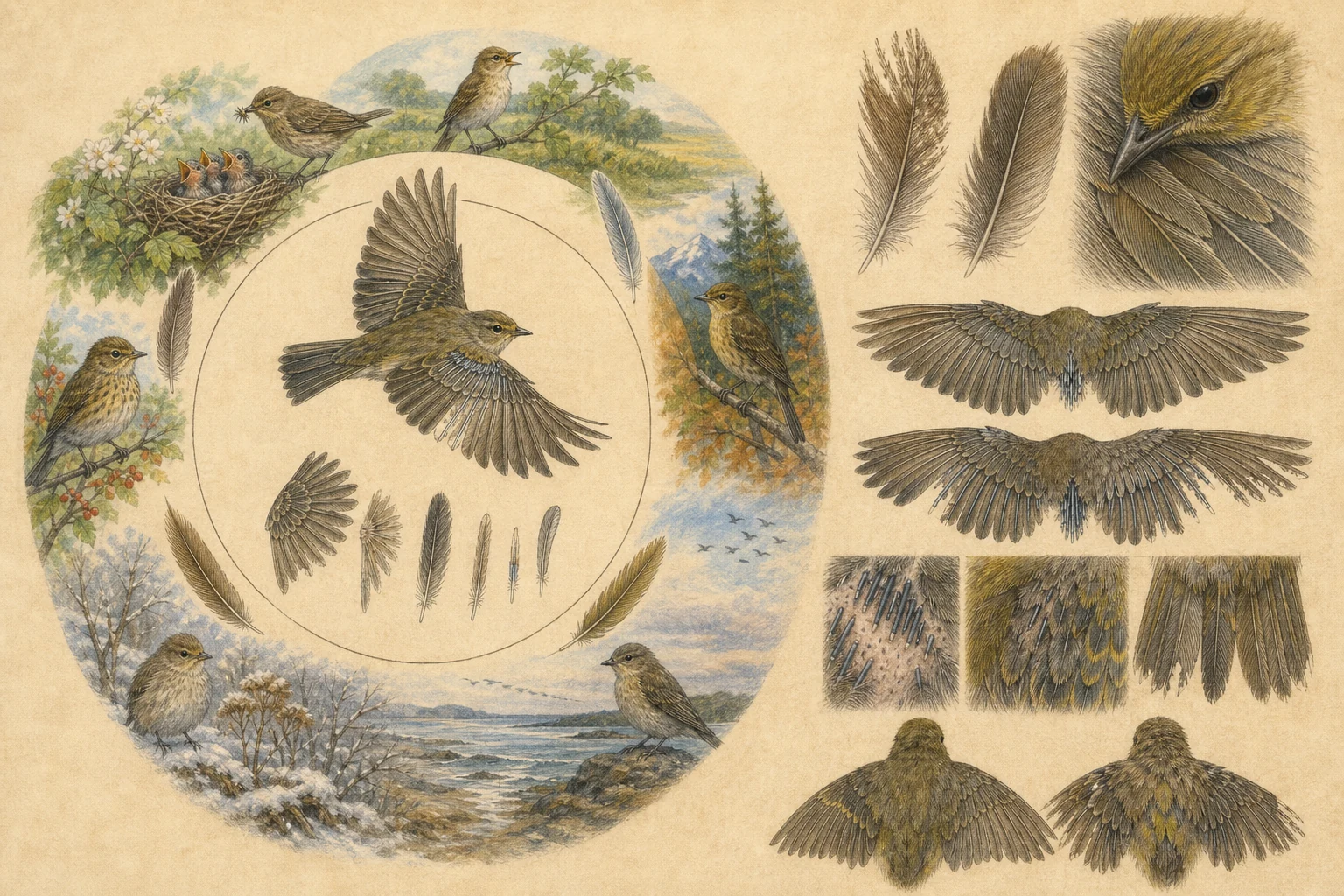
A growing feather is fed by a vascular pulp inside a waxy keratin sheath, but once the vane unfurls and matures, the blood supply withdraws and the feather becomes dead beta-keratin—like a mammalian hair or claw. Daily preening zips separated barbules back together and spreads protective uropygial oil, yet ultraviolet light, abrasion against twigs, feather-chewing lice, and aerodynamic stress steadily fray the tips. Because a worn feather cannot heal itself in place, every bird must periodically push old feathers from the follicles and grow fresh replacements. [1][2]
- Fully grown feathers are dead keratin structures that cannot heal broken shafts or abraded vane tips
- New replacement feathers emerge from the skin follicle encased in a vascular, waxy pin-feather sheath
- Dark melanin-rich feather tips resist sunlight and physical abrasion longer than unpigmented white edges
Complete and partial do not mean fast and slow
Ornithologists distinguish molt extent by which feather tracts are replaced. A complete molt—typically the prebasic molt once a year—replaces every body, wing, and tail feather, whereas a partial molt replaces contour plumage and sometimes inner wing coverts while retaining the primary and secondary flight feathers. Most songbirds and raptors drop flight feathers sequentially in matched pairs from the inner primaries outward so they never lose the ability to fly, whereas ducks, geese, swans, and grebes shed all flight feathers simultaneously and spend several weeks flightless on open water. [1][2][3]
- A complete molt replaces every body, wing, and tail feather; a partial molt refreshes body plumage and selected coverts
- Most passerines and raptors drop flight feathers in symmetrical pairs so they remain airborne throughout molt
- Waterfowl, loons, and grebes shed all flight feathers at once and rely on open water for safety while flightless
Timing has to fit the annual cycle
Synthesizing thousands of new feathers demands massive protein and energy investment while temporarily reducing wing area and thermal insulation, so birds rarely overlap heavy molt with peak nestling feeding or long-distance flight. Many temperate songbirds complete their main molt on the breeding grounds in late summer after young fledge, whereas some long-distance migrants fly to productive stopover regions first, molt on the wintering grounds, or suspend wing molt mid-sequence. Long-term ringing datasets show that individuals also adjust post-breeding molt start dates and speed in response to late broods and local weather. [2][3][4][5]
- Feather synthesis is energetically expensive, so most species separate heavy molt from breeding and migration
- Late-nesting or double-brooded songbirds often begin post-breeding molt later and replace feathers more rapidly
- Some long-distance migrants pause or split molt around autumn migration, finishing flight feathers on wintering grounds
Read molt as a pattern, not an injury diagnosis
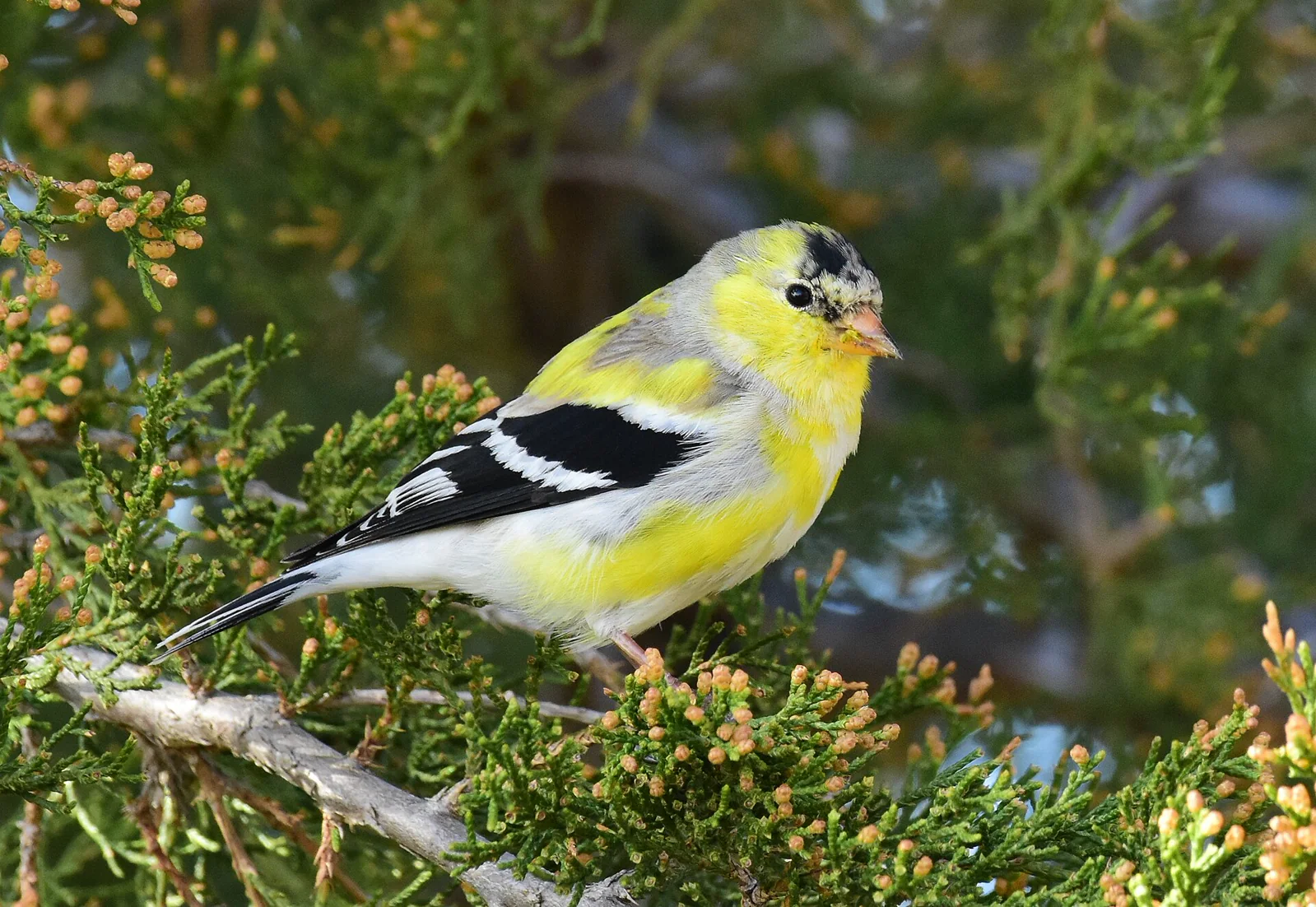
In late summer, quiet songbirds skulking in dense brush with scruffy heads, patchy body color, or notched wings are usually in normal molt rather than sick or injured. Look for left-right symmetry in missing flight feathers, contrast between faded, abraded older remiges and dark, crisp-edged new ones, or pale waxy pin sheaths around the neck and crown. Note the date, age cues, and exact feather tracts involved, keeping in mind that occasional bald heads on cardinals or jays and fright-molted tail feathers can mimic or complicate normal seasonal replacement. [2][3]
- Symmetrical notches in both wings or stepped tail lengths indicate orderly flight-feather replacement rather than injury
- Contrast between bleached, frayed old feathers and dark, pale-fringed new feathers helps age many birds in autumn
- Molting songbirds often become quiet and stay inside dense cover while wing gaps reduce flight efficiency
Related guides
Get Fauna and identify it in the field.
Where this guide comes from
Source-checked editorial guide. Last updated . This guide teaches identification and field skills; it is not a substitute for expert verification when it matters.