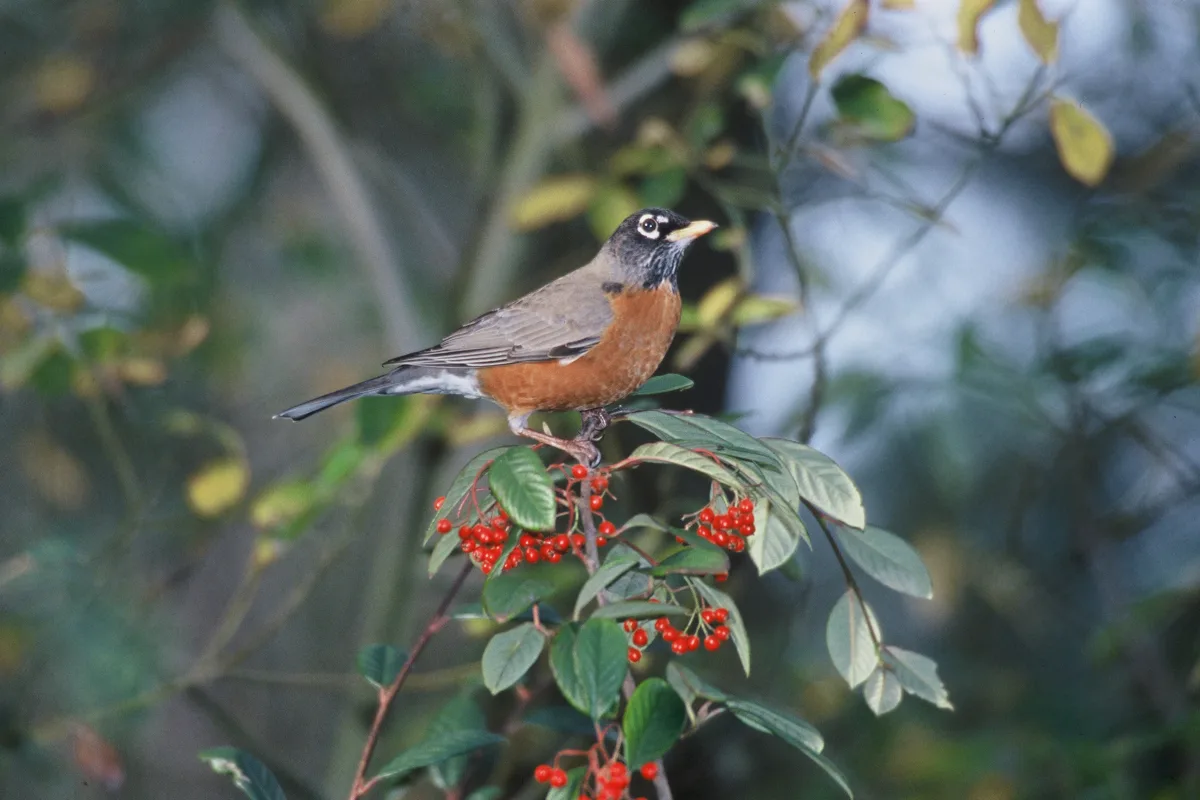
American Robin
Turdus migratorius
A familiar thrush that hunts on lawns and sings clear, rising and falling phrases.
What to look for
- 01
Warm orange breast with a gray-brown back
- 02
Dark head, yellow bill, and broken white eye ring
- 03
Long-legged thrush shape with an upright stance
Where it lives
Lawns, gardens, parks, woodland edges, farms, mountains, and many other open habitats across North America.
How it moves
Runs and pauses on open ground to find invertebrates, then gathers in fruiting trees or winter flocks.
Common lookalikes
Varied thrushes show a dark breast band and bold orange wing markings. Eastern bluebirds are smaller and bluer-backed.
Observe responsibly
Listen at dawn, then watch open ground from a respectful distance. Keep cats indoors to protect ground-foraging birds.
Avoid trimming occupied nests. If you find a fledgling, observe from a distance before assuming it needs help.
American robins are widespread, while pesticide use, window strikes, and outdoor cats create local risks.
Get Fauna and identify it in the field.
Where this guide comes from
Sources are linked below. Field marks vary with age, sex, season, region, light, and viewing distance.