Watching a pollinator garden
The useful question is not only which pollinators visit, but which flowers they use, when they arrive, and what they do. A fixed patch and a fixed watch turn garden traffic into comparable observations.
Last updated
Set one repeatable watch
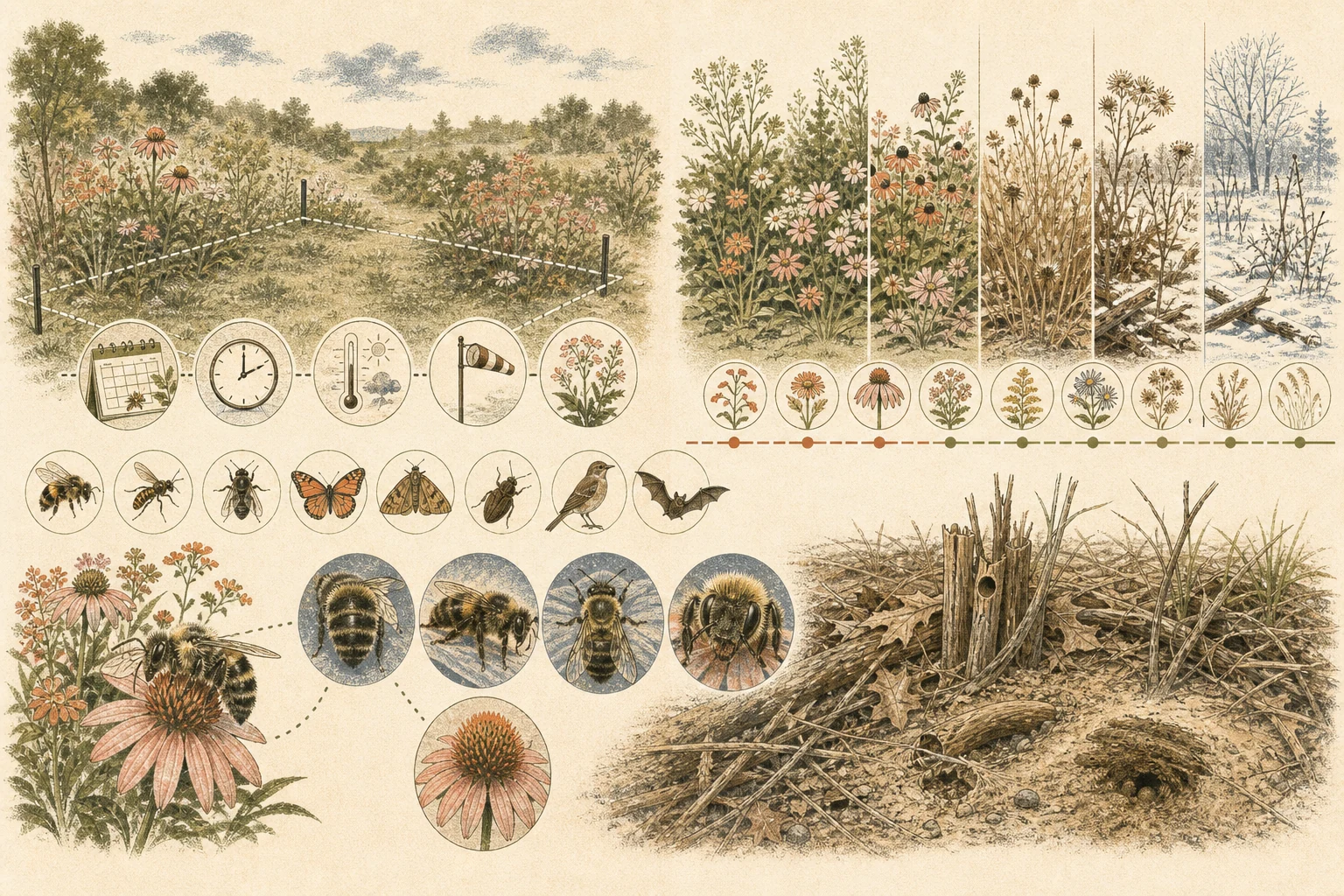
Select a single flowering clump or a meter-wide patch that you can see clearly without stepping into the bed, and watch it for a fixed ten- or fifteen-minute window. Before starting the timer, note the date, time of day, air temperature, cloud cover, wind speed, and which plant species have open blossoms inside your frame. Tally an insect only when it contacts the reproductive parts of a flower rather than merely resting on a leaf, so your counts can be compared honestly across weeks and follows community-science monitoring protocols. [3][6]
- Fix both the patch size and the observation duration—such as ten minutes at one flowering clump
- Record temperature, sun or cloud, wind, and open flower species before starting each timed count
- Count visitors only when they touch stamens or pistils, separating active floral visits from leaf perching
Start with honest visitor groups
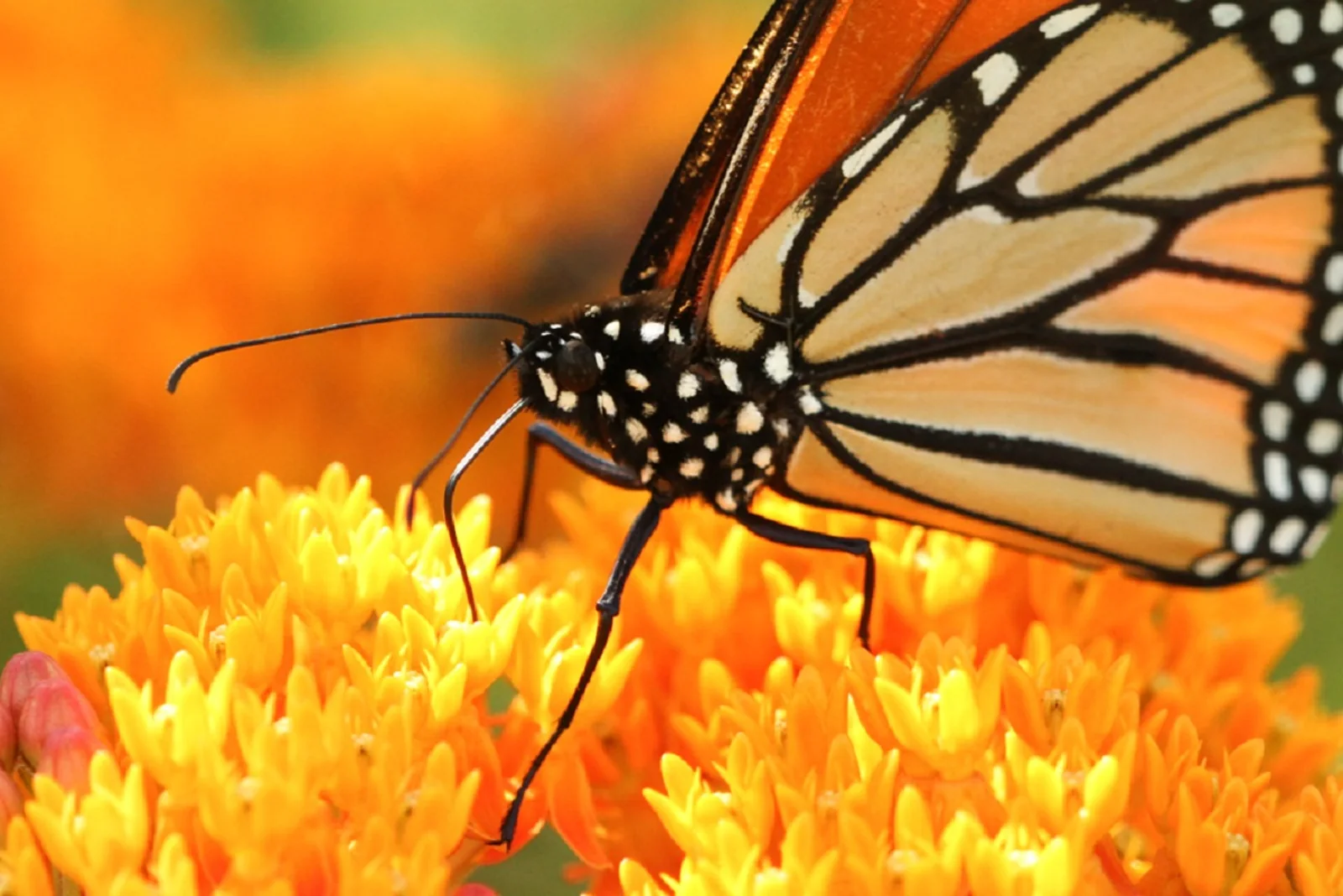
Flowers attract a wide guild of animals—bees, syrphid and bombyliid flies, wasps, butterflies, day-flying moths, beetles, and in many regions hummingbirds or sunbirds. Rather than guessing species names on the wing, sort visitors into honest morphogroups you can separate reliably by antennae, eye shape, wing count, and pollen-carrying structures. Watch whether the visitor is packing pollen onto leg scopa or underside hairs, probing deep corollas for nectar, hovering in place, or hunting other insects among the petals. [1][3][5]
- Bees carry branched body hairs, four wings, longer antennae, and pollen loads on hind legs or abdominal brushes
- Flower-visiting flies have two wings, large eyes that nearly meet, short stubby antennae, and often hover in place
- Butterflies, moths, wasps, and flower beetles each use distinct mouthparts and landing postures on open blooms
Photograph the evidence, not a forced answer
Many native bees and hoverflies cannot be identified to species without microscopic venation or genital characters, while bumblebees and larger butterflies often can be named if key angles are captured. Aim for a short burst of sharp macro photographs showing the top of the thorax and abdomen, a side profile including the face and cheek length, the hind leg pollen basket or brush, and the flower being visited. Record the observation at genus, family, or broad guild level whenever field photos leave sibling species ambiguous. [4][5]
- Capture dorsal thorax and abdomen bands, a side view of the head and cheek, and the hind leg structure
- Include the host flower in at least one frame to document floral choice and provide a size reference
- Stop at genus or broad morphogroup when separating look-alike species would require microscopic examination
Read the garden across a season
Repeating your timed watch from early spring into late autumn reveals how pollinator guilds turn over and where the garden's forage calendar has gaps. Early-emerging queen bumblebees and mining bees depend on spring-blooming trees and perennials, midsummer brings a peak of solitary Megachile and Halictus bees, and late asters or goldenrods fuel autumn queens and migrating butterflies. Notice non-floral habitat too: bare sunny soil patches, pithy plant stems, and undisturbed leaf litter provide the nesting and overwintering quarters that keep resident pollinators returning. [2][6]
- Track bloom succession from early spring through late autumn to spot weeks when nectar and pollen run short
- Watch how shallow umbrella-shaped flower clusters favor short-tongued flies and beetles while deep tubes favor long-tongued bees
- Leave bare soil patches, hollow stems, and autumn leaf litter unmulched and pesticide-free for ground- and stem-nesting bees
Related guides
Get Fauna and identify it in the field.
Where this guide comes from
Source-checked editorial guide. Last updated . This guide teaches identification and field skills; it is not a substitute for expert verification when it matters.
- USDA Natural Resources Conservation Service — Insects and pollinators ↗
- USDA NRCS — Habitat assessment for pollinators in yards and gardens ↗
- Xerces Society — Community science monitoring guide for native bees ↗
- U.S. Geological Survey — Bumblebee identification from photographs ↗
- U.S. Geological Survey — Bee Lab identification and survey work ↗
- Xerces Society — California pollinator monitoring guide ↗