Snow tracking basics
Snow preserves movement beautifully, but it also changes prints as crystals settle, melt, refreeze, and drift. Read the repeated pattern first and keep claims about species, age, and behavior conservative.
Last updated
Judge the snow before the print
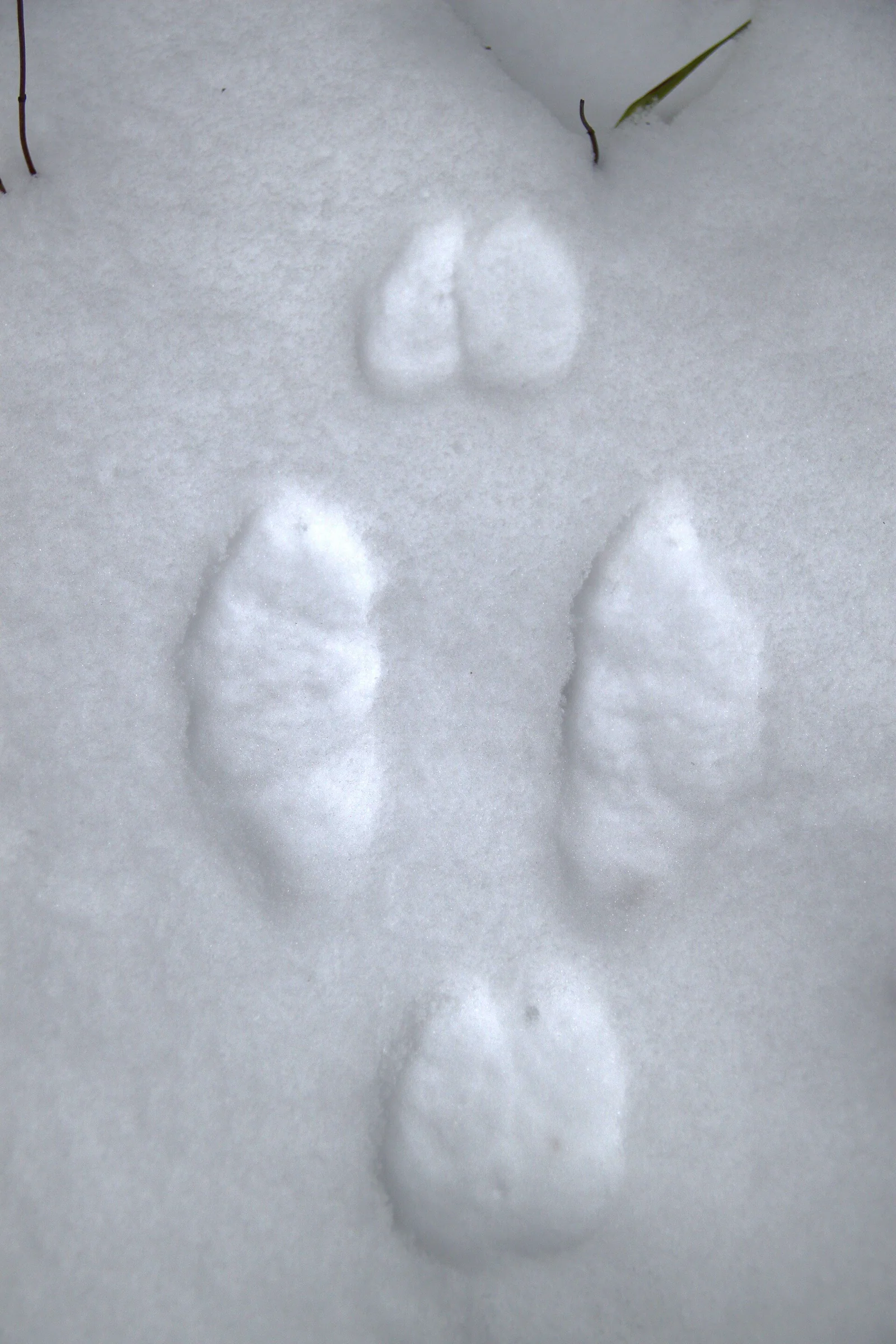
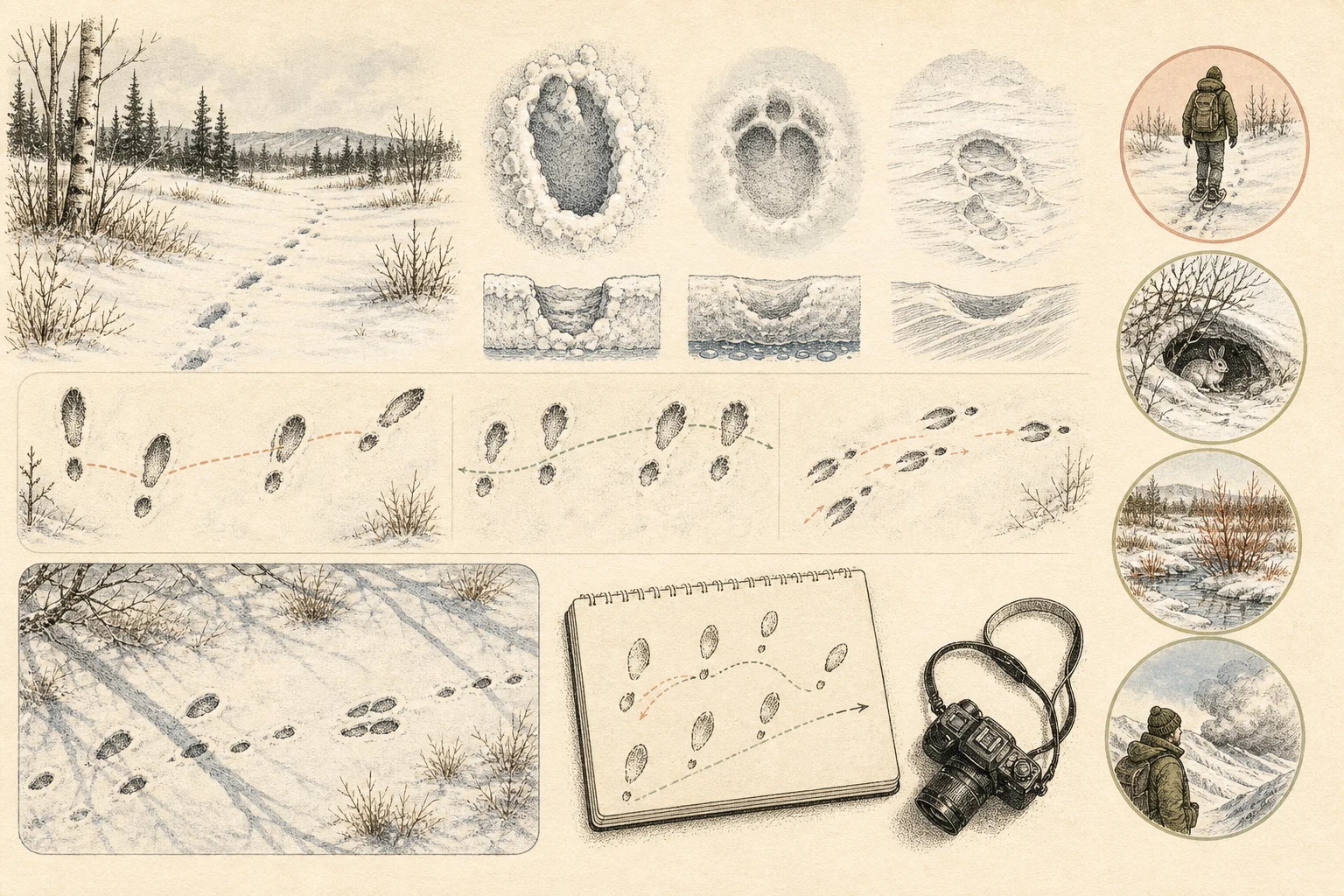
Snow is an active, changing medium rather than fixed plaster. Deep, cold powder collapses inward around a lifting foot and hides toe pads behind a trough of scuff marks; wet, packing snow holds crisp pad and claw impressions when fresh; and afternoon sun or wind can melt out the walls of a Red Fox print until it looks as wide as a Coyote or Gray Wolf track. A sharp-edged print on shaded north-facing snow may hold its outline for days, whereas a south-facing print can blur in an hour, so always check temperature, sun exposure, wind, and time since the last snowfall before judging age or size. [1][3]
- Note whether the snow is powdery, crusted, wet, or refrozen.
- Check recent snowfall, wind, sun, and temperature changes.
- Choose the least distorted print for close study.
Classify the repeating pattern
When individual prints are sunk deep below the surface, the overall rhythm of the trail is far more reliable than toe counts. Walkers and trotters—including deer, elk, foxes, and coyotes—often step in an alternating diagonal line or place the hind foot neatly into the front impression to save energy in deep snow. Hoppers such as snowshoe hares, cottontails, and tree squirrels bound forward so their longer hind feet land ahead of and outside the smaller front prints, pointing in the direction of travel. Weasels, mink, and martens typically bound across snow in paired two-by-two or diagonal four-print clusters. [2][3]
- Scan the trail from several steps away before crouching over one print.
- Count how many prints repeat in each group.
- Mark changes in gait instead of assuming the whole trail was made at one speed.
Measure a trail, not just a foot
Single-print dimensions in snow are notorious for misleading observers when walls slump or feet slide on entry. Recording the trail width (straddle), stride or bound length between repeating sets, direction of travel, and how deeply the animal sank into the crust gives you structural evidence that survives mild melting. Photograph both the long trail in low-angle sidelight—which casts shadows into shallow depressions—and straight down over the cleanest individual print with a ruler laid at the same level as the snow surface. [1][3]
- Place a ruler beside the track without stepping into the trail.
- Measure several clear prints and report a range.
- Record nearby beds, browse, scat, slides, or tree sign separately.
Protect winter wildlife and yourself
Winter is an energy bottleneck for wild animals, and forcing a browsing deer, roosting grouse, or hunting coyote to flee through deep snow drains calories it cannot easily replace. Read the story by backtracking—walking in the reverse direction of the animal's travel—or by studying where the trail crosses an established path, rather than following fresh tracks toward a bedded animal or active den. Stay on permitted winter routes, respect seasonal wildlife closures, and watch daylight and ice conditions so a compelling trail never pulls you into unsafe terrain. [4][5]
- Turn back if an animal reacts to your presence.
- Check weather, route conditions, ice, and local closures before leaving.
- Do not rely on an unknown trackway for navigation.
Related guides
Get Fauna and identify it in the field.
Where this guide comes from
Source-checked editorial guide. Last updated . This guide teaches identification and field skills; it is not a substitute for expert verification when it matters.