Reading browse, rubs, and bark sign
Plants preserve feeding and rubbing sign after an animal has gone. Read the damaged edge, its height and extent, nearby tracks or droppings, and the plant's response before assigning a maker.
Last updated
Read the broken edge
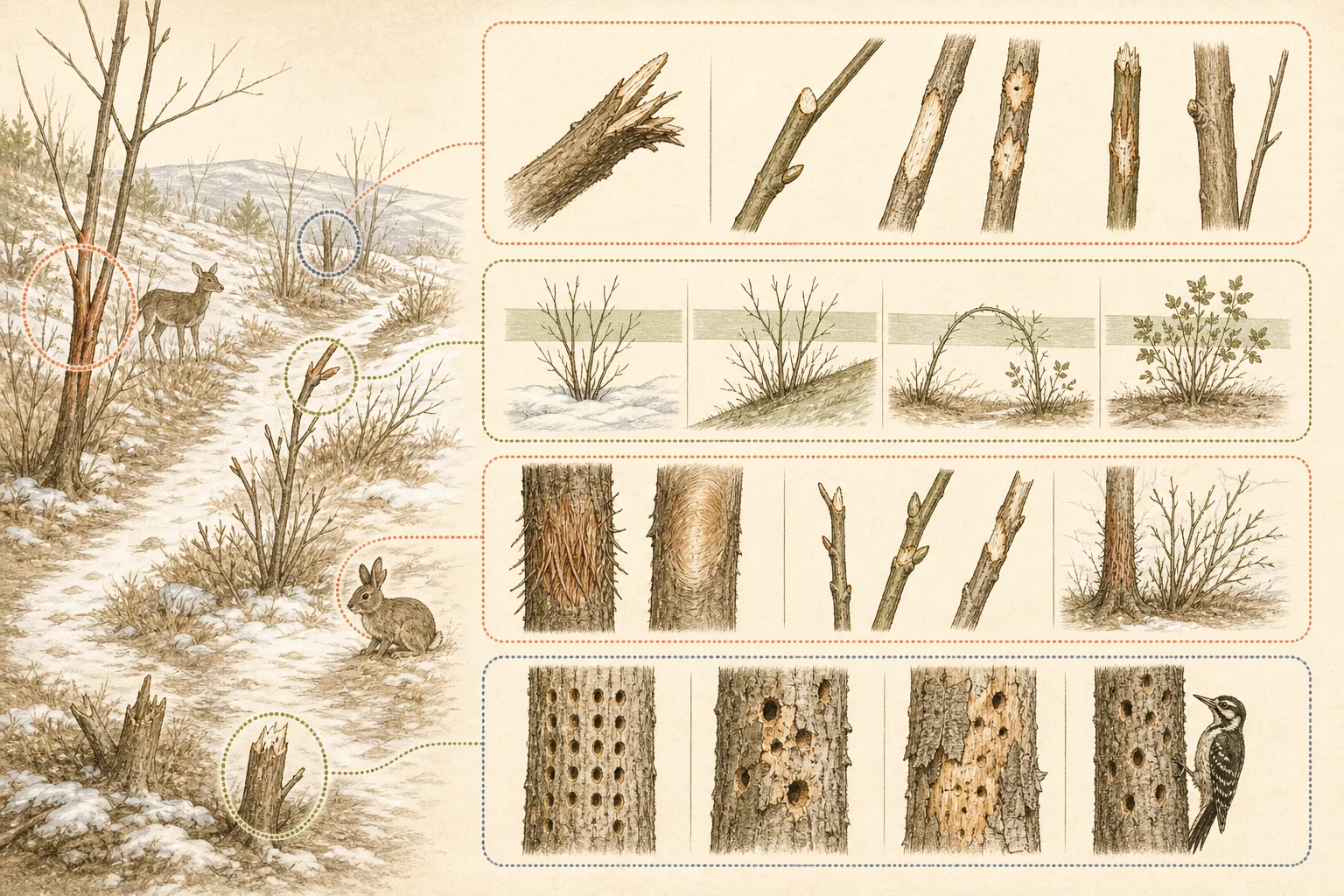
How a woody stem was severed tells you immediately about the dental anatomy of the browser. Deer, elk, and moose have lower incisors that bite against a tough upper dental pad rather than upper front teeth; when they feed on a twig, they clamp and jerk upward, leaving a crushed, fibrous, ragged tip with a strip of bark often peeled down one side. Cottontails, snowshoe hares, and rodents carry sharp, chisel-like upper and lower incisors that slice through twigs at a clean, smooth 45-degree angle that looks almost as if it were snipped with garden pruners. [1][2][3]
- Inspect several damaged twigs rather than the neatest example.
- Compare fresh inner color with older gray or darkened surfaces.
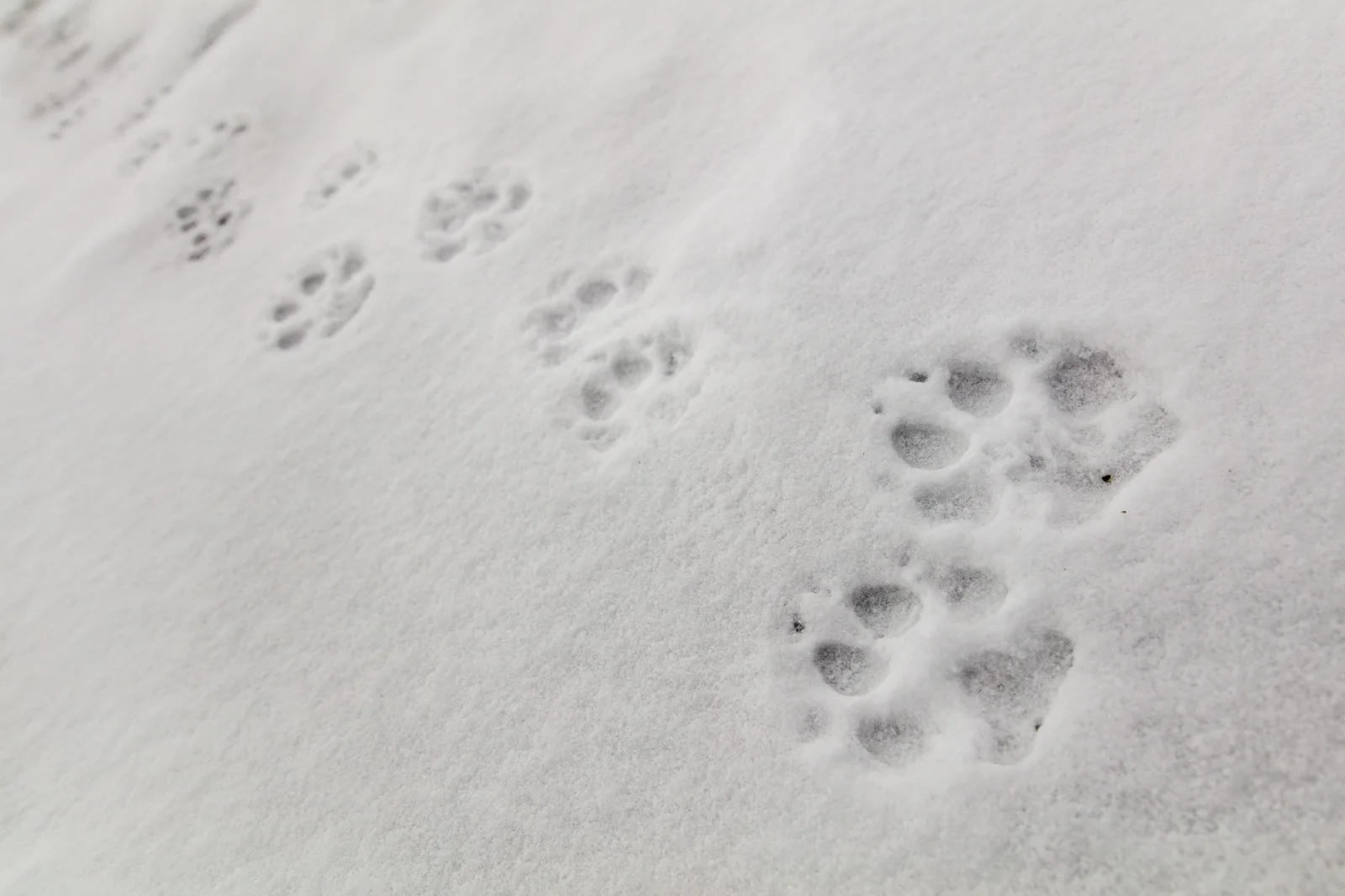
- Look for tracks and droppings before choosing among overlapping mammals.
Use height as a range, not a verdict
Measuring how high feeding or bark gnawing sits above the ground helps separate small ground-dwellers from long-legged ungulates, but winter snowpack can easily fool an uncritical observer. Voles and mice typically girdle bark near the root collar beneath protective snow cover; cottontails and hares clip stems up to about two feet above whatever snow surface they were standing on, meaning spring thaw can leave rabbit cuts dangling four feet in the air. White-tailed and mule deer commonly browse from ground level up to five or six feet, while elk and moose reach substantially higher. [1][2][3][5]
- Note whether damage continues above or below the first obvious mark.
- Record current snow depth when reading winter browse.
- Compare the same plant species at browsed and unbrowsed spots.
Separate rubbing from feeding
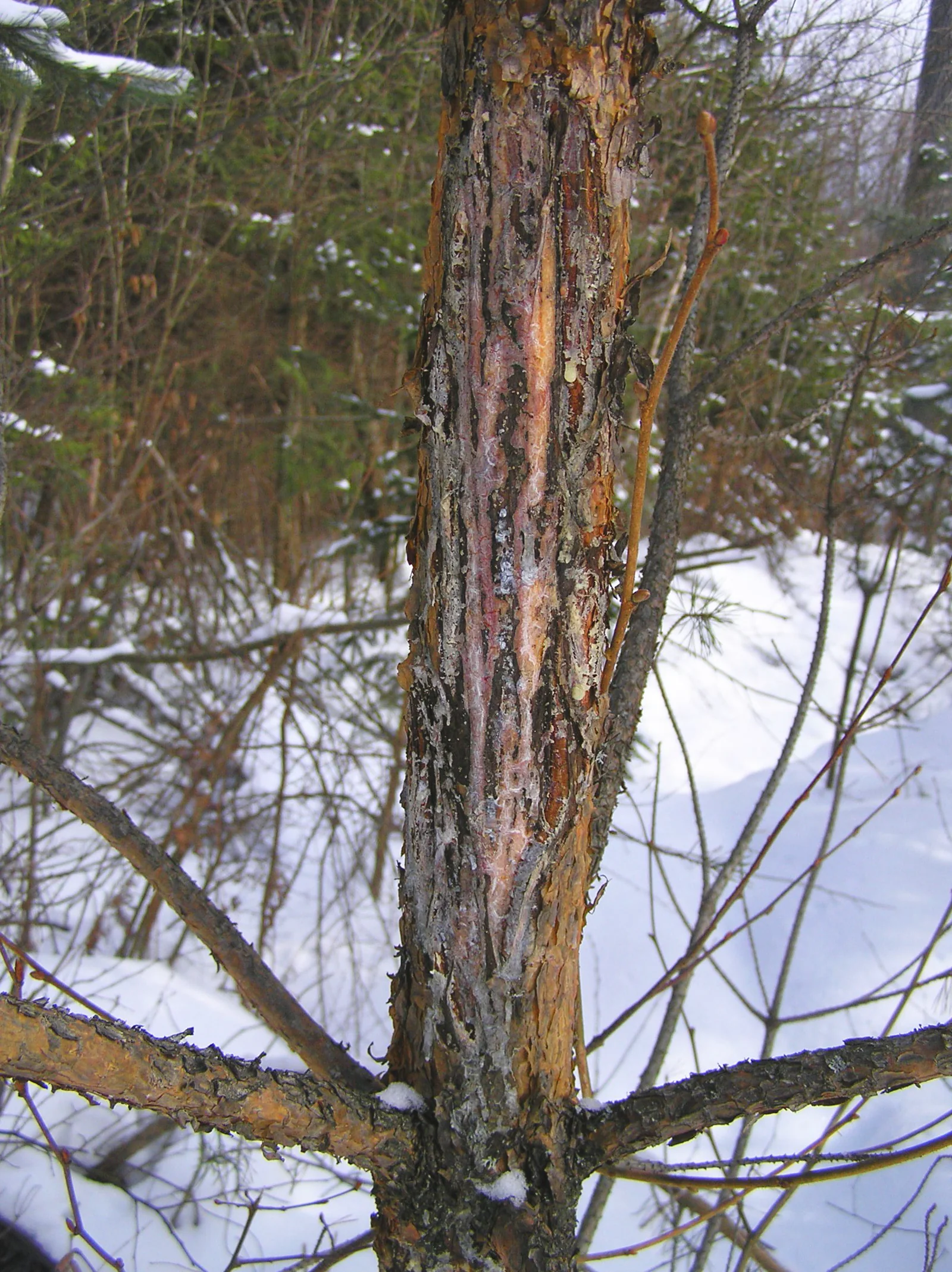
Not all stripped bark is a meal. When bucks and bull elk shed their antler velvet in late summer and polish their racks through the autumn rut, they thrash saplings and young trees, shredding outer bark into hanging ribbons and burnishing the exposed sapwood smooth without leaving incisor grooves. By contrast, winter bark feeding by porcupines, beavers, rabbits, or hungry cervids exposes distinct, repetitive tooth channels carved into the nutritious inner phloem and cambium. Because deer frequently browse twigs right beside a rub tree, document the two signs separately. [1][3][5]
- Photograph the full trunk and the close texture of the scar.
- Look for broken side branches and nearby tracks.
- Avoid peeling loose bark to make the mark easier to see.
Notice patterned bird sign
Tree trunks also record unmistakable avian foraging architecture. Yellow-bellied and red-breasted sapsuckers chisel neat, horizontal rows and rectangular grids of shallow, quarter-inch wells into living birch, maple, apple, and pine bark, returning repeatedly to lap up the welling sap and the insects trapped in it. Other woodpeckers leave very different work: superficial bark scaling where outer flakes were pried off in search of bark beetles, or deep, rectangular and conical excavations chiseled into dead heartwood after carpenter ants and wood-boring beetle larvae. [4][6]
- Record whether holes form rows, patches, flakes, or deeper excavations.
- Note sap, resin, frass, loose bark, and tree condition without touching them.
- Use a local bird guide before attempting a species identification.
Related guides
Get Fauna and identify it in the field.
Where this guide comes from
Source-checked editorial guide. Last updated . This guide teaches identification and field skills; it is not a substitute for expert verification when it matters.
- University of Minnesota Extension — identifying deer, rabbit, and rodent damage ↗
- Penn State Extension — cottontail rabbit damage identification ↗
- Penn State Extension — white-tailed deer damage and monitoring ↗
- USDA Forest Service — yellow-bellied sapsucker feeding wells ↗
- National Park Service — Track Makers ↗
- USDA Forest Service — bark-flaking and excavation by foraging woodpeckers ↗