How to read animal tracks
A track is a sentence about an animal that has already left. Learn to read the shape, the count, and above all the pattern the prints make together.
Last updated
Find a clean print first
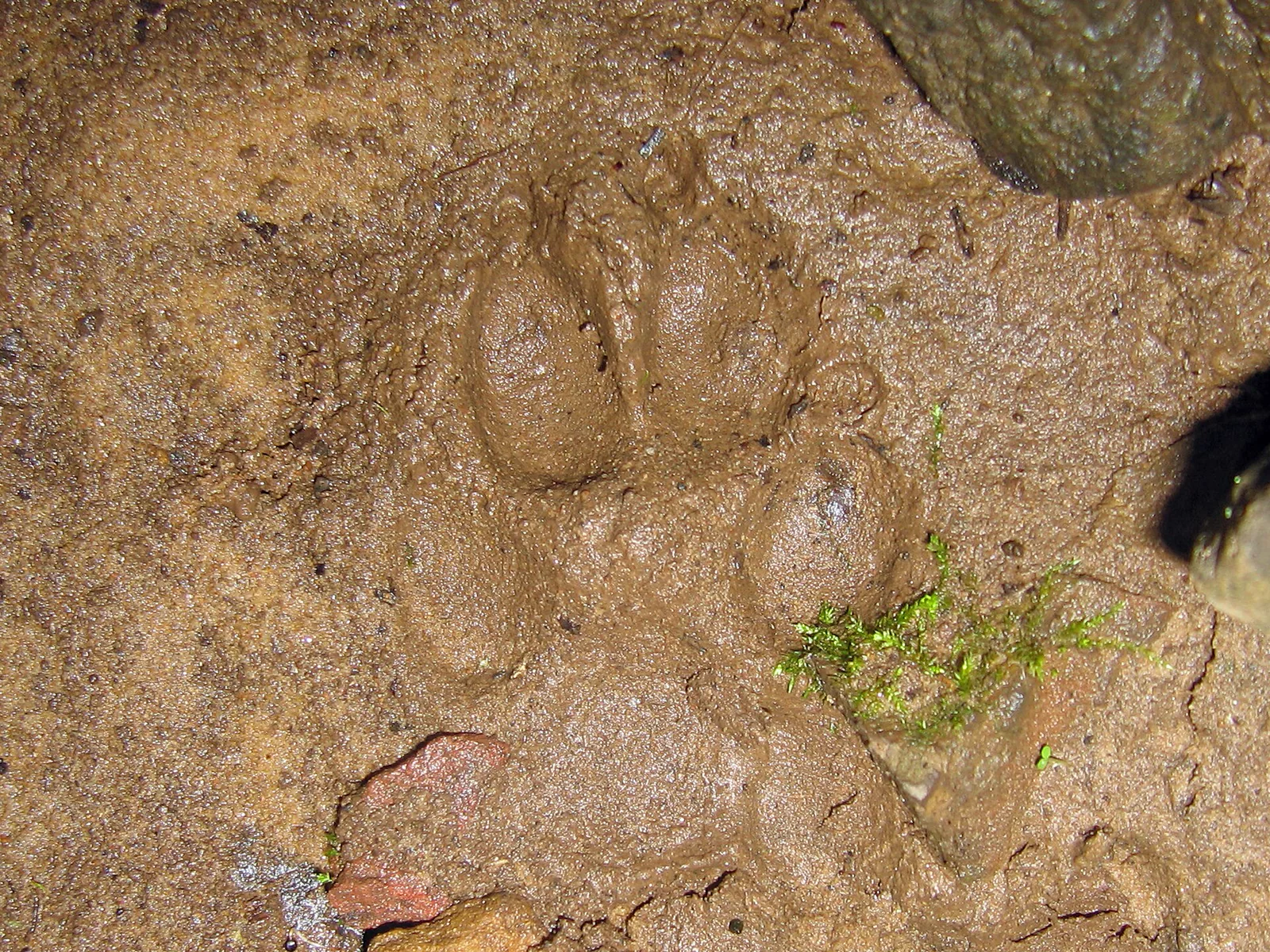
Most tracks are partial or smeared. Walk the trail until you find one crisp print in good substrate, then work from that. Damp sand, firm mud, and a light dusting of snow record detail well; dry dust, deep snow, and coarse gravel all distort size and blur toes. [1][2][3][4]
- Measure length and width at the bottom of the impression, excluding claw tips; record claw marks separately
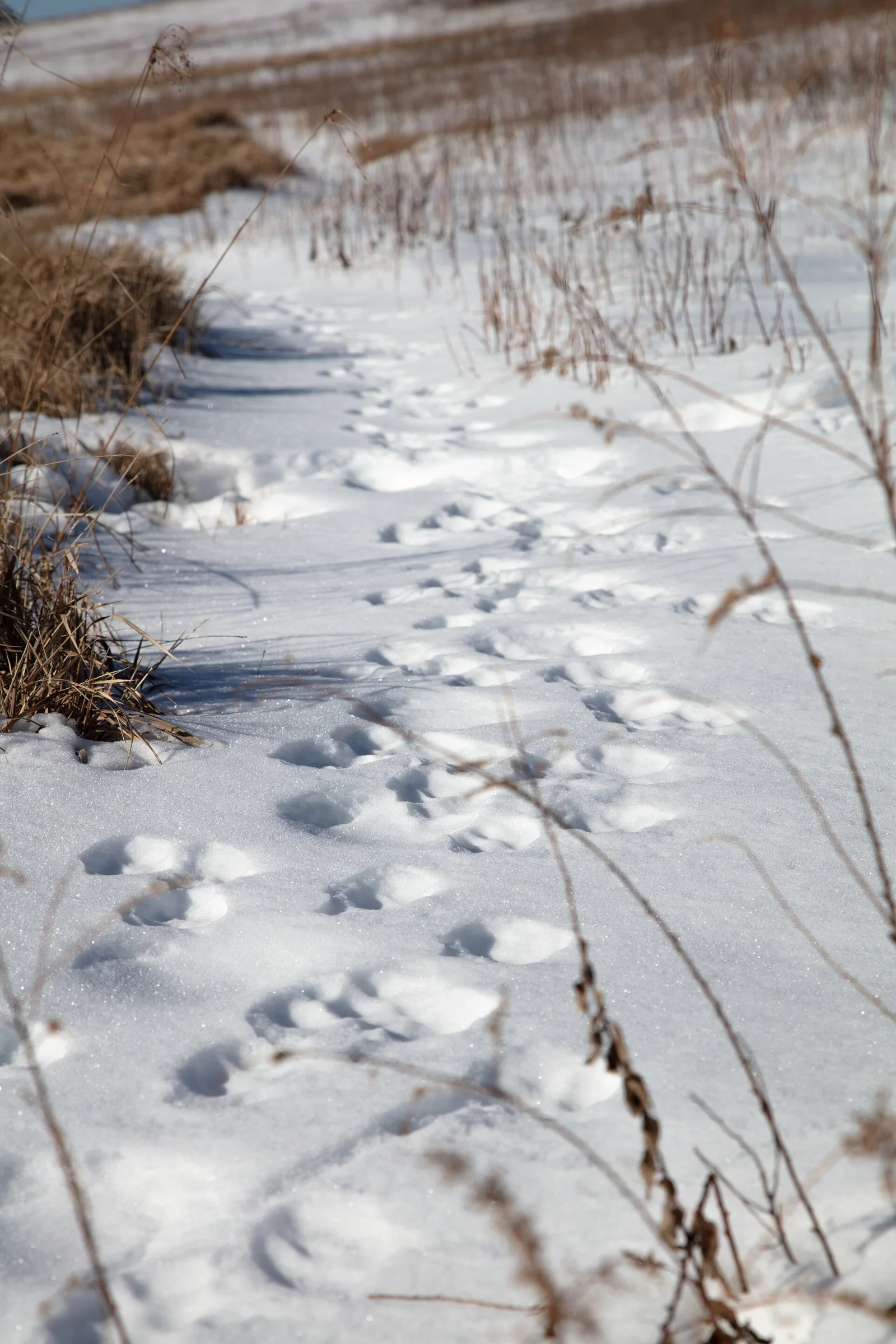
- Substrate changes apparent size — a print in deep snow can look far larger than the foot that made it
- Photograph with something for scale, and shoot straight down rather than at an angle
Front and hind feet differ
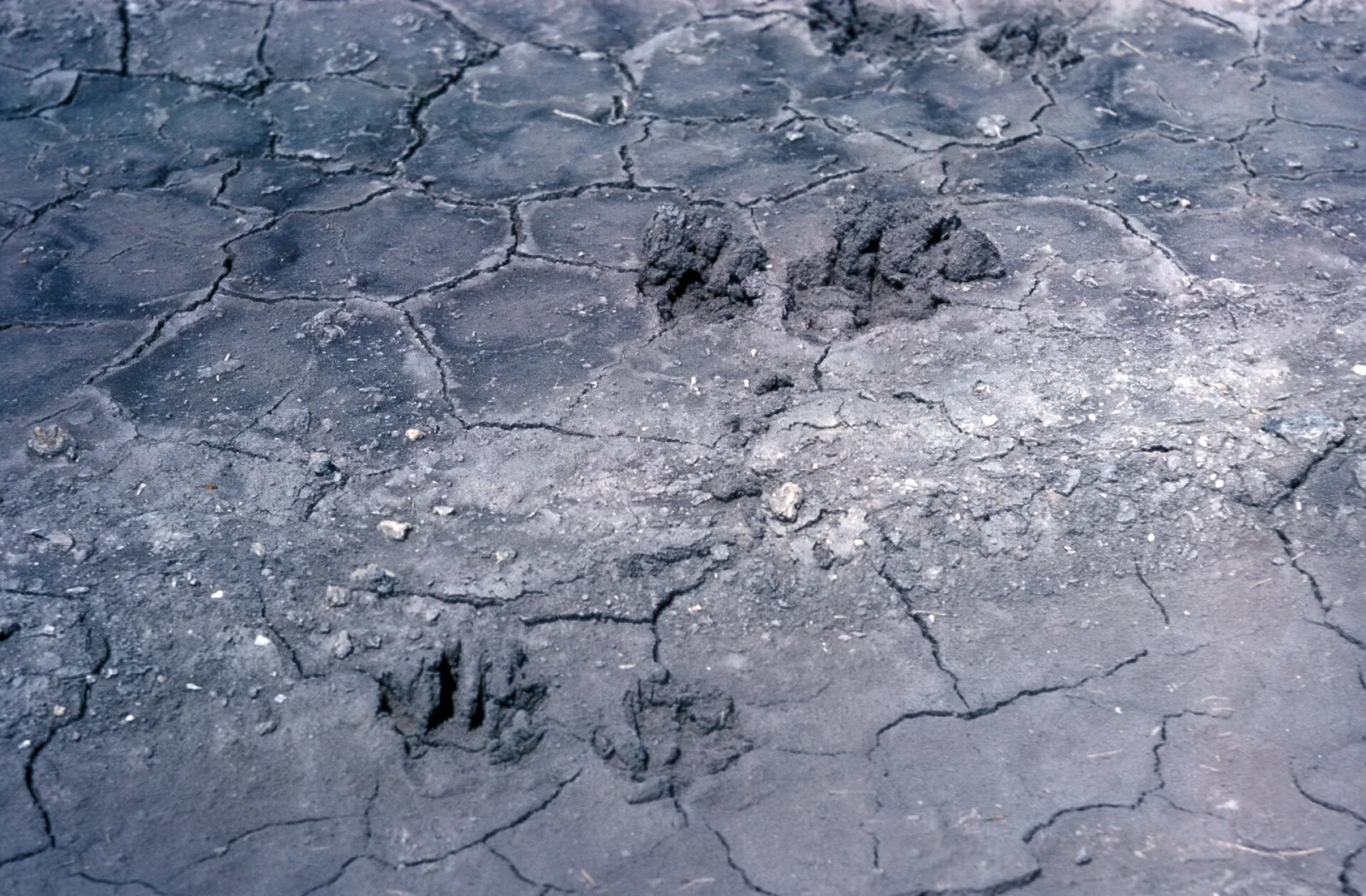
Many mammals have front and hind feet that differ in size, shape, or toe count. Compare repeated prints before assigning a foot. Many rodents, for instance, register four toes in front and five behind. [1][3]
Read the gait, not just the print
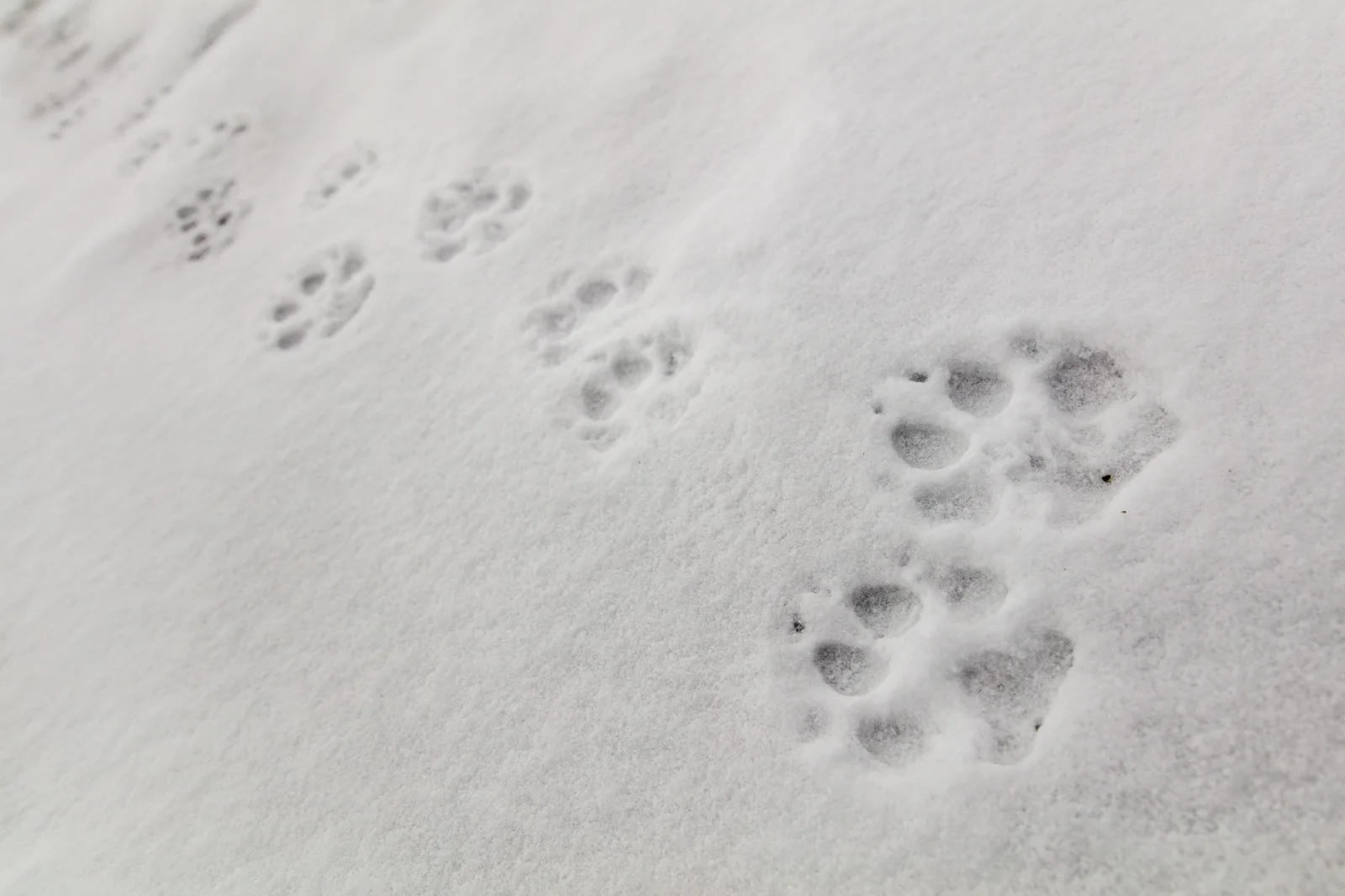
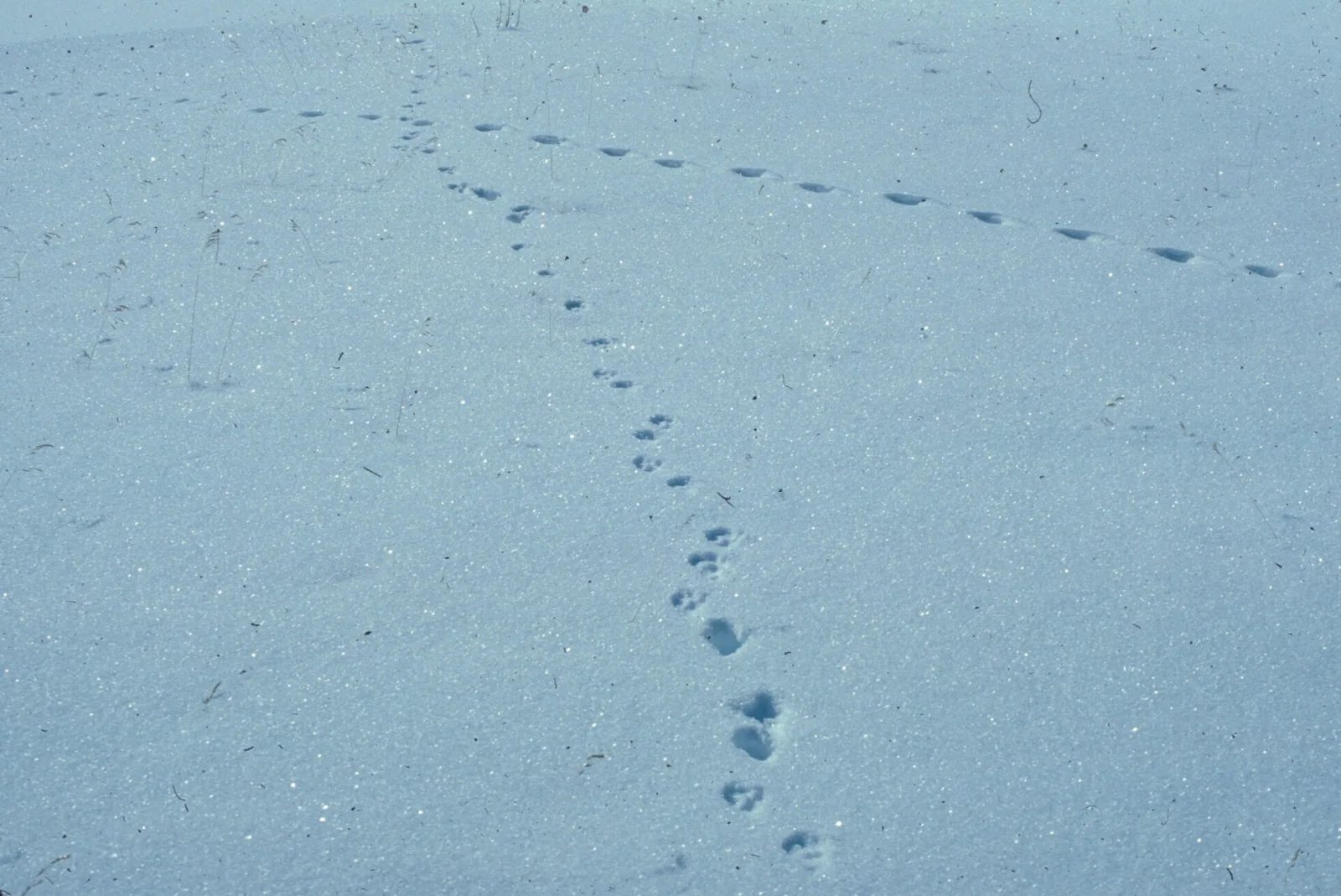
The pattern of a trail is often among the most useful clues when individual prints are incomplete. Trackers commonly group patterns as walking or stepping, bounding, hopping, and loping; compare several repetitions before naming the gait. [1][3][4]
- Steppers place feet in an alternating sequence; many walking canids direct-register, placing a hind foot close to or over the front print
- Bounders push off and land the hind feet in or just behind the front prints, printing tight side-by-side pairs — think weasels
- Hoppers land hind feet ahead and outside the front pair — rabbits and many rodents
- Lopers leave repeated groups of prints separated by longer gaps; the exact arrangement changes with speed and species
Read the trail, not one track
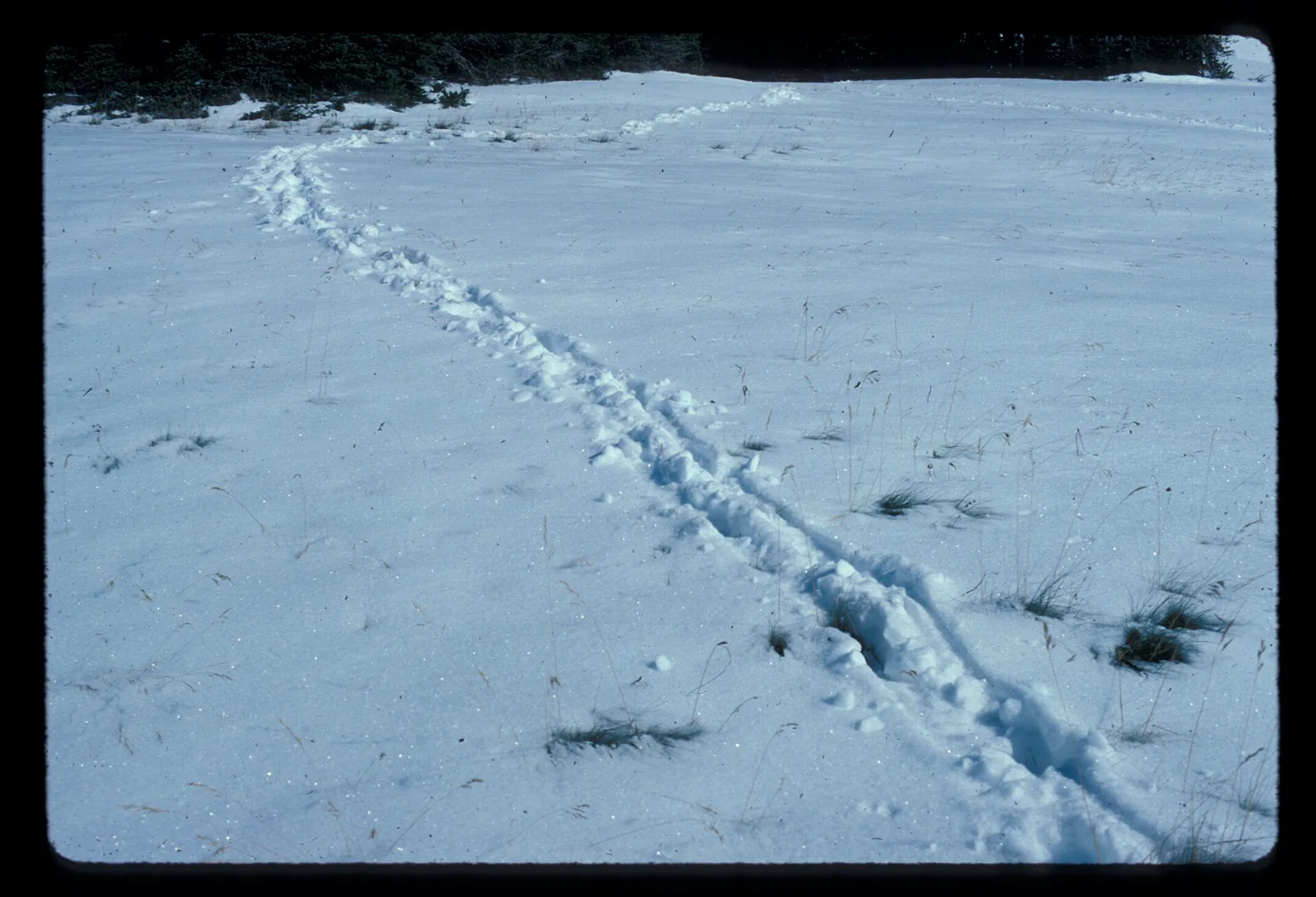
Follow the line the animal took across the landscape rather than staring at one isolated impression. Trail width, straddle, stride length, whether the route runs purposefully straight from cover to cover or meanders around scent posts, and where it goes — slipping under a barbed-wire fence, hugging a stone wall, or dropping down a bank to water — all narrow the candidate species. A continuous trail also reveals changes in speed, pauses where the animal listened, and what it was doing, which a single print never will. [1][3][4]
- Measure straddle (trail width) and stride alongside individual print dimensions
- Note whether the trail travels straight between cover patches or loops to investigate scents
- Follow the line backward or forward to beds, crossings, or feeding sign without disturbing the animal
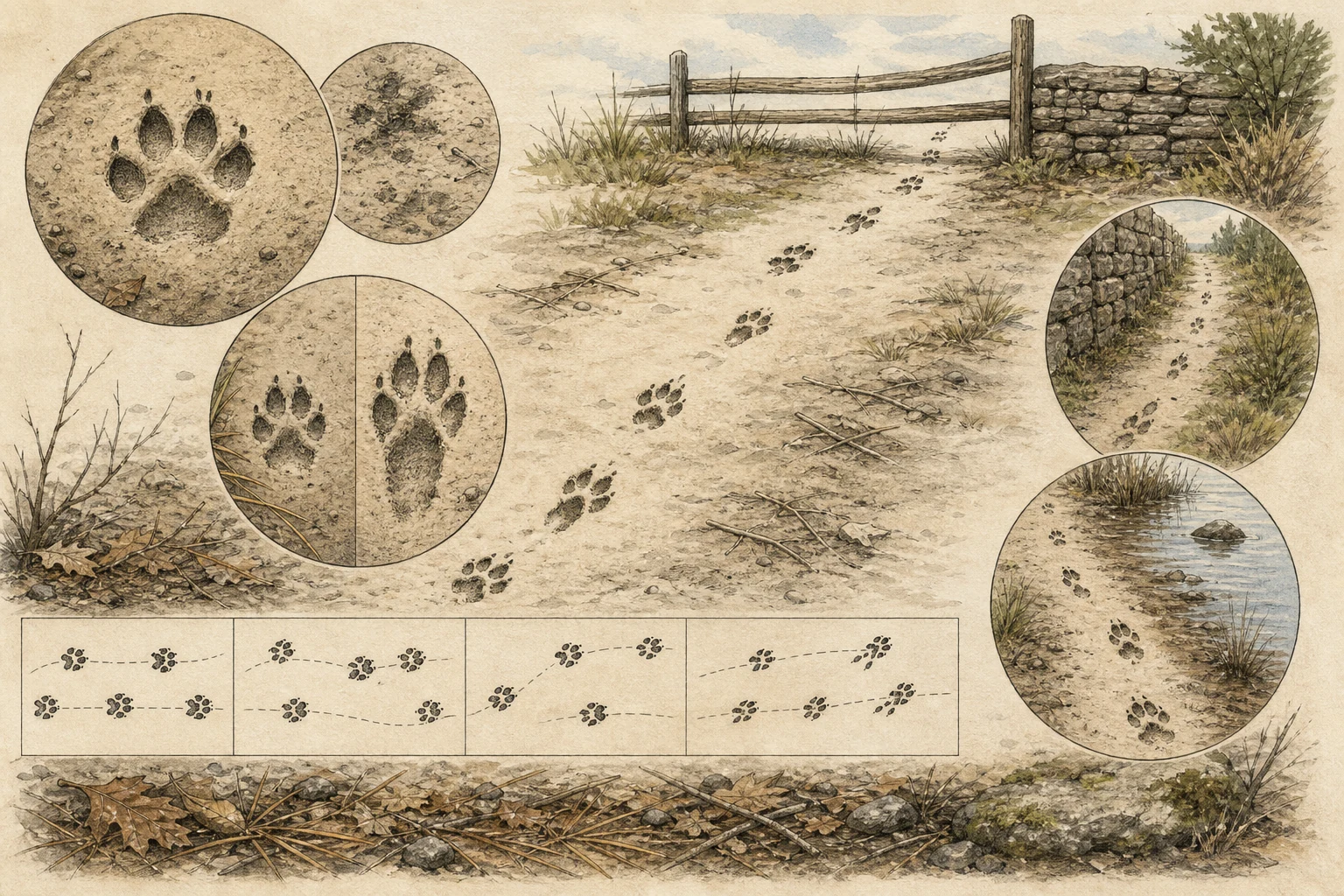
Examples in the field
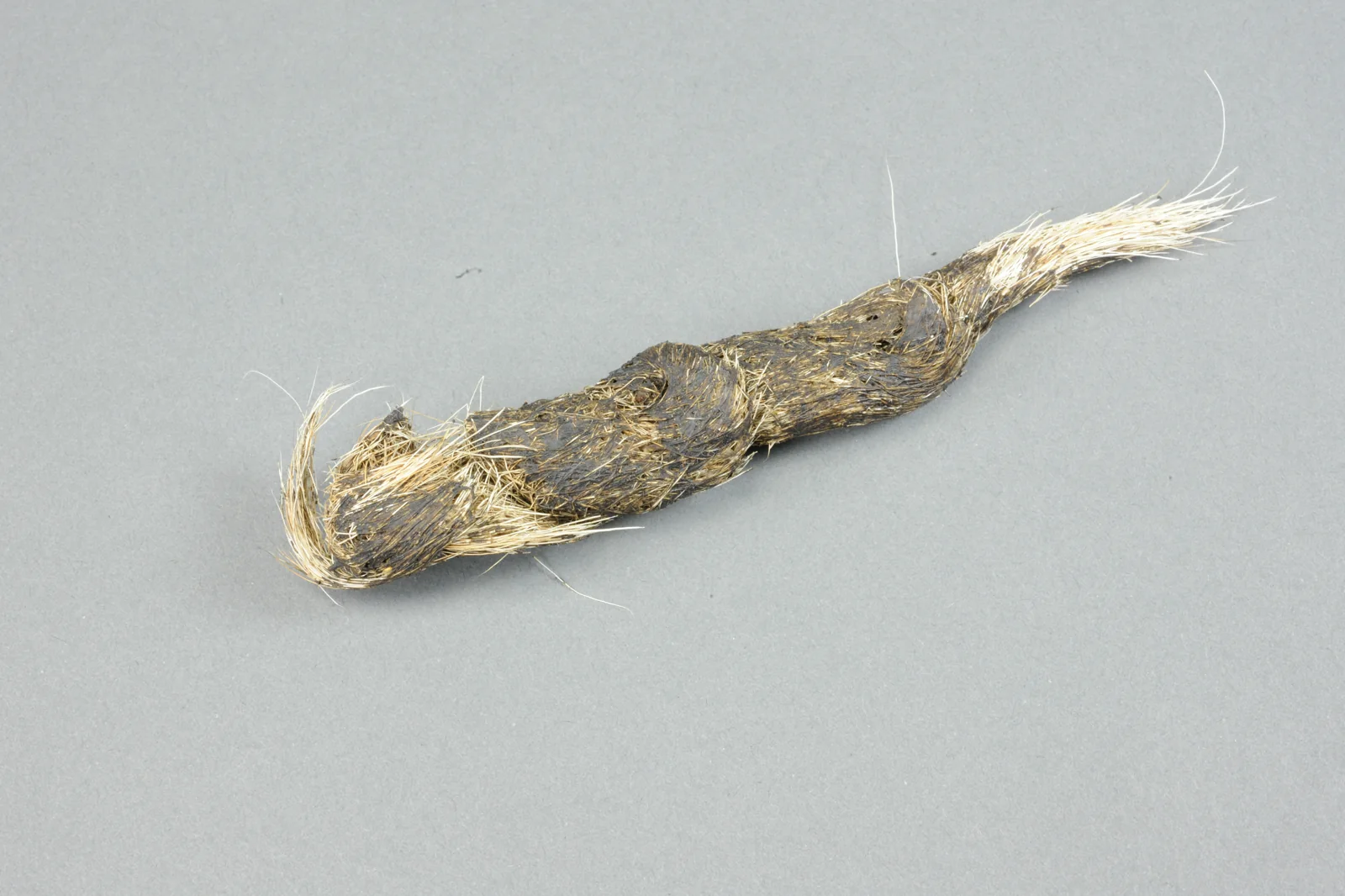
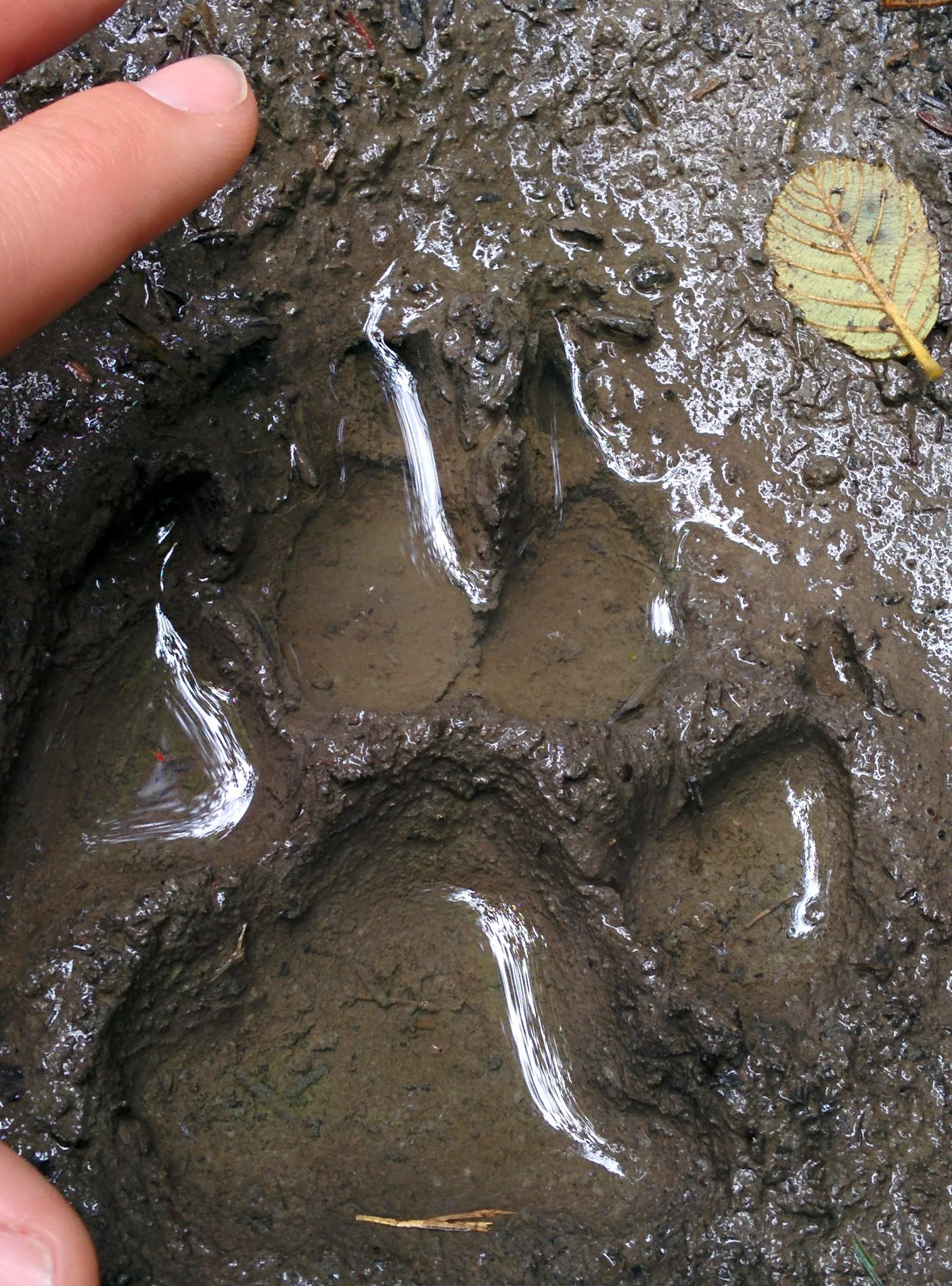
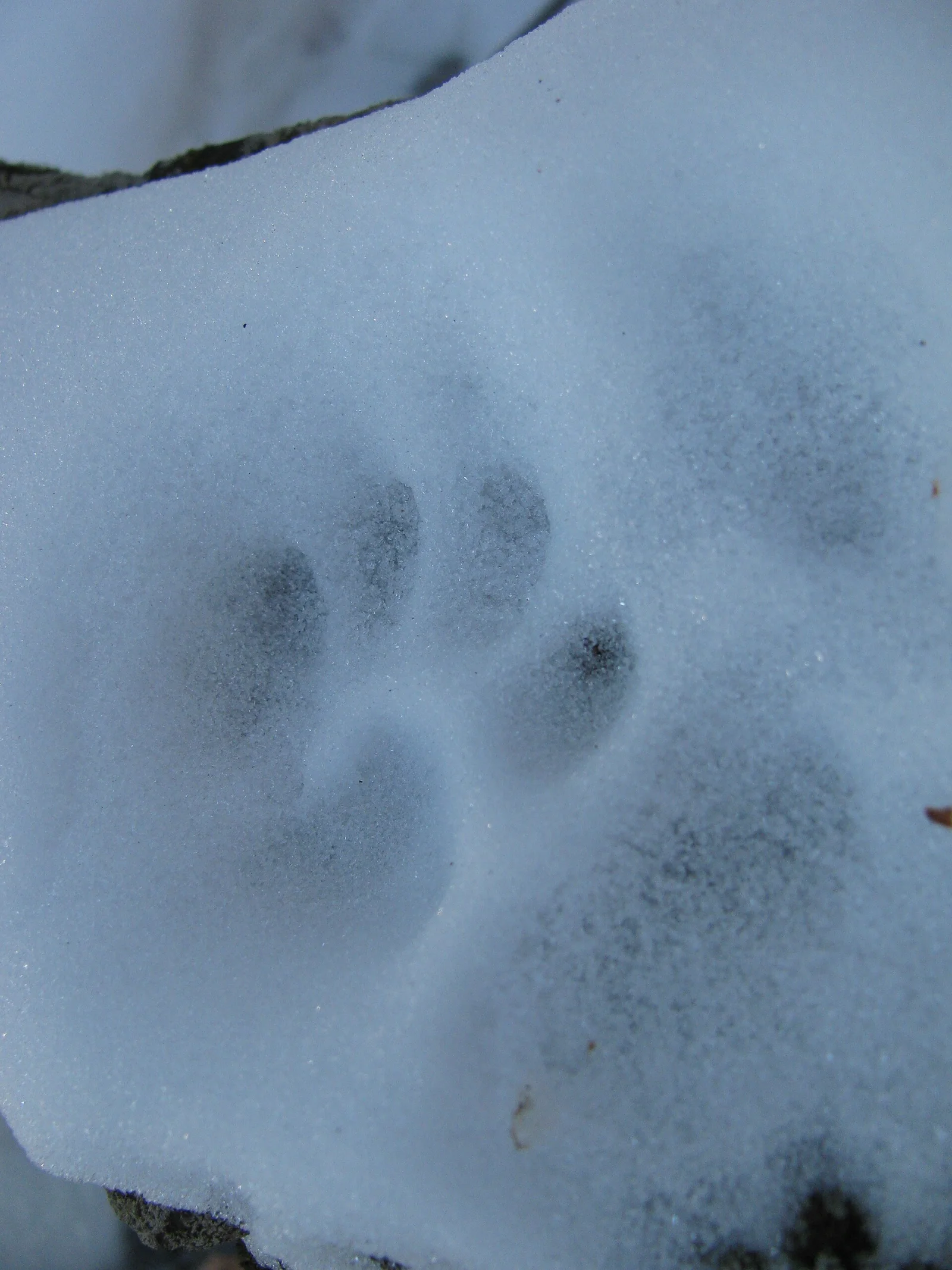
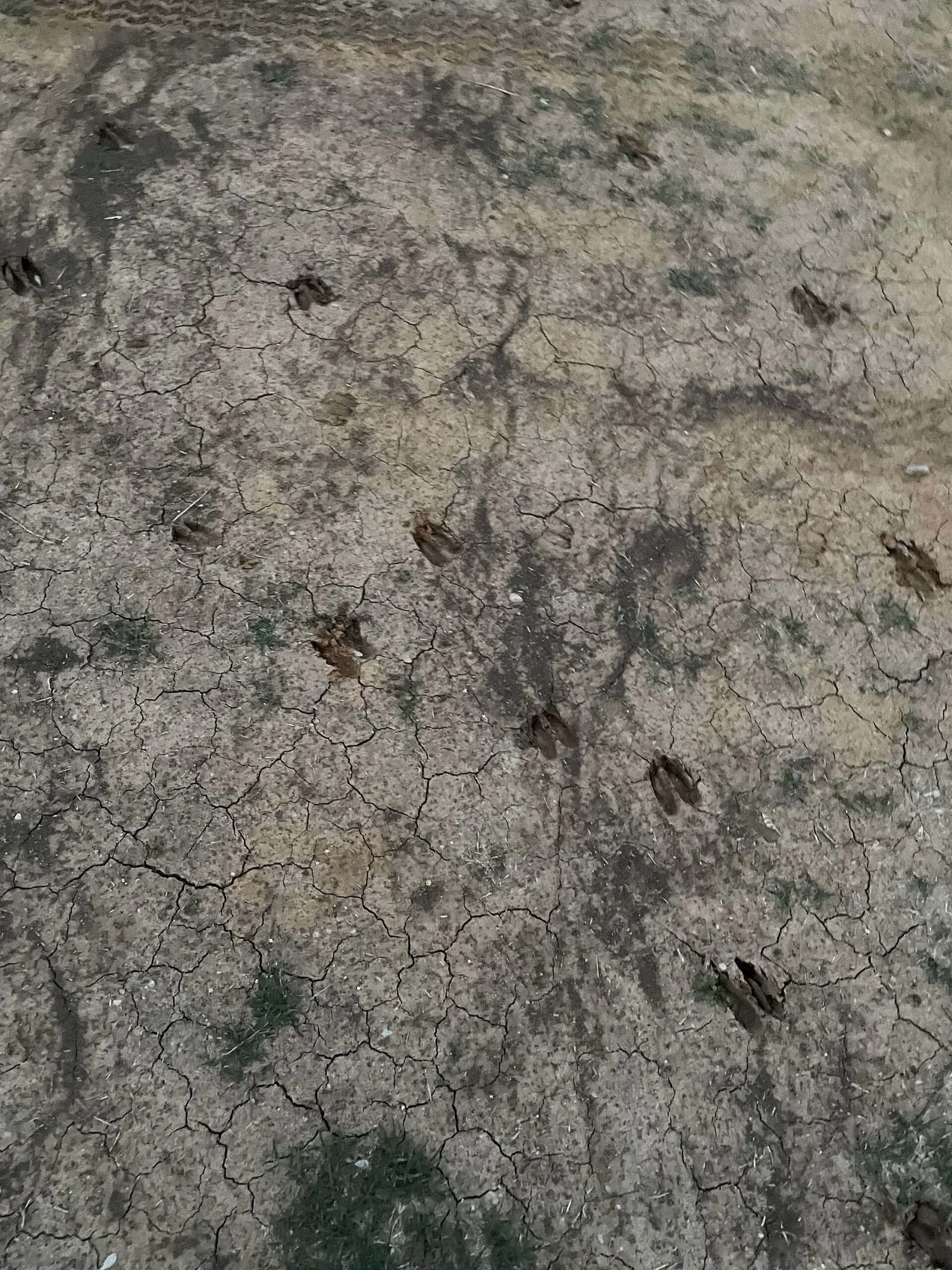
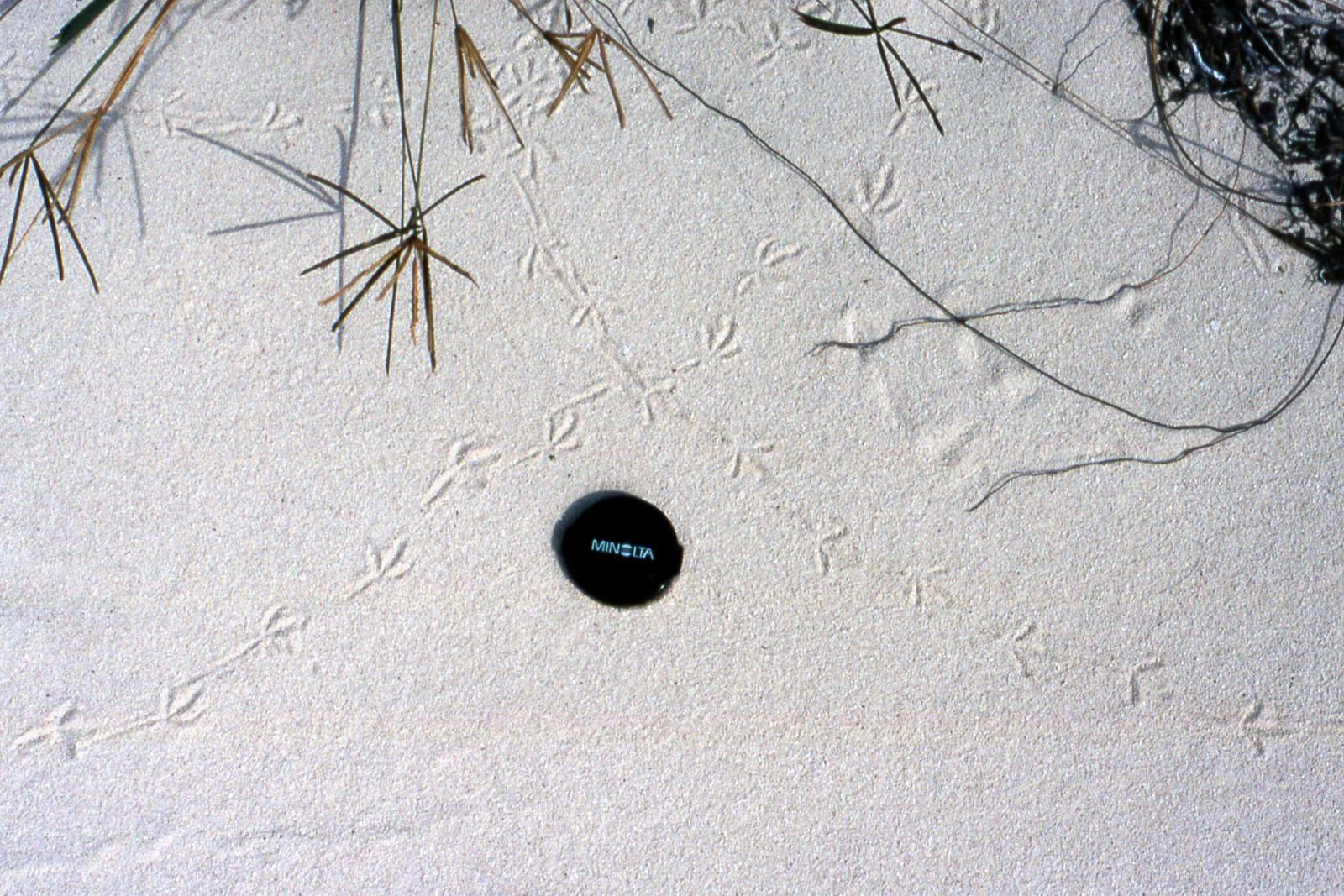
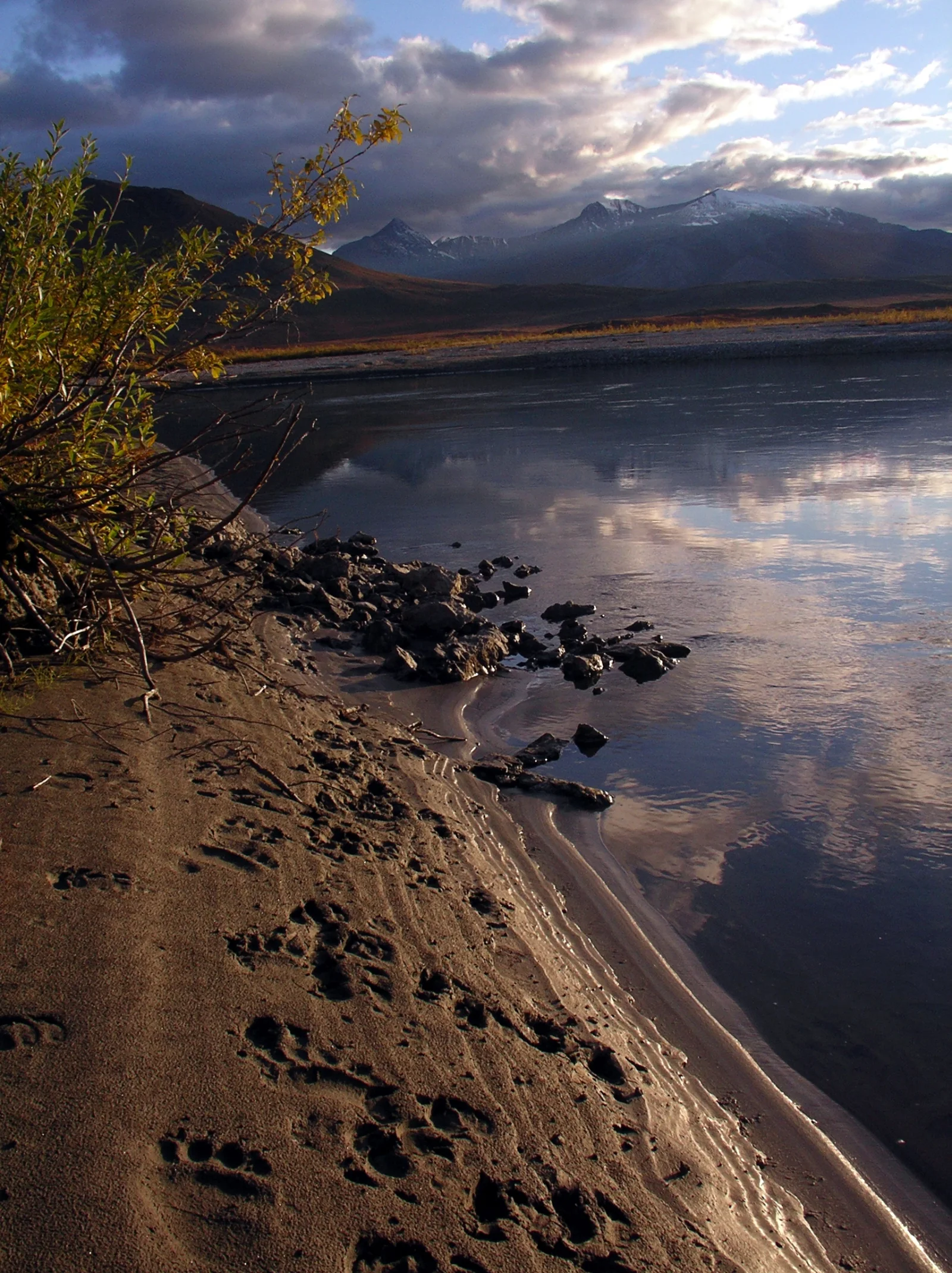
Real tracks are rarely as tidy as a diagram. These examples show how print shape, gait, and substrate look together — the same clues the sections above describe, in the mud and snow you will actually meet.
Related guides
Get Fauna and identify it in the field.
Where this guide comes from
Source-checked editorial guide. Last updated . This guide teaches identification and field skills; it is not a substitute for expert verification when it matters.