Recording wildlife sounds for identification
A useful identification recording preserves the sound and its context. Good technique, an uncompressed file, a spoken or written field note, and conservative comparison matter more than expensive equipment.
Last updated
Improve the signal before buying gear
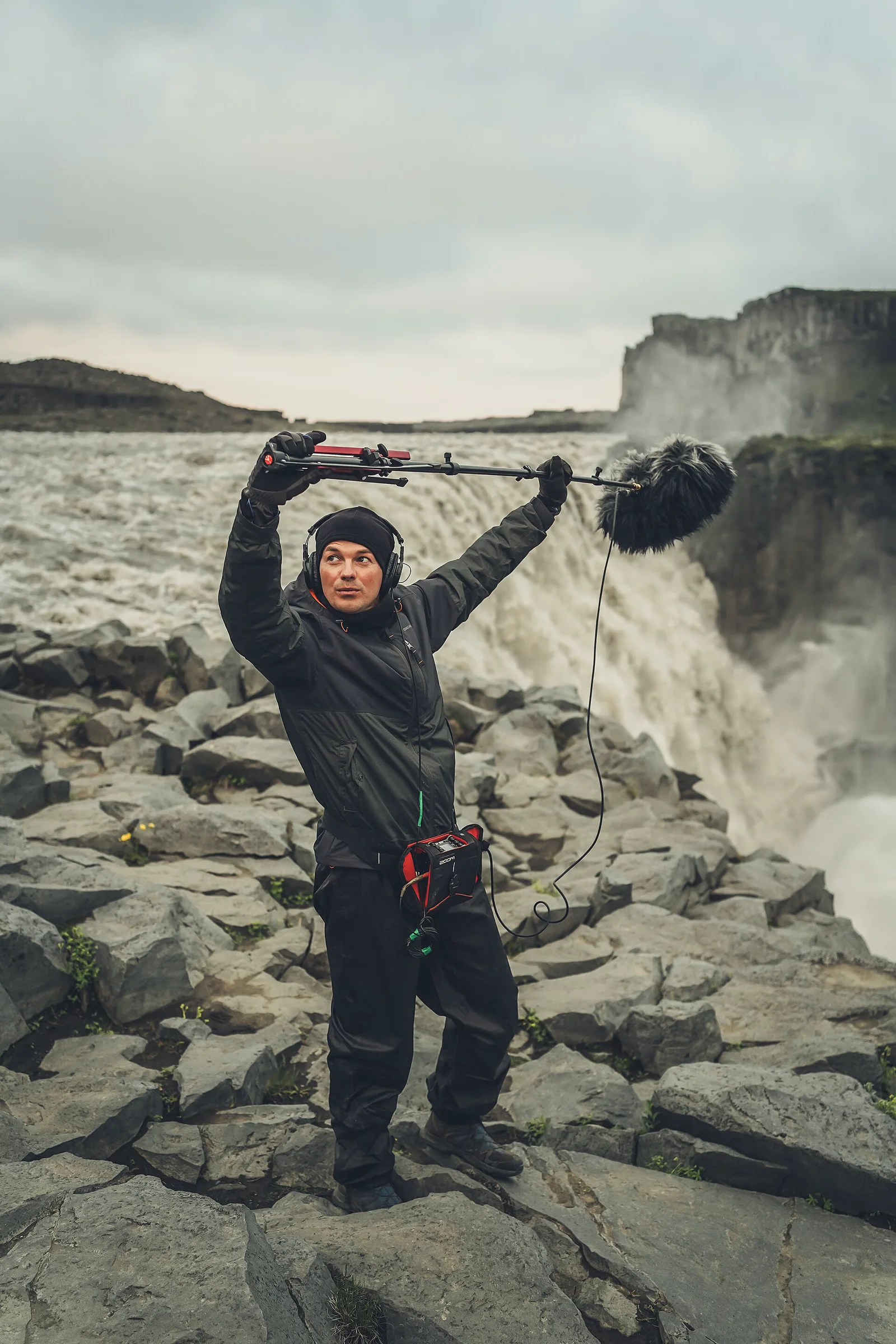
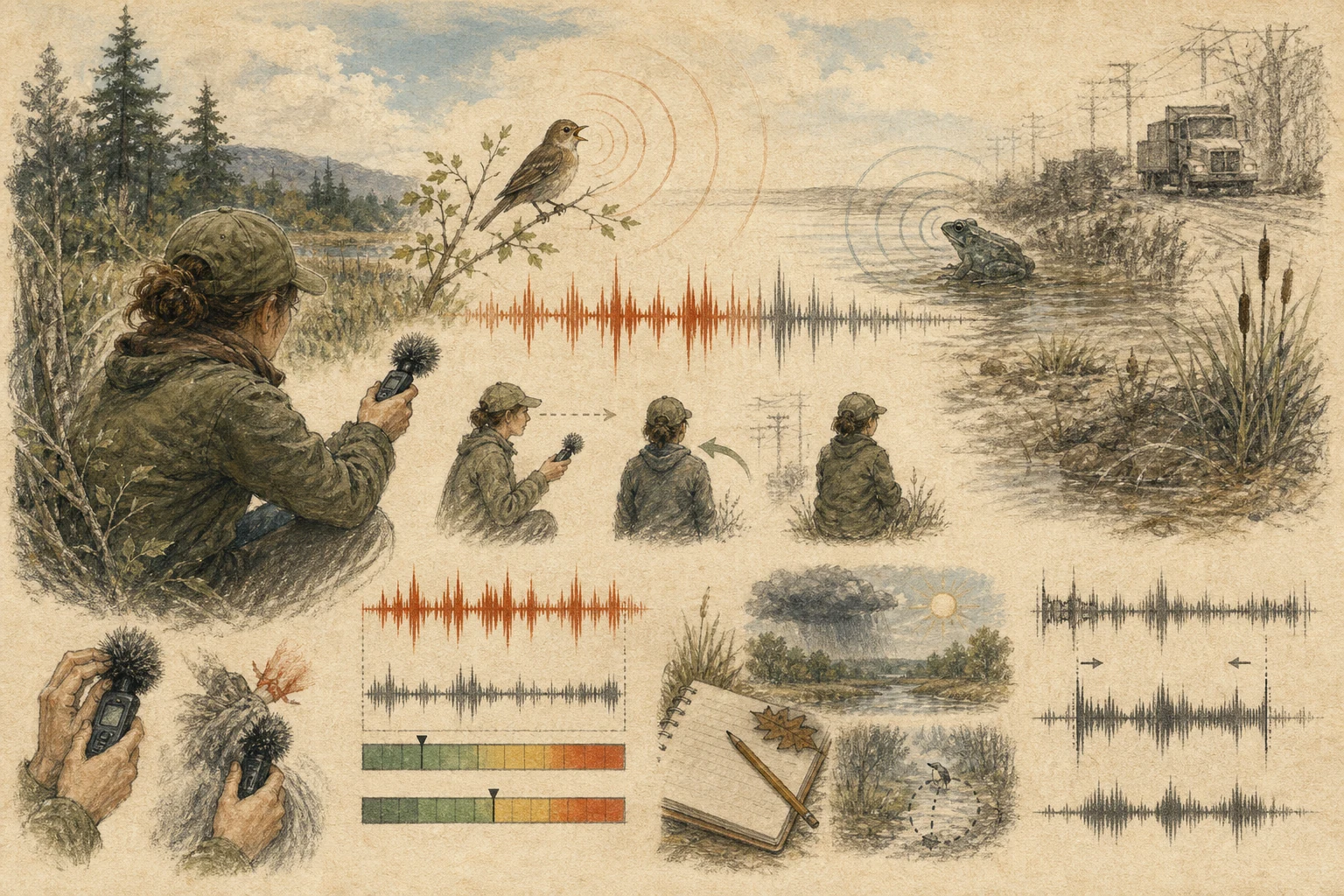
Clean field recordings depend far more on proximity, stillness, and acoustic shadow than on studio hardware. Locate the actual microphone port on your smartphone or handheld recorder, remove bulky cases that muffle it, point the capsule unobstructed toward the singing bird or calling frog, and use your own torso or a tree trunk to block wind and distant road hum. Approach only as close as you can without altering the animal's behavior, plant your feet before pressing record so gravel crunching and jacket rustle do not swamp the spectrogram, and let the file run across several complete song bouts. [1][3][4][6]
- Practice starting and stopping without handling noise.
- Brace the recorder or hold it steadily.
- Stay silent for long enough to capture several examples of the sound.
Record an archival-quality original
Lossy compression formats discard high-frequency overtones and rapid trills that separate closely related warblers, sparrows, and insects. Configure your recording app or handheld unit to capture uncompressed WAV audio—Cornell Lab's Macaulay Library recommends a minimum of 48 kHz sample rate and 24-bit depth—so the full frequency spectrum is preserved. Monitor input gain so loud close calls peak comfortably below digital clipping, and archive the raw original file untouched before creating any trimmed copy for upload. [1][2][3]
- Check storage, battery, file format, and levels before the outing.
- Do not convert a compressed original to WAV and call it lossless.
- Back up original recordings in a second location.
Attach the field context
An isolated audio clip is much harder to verify weeks later if you do not know whether the caller was high in a conifer canopy, skulking in streamside reeds, or giving an agitated flight call. Before stopping the recording, speak a brief, quiet voice tag at the end—or write an immediate field note—capturing the date, time, location, habitat structure, whether you saw the animal, what it was doing, and what other species were vocalizing in the background. [1][3][4][5][6]
- State whether the animal was seen and how many individuals were present.
- Note timestamps for the clearest target sounds.
- Keep the exact location private when disclosure could put wildlife at risk.
Identify conservatively and edit lightly
Automated tools such as Merlin Sound ID are powerful field assistants, but vocal mimics like Northern Mockingbirds, European Starlings, and Blue Jays, chip notes shared across genera, and mechanical squeaks can all trigger false matches. Treat every app suggestion as a hypothesis to verify by listening to reference recordings and inspecting the visual spectrogram for phrase structure and pitch. When preparing a copy for a public archive, trim only the handling noise at the start and end of the clip and leave natural pauses intact. [2][3][4][6]
- Compare multiple phrases rather than one syllable.
- Keep an unknown at group level when the evidence does not separate species.
- Upload only your own recording with accurate observation metadata.
Related guides
Get Fauna and identify it in the field.
Where this guide comes from
Source-checked editorial guide. Last updated . This guide teaches identification and field skills; it is not a substitute for expert verification when it matters.
- Cornell Lab — recording bird sounds with a smartphone ↗
- Cornell Lab eBird — preparing sound recordings for upload ↗
- Cornell Lab eBird — sound recording tips ↗
- Cornell Lab eBird — Merlin Sound ID best practices ↗
- National Park Service — natural-sound monitoring in the field ↗
- Cornell Lab eBird — protecting sensitive-species locations ↗