Dawn chorus basics
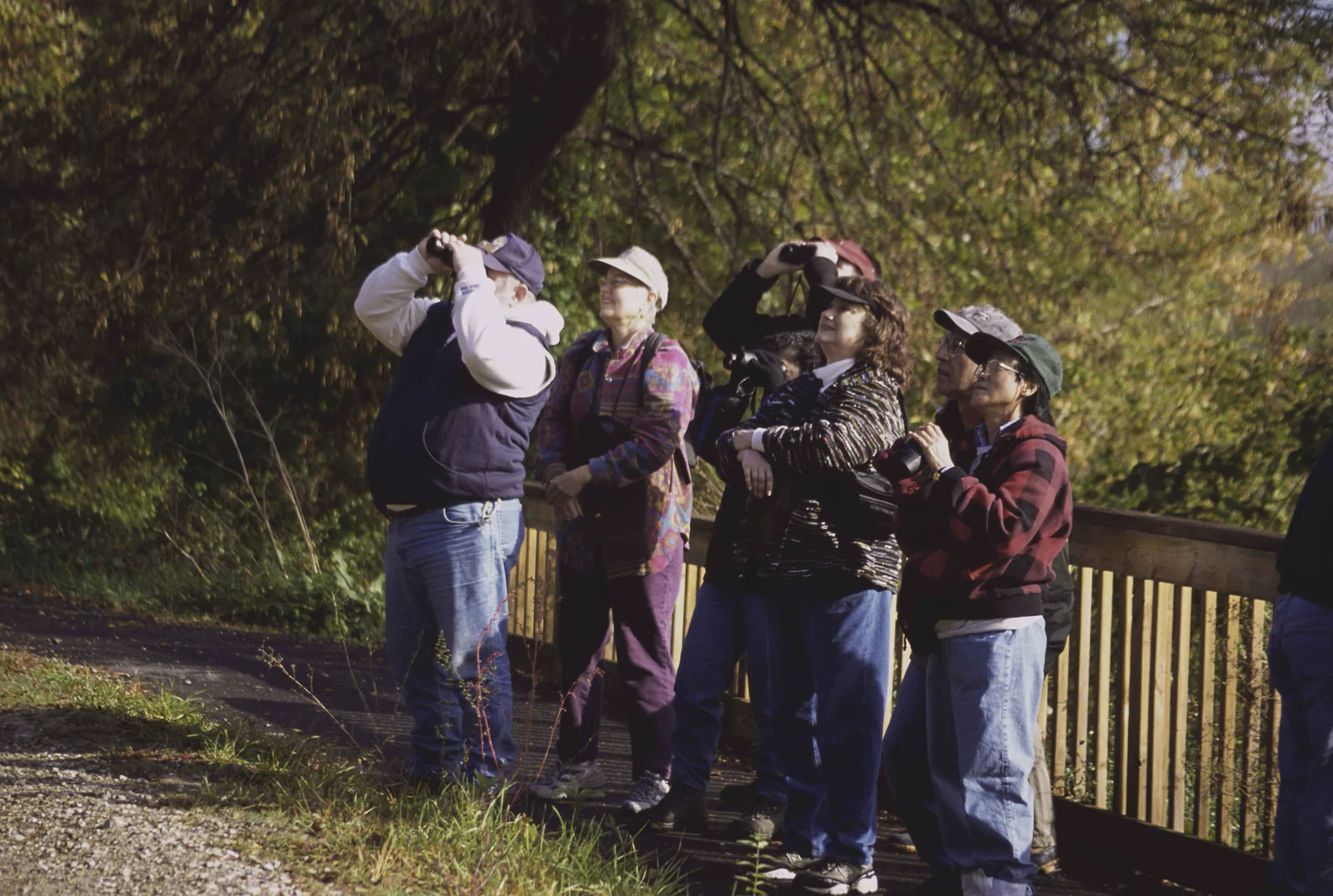
The dawn chorus sounds like an undifferentiated wall of sound until you stop trying to hear all of it. Then it comes apart, one voice at a time.
Last updated
Why dawn
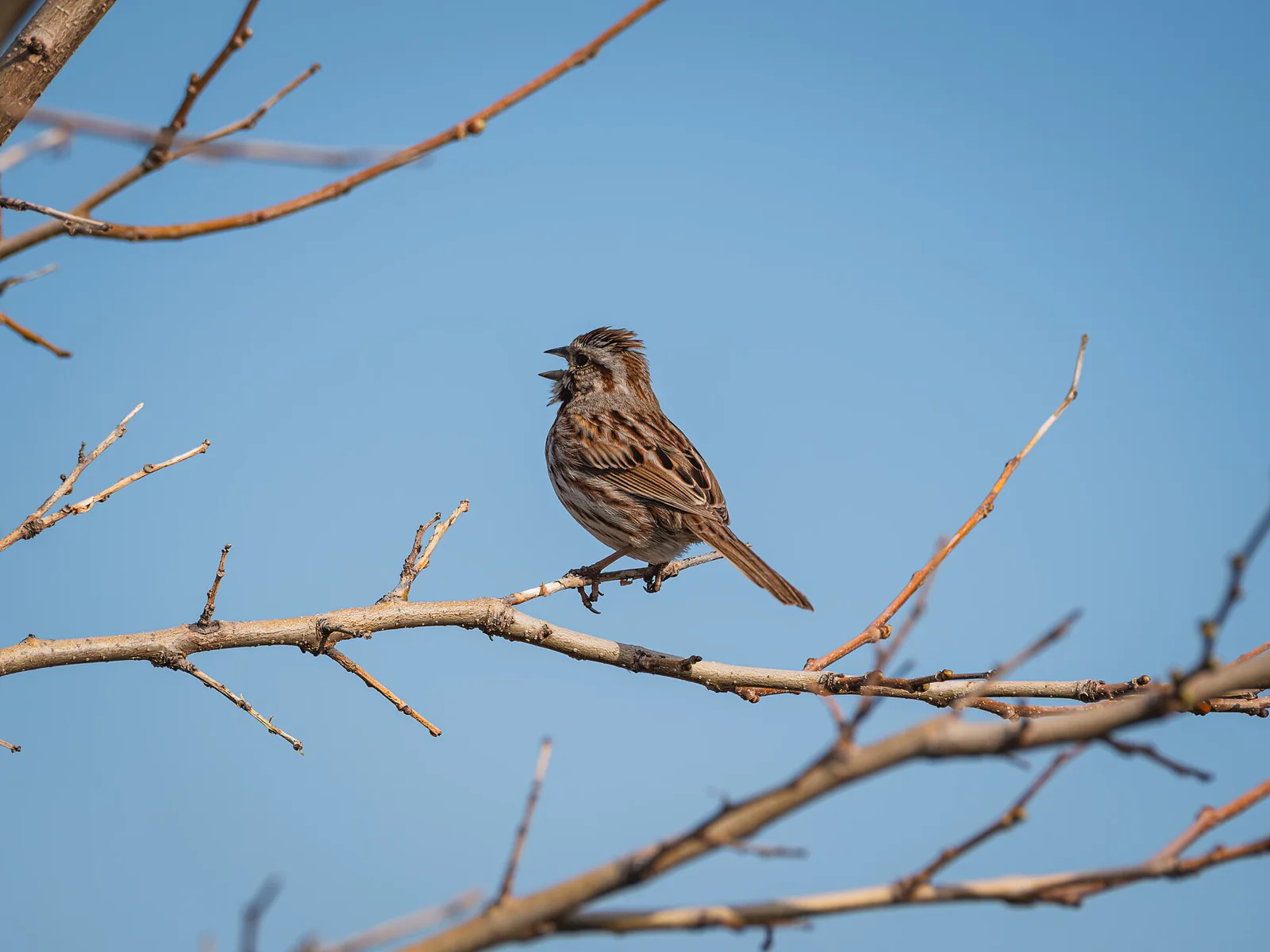
Birdsong intensifies dramatically around twilight and first light during the spring and early-summer breeding season. Singing advertises territory occupancy and attracts mates at an hour when low light still limits insect foraging and cool, calm air carries acoustic signals cleanly. Why different species join in a predictable sequence—often starting with large-eyed thrushes, robins, and flycatchers before smaller warblers and finches—is still actively studied. The Woodland Trust's March–July season and May–June peak are British examples, not a global calendar. [4][7]
- Arrive 30 to 45 minutes before local sunrise to hear the earliest solo voices before the full chorus builds
- Notice the order of entry: robins, thrushes, and cardinals or blackbirds often sing in dimmer twilight than canopy warblers
- Expect calm, clear mornings in spring to produce a louder, longer chorus than windy or rainy mornings
Listen for qualities, not words
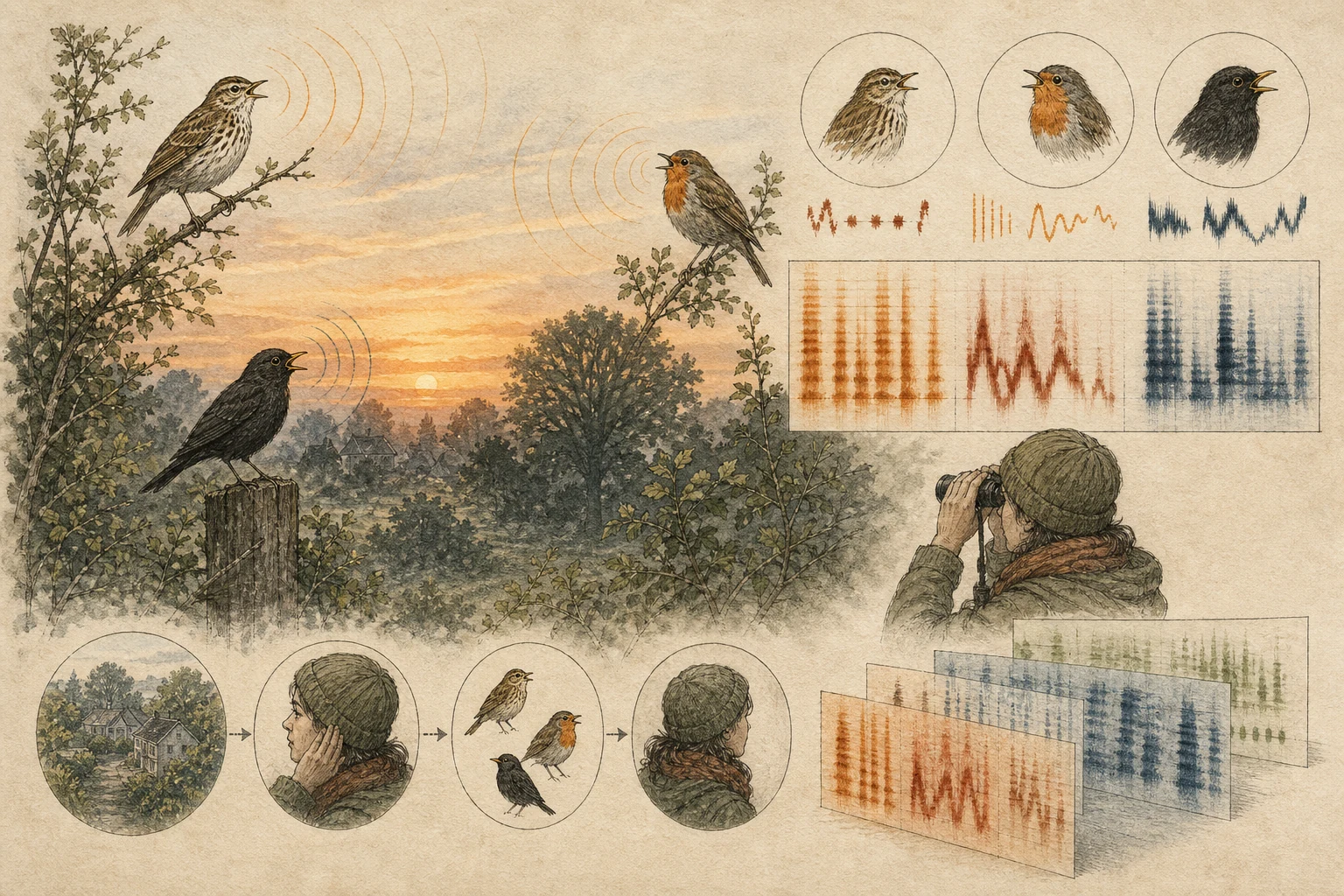
Rather than trying to memorize songs whole, break each one into features you can describe. Cornell, the RSPB, and the Wildlife Trusts teach a similar handful of qualities that can narrow the field more reliably than recalling an entire sound from memory. [1][5][6]
- Rhythm — is it steady, hurried, halting?
- Repetition — how many times does a phrase repeat?
- Pitch — does it rise, fall, or stay level?
- Tone — clear and whistled, buzzy, harsh, fluty, musical?
Use mnemonics and pictures of sound
Verbal mnemonics—such as 'drink-your-tea' for an Eastern Towhee or 'who-cooks-for-you' for a Barred Owl—provide sticky memory hooks for rhythm and cadence, even though they are not literal transcriptions. Pairing your ear with a live or recorded spectrogram turns sound into a visual shape: plotting time on the horizontal axis and pitch (frequency) on the vertical axis makes slurs, trills, repeated syllables, and overlapping dawn-chorus voices far easier to separate and remember. [2][3]
- Use classic verbal mnemonics to lock in rhythm and syllable count, or invent your own phrase in your field notes
- Read spectrograms left to right for timing and bottom to top for rising or falling pitch
- Sketch a simple line of dashes, rises, and trills in your journal while listening to anchor the pattern
Start absurdly small
Pick three common resident or backyard birds you can hear from your own doorstep and learn only those until you recognize their voices instantly. Once those three anchor species are familiar, the morning wall of sound resolves into known voices plus one standout stranger you can track down with binoculars. The RSPB formalizes the same habit as learning one new song a week. A sound-ID app can suggest a candidate name in real time, but always treat its output as a hypothesis to verify with the audio recording, visual field marks, habitat, and season. [1][5]
- Master three ubiquitous local singers first so you can mentally filter them out of a busy woodlot
- Follow one unfamiliar voice until you see the singing bird throw its head back and confirm the visual ID
- Treat sound-ID app suggestions as leads to verify rather than automatic checklist entries
Related guides
Get Fauna and identify it in the field.
Where this guide comes from
Source-checked editorial guide. Last updated . This guide teaches identification and field skills; it is not a substitute for expert verification when it matters.
- Cornell Lab of Ornithology (All About Birds) — Bird ID Skills: How to Learn Bird Songs and Calls ↗
- Cornell Lab of Ornithology (Living Bird) — What Does a Dawn Chorus of Bird Song 'Look' Like? ↗
- National Audubon Society — How to Memorize Bird Songs by Using Mental Images ↗
- Woodland Trust — Dawn chorus: why birds sing in the morning ↗
- RSPB — Bird song identifier: 15 common bird sounds for beginners ↗
- The Wildlife Trusts — Identify bird song ↗
- Cornell Lab of Ornithology — Who sings first during the dawn chorus, and why? ↗