Reading scat & sign
Most of the time the animal is gone and the ground is too hard for prints. Sign is what remains, and it is often more specific than a track.
Last updated
Scat: shape, contents, placement
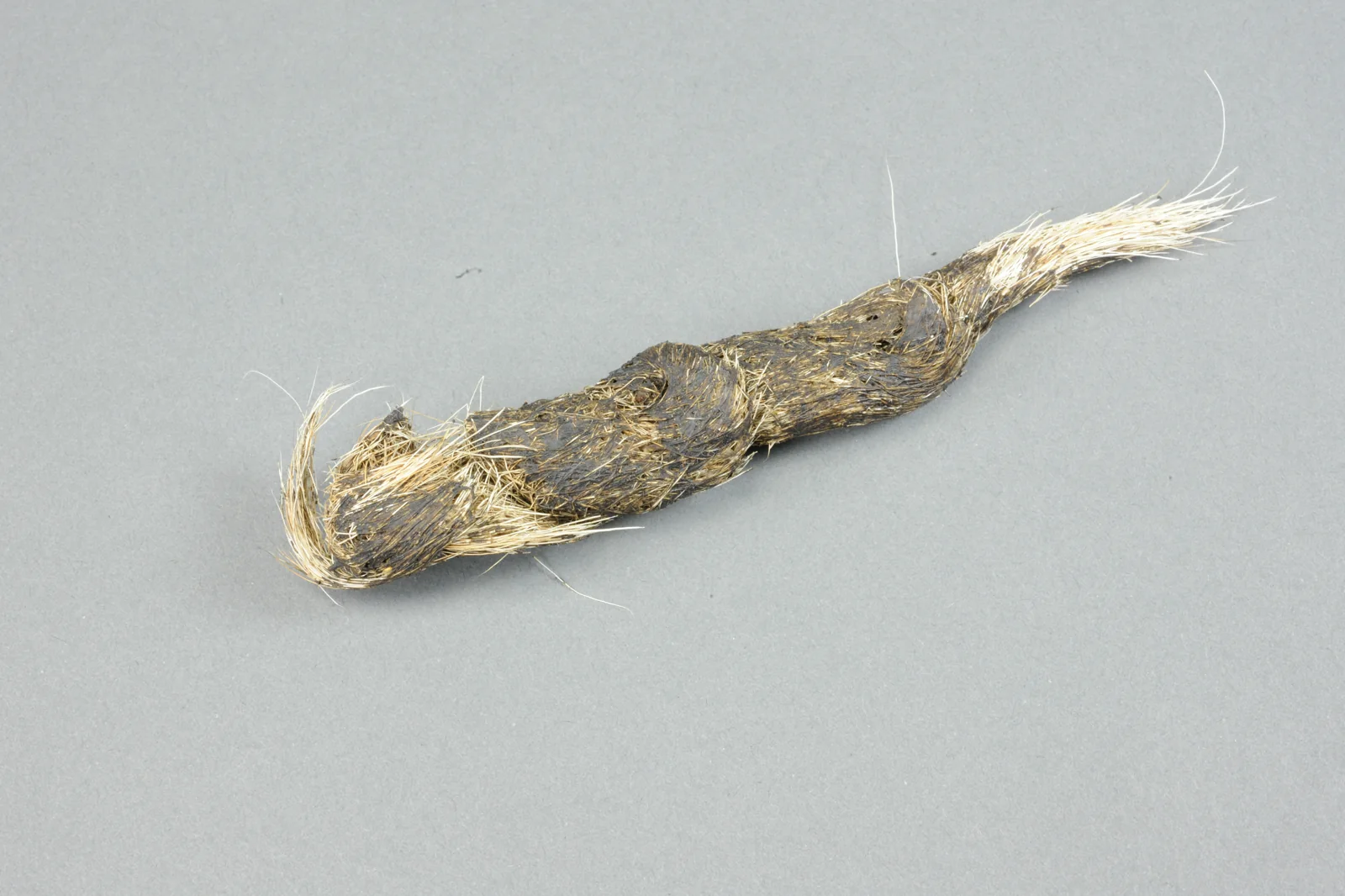
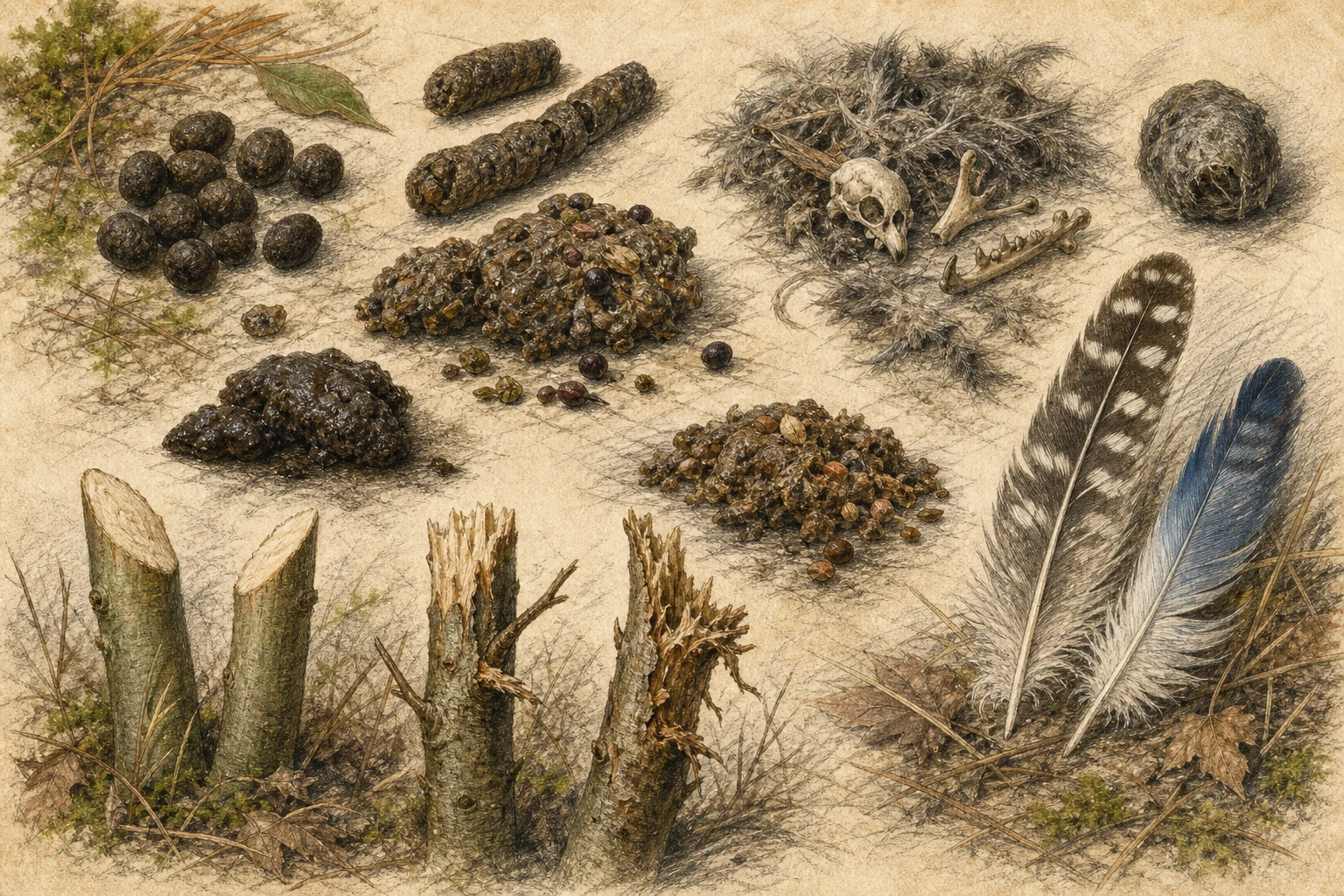
Scat can be grouped loosely by form — discrete pellets in rabbits and deer, tapered twisted cords in foxes and coyotes, blunt segmented cylinders in bobcats, or looser seasonal mounds in omnivores like bears and raccoons — but shape shifts dramatically with diet and moisture. Felted hair or bone splinters point to vertebrate prey, whereas hulls and pits point to fruit or mast; prominent placement on trail junctions, rocks, or logs often signals territorial marking. Bird droppings usually combine darker tubular fecal material with chalky white uric acid. [1][3][5]
- Never handle scat bare-handed; it can carry parasites and disease
- Photograph in place with scale, and leave it where it lies
- Size varies with the individual — use it as a range, not a measurement
Owl pellets are not scat
A pellet is regurgitated from the upper digestive tract rather than excreted as feces. Because owls swallow mice, voles, shrews, and small birds whole and have less acidic stomach juices than diurnal hawks, their muscular gizzard compacts indigestible fur, feathers, teeth, and delicate skull bones into a neat felt-like oval cast up hours after hunting. Hawks, falcons, herons, gulls, and corvids also cast pellets; owl pellets generally preserve more intact skeletons, though contents vary by prey and species. [3][4]
- Look beneath sheltered conifer branches, barn rafters, and cavity trees for accumulated pellets and whitewash
- Scan upward with binoculars from a respectful distance before stepping under a potential owl roost
- Inspect exposed bone or fur visually rather than pulling wild pellets apart barehanded
Gnaw and browse marks
Woody twigs and bark record the dentition of the herbivore that fed on them. Clean, knife-sharp 45-degree angled cuts on low stems are consistent with rabbit, hare, or rodent incisors; ragged, fibrous, shredded twig tips are consistent with deer or elk browsing because cervids lack upper incisors and pinch stems between their lower teeth and a tough upper dental pad. Combine cut geometry with height above the ground or snowpack and nearby tracks, treating browse marks as supporting evidence rather than standalone species proof. [1]
Feathers — look, photograph, leave
Molted or plucked feathers along a trail can narrow a bird group through vane symmetry, shaft curvature, barring, and measured length compared against the U.S. Fish and Wildlife Service Feather Atlas. In the United States, the Migratory Bird Treaty Act generally prohibits possessing feathers, nests, or other parts of protected native North American birds without authorization, even if naturally molted and found on the ground; narrow legal exceptions exist. Photograph both sides of the feather in place with a scale beside it and leave it where it lies. [2][6]
- Photograph upper and lower feather surfaces straight on with a ruler beside the vane
- Note whether you found a single molted feather or a compact plucking scatter
- Leave protected native-bird feathers in the field in accordance with federal and state wildlife laws
Related guides
Get Fauna and identify it in the field.
Where this guide comes from
Source-checked editorial guide. Last updated . This guide teaches identification and field skills; it is not a substitute for expert verification when it matters.
- University of Florida IFAS Extension — Identify the Wildlife Species Responsible for Damage ↗
- U.S. Fish & Wildlife Service Forensics Laboratory — The Feather Atlas ↗
- BioKIDS, University of Michigan — Scat and Pellets ↗
- National Audubon Society — What Is an Owl Pellet? ↗
- Internet Center for Wildlife Damage Management — Scat ID ↗
- U.S. Fish & Wildlife Service — Feathers and the law ↗