Coyote tracks or dog tracks?
Two canids leave similar prints in the same mud. The trail they leave behind separates them more reliably than the print does.
Last updated
The print
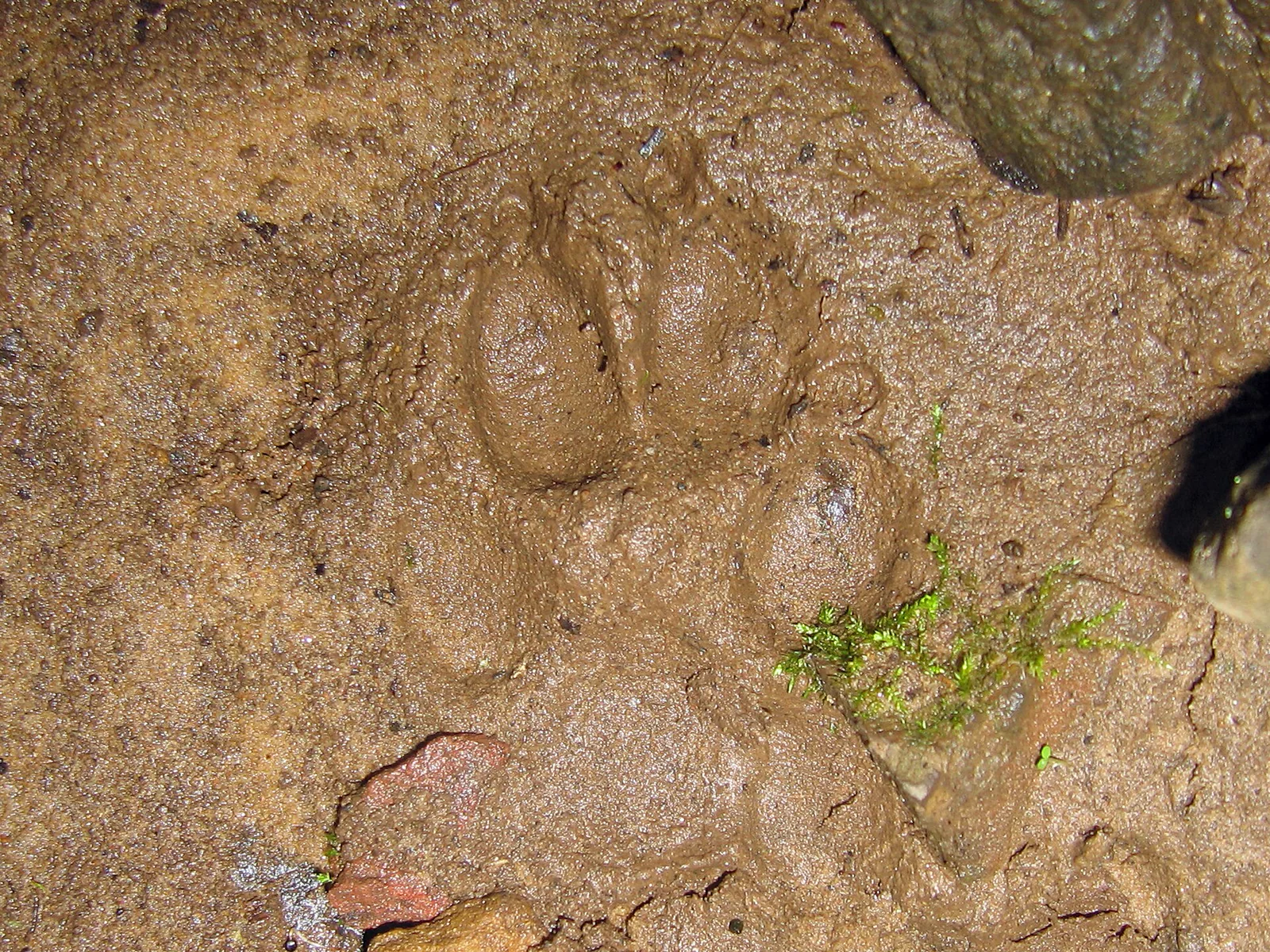
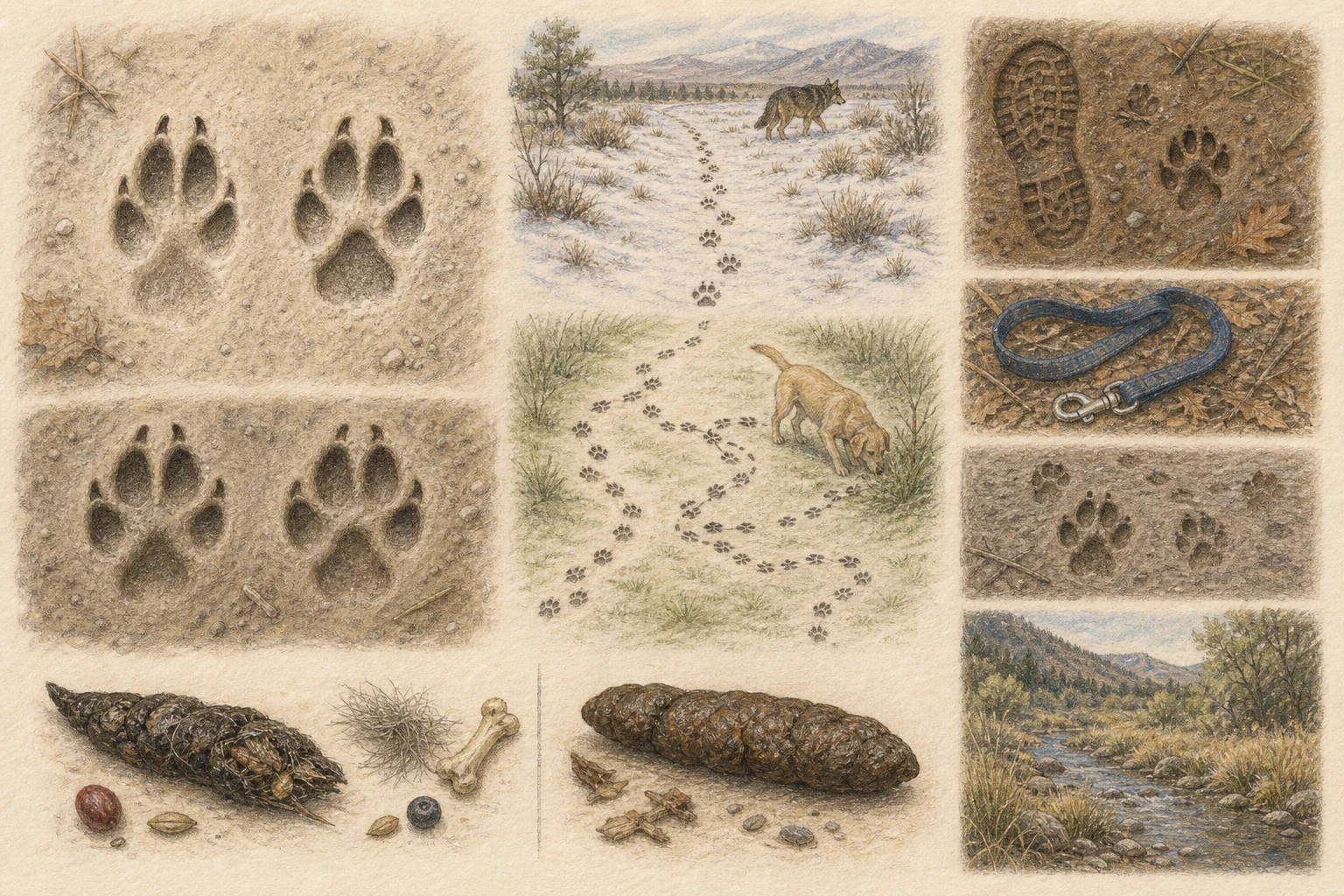
Coyote prints tend to be compact and oval, with the two middle toes close together and negative space forming a clean X between the toes and heel pad. Domestic-dog prints often look rounder and more splayed with heavier outer claw marks, but breed, gait, nail wear, and mud or snow substrate create extensive overlap. Coyote front feet are also slightly larger and broader than their hind feet, so measure several clean impressions along the trail and record whether claw tips are included. [1][5][6]
The trail is the real answer
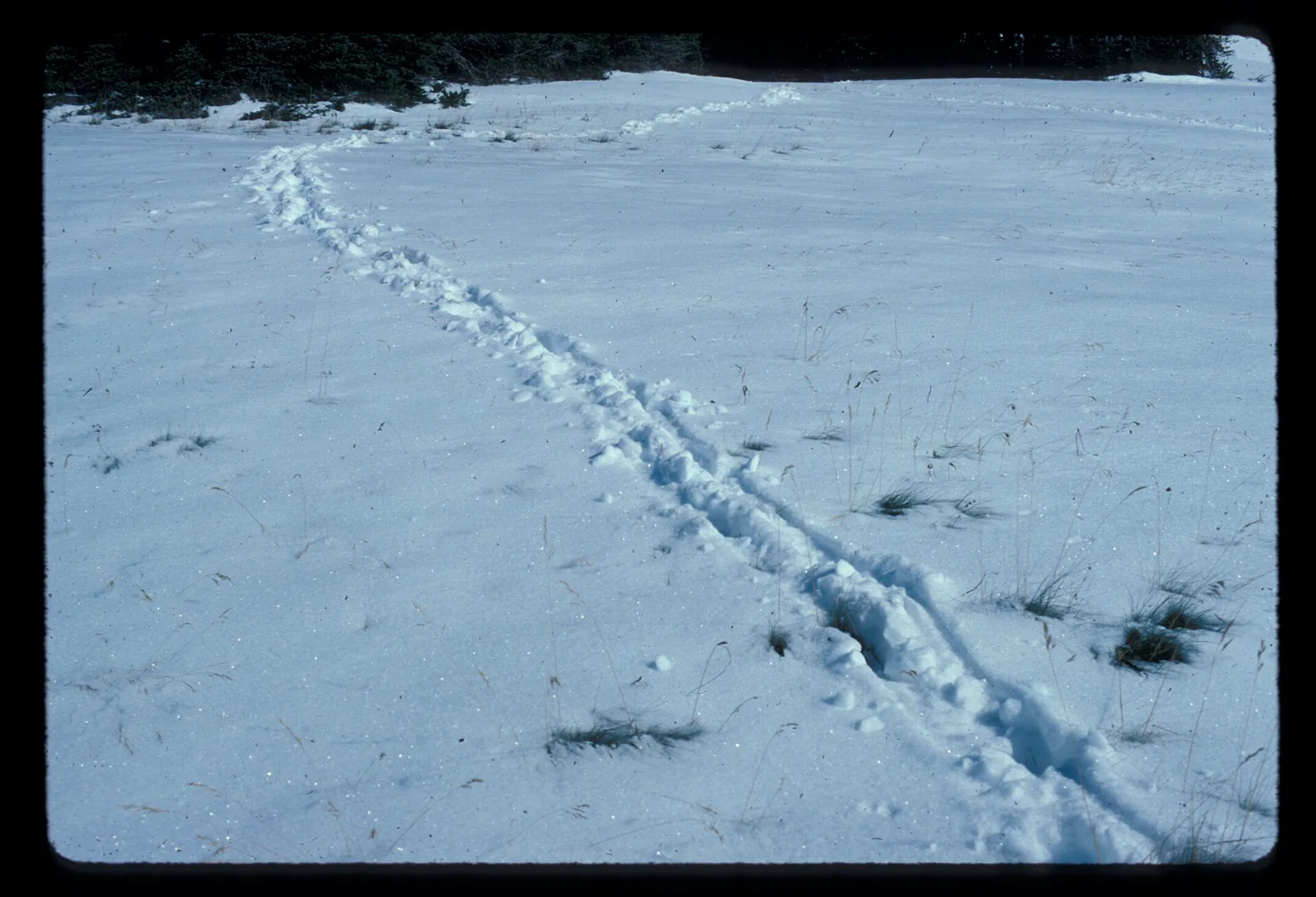
When traveling between cover patches or along a trail corridor, coyotes conserve energy: they often trot in a narrow, purposeful line and direct-register, placing the hind foot neatly into the front print. Off-leash domestic dogs typically burn energy by weaving from side to side, investigating trail margins, and leaving wide, erratic straddles. Still, a hunting or playing coyote and a leashed or trotting dog can reverse that pattern, so treat trail linearity as a strong field tendency rather than an automatic verdict. [1][5][6]
- Sight down at least ten consecutive strides to judge whether the line is narrow and direct or looping
- Check for direct registration, where the hind print lands inside the front impression
- Remember that a foraging coyote zigzags too, so pair trail geometry with print shape
Read the scat too
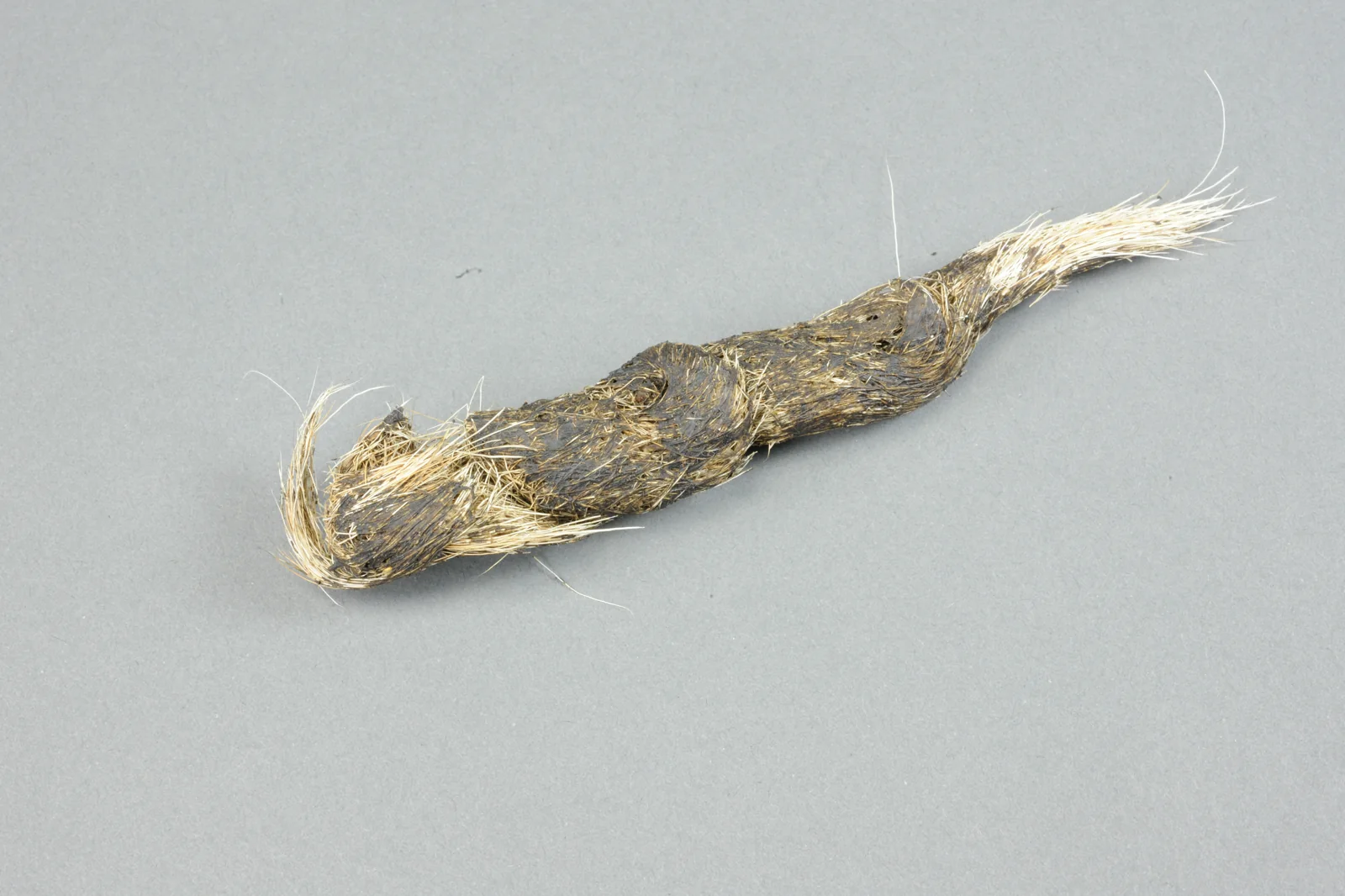
When a trackway is ambiguous, look along trail junctions, ridge crests, and prominent rocks for droppings. Coyote scat is typically tapered or rope-like and twisted around coarse wild residues—rodent hair, bone fragments, feathers, persimmon seeds, or berries—and is often deposited right in the middle of a path as a territorial marker. Domestic dog scat is usually more uniform and smooth from commercial kibble, though diet and hydration create overlap; never identify either canid from scat alone. [2][3][4]
- Never handle scat with bare hands — it can carry parasites and disease
- Photograph in place, with something for scale, and leave it
Where you are matters
Step back from the mud and read the wider surroundings. Look for accompanying human boot prints, bicycle tires, leash drags, or multiple overlapping dog sizes near trailheads, and weigh those against a sustained solitary trail slipping under a fence line into dense brush at dawn. Because coyotes thrive in urban parks, golf courses, and greenbelts as well as remote deserts and forests, local presence and habitat context shift the odds without proving the identification on their own. [2][3][4][6]
- Scan beside the canid prints for human boot tread or a second domestic dog trail
- Trace where the trackway begins and ends—toward a parking lot or through thick cover
- Keep the identification tentative when substrate is soft and only one or two prints survive
Related guides
Get Fauna and identify it in the field.
Where this guide comes from
Source-checked editorial guide. Last updated . This guide teaches identification and field skills; it is not a substitute for expert verification when it matters.
- Wildlife Illinois (Illinois DNR & University of Illinois Extension) — Coyote Tracks ↗
- Washington Department of Fish & Wildlife — Coyote ↗
- Portland Urban Coyote Project — How to Identify a Coyote and Signs of Coyotes ↗
- Urban Coyote Research Project (Ohio State) — Signs of Coyote Presence ↗
- New Mexico State University Extension — Identifying and Preserving Wildlife Tracks ↗
- U.S. Fish & Wildlife Service — Snow Tracks ↗