Reading habitat: where to look
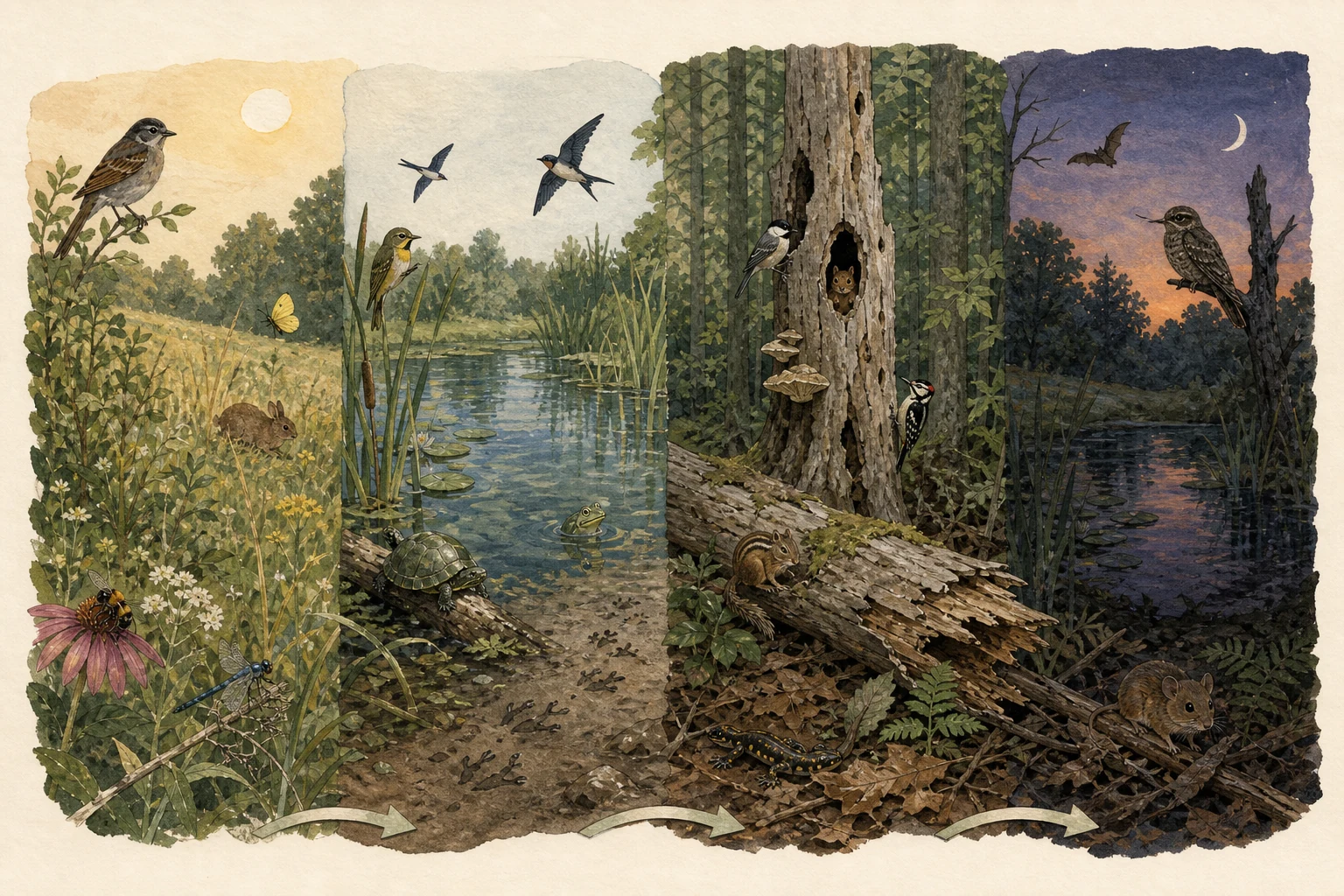
Wildlife is not spread evenly across a landscape. Some species gather at seams while others depend on habitat interiors. Learn to read both and you stop searching at random.
Last updated
Edges can concentrate wildlife
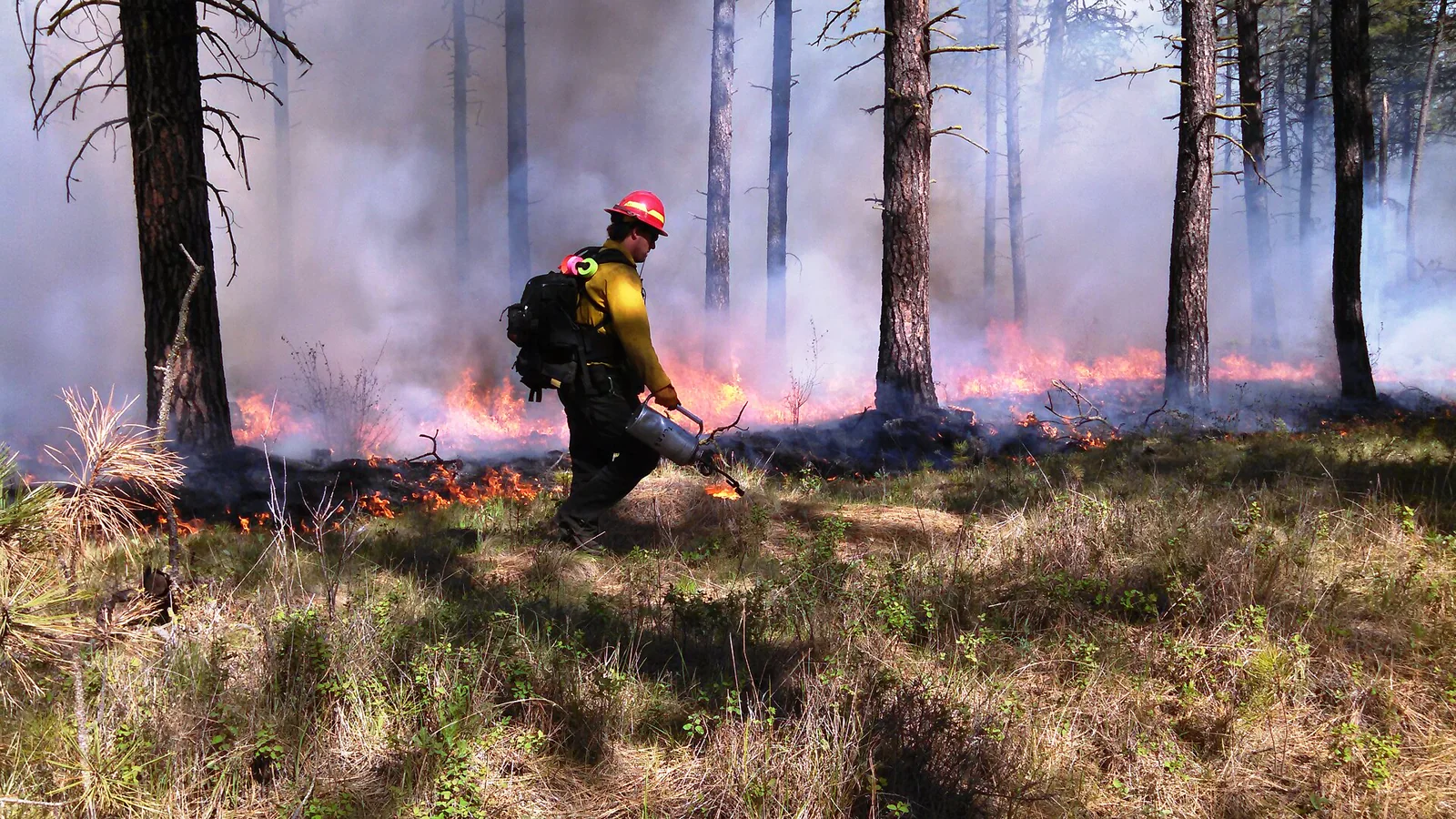
The boundary between two habitats is called an ecotone. Some species use the resources on both sides — feeding in one and sheltering in the other — so tree lines, wet margins, woodland rides, and glades are useful places to check. But the edge effect is not universally positive: abrupt or degraded edges can reduce habitat for interior specialists. Treat an edge as a testable field clue, not a promise that abundance will be higher there. [3][6][10]
- Tree line meeting meadow
- Where water meets grass or mud
- Hedgerows, fence lines, rides, and the margins of clearings
Water concentrates many species
Pond margins, slow stream bends, seeps, and tidal flats attract many species for drinking, feeding, breeding, or refuge. Some animals meet much of their water need through food, so water is not a universal draw. It is still a productive place to look because it combines a resource with a habitat edge; compare the shoreline, shallows, vegetation, and adjacent cover rather than watching only the open water. [8][11]
- Scan the damp mud margin and emergent reeds for tracks, probing shorebirds, and amphibians
- Watch overhanging branches and snag perches above the water for kingfishers, flycatchers, and dragonflies
- Remember that desert specialists like kangaroo rats obtain water metabolically from seeds rather than visiting open pools
Dead wood is habitat, not mess
A standing dead tree — a snag — is a particularly valuable forest structure. Washington's wildlife agency counts more than a hundred species of birds, mammals, reptiles, and amphibians using snags for nesting, roosting, and feeding. In the UK, the Woodland Trust describes standing deadwood as the scarcest form of deadwood; it supports species that can live nowhere else, and some 650 UK beetle species depend on decaying wood. Downed logs do similar work at ground level. [4][5][7]
- Look for cavities, loose bark, and woodpecker excavations
- Look for repeated use, but do not assume every cavity is occupied
Then pick your hour
Habitat tells you where; time helps tell you when. Many birds and mammals are especially active in the early morning or around dusk, but the useful window depends on species, season, weather, and tide. In winter woodlands or cold desert mornings, midday sun on a sheltered south-facing slope may draw out more foraging songbirds and reptiles than a frosty dawn. Start with local natural-history guidance, then record what the place actually does at different hours. [1][2][9]
- Concentrate songbird and mammal watches in the first two hours after sunrise and the final hour before dusk during warm months
- In cold weather, check sun-warmed edges, unfrozen seeps, and berry-bearing shrubs during late morning and midday
- Along coasts and estuaries, let the falling and rising tide schedule your visit as much as the clock
Related guides
Get Fauna and identify it in the field.
Where this guide comes from
Source-checked editorial guide. Last updated . This guide teaches identification and field skills; it is not a substitute for expert verification when it matters.
- U.S. Fish & Wildlife Service — Wildlife watching at Ridgefield National Wildlife Refuge ↗
- U.S. Fish & Wildlife Service — Wildlife Watching Tips ↗
- NC State Extension — Managing Forest Edges for Wildlife ↗
- Penn State Extension — Dead Wood for Wildlife ↗
- Washington Department of Fish & Wildlife — Snags: The Wildlife Tree ↗
- Forestry Commission (GOV.UK) — Nature's hidden havens: rides, edges and glades ↗
- Woodland Trust — Deadwood in woodland ↗
- The Wildlife Trusts — Ponds ↗
- Woodland Trust — Winter wildlife watching: what, where and when to spot ↗
- U.S. Forest Service — Global synthesis of forest edge effects ↗
- National Park Service — Kangaroo rats and water ↗