How to run a BioBlitz
A BioBlitz is a communal effort to document as many species as possible in a defined place and time—not proof that every species present was found.
Last updated
Set a bounded objective
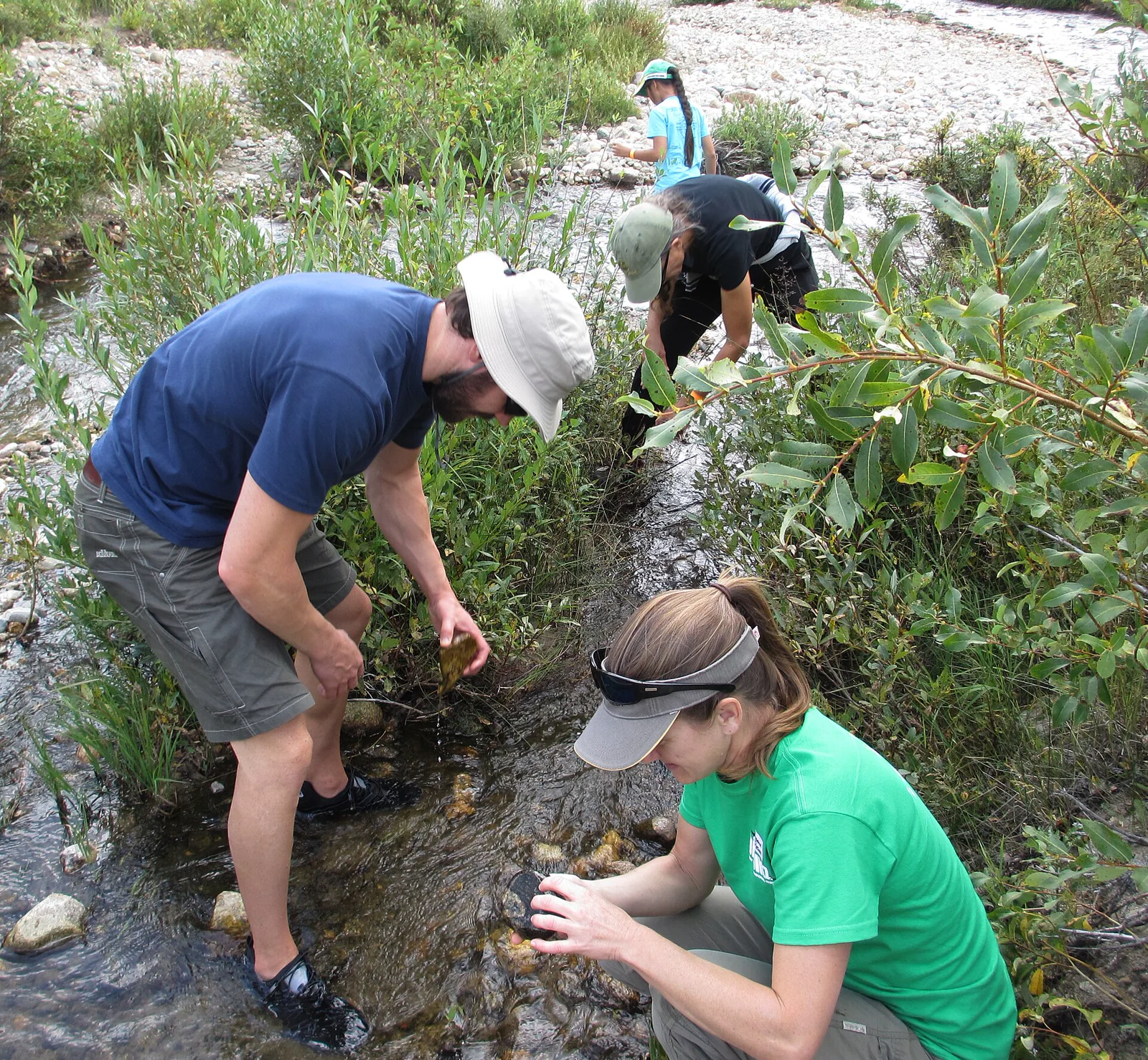
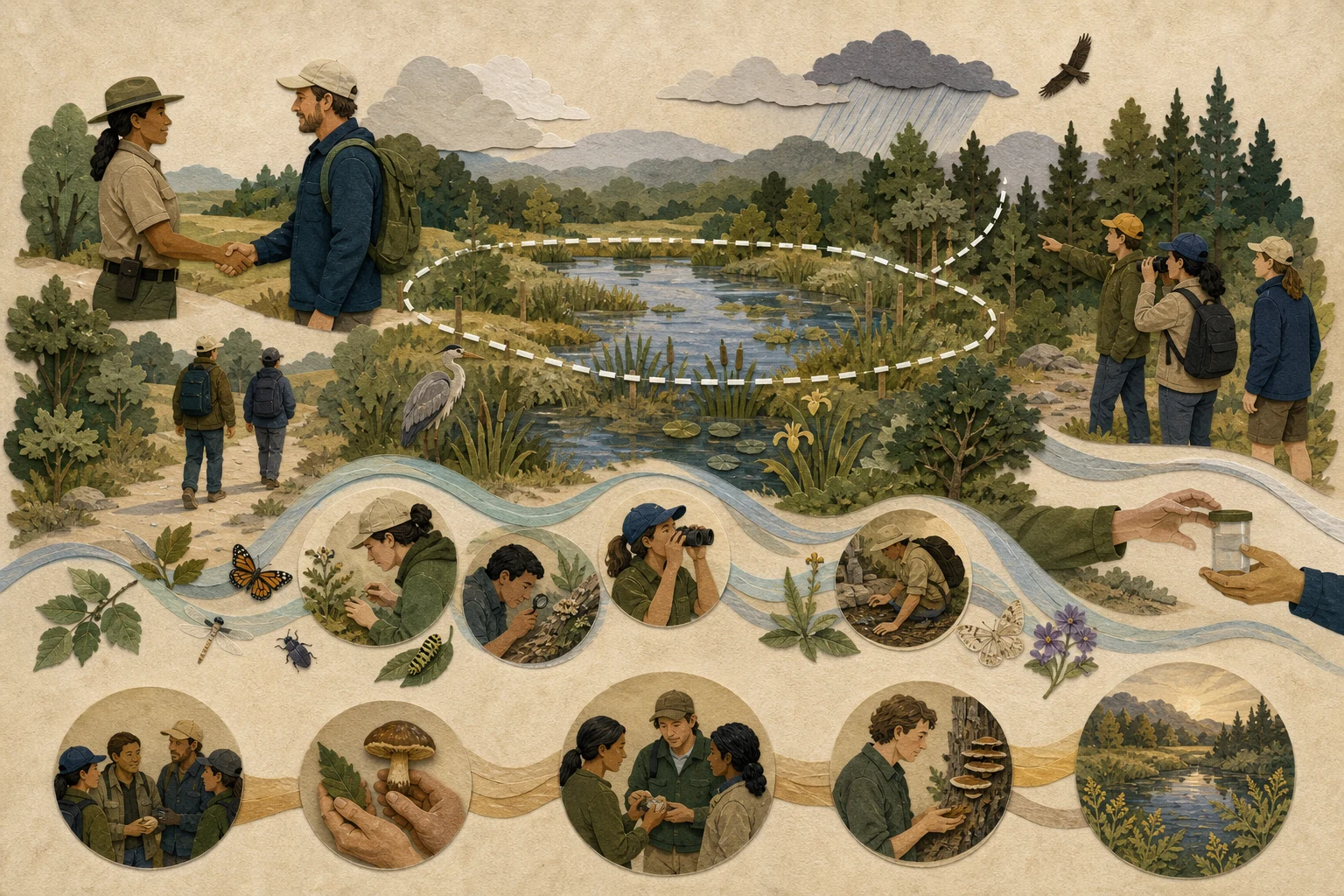
A successful community BioBlitz begins with a crystal-clear map boundary, a defined start and finish time, and an explicit decision about whether teams will document all visible wild taxa or focus on target groups such as pollinators, stream macroinvertebrates, or woodland fungi. Because a three-hour Saturday morning count in April captures a very different slice of life than an overnight July survey, frame your event results as a dated snapshot shaped by weather, season, and observer effort. Presenting the tally as 'species documented during the event' keeps expectations grounded and scientifically honest. [1][2][3]
- Establish an exact polygon boundary, time window, and target habitat or taxonomic scope before promoting the event.
- Schedule staggered microhabitat walks—such as a dawn bird walk, midday flower watch, and dusk moth sheet—if time permits.
- Describe the final species tally as a time-bounded snapshot of detected life rather than an exhaustive park census.
Build permission and care into the plan
Coordinate with the park superintendent, reserve manager, or private landowner well in advance to confirm trail access, parking capacity, group-size limits, and site-specific conservation rules. Walk the routes ahead of time to identify accessible paths, rest areas, cell-coverage dead zones, weather shelter, and field hazards such as steep banks or ticks. Make sure every participant understands that observing and photographing wildlife does not authorize handling, netting, or specimen removal; in U.S. national parks and many reserves, any physical collection or specialized trapping requires a formal scientific research permit. [1][5]
- Secure written land-manager permission and clarify rules on off-trail travel, group sizes, and sensitive habitat closures.
- Keep public BioBlitzes strictly photographic and acoustic unless permitted specialists hold valid scientific collecting authorizations.
- Brief participants at the welcome table on trail safety, weather contingencies, and leaving logs, bark, and nests undisturbed.
Rehearse the data workflow
Set up your iNaturalist collection project with the exact place polygon and time window several weeks early, then walk the site to test GPS lock and upload behavior under real canopy conditions. At the start of the event, run a five-minute demonstration showing newcomers how to take multi-angle diagnostic photos—whole plant plus leaves and flowers, or dorsal and lateral insect views—and how to save observations offline when cellular signal drops. Pair beginners with experienced field naturalists on the trail, and recruit regional botanists, entomologists, and birders online beforehand so incoming records receive timely, accurate identification review. [2][4]
- Field check: test your project boundary and offline app settings on site before participants arrive.
- Teach a simple three-shot habit—whole organism, close diagnostic detail, and habitat context—before groups head down the trail.
- Recruit remote and on-site taxon identifiers ahead of time so post-event uploads are reviewed rather than left at unknown rank.
Close the loop after the event
A BioBlitz is only half finished when participants leave the trailhead. Give observers several days to upload camera-card photos from home, remind them to combine multiple frames of the same individual organism into single records, and leave ambiguous observations honestly at genus or family rank rather than forcing species names. Once identification review settles, compile a concise summary for the land manager and community that states the event boundary, dates, participant count, weather conditions, total observations, verified species count, and notable gaps—alongside a permanent project link or archived dataset export. [1][2][3][4]
- Set a post-event upload deadline of three to seven days before compiling the summary report for participants and land managers.
- Audit incoming records for accidentally split multi-photo encounters, captive garden plants, and drifted GPS pins.
- Report observer numbers, hours searched, and unresolved taxa alongside the headline species count.
Related guides
Get Fauna and identify it in the field.
Where this guide comes from
Source-checked editorial guide. Last updated . This guide teaches identification and field skills; it is not a substitute for expert verification when it matters.