How pollination works
Pollination moves pollen to a receptive reproductive surface; fertilization may follow if the pollen is compatible and completes later steps. Wind, water, and animals can act as vectors, and effectiveness depends on where pollen is placed and where it goes next.
Last updated
Separate transfer from fertilization
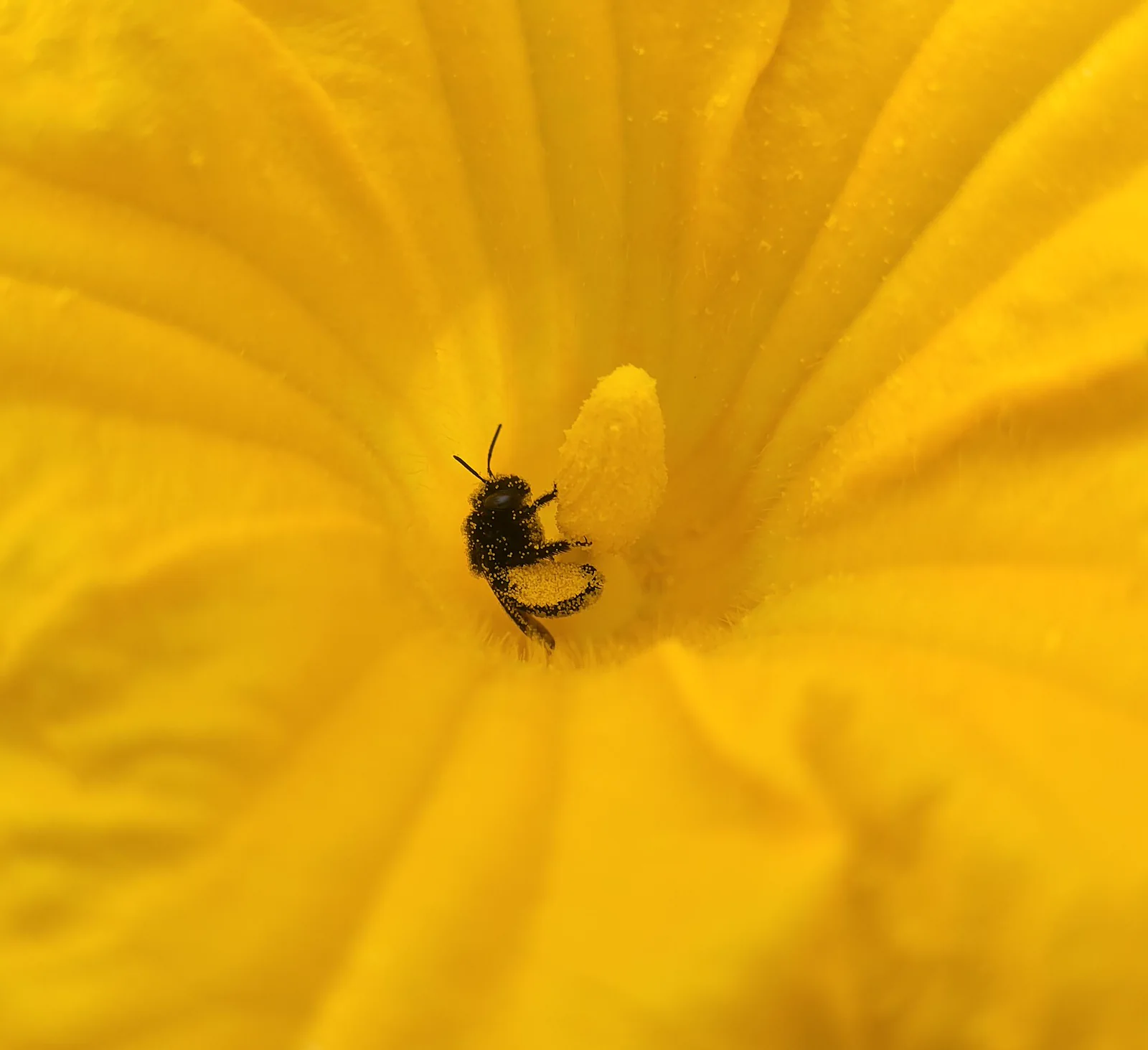
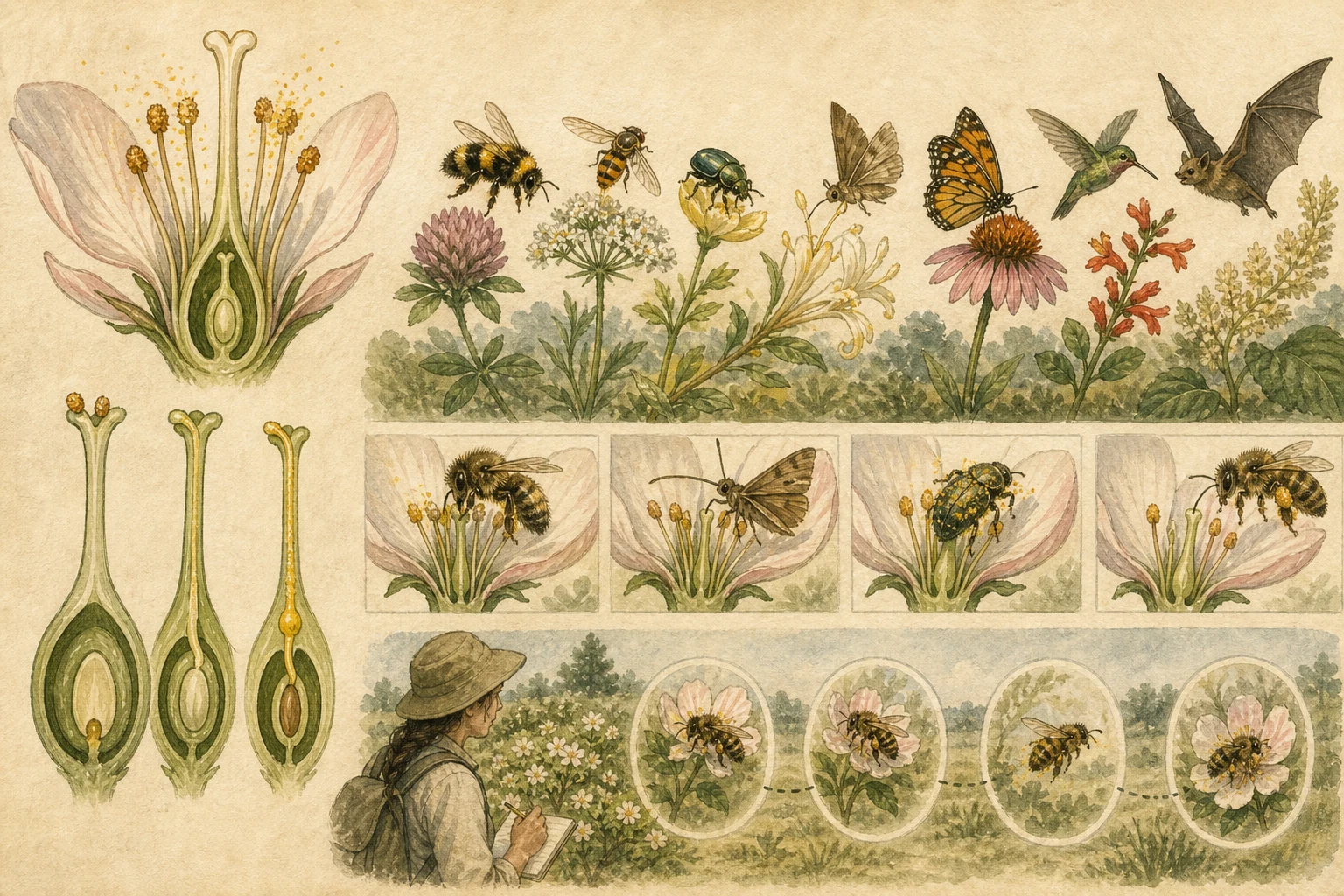
When you watch a bumble bee dusted with golden grains inside a squash blossom, you are watching the transport step of plant reproduction, not fertilization itself. In flowering plants (angiosperms), pollination is the physical transfer of pollen from the male anther to a receptive female stigma—either within the same flower, between flowers on the same individual, or across separate plants. Only after a compatible pollen grain lands on a receptive stigma does it hydrate, germinate, and grow a microscopic pollen tube down the style to fertilize an ovule, triggering seed and fruit development. Visible pollen on a flower or bee does not guarantee that fertilization occurred. [2][3][4]
- Pollination is the arrival of pollen on a receptive stigma (or gymnosperm ovule); fertilization happens later inside the ovule.
- Many wild plants are self-incompatible, requiring pollen carried from a genetically distinct individual to set viable seed.
- Field check: use a hand lens to inspect whether a flower's anthers are shedding fresh pollen or whether the stigma is open and receptive.
Vectors solve a transport problem
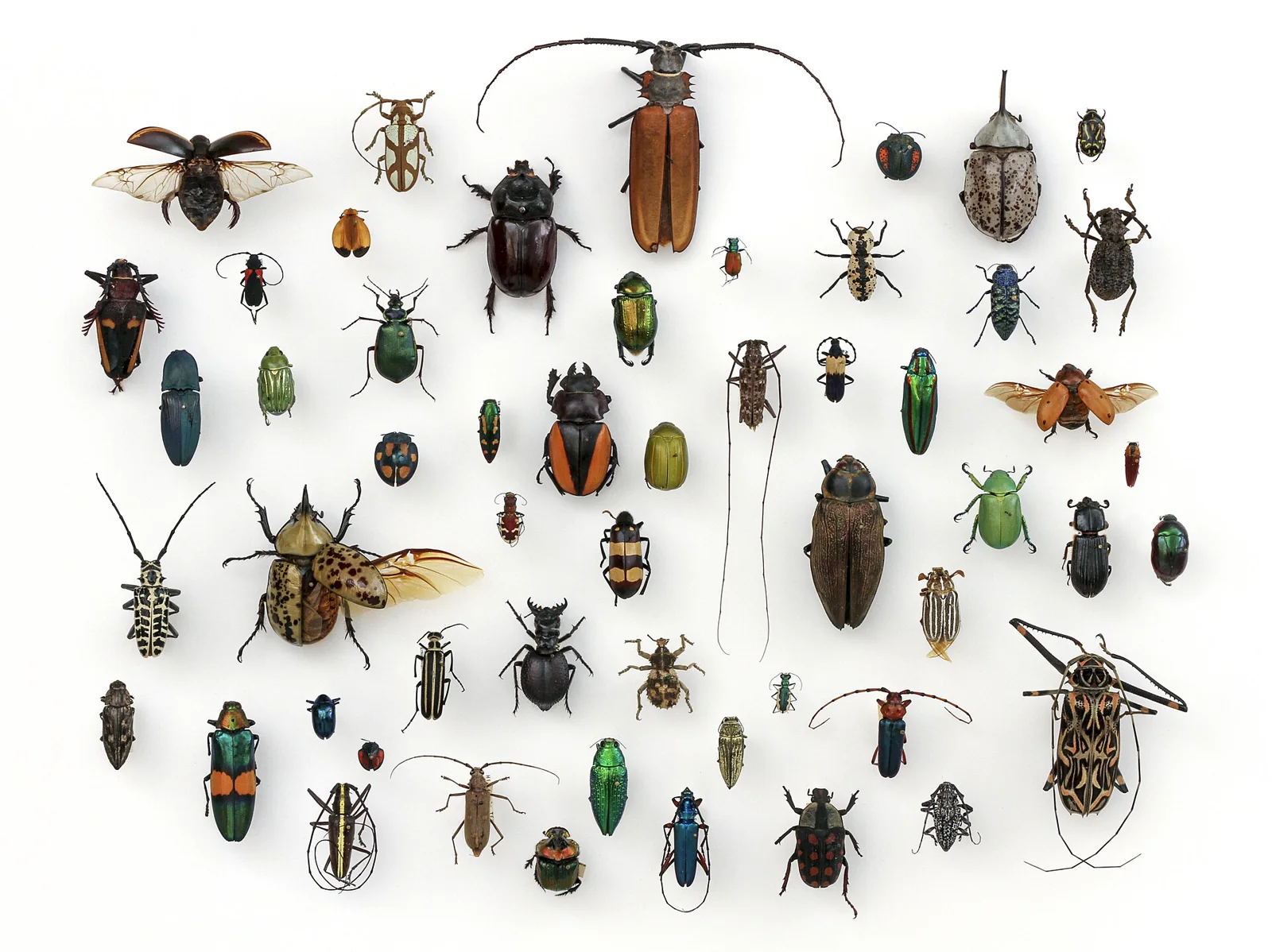
Because rooted plants cannot walk to a mate, they rely on physical or biological vectors to bridge the gap between anthers and stigmas. Conifers, grasses, sedges, oaks, and birches entrust vast clouds of lightweight, smooth pollen grains to the wind, hanging dangling catkins or feathery stigmas in open air. Most flowering plants instead recruit animal vectors—including solitary and social bees, syrphid flies, beetles, moths, butterflies, hummingbirds, sunbirds, and nectar-feeding bats—by offering calorie-rich nectar, protein-rich pollen, floral oils, or warm shelter. A small subset of submerged aquatic plants even releases pollen that drifts on or beneath the water surface. [1][2][5]
- Wind-pollinated plants typically produce inconspicuous, scentless flowers with exposed anthers and feathery, high-surface-area stigmas.
- Animal-pollinated flowers use visual guides, scent plumes, and nectar or pollen rewards to attract insects, birds, or bats.
- Look beyond honey bees: native bumble bees, solitary mining and mason bees, hoverflies, beetles, and nocturnal moths drive wild plant pollination.
A visitor is not always a pollinator
One of the most rewarding field habits is distinguishing a mere floral visitor from an effective pollinator. An insect or bird that lands on a blossom may sip nectar from the side without ever touching the anthers or stigma, chew a hole through the base of a tubular corolla as a 'nectar robber,' or groom most of the pollen into tight transport baskets without brushing a receptive stigma. Even when a visitor picks up pollen, it only pollinates the plant if it subsequently carries compatible grains to another receptive stigma of the same species before the pollen loses viability or gets buried under foreign pollen from unrelated flowers. [1][3][4]
- Common trap: calling every insect perched on a petal a pollinator without checking whether its body contacts the anthers and stigma.
- Nectar robbers bite or pierce the base of tubular flowers to take nectar while bypassing the reproductive organs completely.
- Floral syndromes (such as red tubular flowers for hummingbirds) are helpful hypotheses, yet generalist visitors routinely cross those boundaries.
Observe a sequence, not one landing
To turn a casual wildflower walk into a real pollination observation, pick a single flowering patch and watch it quietly for ten or fifteen minutes without disturbing the stems. For each visitor, note its taxonomic group as specifically as your view and photos allow, whether it collects pollen, probes for nectar, or buzz-vibrates poricidal anthers (as bumble bees do on shooting stars, blueberries, and tomatoes), which body part touches the anthers and stigma, how long it stays, and whether its next flight goes to another flower of the same species. That behavioral chain provides far stronger evidence than a single snapshot. [1][3][5]
- Field check: track where an insect flies after leaving a blossom—flower constancy to the same plant species makes pollen transfer work.
- Listen for the high-pitched buzz of a bumble bee vibrating tubular anthers to shake loose dry pollen grains.
- Record time of day, temperature, and cloud cover, since different pollinator guilds work the same flower patch in morning, afternoon, and dusk shifts.
Related guides
Get Fauna and identify it in the field.
Where this guide comes from
Source-checked editorial guide. Last updated . This guide teaches identification and field skills; it is not a substitute for expert verification when it matters.
- Bumblebee Conservation Trust ↗
- USDA National Agricultural Library — Insects and pollinators ↗
- Smithsonian Gardens — The why, what, when, where, who, and how of pollination ↗
- U.S. Forest Service — Pollinator-friendly best management practices ↗
- Smithsonian National Museum of Natural History — Precious pollinators ↗