Monarch Butterfly
Danaus plexippus
An orange-and-black milkweed butterfly whose populations make extraordinary seasonal journeys.
What to look for
- 01
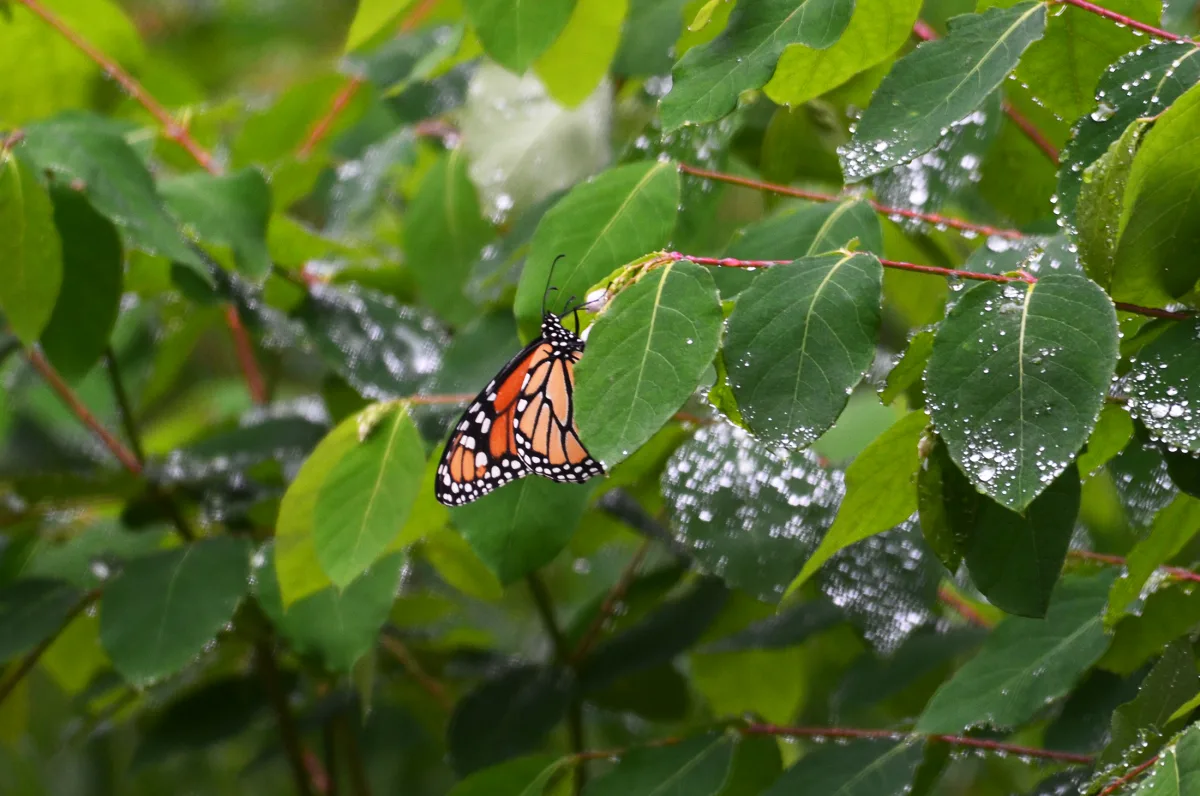
Orange wings crossed by black veins and bordered in black with white spots
- 02
Black body with white spotting
- 03
Male usually has a dark scent patch on each hindwing
Where it lives
Open fields, gardens, roadsides, coastal sites, and other flower-rich places where milkweed and nectar plants occur.
How it moves
Adults nectar at flowers; females search for milkweed for egg-laying. Migratory timing and direction vary by population and season.
Common lookalikes
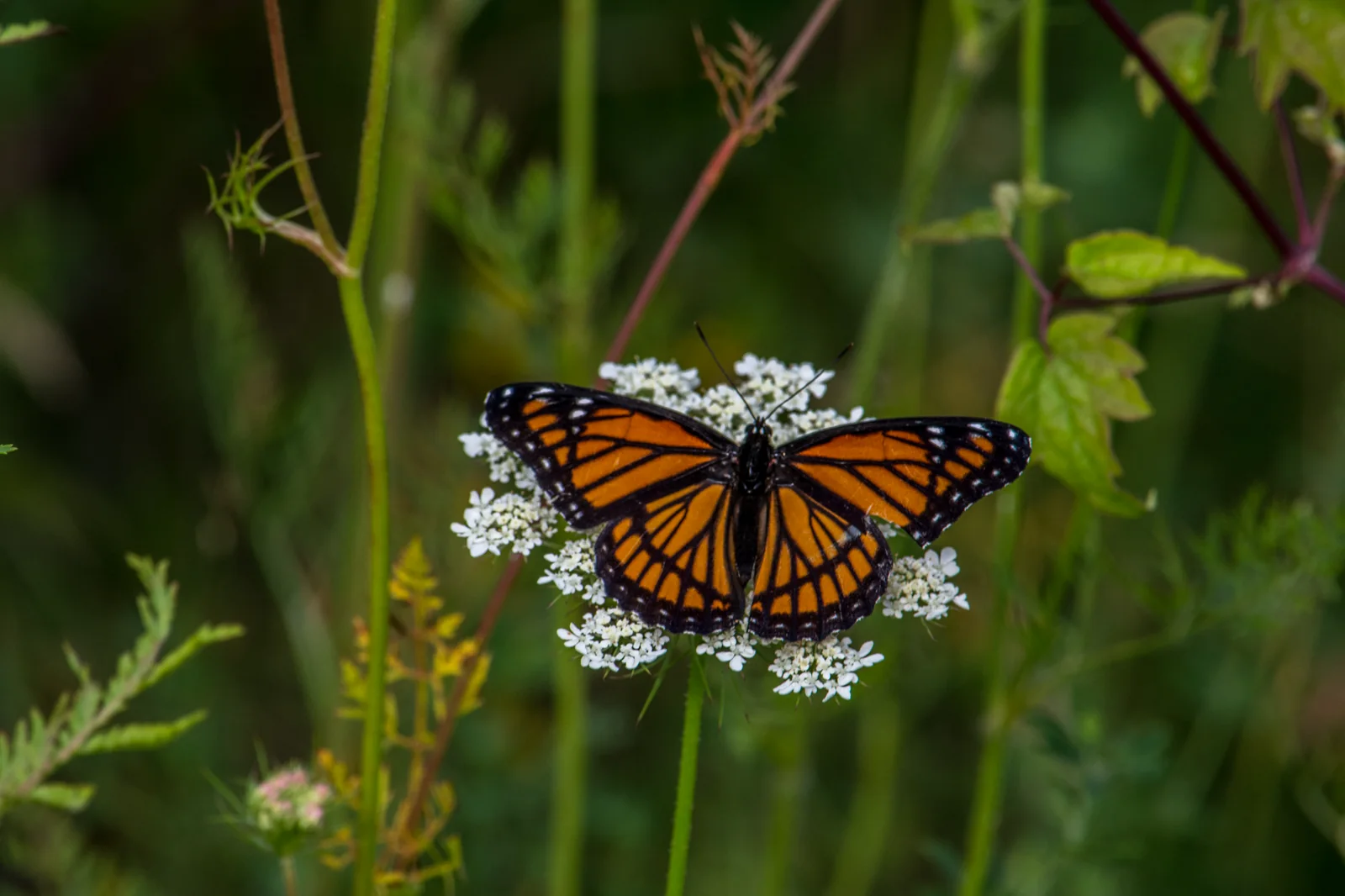
Viceroys have a black line across each hindwing. Queen butterflies are darker and carry more white spots across the forewing.
Observe responsibly
Photograph without handling when possible. Do not publish exact locations of vulnerable overwintering clusters.
Avoid pesticides around milkweed and nectar plants. Follow local rules before collecting or rearing any butterflies.
Monarch abundance varies across regions and years; habitat loss, pesticide exposure, drought, and climate change are important pressures.
Get Fauna and identify it in the field.
Where this guide comes from
Sources are linked below. Field marks vary with age, sex, season, region, light, and viewing distance.