Photographing plants for identification
A single flower close-up often hides the characters a botanist needs. Work from habitat and whole-plant form toward stems, leaves, flowers or fruit, and small diagnostic details, while keeping one encounter together.
Last updated
Start wide enough to show habit
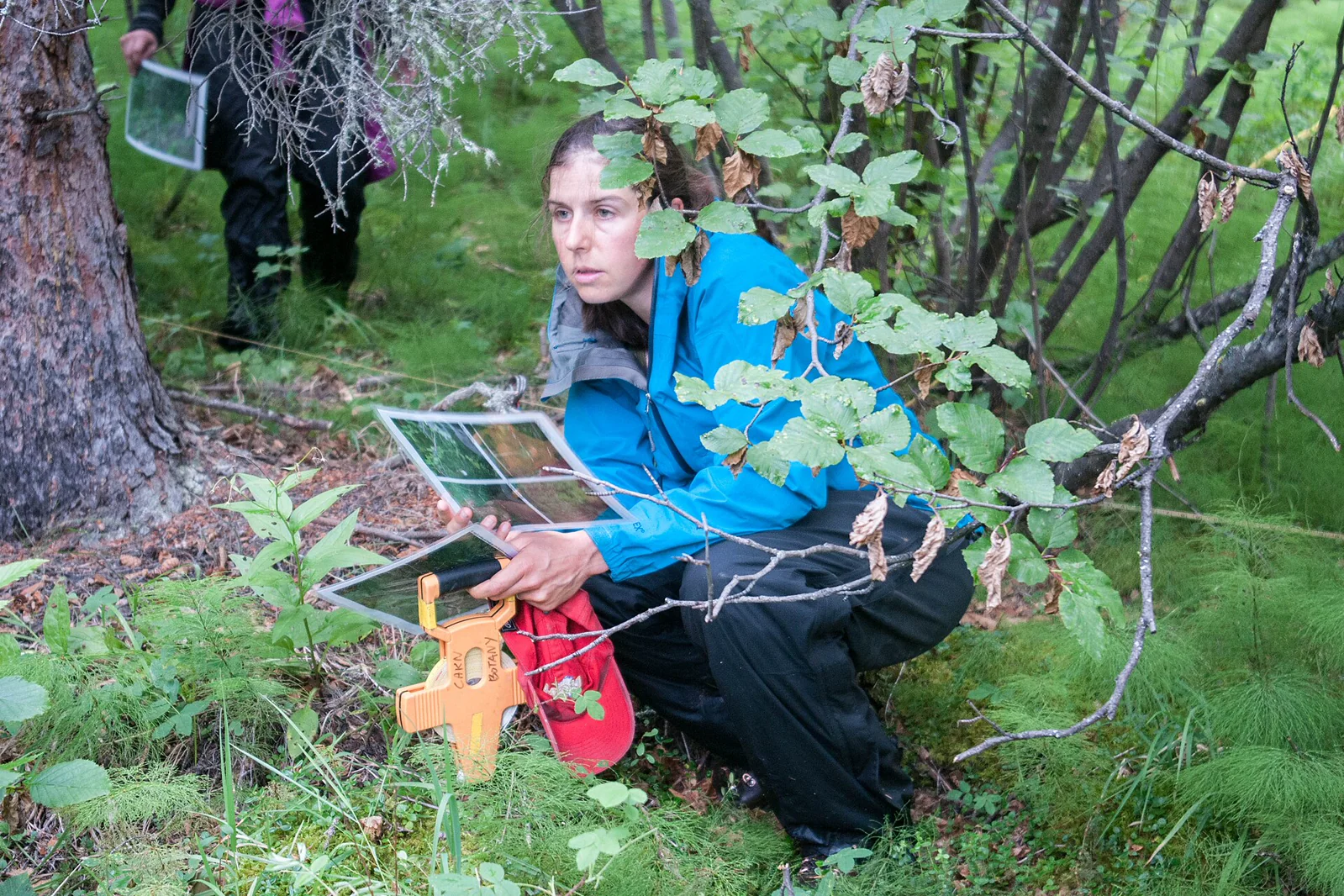
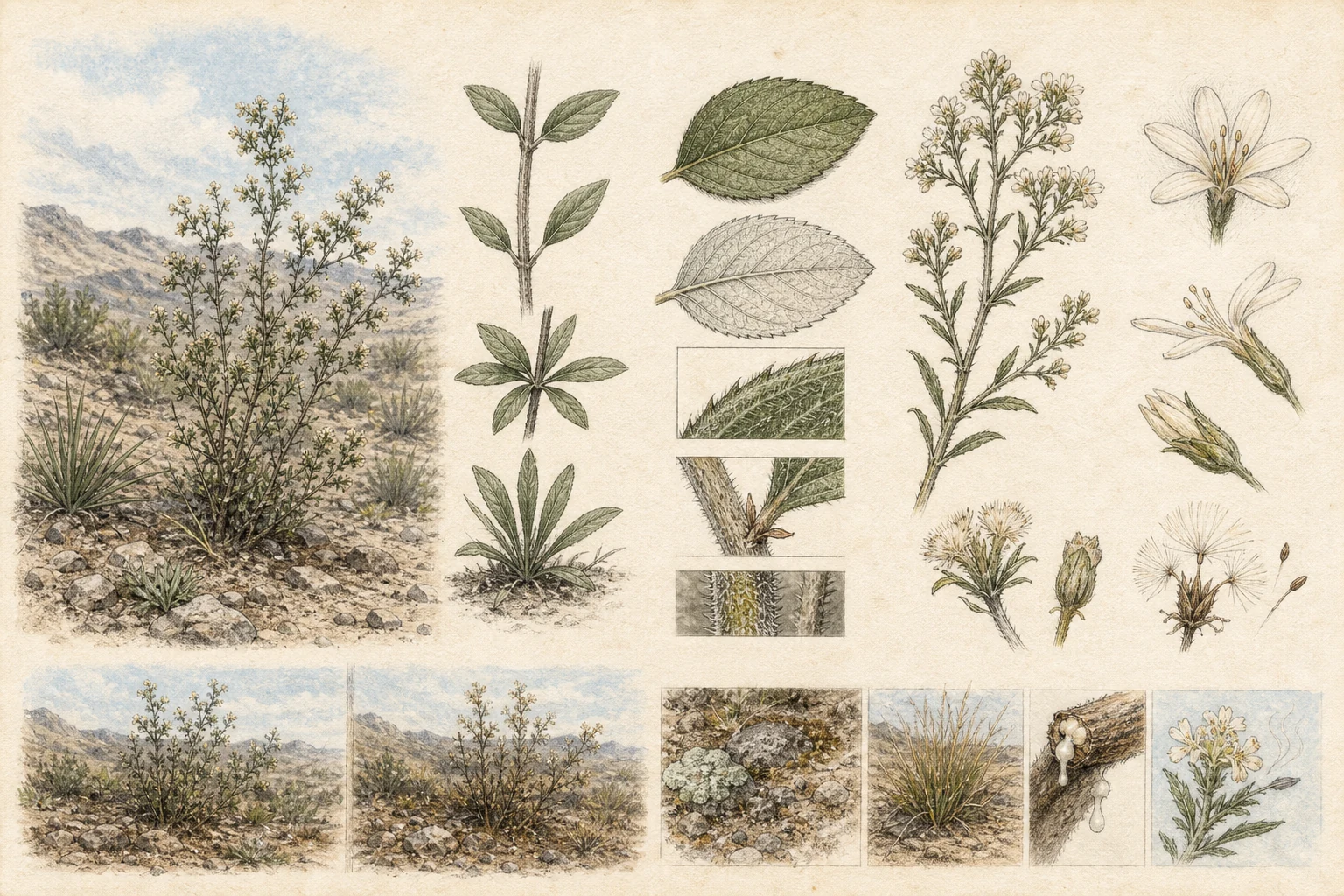
A tight portrait of a yellow composite blossom or a single oak leaf leaves out the context a botanist checks first. Step back before kneeling and photograph the whole plant in its setting—whether it grows as a single-stemmed herb, a sprawling mat on limestone gravel, a woody shrub with peeling bark, or a climbing vine along a floodplain margin. Then frame the entire individual from basal leaves or root crown to its uppermost flowering shoots so reviewers can see overall posture, branching architecture, and surrounding habitat in a single view. [1][2][3]
- Take an initial habitat and whole-plant frame showing growth form, height, and substrate before moving in.
- Show how basal leaves, main stems, branches, and flowering shoots connect on the same individual.
- Include bark texture and twig branching patterns when documenting trees, shrubs, or woody vines.
Document how leaves attach
Many look-alike genera separate immediately by how leaves sit on the stem rather than by flower color. Frame a clear section of stem in profile to show whether leaves emerge opposite each other in pairs, alternate singly up the stalk, radiate in whorls, or cluster strictly at the base. Turn one mature leaf gently in place to photograph both its upper and lower surfaces, capturing venation, marginal teeth or lobes, petiole length, clasping bases, tiny stipules at the node, and any glandular or silky hairs. Hold a millimeter ruler or coin beside the leaf rather than laying it across the tissue. [1][2][4]
- Photograph a clean stem profile that proves whether leaves are alternate, opposite, whorled, or basal.
- Capture both upper and lower leaf surfaces, leaf margins, petiole bases, and any stipules or stem hairs.
- Hold a small ruler in the same plane beside the leaf to establish true dimensions without crushing parts.
Give flowers and fruit several views
A top-down shot of a flower face shows petal number and symmetry, but keys regularly ask about the sepals, bracts, spurs, or ovary hidden underneath. Photograph the whole inflorescence first—whether a spike, umbel, panicle, or solitary head—and then take both a face-on and a crisp side or underside view of an individual blossom. In asters, thistles, and goldenrods, a sharp side shot of the overlapping phyllaries (involucral bracts) cup beneath the flower head is essential. Include unopened buds, mature seed capsules, pods, or berries on the same stem without plucking or dissecting the living plant. [1][3][4]
- Pair a face-on flower portrait with a side or underside angle showing sepals, calyx tubes, or involucral bracts.
- Document the architecture of the entire flower cluster as well as any developing fruits or seed pods.
- Leave petals and fruits intact on the stem; return later in the season if mature seeds are needed for keys.
Keep the encounter and uncertainty intact
When two or three similar species grow intertwined in a meadow, mixing leaves from one stem with flowers from its neighbor creates a chimeric record no expert can untangle. Trace stems to the ground to verify that every photograph in your observation belongs to the exact same individual, and create a separate record if you return weeks later to photograph ripe fruit. Add brief field notes on traits the camera misses—such as crushed-leaf mint or carrot odor noticed from bruised foliage, gritty leaf texture, or whether the plant was intentionally planted—and stop at genus when microscopic characters are required. [1][4][5]
- Trace stems carefully so every close-up in a single observation comes from the exact same plant individual.
- Create a fresh, dated observation when revisiting a marked plant in a later flowering or fruiting stage.
- Note habitat, wild versus cultivated status, and non-visual traits while keeping identifications at a supported rank.
Related guides
Get Fauna and identify it in the field.
Where this guide comes from
Source-checked editorial guide. Last updated . This guide teaches identification and field skills; it is not a substitute for expert verification when it matters.
- University of Florida Herbarium — Florida Plant Identification Help ↗
- North Dakota State University Extension — Plant Identification Guide ↗
- Botanical Research Institute of Texas — Plant Collection and Preservation ↗
- University of Kansas Biodiversity Institute — Plant Identification ↗
- iNaturalist Help — What Is an Observation? ↗