Poison Hemlock
Conium maculatum
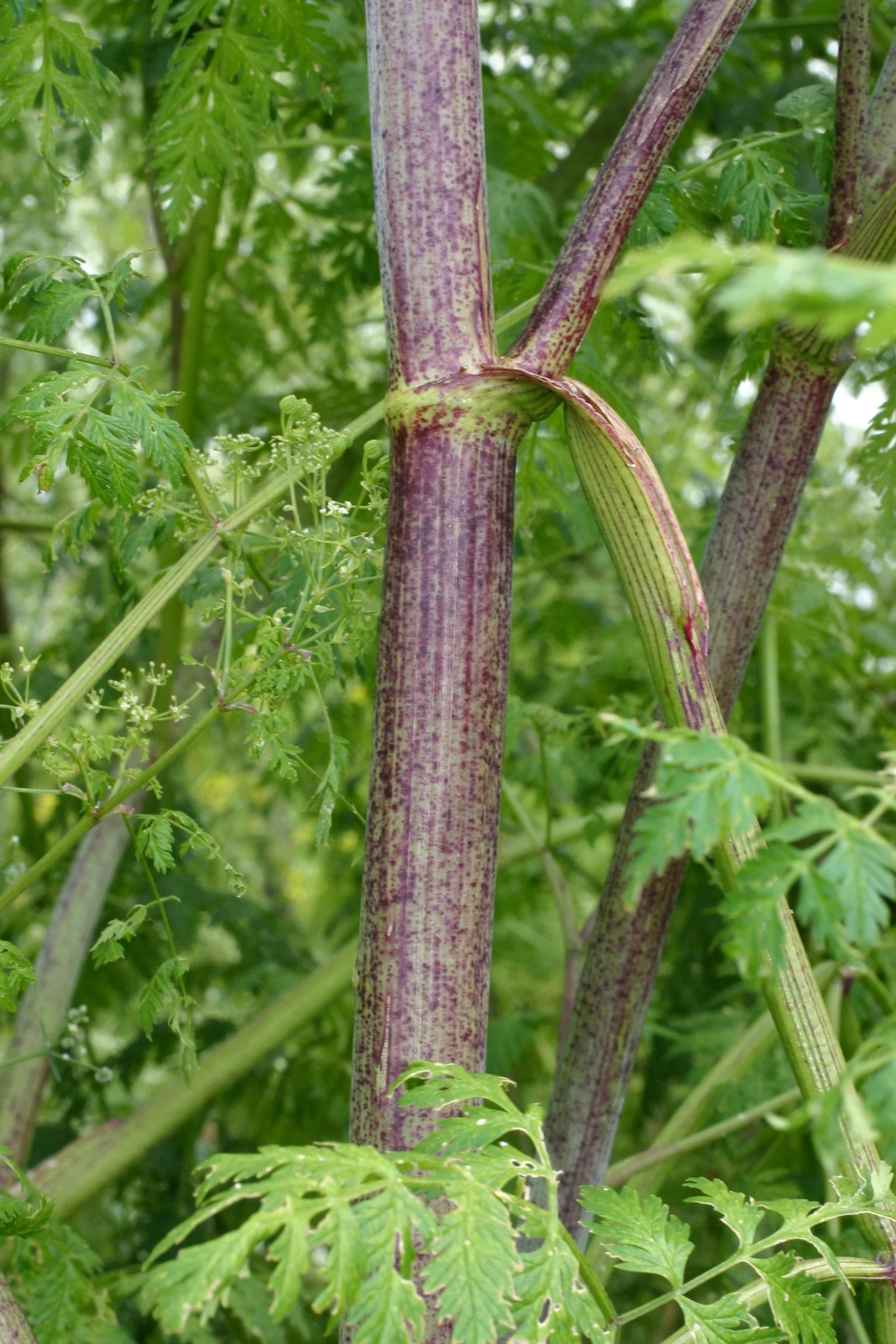
One of North America's most poisonous plants, identifiable year-round by smooth stems blotched with purple.
What to look for
- 01
Stems are hairless and smooth, streaked and blotched with purple or reddish patches
- 02
Tall at flowering — commonly six feet or more, well above wild carrot
- 03
Branching clusters of white umbels, not a single flat head
- 04
Finely divided, fern-like foliage with a musty, unpleasant smell when crushed
Where it lives
Roadsides, ditches, stream banks, field edges, and waste ground, often in large stands on damp, disturbed soil.
How it grows
A biennial. In its first year it is only a low, non-flowering rosette — which is exactly why flower-based identification fails and the stem must be checked. It bolts and flowers in late spring and early summer of year two.
Common lookalikes
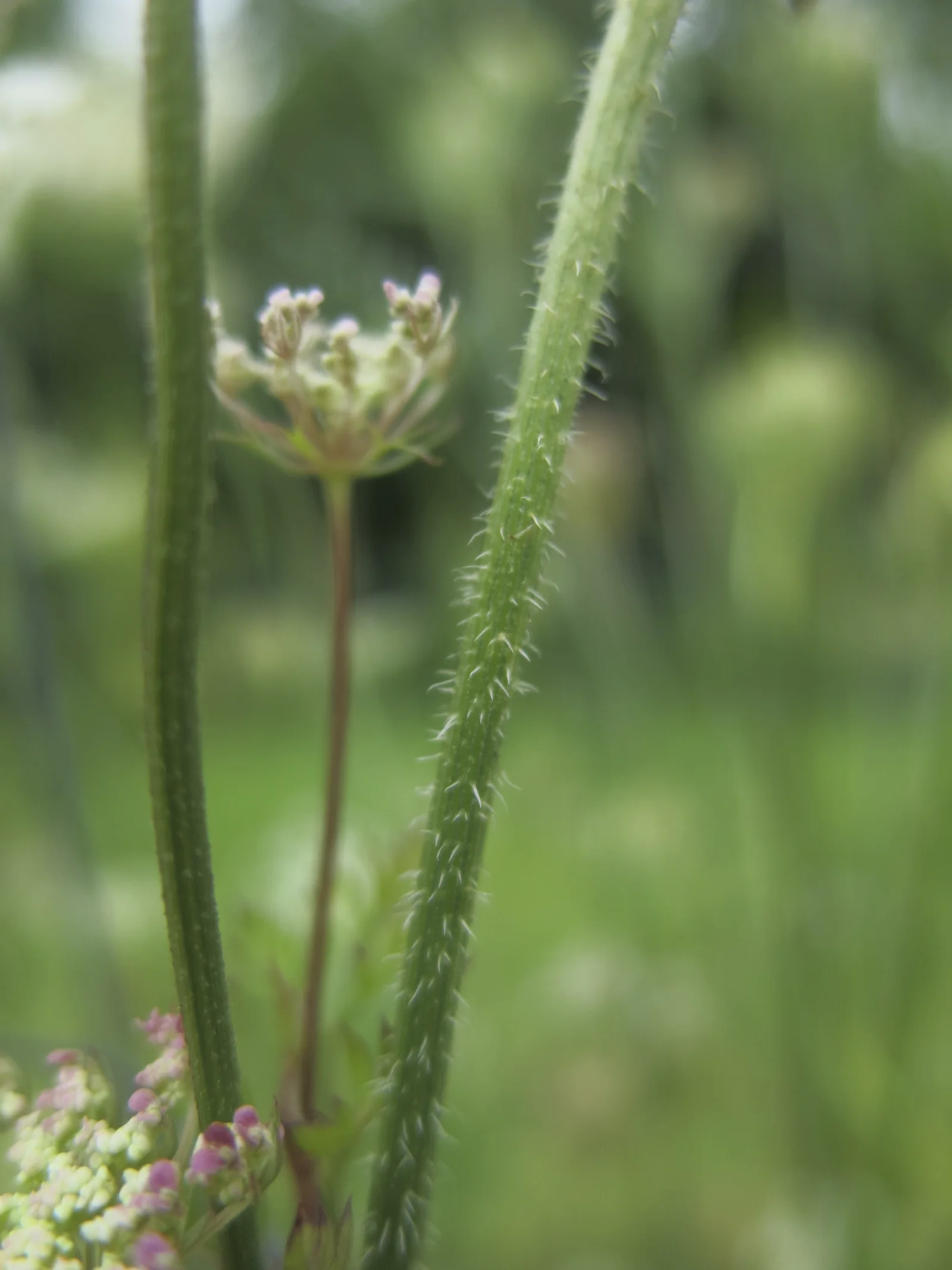
Queen Anne's lace is shorter, with hairy green stems, a single flat-topped umbel, and a carrot smell. Wild parsnip, water hemlock, and elderberry are also confused with it.
Observe responsibly
Look, photograph, and leave it. Do not cut, pull, or strim it without gloves and eye protection — and never burn it.
Every part is highly poisonous. Its coniine-type alkaloids attack the neuromuscular junction and there is no antidote; poisoning can be fatal. Sap can also affect people through cuts or the eyes. If any part has been eaten, call Poison Control at 1-800-222-1222 (US) immediately, even before symptoms appear.
Introduced and invasive, listed as a noxious weed in many states. Removal is a job for gloved, protected, informed hands — or for the county weed authority.
Get Fauna and identify it in the field.
Where this guide comes from
Sources are linked below. Field marks vary with age, sex, season, region, light, and viewing distance.