Queen Anne's Lace
Daucus carota
This hairy-stemmed roadside umbel is a wild carrot. Its deadly hemlock lookalike makes the stem worth checking every time.
What to look for
- 01
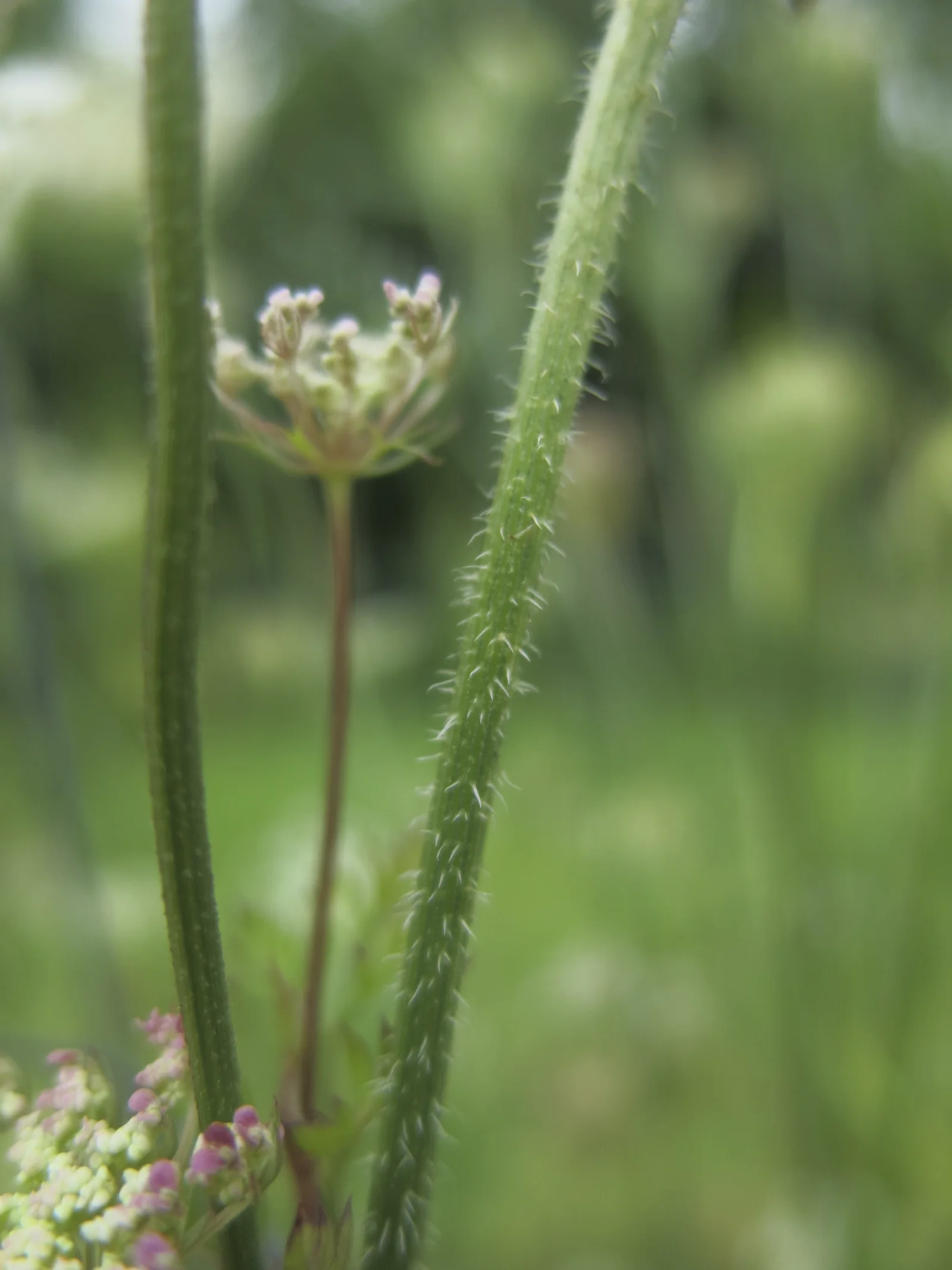
Stems are solid green and noticeably hairy — no purple blotches anywhere
- 02
Usually knee- to waist-high, well under three feet
- 03
A single flat-topped white umbel, often with one tiny dark purple floret at the centre
- 04
Crushed leaves and root smell distinctly of carrot
Where it lives
Roadsides, old fields, meadows, and disturbed ground across most of North America, where it is introduced rather than native.
How it grows
A biennial: a low rosette in year one, then a flowering stalk in year two, blooming through mid and late summer. The umbel curls upward into a cupped 'bird's nest' as seed sets.
Common lookalikes
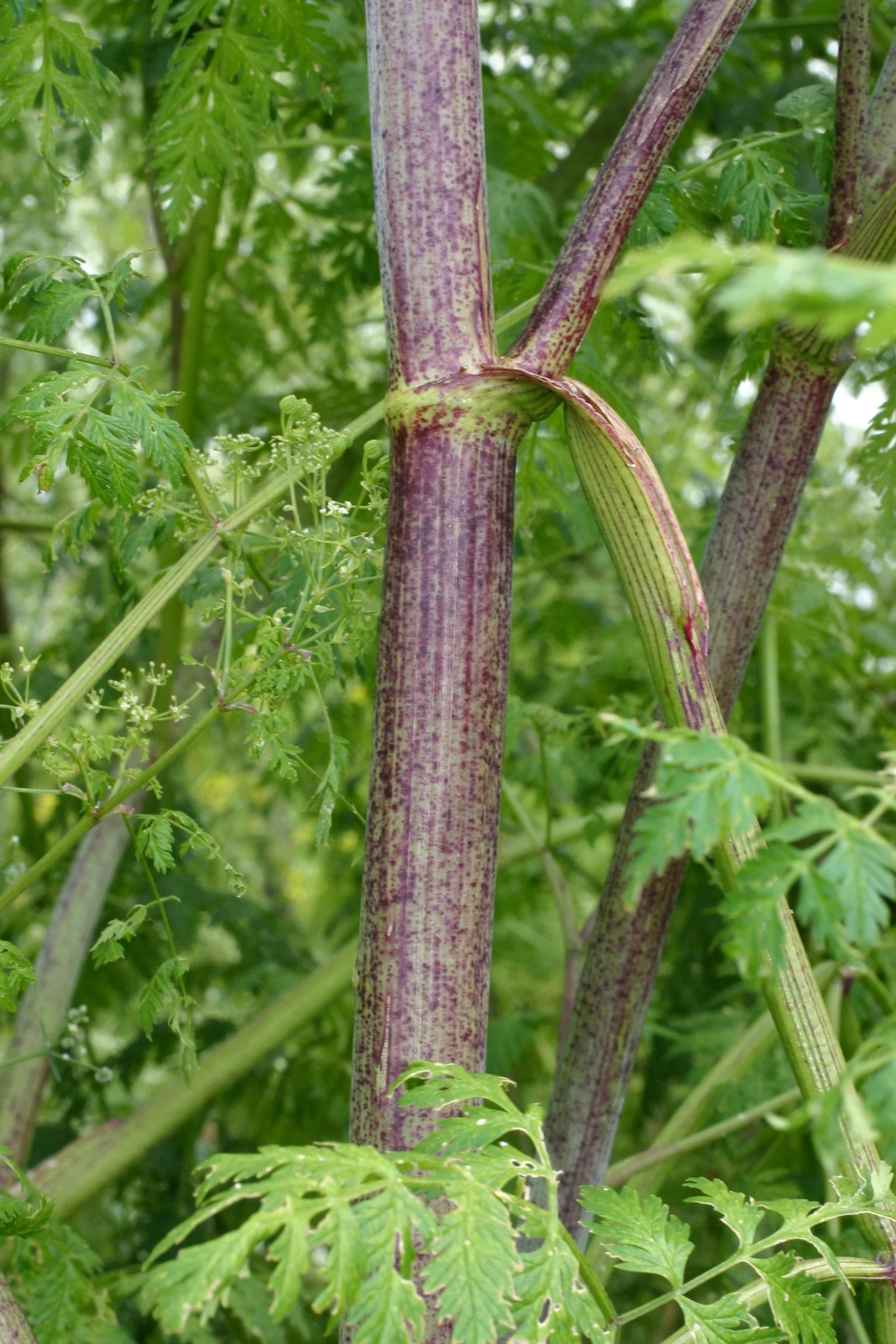
Poison hemlock is the dangerous double: taller, with hairless stems marked by purple blotches, branching clusters of umbels, and a musty smell instead of carrot. Several other white umbels, including deadly water hemlock, are also easily confused.
Observe responsibly
Check the stem before anything else — hairy and unblotched, or smooth and purple-spotted. Never rely on the flower shape alone.
Fauna teaches identification, not edibility. Wild carrot's foliage can irritate skin in sunlight, and its lookalikes include some of the most poisonous plants in North America. Never eat any wild umbel on the strength of a guide or an app.
Introduced and widespread, treated as a weed in many regions, though its flowers do support a range of small pollinators.
Get Fauna and identify it in the field.
Where this guide comes from
Sources are linked below. Field marks vary with age, sex, season, region, light, and viewing distance.