How animal camouflage works
Camouflage can delay detection, obscure an outline, flatten apparent shape, or make an animal resemble an irrelevant object. Its success is measured through another animal's sensory system, not simply by whether a human observer finds the pattern convincing.
Last updated
Conceal detection or recognition
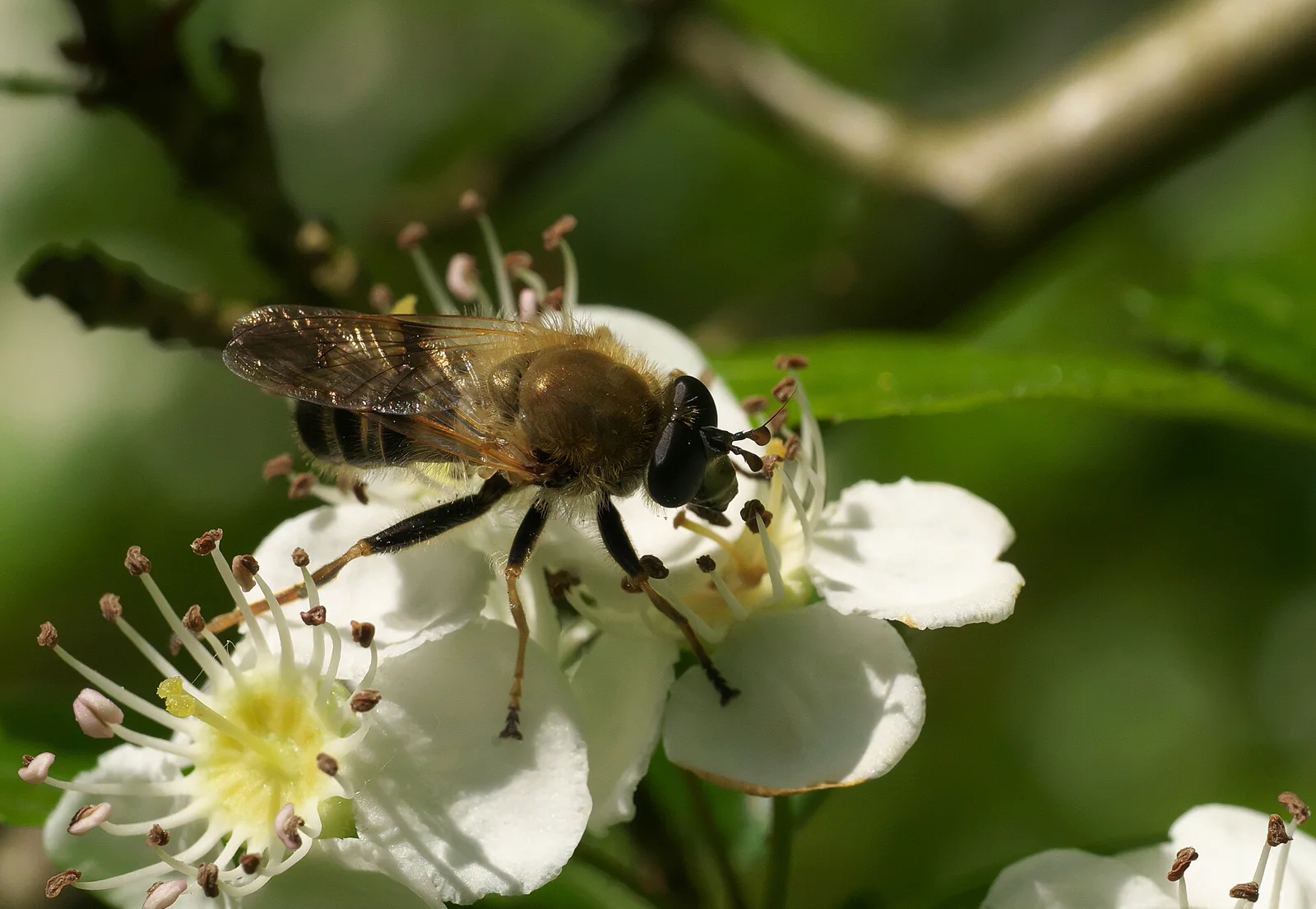
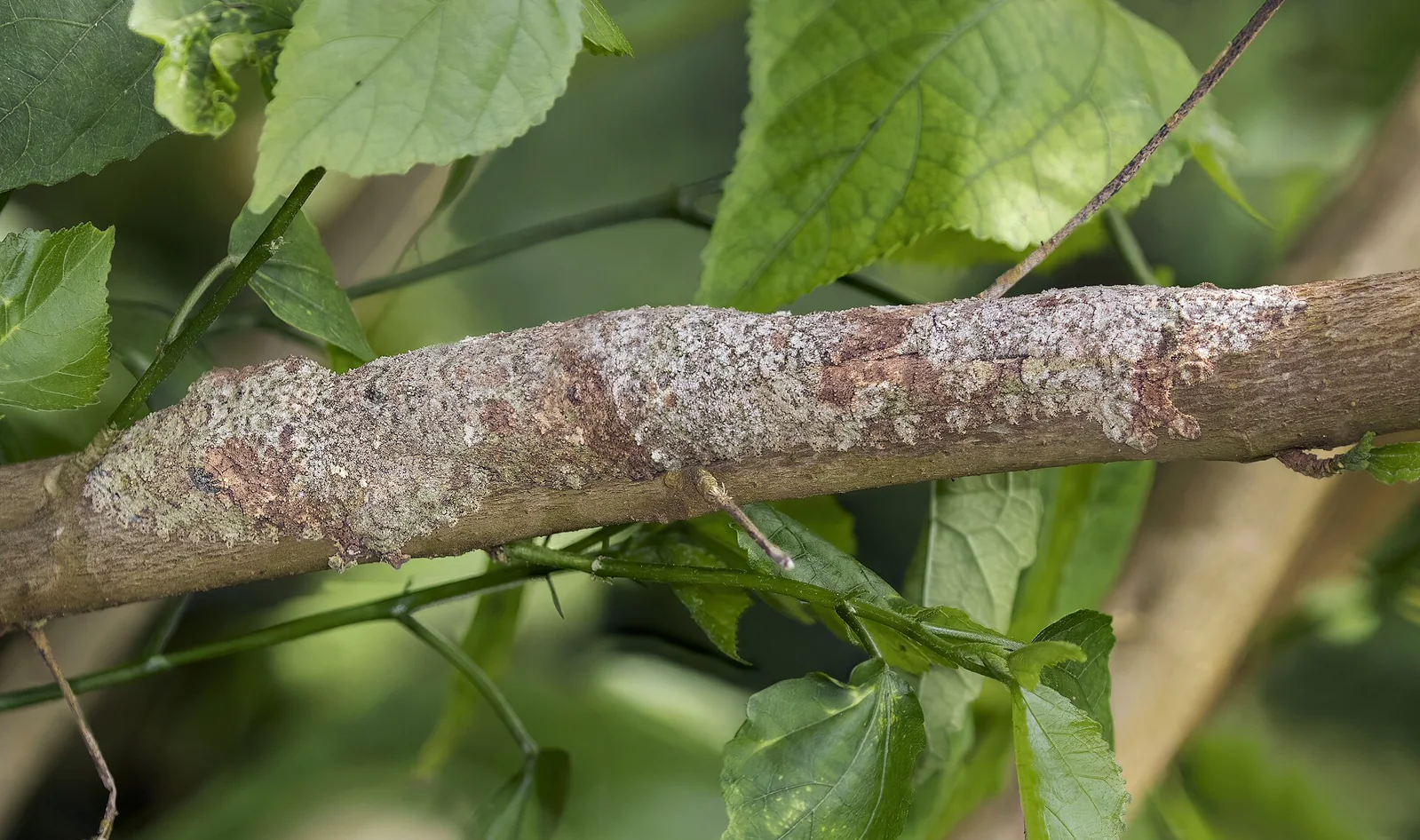
Visual camouflage works by interfering with one of two steps in a predator's or prey animal's search: initial detection or subsequent recognition. Background matching reduces the chance that an animal is detected at all by echoing the colors, brightness, and texture scale of surrounding bark, shingle, or leaf litter—as when a nightjar or mossy leaf-tailed gecko settles against mottled wood. Masquerade operates differently: a viewer may see the organism clearly in plain sight, yet misclassify it as an inedible twig, dead leaf, thorn, or bird dropping. In the field, many cryptic animals benefit from both mechanisms depending on how close a searcher approaches. [1][2][5]
- Background matching prevents a viewer from separating the animal from its substrate in the first place.
- Masquerade allows the organism to be seen as a distinct object while fooling the viewer into classifying it as a twig, leaf, or stone.
- Field check: notice whether you overlooked an insect entirely or saw it first and mistook it for plant debris.
Patterns solve different visual problems
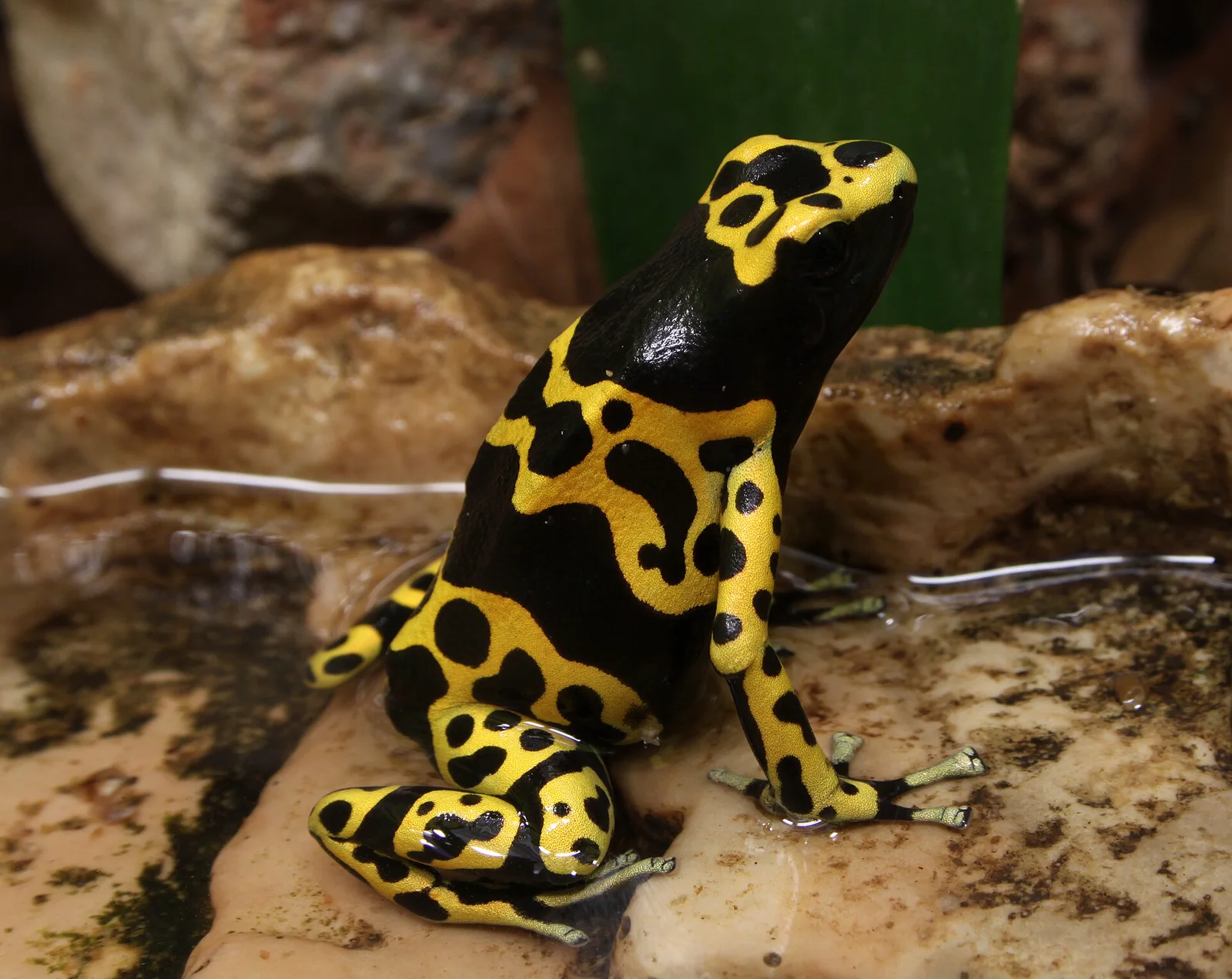
Even when an animal's colors match its habitat, a continuous body outline or three-dimensional shadow can still betray its shape. Disruptive coloration places high-contrast blotches or bands across the body margin to create false internal edges that break up the true silhouette, a strategy seen in killdeer plovers, frogs, and cuttlefish. Countershading—a darker dorsal surface grading into a paler belly—can flatten the three-dimensional shading gradient produced when sunlight falls from above, though researchers note that darker backs also serve thermoregulation and ultraviolet protection. Many wild animals combine background matching, disruptive edges, and countershading on the same body. [2][3][4]
- Disruptive markings touch the body's outer edge to break up the continuous contour that predators search for.
- Countershading offsets overhead directional lighting that would otherwise cast a telltale shadow along a rounded belly.
- Cuttlefish, flatfish, and chameleons can dynamically shift between uniform background matching and high-contrast disruptive patterns.
The observer defines the match
A camouflage pattern is shaped by the visual system and hunting angle of the ecologically relevant receiver, not by human trichromatic vision at arm's length. Songbirds, lizards, and many insects perceive ultraviolet wavelengths invisible to us, while mammalian carnivores such as foxes and coyotes have dichromatic color vision that misses red-green contrasts obvious to human eyes. Viewing distance and substrate selection are equally critical: bold stripes or spots that look conspicuous a foot away can blend into dappled shade at ten yards, and a bark moth's crypsis fails immediately if it rests oriented across the vertical grain of a tree trunk. [3][4][5]
- A pattern that looks bright to human eyes can be cryptic to a dichromatic mammal or a predator viewing from a different angle.
- At greater distances, high-contrast spots and stripes blend optically into the average brightness of the background.
- Posture and microhabitat choice—such as a moth aligning its wings with bark crevices—are essential parts of functional camouflage.
Test a field interpretation
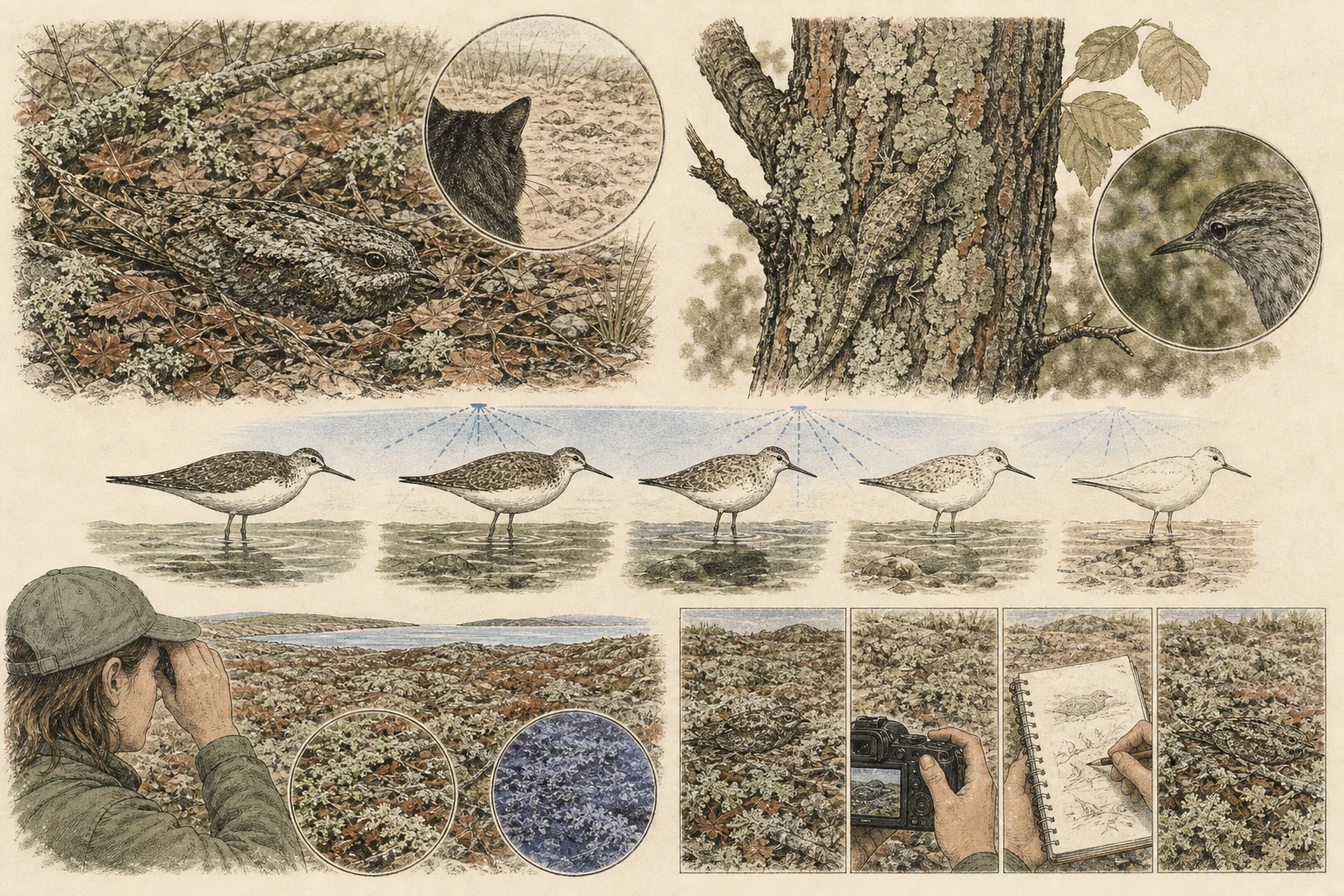
When you spot a well-camouflaged frog, spider, or ground-nesting bird, resist crowding it and document the scene before the animal shifts posture. Take your first photograph wide enough to include several body lengths of the natural substrate, lighting angle, and surrounding cover, then capture a closer frame for species identification. In your field notes, record the exact surface, sun or shade conditions, viewing distance, and how the animal behaved once detected. Ask whether its markings match background grain, interrupt the body margin, or mimic a discrete object, treating your interpretation as a testable visual hypothesis. [1][4][5]
- Field check: take a wide habitat frame showing the animal against its natural substrate before zooming in for an ID shot.
- Record lighting conditions, substrate texture, body orientation, and whether the animal froze or fled when approached.
- Common trap: assuming any dull-colored animal is background-matching without checking how its edges and shadows behave in natural light.
Related guides
Get Fauna and identify it in the field.
Where this guide comes from
Source-checked editorial guide. Last updated . This guide teaches identification and field skills; it is not a substitute for expert verification when it matters.
- Natural History Museum — Can you spot the hidden animals that use cunning camouflage? ↗
- Journal of Zoology — Camouflage ↗
- The American Naturalist — Three-dimensional camouflage ↗
- Philosophical transactions of the Royal Society of London. Series B, Biological sciences — Animal camouflage: current issues and new perspectives ↗
- Philosophical transactions of the Royal Society of London. Series B, Biological sciences — Cephalopod dynamic camouflage: bridging the continuum between background matching and disruptive coloration ↗