Warning coloration explained
Aposematism couples a detectable signal with a defense or other cost to an attacker. Signal form, predator experience, background, and local species all matter, so there is no universal palette that lets people diagnose danger by sight.
Last updated
A warning is a relationship
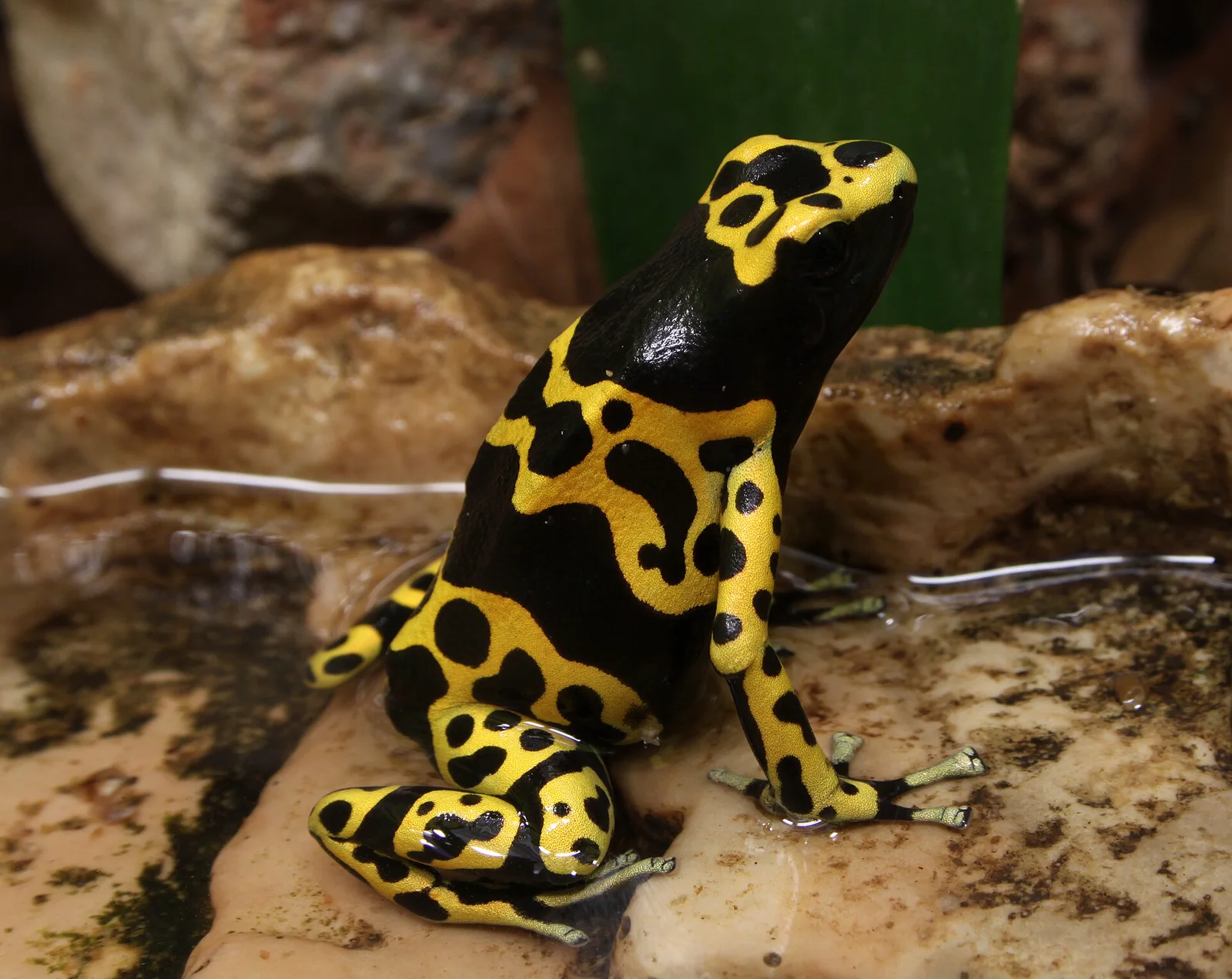
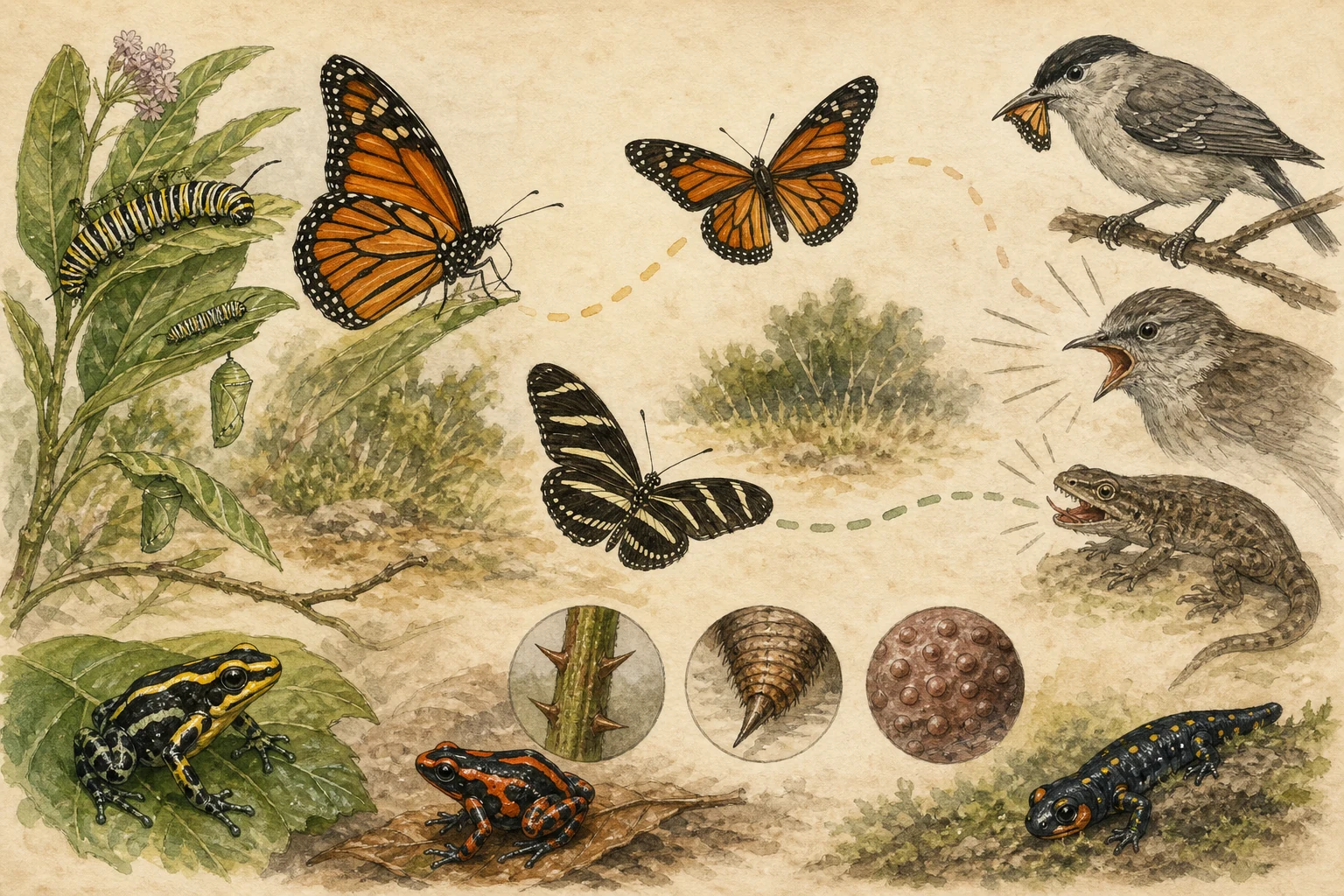
Aposematism is not a universal color chart of dangerous wildlife; it is a functional coupling between a detectable signal and a defense that makes attacking the organism unprofitable. While yellow-and-black banding on a bumblebee poison frog or orange-and-black patterning on a monarch butterfly are classic examples, the signal works only relative to the sensory system of a specific predator—such as a foraging bird or lizard—and the visual background where the encounter occurs. Elsewhere in nature, equally vivid reds, yellows, and blues serve courtship display, species recognition, or even distance-dependent camouflage rather than warning. [1][2][4]
- Aposematism pairs an easily detected signal with an actual secondary defense such as toxins, venom, spines, or foul taste.
- Common trap: assuming every brightly colored beetle, frog, or snake is toxic, or that every venomous animal wears bright colors.
- The same hue can act as a mate-attraction signal in one viewing context and a predator warning in another.
Recognition can be learned
Conspicuous, high-contrast patterns help defended prey survive because they trigger initial wariness in naive predators and accelerate associative learning and memory retention after a single unpleasant tasting or sting. When a young bird samples a distasteful bug or butterfly and regurgitates it, a bold, distinctive pattern makes it much easier for the predator to recognize and skip similar prey on future encounters. Even so, warning signals do not have to be maximally bright to work, and wild populations frequently maintain noticeable color and pattern variation shaped by predator community turnover, thermal needs, and gene flow. [2][3][5]
- Bold, high-contrast patterns speed up predator avoidance learning and reduce recognition errors after a bad encounter.
- Slow, exposed movement in daylight often accompanies warning coloration and reinforces the visual signal.
- Natural aposematic populations can still vary in color across regions or temperatures rather than looking identical everywhere.
Defenses are not interchangeable
Saying that a warningly colored animal is 'defended' covers a wide spectrum of biological mechanisms that differ across species, life stages, and even individual diets. Monarch caterpillars sequester cardiac glycosides from milkweed host plants, zebra longwing butterflies synthesize cyanogenic glycosides and gather amino acids from pollen, poison frogs accumulate lipophilic alkaloids from arthropod prey, and velvet ants deliver a painful sting backed by tough cuticle. Moreover, a chemical that deters one avian predator may be tolerated by a specialized predator or parasitoid, so defense is always conditional rather than absolute. [1][4]
- Chemical defenses may be sequestered from larval host plants (monarchs), diet-derived from prey (poison frogs), or synthesized internally.
- Within the same species, toxin concentration can vary depending on which host plant or prey the individual consumed.
- A defense that deters generalists can still be bypassed by specialist predators that have evolved physiological resistance.
Observe without testing the signal
In the field, treat bold coloration as an invitation to observe behavior and ecological context rather than a puzzle to test with your fingers. Photograph the animal intact from above and the side, note its life stage, posture, and movement style, and document the exact plant, fungus, or substrate it is using. Never pick up, prod, or harass a caterpillar, blister beetle, amphibian, or snake to see whether it exudes defensive fluid, displays a flash mark, or bites. Use your photographs and regional field guides afterward to confirm the species and read published natural-history accounts of its defenses. [1][2][3][4]
- Field check: photograph the organism alongside its host plant or substrate—diet often explains how a chemical defense is acquired.
- Never handle unknown caterpillars, beetles, frogs, or snakes; defensive hairs, skin secretions, and venoms can injure people and stress wildlife.
- Note whether a warning pattern is constantly visible or flashed only when the animal moves its wings or limbs.
Related guides
Get Fauna and identify it in the field.
Where this guide comes from
Source-checked editorial guide. Last updated . This guide teaches identification and field skills; it is not a substitute for expert verification when it matters.
- Nature Education — Predation, herbivory, and parasitism ↗
- Proceedings. Biological sciences — Linking the evolution and form of warning coloration in nature ↗
- Biological reviews of the Cambridge Philosophical Society — Diversity in warning coloration: selective paradox or the norm? ↗
- U.S. Forest Service — Zebra longwing butterfly ↗
- Nature — Selection overrides gene flow in mimicry ↗