Helping pollinators and No Mow May
Letting a lawn flower through No Mow May can boost the nectar available to bees at a lean time of year, and it has made pollinator decline visible to millions. But it works best as an entry point to bigger changes—native flowers, undisturbed nesting habitat, and no pesticides—that support pollinators across the whole season.
Last updated
Why a flowering lawn helps
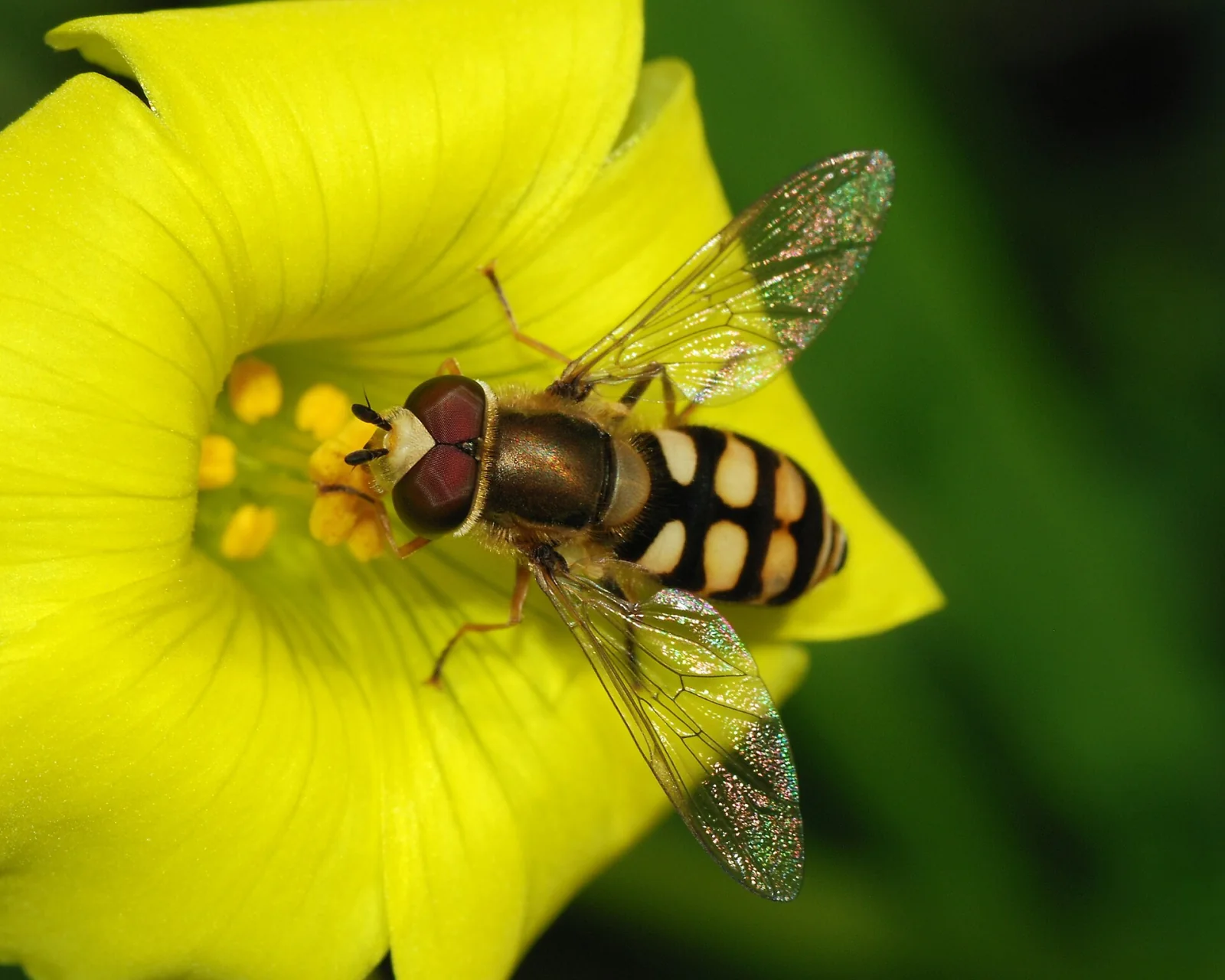
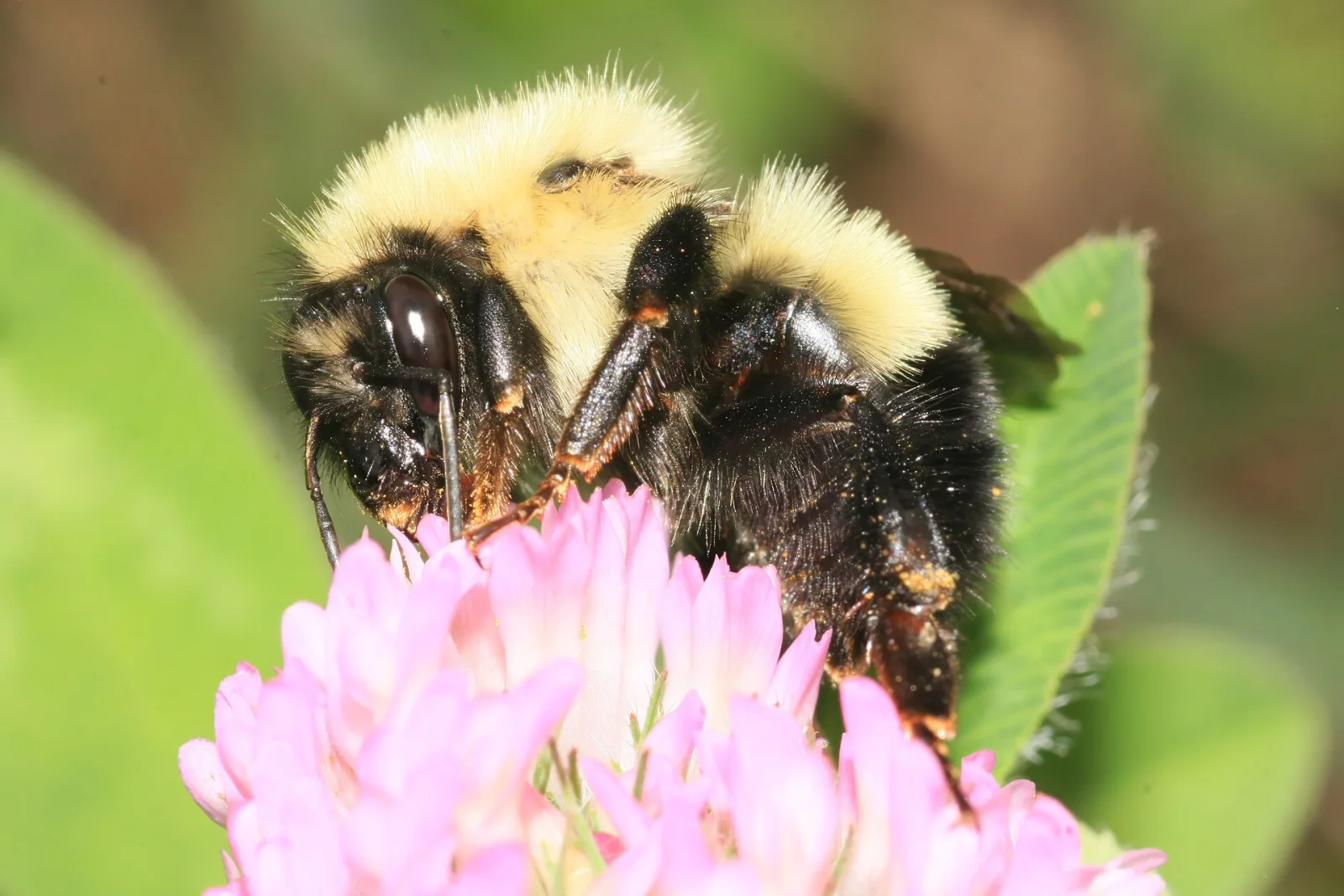
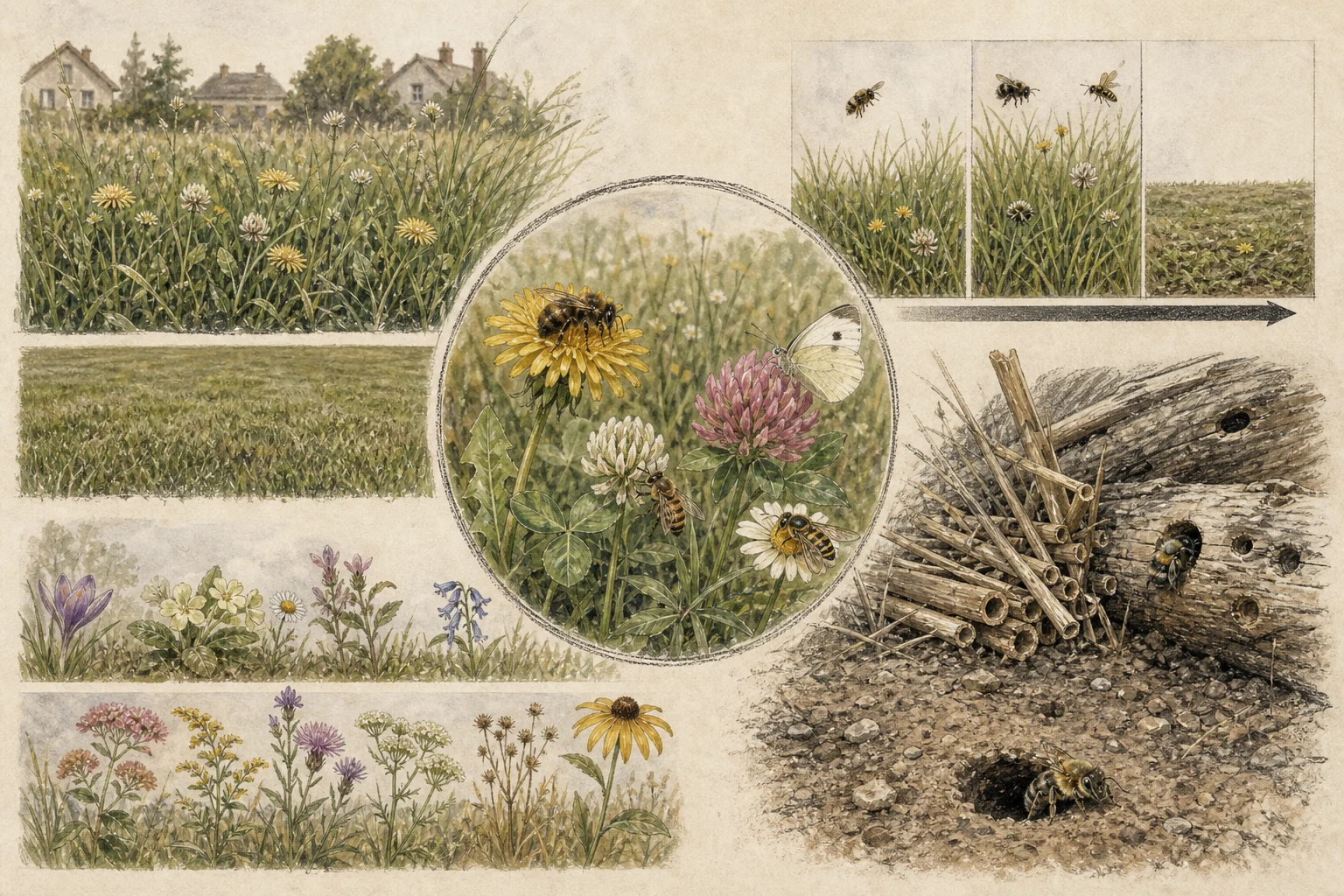
Frequent mowing decapitates low-growing broadleaf plants before they can set buds, turning residential turf into a green desert for foraging insects. Pausing the mower during spring allows self-heal, white clover, bird's-foot trefoil, dandelions, and violets to bloom across existing lawns. Surveys led by Plantlife show that relaxing mowing schedules can multiply the weight of nectar sugar produced per square meter, offering an immediate caloric bridge for queen bumblebees, mason bees, hoverflies, and early butterflies emerging from winter dormancy. [1][2]
- Pausing spring mowing lets low lawn plants like white clover, self-heal, and dandelions open their flowers
- Early lawn blooms supply critical nectar and pollen for queen bumblebees and solitary bees establishing nests
- Visible neighborhood participation shifts cultural norms away from uniform, herbicide-treated turfgrass
One month is a starting point
Wild bees, hoverflies, and lepidopterans fly from late winter until the first autumn frosts, so thirty days of unmown turf cannot sustain pollinator life cycles on its own. Conservation scientists at the Xerces Society and Royal Horticultural Society note that scalping a tall, flowering lawn flat on June 1 suddenly removes every bloom and can crush caterpillars and ground-dwelling beetles sheltering in the sward. Instead, leaving rotating patches of longer grass and raising mower blade heights across summer preserves continuous refuge. [2][3]
- Pollinator activity spans early spring through late autumn, far outlasting a single calendar month
- Scalping an entire flowering lawn at the start of June creates an abrupt local nectar famine
- Mowing at varied heights—leaving some long meadow strips alongside shorter paths—maintains summer habitat
Plant for the whole season
The strongest foundation for garden pollinators is a continuous succession of blossoms from early spring willow catkins and bulbs through mid-summer perennials to late-season asters and goldenrods. Prioritizing regionally native plants ensures that specialist bees find the specific pollen chemistry their larvae require, while pairing open-faced umbels and composites with deep tubular flowers feeds both short-tongued hoverflies and long-tongued bumblebees. Avoid double-flowered horticultural cultivars whose extra petals block access to nectaries and stamens. [3][4]
- Overlap bloom periods from early spring through late autumn so foraging insects never face a mid-season gap
- Prioritize regionally native plants that co-evolved with specialist solitary bees and native caterpillars
- Include diverse flower shapes while avoiding sterile double-flowered varieties that lack accessible pollen
Nesting sites and no pesticides
Forage means little without safe places to reproduce and overwinter. Roughly 70 percent of native bee species are solitary ground-nesters that excavate burrows in sunny, well-drained patches of bare soil, while another 30 percent nest inside pithy plant stems or beetle tunnels in standing deadwood. Leaving unmulched soil pockets, waiting until late spring to cut back hollow perennial stalks, and eliminating insecticides, fungicides, and lawn herbicides—especially systemic neonicotinoids—protects both adult foragers and developing brood. [4][5]
- Leave small patches of sunny, unmulched bare earth for ground-nesting mining and sweat bees
- Retain dead hollow flower stems and untreated log piles over winter for cavity-nesting mason and leafcutter bees
- Eliminate insecticides and broadleaf herbicides, and confirm that nursery plants are free of systemic chemicals
Related guides
Get Fauna and identify it in the field.
Where this guide comes from
Source-checked editorial guide. Last updated . This guide teaches identification and field skills; it is not a substitute for expert verification when it matters.