Bumble Bee
Bombus spp.
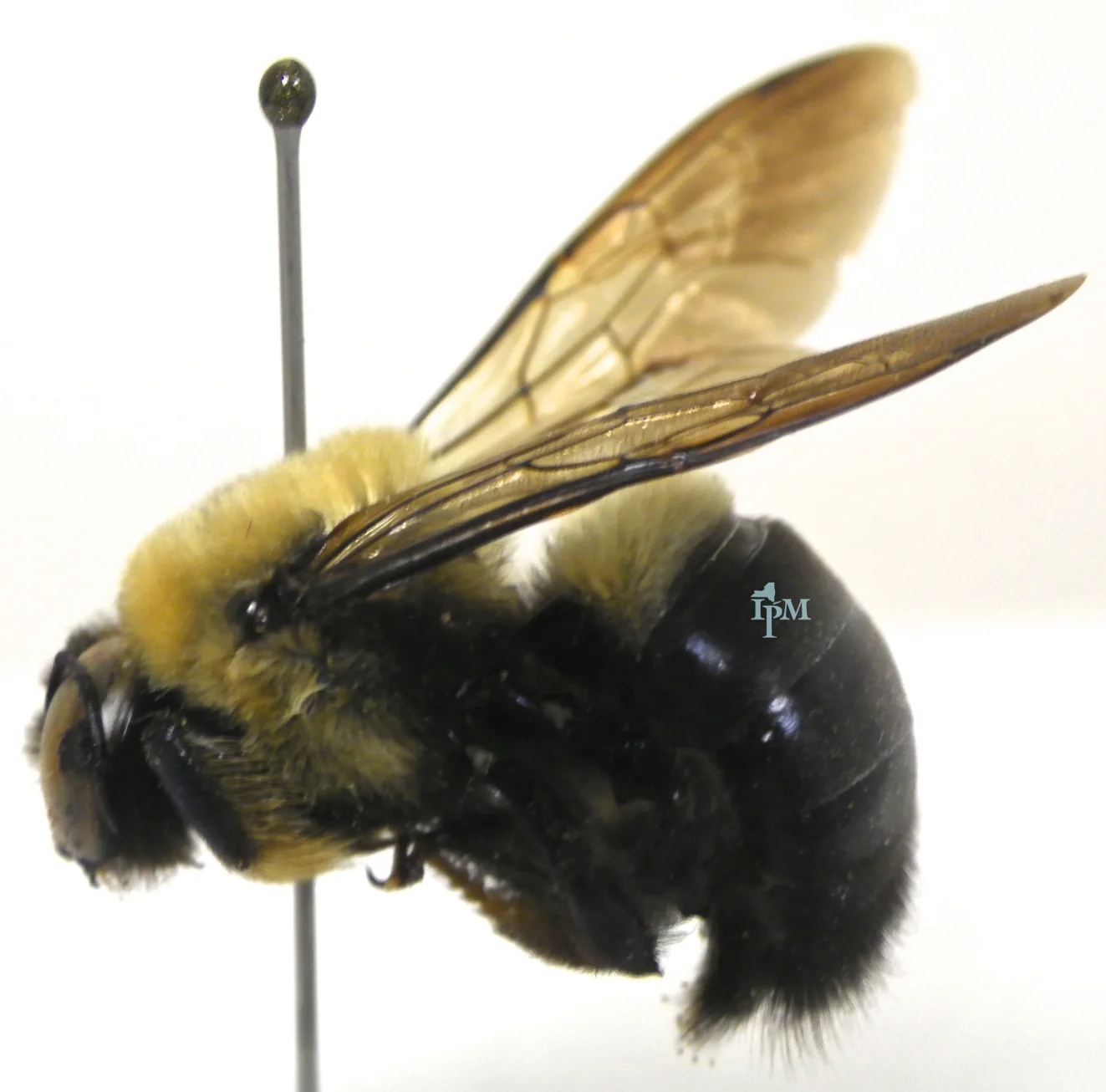
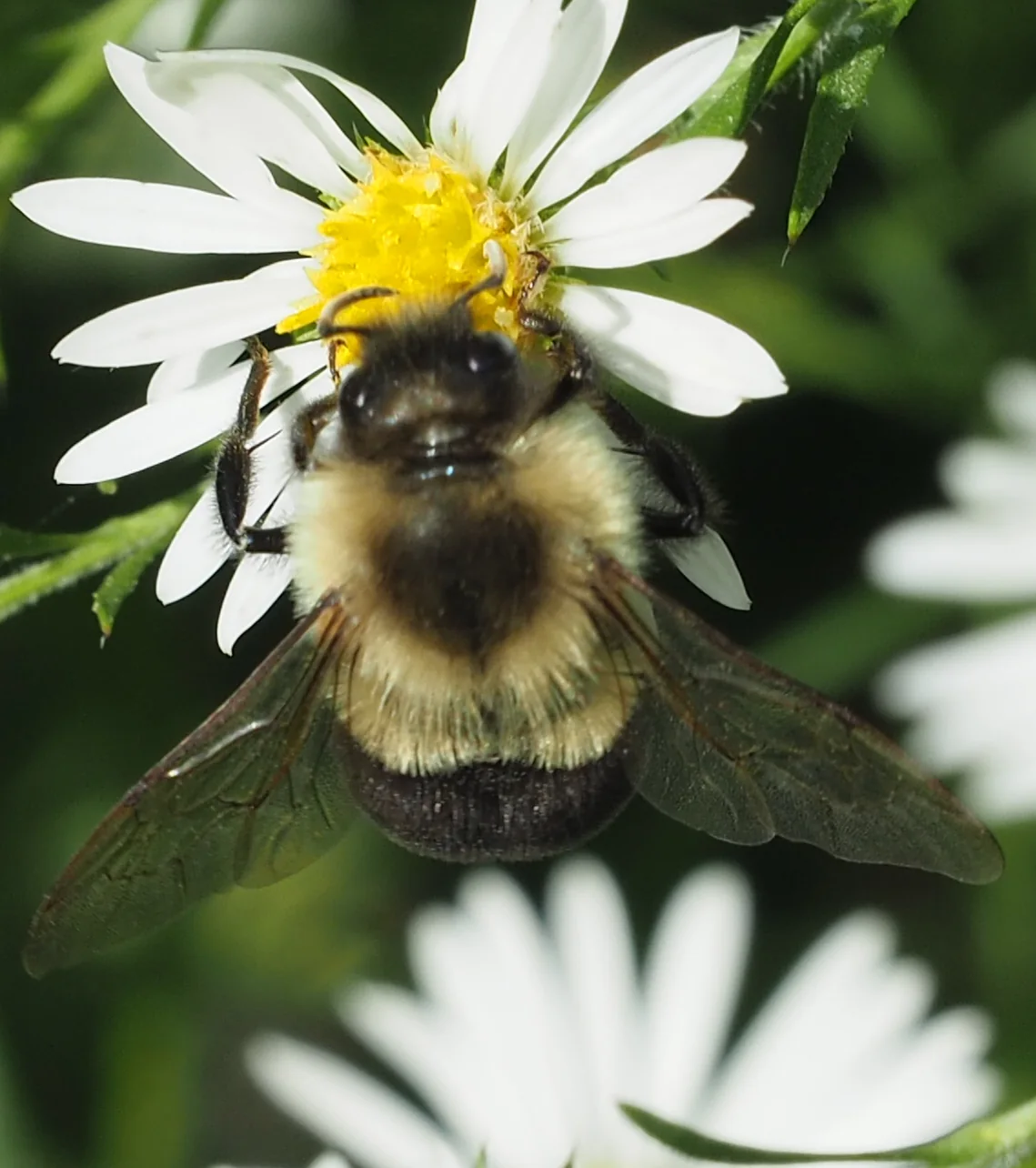
A round, thoroughly furry bee whose hairy abdomen separates it from the shiny-backed carpenter bee.
What to look for
- 01
Abdomen covered in dense hair, usually banded black and yellow
- 02
Stout, rounded body with a fuzzy thorax
- 03
Pollen carried in a smooth basket on the hind leg of workers and queens
Where it lives
Meadows, gardens, roadsides, and woodland edges. Colonies nest underground in old rodent burrows, under grass tussocks, or in cavities.
How it moves
Social: a queen founds a colony each spring and workers forage through summer. Bumble bees buzz-pollinate, shaking pollen loose with rapid vibration — something honey bees cannot do.
Common lookalikes
Carpenter bees are similar in size and colour but have a shiny, hairless black abdomen, and they bore nest tunnels into wood rather than nesting in colonies underground.
Observe responsibly
Watch flowers rather than chasing individuals, and leave nest entrances alone. Bare ground and undisturbed grass edges matter more to bumble bees than bee hotels.
Docile while foraging and unlikely to sting unless a nest is threatened or a bee is trapped against skin. Only females can sting; stings are painful and can be serious for people with allergies.
Several North American bumble bees have declined steeply — the rusty patched bumble bee is federally endangered — from habitat loss, pesticides, disease, and climate pressure.
Get Fauna and identify it in the field.
Where this guide comes from
Sources are linked below. Field marks vary with age, sex, season, region, light, and viewing distance.