Light pollution and wildlife
Life on Earth evolved with a reliable cycle of day and night, and artificial light at night breaks it. Glare and skyglow disorient migrating birds and sea-turtle hatchlings, draw and exhaust insects, and shift the timing of feeding and breeding across many species—yet much of the harm is avoidable with smarter, shielded, warmer lighting.
Last updated
A broken day–night cycle
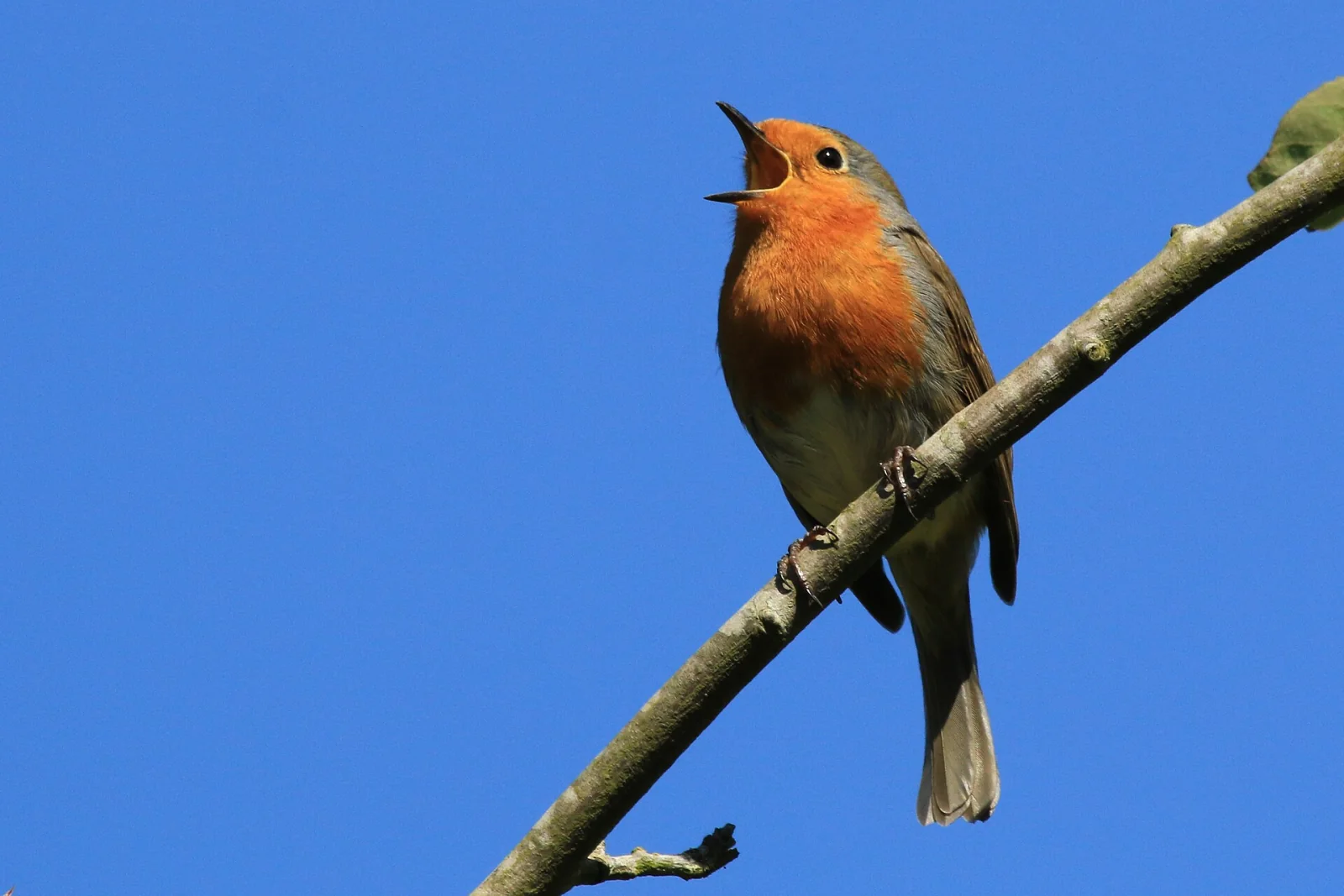
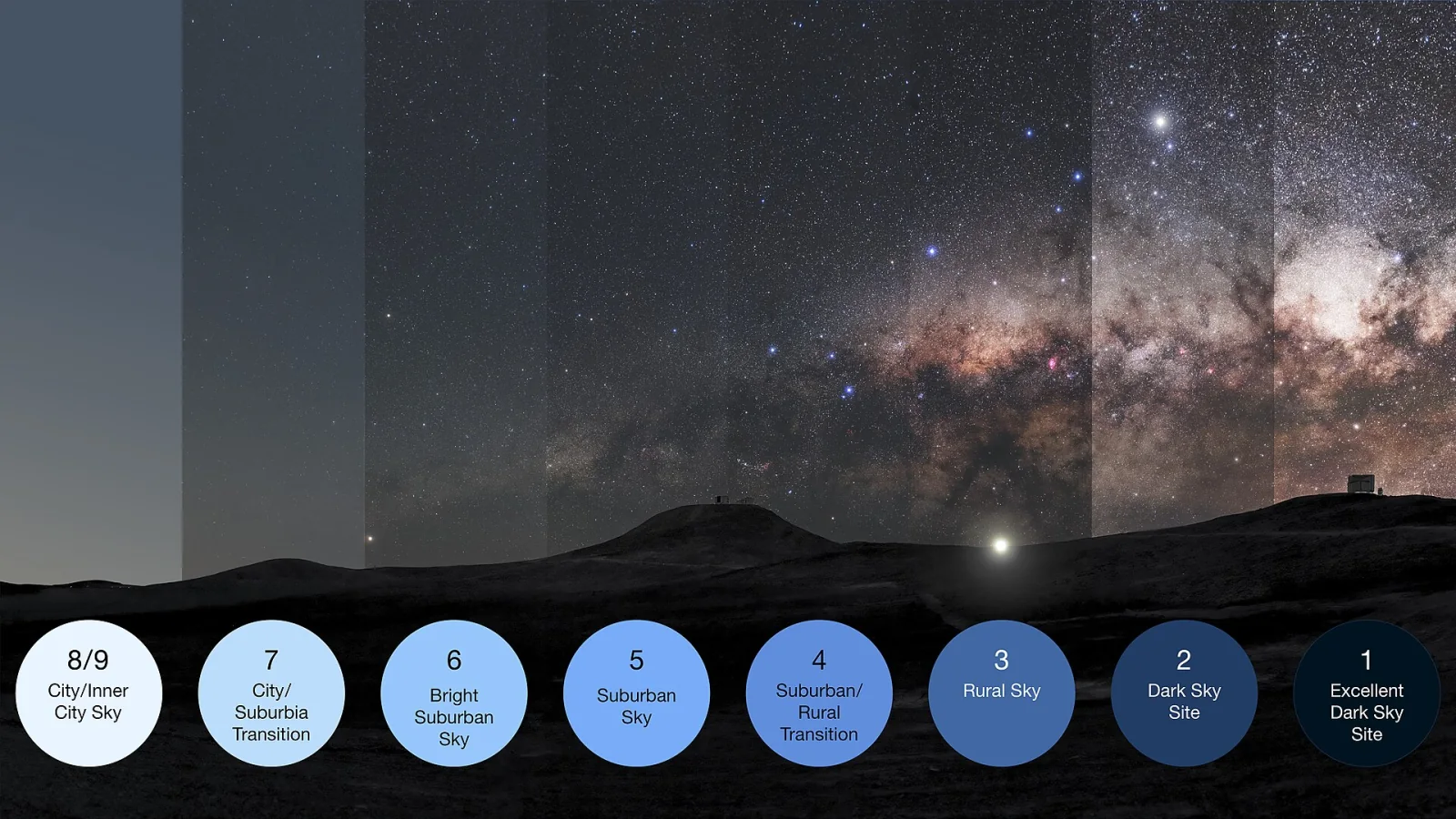
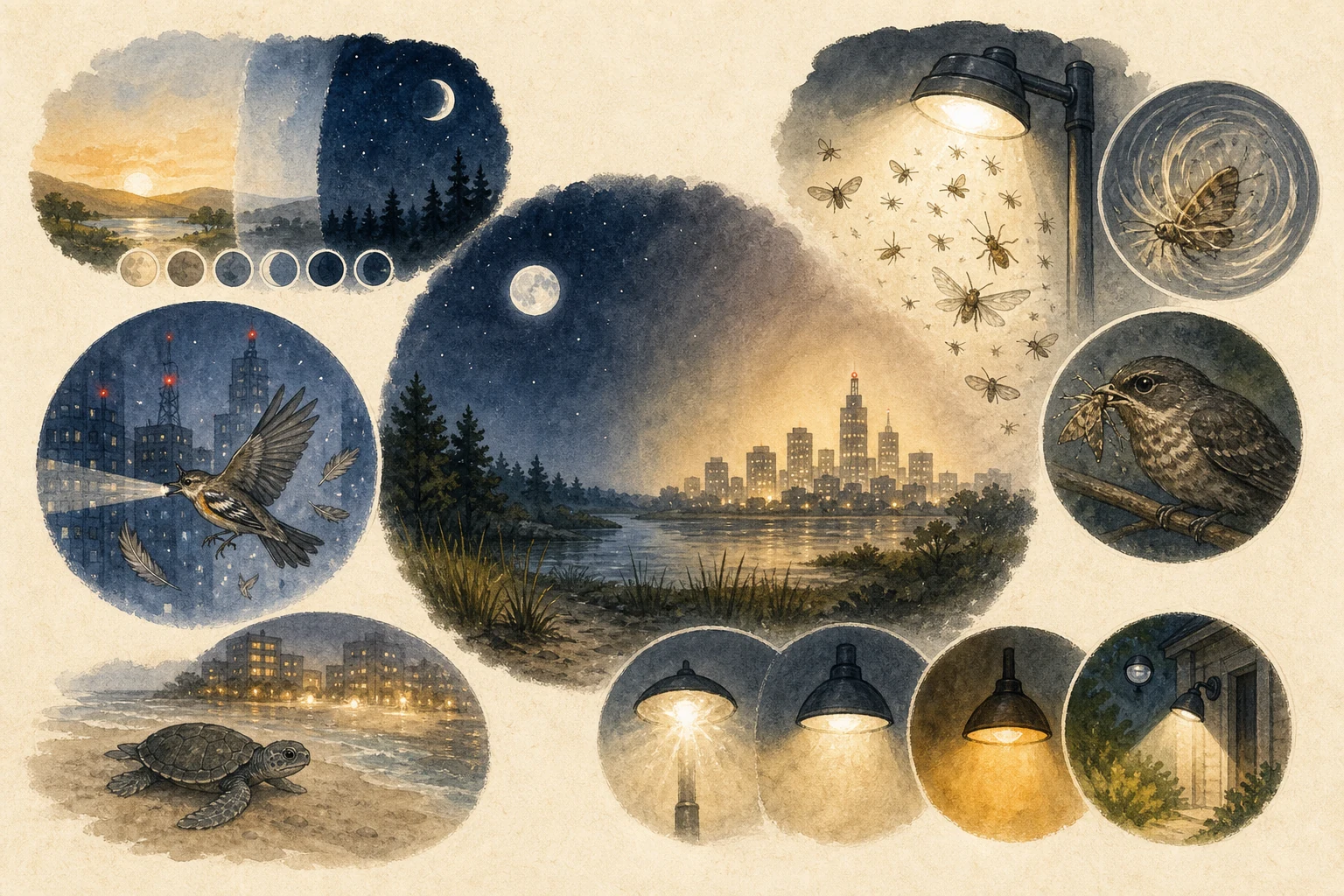
For billions of years, life on Earth relied on a predictable cycle of solar daylight, twilight, starlight, and lunar phases to synchronize circadian clocks and seasonal calendars. Artificial light at night (ALAN)—both direct glare from unshielded fixtures and diffuse urban skyglow scattered by clouds—erases natural darkness across vast landscapes. Even low-intensity illumination suppresses nocturnal melatonin production, shifts the timing of dawn bird song, delays frog choruses, and alters predator-prey balance between visual hunters and nocturnal foragers. [1][2]
- Natural circadian and seasonal rhythms depend on predictable cycles of darkness, twilight, and moonlight
- Both direct fixture glare and reflected urban skyglow alter melatonin levels and daily activity timing
- Nocturnal species lose their dark refuge while visual predators gain unnatural hunting hours at night
Insects drawn to their deaths
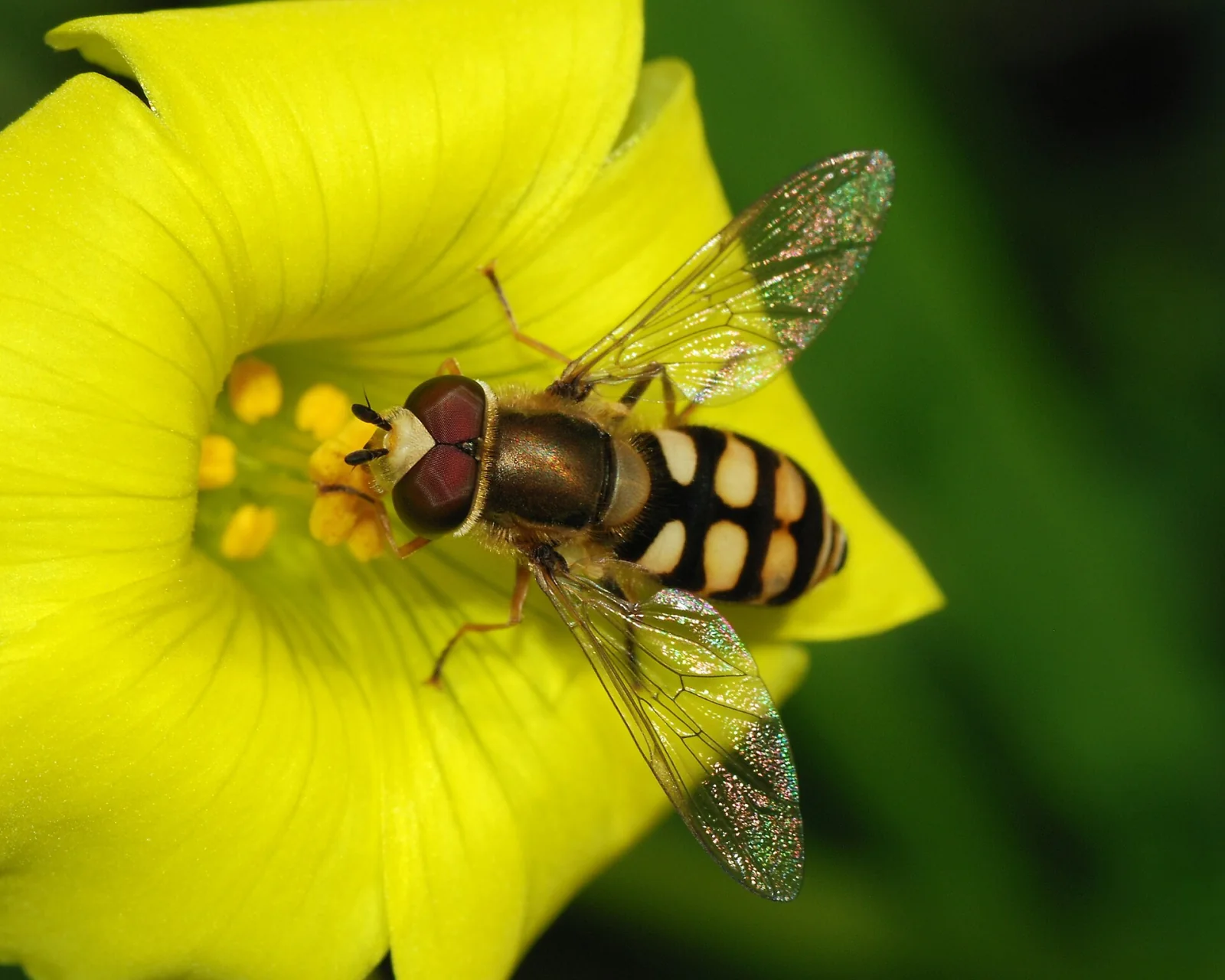
Nocturnal insects—including moths, caddisflies, beetles, and lacewings—suffer acute mortality around outdoor lamps. Drawn out of adjacent dark habitat by dorsal-light orientation responses, insects orbit streetlamps and floodlights until they die of exhaustion or thermal injury, or are picked off in unnatural numbers by opportunistic spiders and bats. Field experiments summarized by the Royal Society also show that lit hedgerows and meadows experience reduced nocturnal pollination, lower female moth mating rates, and stunted caterpillar development. [2][3]
- Streetlights and floodlights act as ecological sinks that trap and exhaust night-flying moths and beetles
- Artificial illumination disrupts nocturnal plant pollination and interferes with moth pheromone mating
- High-intensity blue-white LEDs attract significantly more insects than warmer, long-wavelength amber lamps
Birds and turtles led astray
Long-distance navigators that orient by starlight and horizon brightness are acutely vulnerable to artificial glare. Most songbirds migrate at night; when low cloud ceilings trap them over brightly lit skylines, they become disoriented, circle illuminated skyscrapers, and suffer fatal window collisions by the millions. On coastal nesting beaches, loggerhead, green, and leatherback sea-turtle hatchlings instinctively crawl toward the lowest, brightest horizon over the open ocean—a cue easily hijacked by beachfront streetlights and boardwalks, luring hatchlings inland into traffic and dehydration. [3][4]
- Nocturnally migrating songbirds become trapped in bright urban skyglow and collide with illuminated buildings
- Sea-turtle hatchlings orient toward the brightest low horizon and are drawn inland when beachfronts are lit
- Seabird fledglings such as shearwaters and petrels also ground around coastal streetlights on maiden flights
Better lighting reverses much of it
Unlike chemical pollutants that persist in soil or water for decades, light pollution vanishes the instant a switch is flipped or a fixture is redesigned. DarkSky International, Audubon's Lights Out network, and sea-turtle conservation programs recommend five practical principles: install only lights that serve a clear purpose, fit full cutoff shields so beams point strictly downward, dim to the minimum safe lumen level, put fixtures on motion sensors or curfews, and select warm amber wavelengths (under 2700 to 3000 Kelvin) with minimal blue-spectrum emission. [4][5]
- Use fully shielded fixtures aimed downward so light never spills above the horizontal plane or into trees
- Choose warm-spectrum bulbs below 2700K–3000K and wire outdoor lights to motion sensors or timers
- Turn off non-essential building and porch lights during spring and autumn peak bird-migration windows
Related guides
Get Fauna and identify it in the field.
Where this guide comes from
Source-checked editorial guide. Last updated . This guide teaches identification and field skills; it is not a substitute for expert verification when it matters.
- DarkSky International — Light pollution effects on wildlife and ecosystems ↗
- National Park Service — Night skies as a natural resource ↗
- Royal Society — Light pollution is a driver of insect declines ↗
- NOAA Fisheries — Artificial light and loggerhead turtles ↗
- National Audubon Society — Lights Out Program ↗