The chill science of capybaras
Capybaras became an internet symbol of calm, but the biology behind the memes is genuinely interesting: the world's largest rodent is a semi-aquatic, highly social grazer whose group living, water-centered life, and role as prey and habitat host explain the famously relaxed scenes people love to share.
Last updated
The world's largest rodent
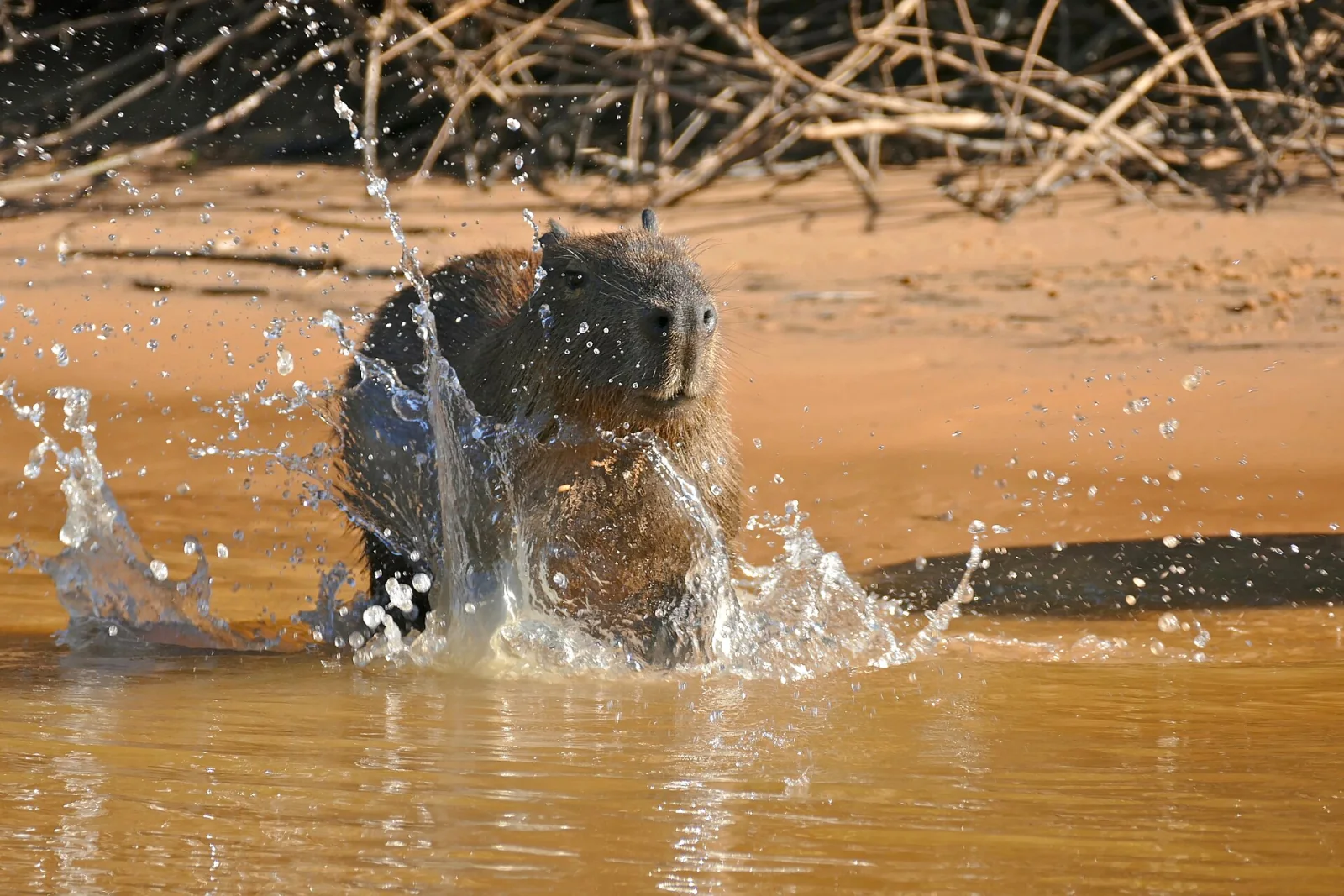
Weighing between 35 and 65 kilograms (77 to 143 pounds) and standing half a meter tall at the shoulder, the greater capybara (Hydrochoerus hydrochaeris) is the largest living rodent on Earth. Native to savannas, gallery forests, and flooded grasslands east of the Andes across South America, it belongs to the caviomorph rodent radiation alongside guinea pigs, Mara, and chinchillas. Its barrel-shaped torso, coarse reddish-brown guard hairs, partially webbed toes, and high-set eyes, ears, and nostrils are specialized adaptations for grazing at the water's edge. [1][2]
- Adult capybaras weigh 35 to 65 kilograms, making them the world's largest living rodent species
- Eyes, ears, and valvular nostrils sit along the top of the skull so the animal can watch and breathe while submerged
- Ever-growing chisel incisors and high-crowned cheek teeth grind tough riparian grasses and aquatic sedges
Life built around water
Capybaras are obligate semiaquatic mammals that rarely venture more than a few hundred meters from permanent rivers, oxbow lakes, marshes, or cattle ponds. Because they have sparse sweat glands and thin fur, they wallow in mud and soak in shallow water during midday heat to regulate body temperature, emerging in late afternoon and night to graze. Water is also their primary defense: when a predator approaches, a capybara barks a sharp alarm and plunges into deep water, staying submerged for up to five minutes. [1][3]
- Sparse sweat glands make midday soaking and mud wallowing essential for thermoregulation in tropical heat
- Capybaras dive and remain underwater for up to five minutes to evade terrestrial predators
- Having an immediate aquatic escape route close by allows herds to rest calmly on exposed mudbanks
Sociable by nature
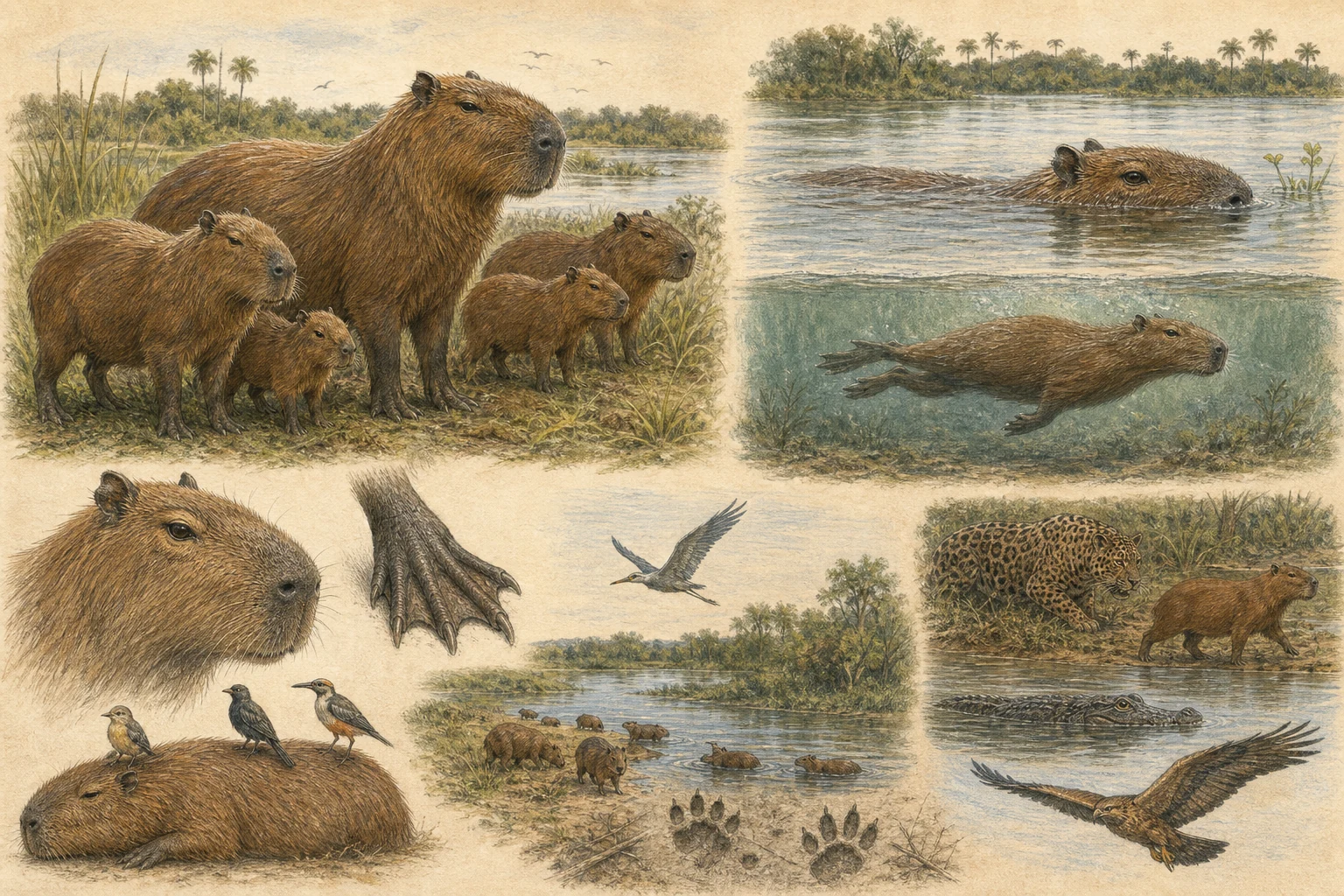
Unlike solitary forest rodents, capybaras live in stable, cohesive family groups of 10 to 20 individuals during the wet season—consisting of a dominant male, several related adult females, their precocial pups, and subordinate males—and can aggregate into herds of 50 to 100 around shrinking dry-season waterholes. Group living provides shared anti-predator vigilance and cooperative nursing of young. That high social tolerance for physical contact and close neighbors—rather than interspecies altruism—explains why resting capybaras allow birds, monkeys, or caimans to sit beside them. [2][3]
- Family groups of 10 to 20 individuals merge into dry-season aggregations of up to 100 around remaining water
- Females in a social group share vigilance and collectively nurse and herd young pups
- High tolerance for close physical proximity within the herd explains why resting capybaras ignore perching birds
Prey, host, and internet star
Across the Llanos and Pantanal, capybaras are a cornerstone herbivore and the primary prey of jaguars, pumas, green anacondas, yacare and black caimans, and harpy eagles. Their backs also serve as mobile foraging perches and grooming stations for cattle tyrants, wattled jacanas, shiny cowbirds, and yellow-headed caracaras, which pluck ticks and horseflies from their hides. Behind the relaxed internet memes, wildlife biologists stress that capybaras are complex, scent-marking, semiaquatic herd animals whose welfare requires deep water and social companions, not domestic living rooms. [3][4][5]
- Jaguars, caimans, anacondas, and large raptors rely on capybaras as a staple herbivore prey base
- Flycatchers, caracaras, and jacanas ride on capybaras to glean ticks and flush insects from marsh grass
- As gregarious, scent-marking semiaquatic grazers, capybaras are unsuited to solitary keeping as household pets
Related guides
Get Fauna and identify it in the field.
Where this guide comes from
Source-checked editorial guide. Last updated . This guide teaches identification and field skills; it is not a substitute for expert verification when it matters.