Eastern Carpenter Bee
Xylocopa virginica
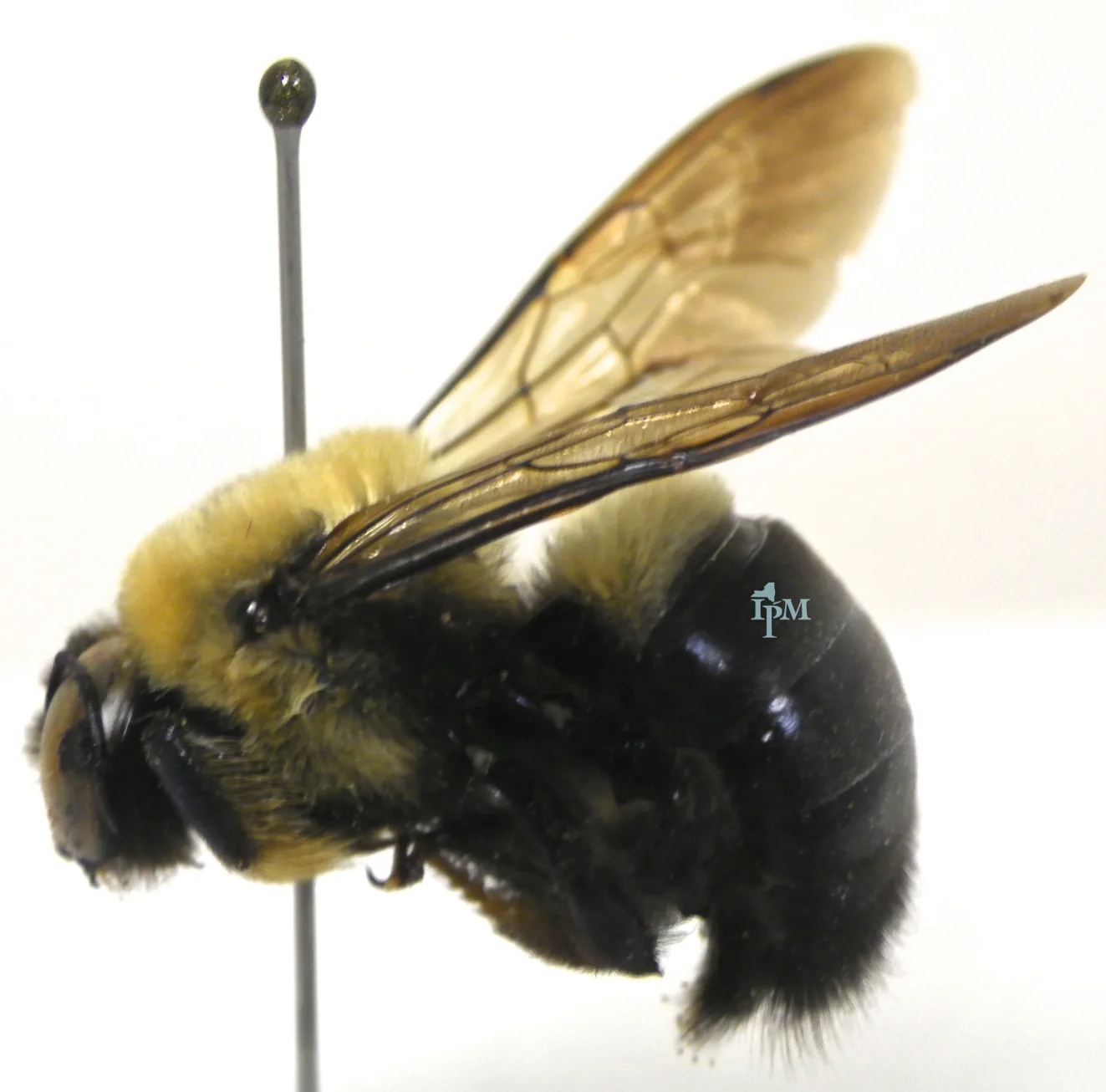
A bumble-bee-sized bee with a bare, glossy black abdomen that tunnels its nest into wood.
What to look for
- 01
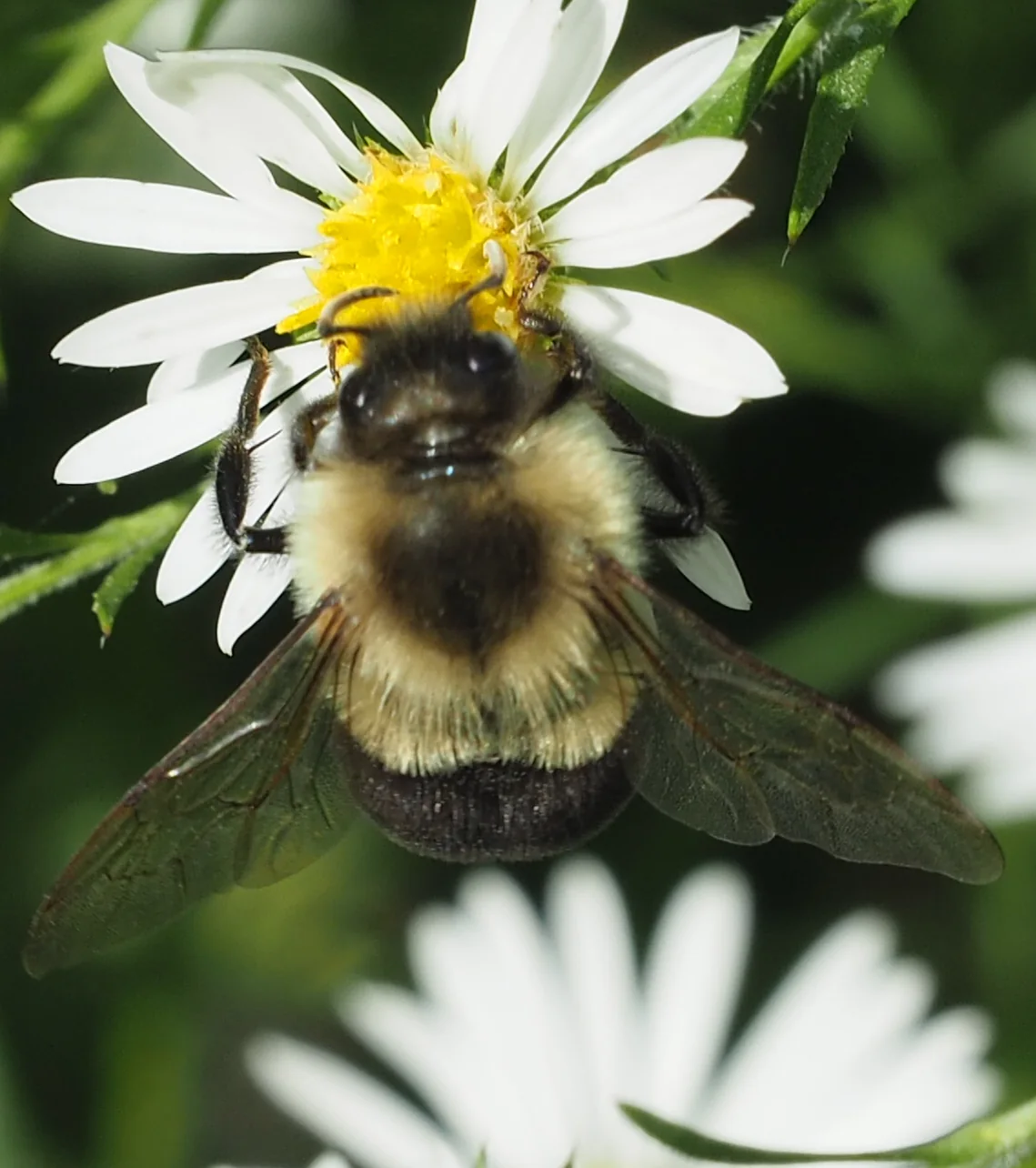
Abdomen shiny, black, and hairless on top — the single most reliable mark
- 02
Fuzzy yellow thorax, so only the rear half looks bald
- 03
Roughly 0.75–1 inch long; males often show a pale patch on the face
Where it lives
Anywhere weathered, unpainted wood meets open flowers — decks, eaves, fence rails, barns, and gardens.
How it moves
Solitary. Females chew perfectly round entrance holes into bare wood and excavate galleries; males hover conspicuously near eaves and railings and cannot sting.
Common lookalikes
Bumble bees are hairy all over, including the abdomen, and nest socially underground rather than boring into wood.
Observe responsibly
The nest holes are the giveaway: look for a clean, round entrance about half an inch across, often with coarse sawdust below it.
Males hover aggressively but are stingless. Females can sting and rarely do unless handled. Nest galleries can accumulate in soft wood over years — painting or sealing bare wood deters them without pesticides.
Common and secure, and a genuinely valuable pollinator despite its reputation — worth deterring from structures rather than killing.
Get Fauna and identify it in the field.
Where this guide comes from
Sources are linked below. Field marks vary with age, sex, season, region, light, and viewing distance.