American Crow
Corvus brachyrhynchos
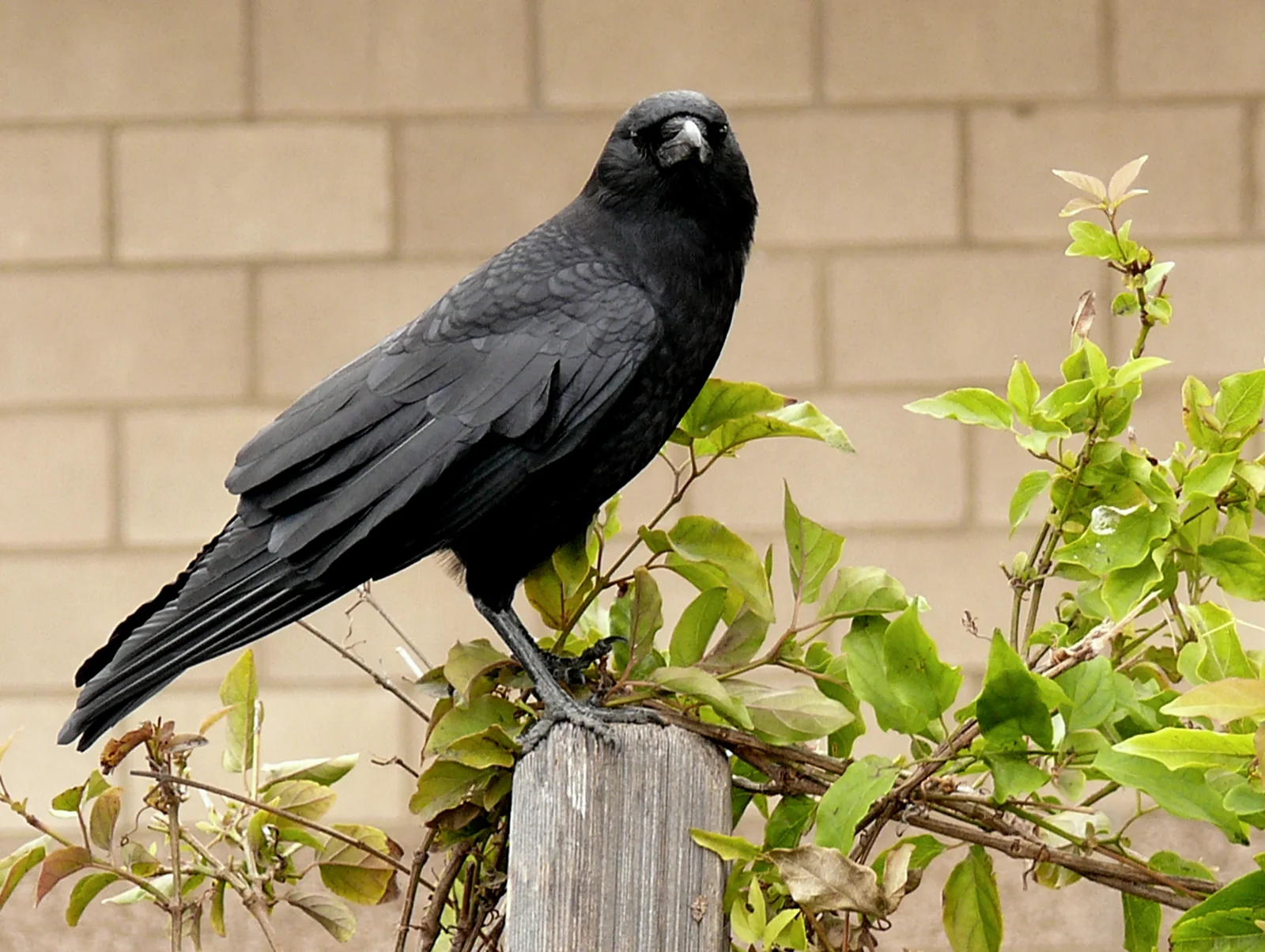
A glossy, pigeon-sized black bird whose rounded, fan-shaped tail is the quickest way to separate it from a raven.
What to look for
- 01
All-black plumage with a slim, fairly straight bill
- 02
Tail spreads into an even, rounded fan in flight
- 03
Smooth, sleek throat without shaggy hackles
Where it lives
Towns, farmland, open suburbs, parks, and field edges. Large communal roosts form outside the breeding season.
How it moves
Flies with steady, rowing wingbeats and rarely soars for long. Social and noisy, often in family groups or large roosts, with a flat, familiar caw-caw.
Common lookalikes
Common ravens are much larger, with a heavier bill, shaggy throat hackles, and a tail that tapers to a wedge-shaped point in flight.
Observe responsibly
Watch from a distance and let roosts settle undisturbed. Never feed crows; food-conditioned birds cause conflicts.
Crows pose no real danger to people, but never handle a sick or dead bird — report unusual die-offs to local wildlife authorities.
Abundant and adaptable across North America, though populations are affected by disease outbreaks and roost disturbance.
Get Fauna and identify it in the field.
Where this guide comes from
Sources are linked below. Field marks vary with age, sex, season, region, light, and viewing distance.