Urban wildlife coexistence basics
Coexistence starts with changing the human-controlled parts of an encounter: food, trash, access to buildings, pets, distance, and timely local reporting.
Last updated
Remove unintended food rewards
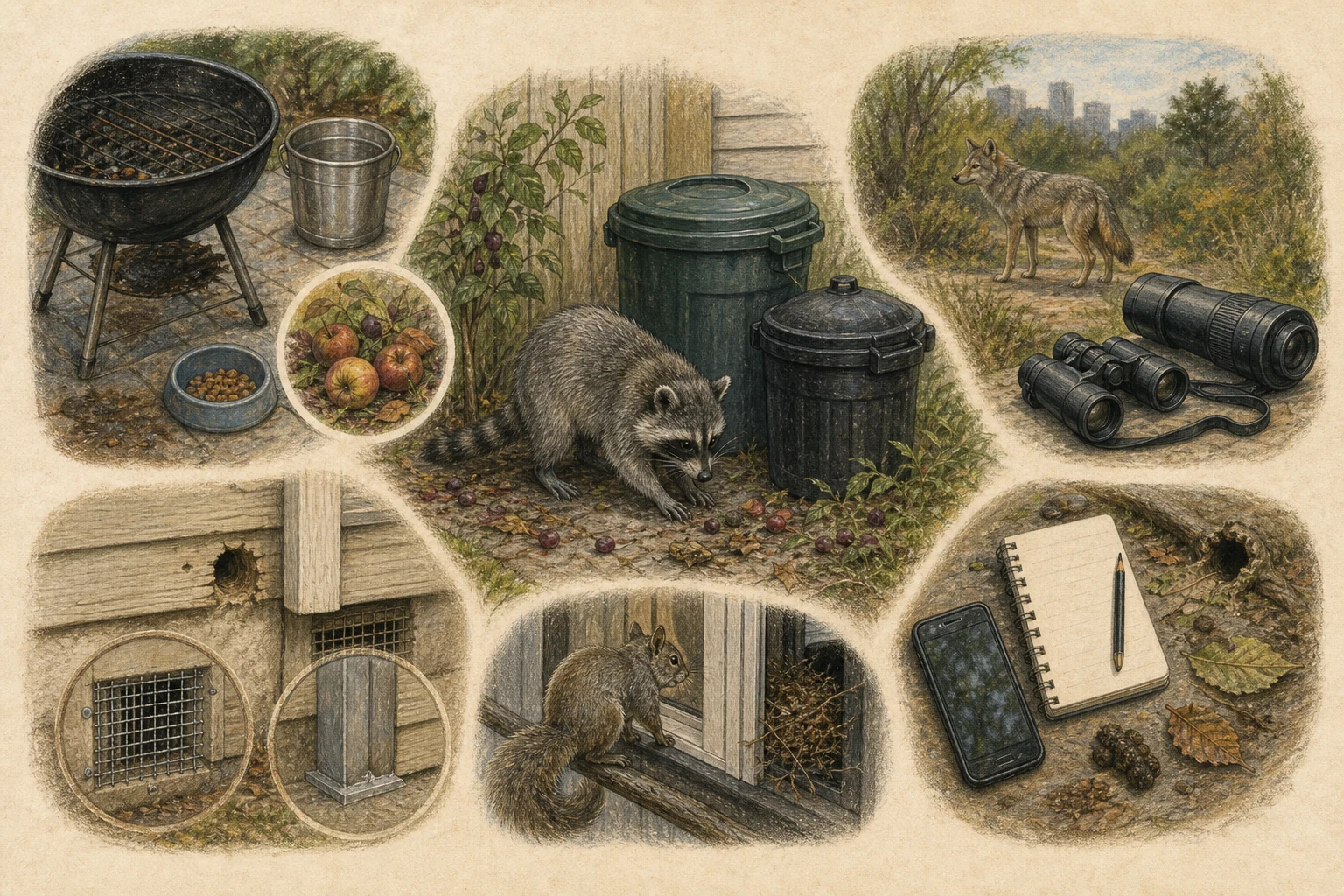
Most neighborhood wildlife conflicts begin when raccoons, coyotes, foxes, deer, or rodents link yards and porches with reliable calories. Never hand-feed wild animals, and audit your property for unintentional handouts: latch garbage and compost bins tightly, burn off and scrub outdoor grill grease, bring pet food and water bowls indoors before dusk, and rake up fallen orchard fruit. In U.S. CDC guidance, backyard songbird feeders are treated as a limited exception provided you scrub feeders and birdbaths regularly, sweep spilled seed that draws rodents and larger mammals, keep pets away, and take feeders down immediately during local avian disease outbreaks or bear activity. [1][2][4][5]
- Field check: walk your yard at dusk to spot open trash lids, pet bowls, fallen fruit, or spilled birdseed before nocturnal mammals arrive.
- Clean songbird feeders and baths regularly, and remove them whenever sick birds, rodent problems, or bears appear locally.
- Never toss food scraps to urban coyotes, raccoons, ducks, or deer—habituated animals lose wariness and face higher mortality.
Share space without closing distance
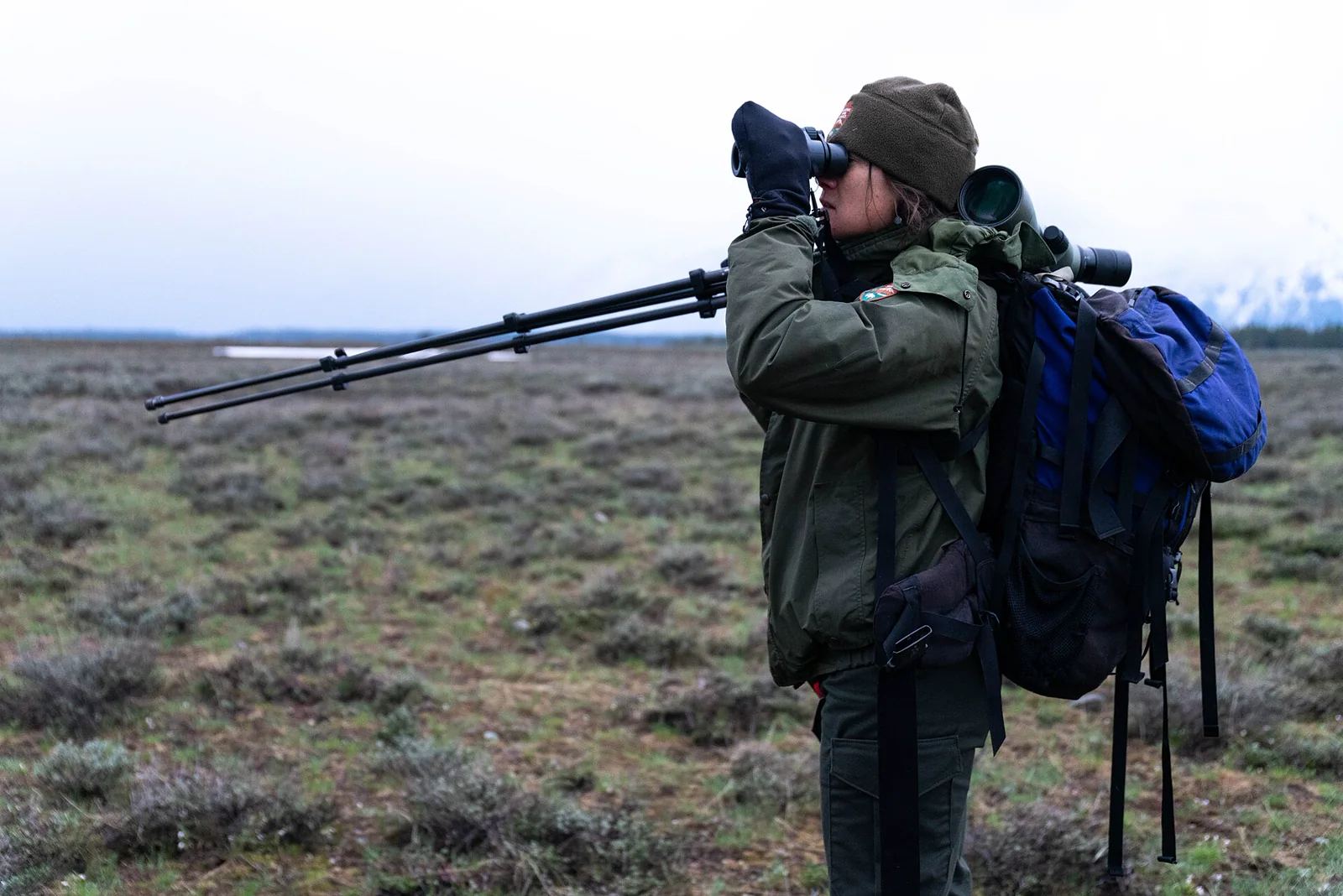
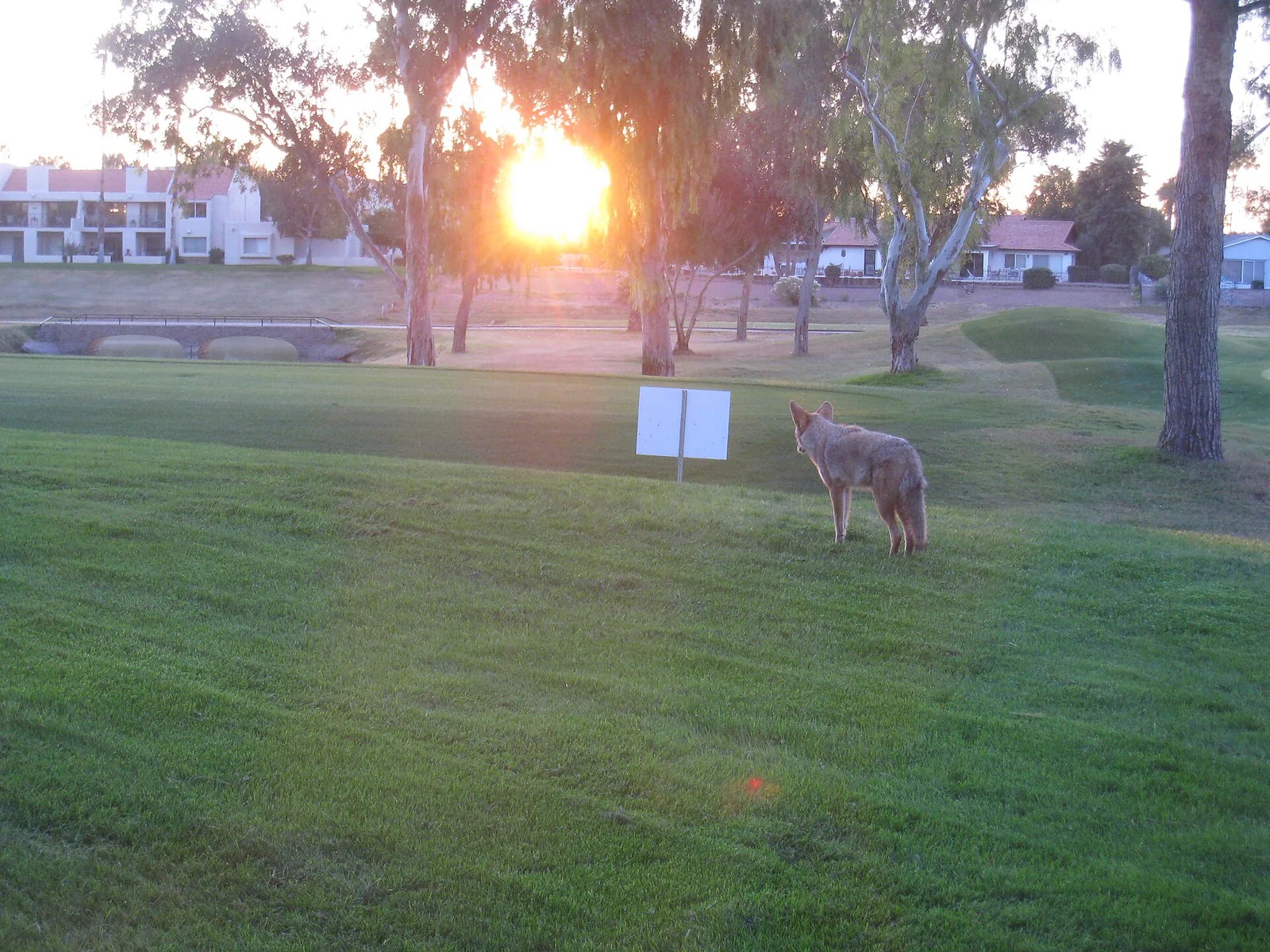
Spotting a coyote trotting along a greenbelt, a raccoon climbing an oak, or a hawk perched on a fence post is a normal part of living in a shared urban landscape. Enjoy the sighting from a respectful distance that lets the animal pass or forage without altering its behavior, using binoculars or a telephoto lens instead of stepping closer for a phone shot. Never whistle, corner, pet, or lure wild animals, and keep dogs leashed and cats indoors or closely supervised in the yard so pets do not chase wildlife, trigger defensive attacks, or exchange parasites and pathogens. [2][6]
- Use binoculars from a porch, sidewalk, or trail rather than approaching urban wildlife for a closer smartphone photo.
- Keep dogs on a leash and supervise pets outdoors, especially at dawn and dusk when coyotes, foxes, and raccoons are active.
- Give wild animals a clear, unobstructed escape route along alleys, fences, and park paths.
Prevent access to buildings carefully
Attics, crawlspaces, chimneys, and spaces beneath backyard decks offer dry, predator-safe shelter that mimics hollow trees and rock dens. Prevent indoor infestations by storing pantry goods, birdseed bags, and garage trash in chew-proof containers, and inspect eaves, vents, and foundation siding in daylight for gnawing, rub marks, or droppings. While CDC rodent-control guidance outlines how to seal small quarter-inch gaps with hardware cloth or metal flashing, never blindly board up an active den hole in spring or summer without confirming whether a female raccoon, squirrel, or bat colony has dependent young inside—consult a licensed local wildlife specialist first. [2][3]
- Inspect foundation vents, chimney caps, soffits, and under-deck lattice in daylight for gaps, tracks, or rub marks.
- Store pet food, grass seed, and birdseed indoors or inside sealed metal bins rather than paper sacks in a garage.
- Common trap: sealing an entry hole during spring or summer before checking whether flightless young are trapped inside.
Let local expertise set the response
When a neighborhood wildlife observation turns into a potential health or safety concern, clear notes and prompt professional contact replace guesswork. From a safe distance, record the time, exact location, species, visible symptoms or behavior, and any attractant or entry point involved. If a person is bitten or scratched by a wild mammal, U.S. CDC guidance advises washing the wound immediately with warm water and soap and seeking prompt medical evaluation for rabies and tetanus; if a pet is exposed, contact a veterinarian right away. For injured wildlife, daytime staggering or aggression, or urgent conflicts, contact your municipal animal control or state wildlife agency. [2][5]
- Log exact time, location, animal behavior, and visible attractants from a safe place to give local wildlife officers actionable details.
- Wash any wildlife bite or scratch immediately with soap and warm water and contact a healthcare provider or veterinarian promptly.
- Call state wildlife agencies, animal control, or licensed rehabilitators rather than attempting to capture sick or injured wildlife yourself.
Related guides
Get Fauna and identify it in the field.
Where this guide comes from
Source-checked editorial guide. Last updated . This guide teaches identification and field skills; it is not a substitute for expert verification when it matters.
- USDA APHIS — Don't Feed the Wildlife ↗
- Centers for Disease Control and Prevention — Wildlife ↗
- Centers for Disease Control and Prevention — Seal Up to Prevent Rodents ↗
- National Park Service — Nature Neighbor ↗
- U.S. Fish and Wildlife Service — The Hidden Harm in Feeding Local Wildlife ↗
- National Park Service — Bring This, Not That for Wildlife Watching ↗