
← Identification guidesSide-by-side field guide
Red fox or coyote?
Compare overall build, ears, face, and tail before deciding which canid you saw.
Last updated
VS
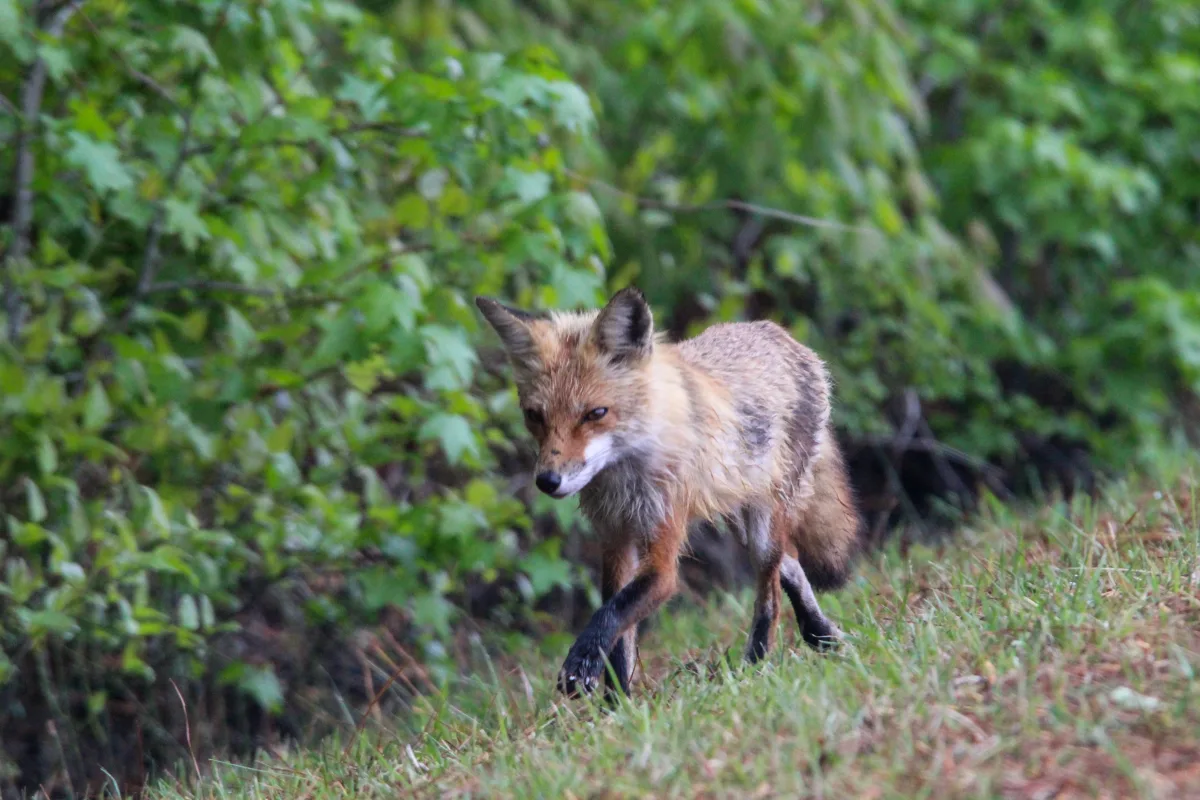
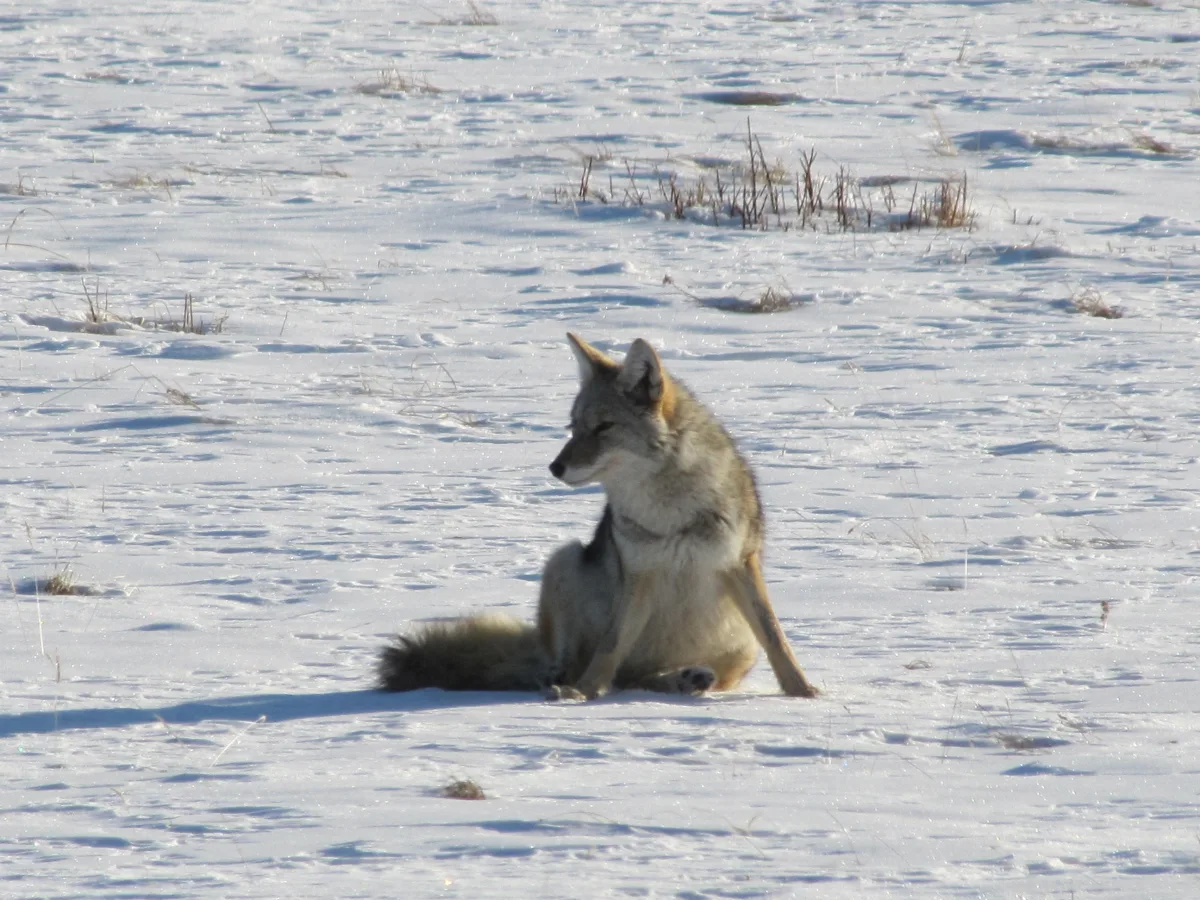
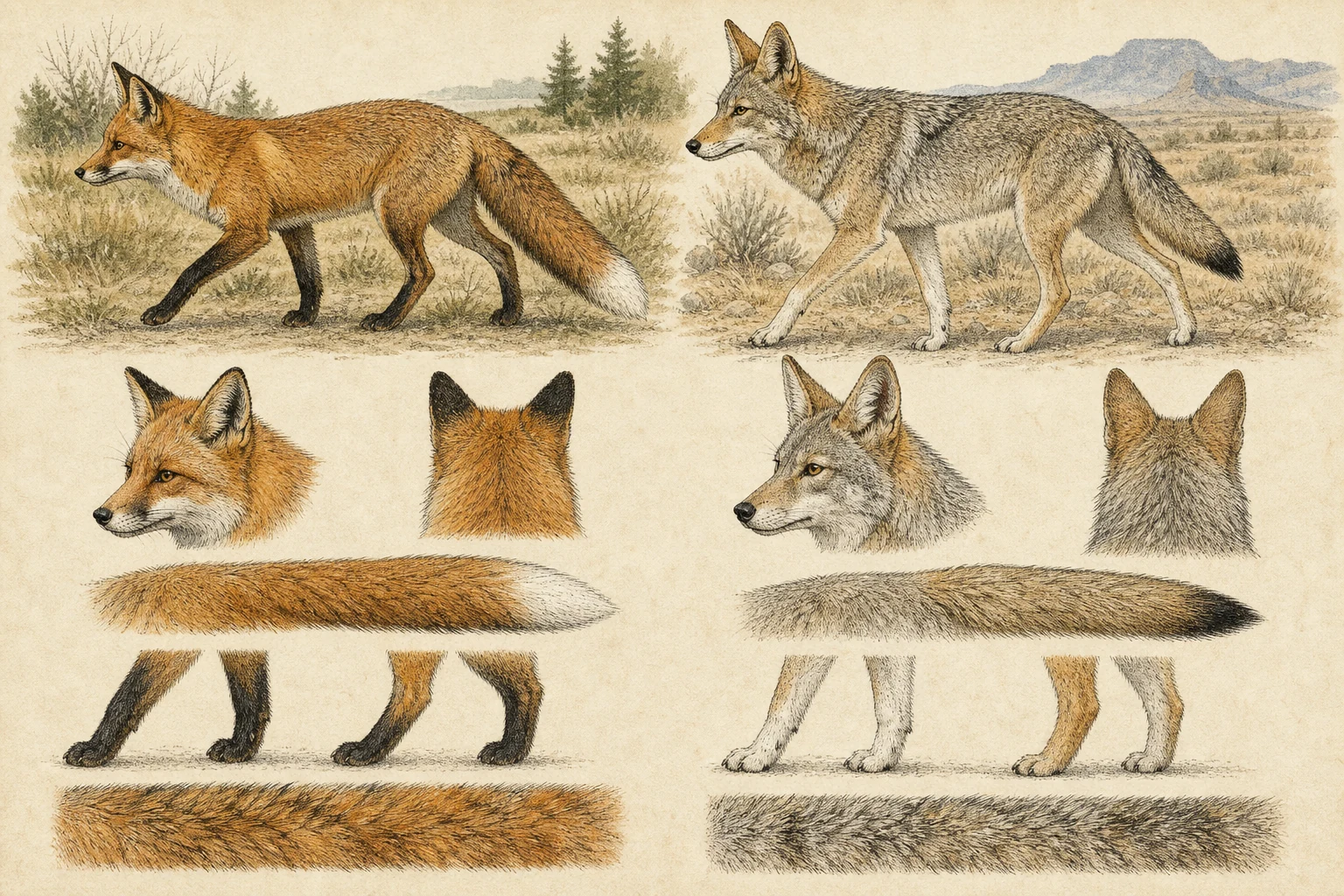
Legs & feet [3][4]
Black legs and feet, like dark stockings against the red coat
Front legs whitish; outer hind legs reddish, inner sides whitish
Coat above [3][4]
Reddish yellow, slightly darker on the back; rare color phases keep a white tail tip
Light gray or dull yellow, with the outer hairs tipped black
Weight [4][5]
Small; published weights run about 7 to 15 pounds
Heavier, though agency figures vary by region, roughly 18 to 40 pounds
Front track [6]
Roughly 1.5 inches wide by 1.8 long
Roughly 2.25 inches wide by 2.5 long, clearly larger
Still not sure?
Download on the App StoreGet Fauna and identify it in the field.
Source-checked editorial guide. Last updated .