Deer tracks or elk tracks?
Deer and elk leave similar cloven-hoof prints. Clean adult tracks usually separate by size; substrate, age, and nearby sign can complicate the call.
Last updated
The print
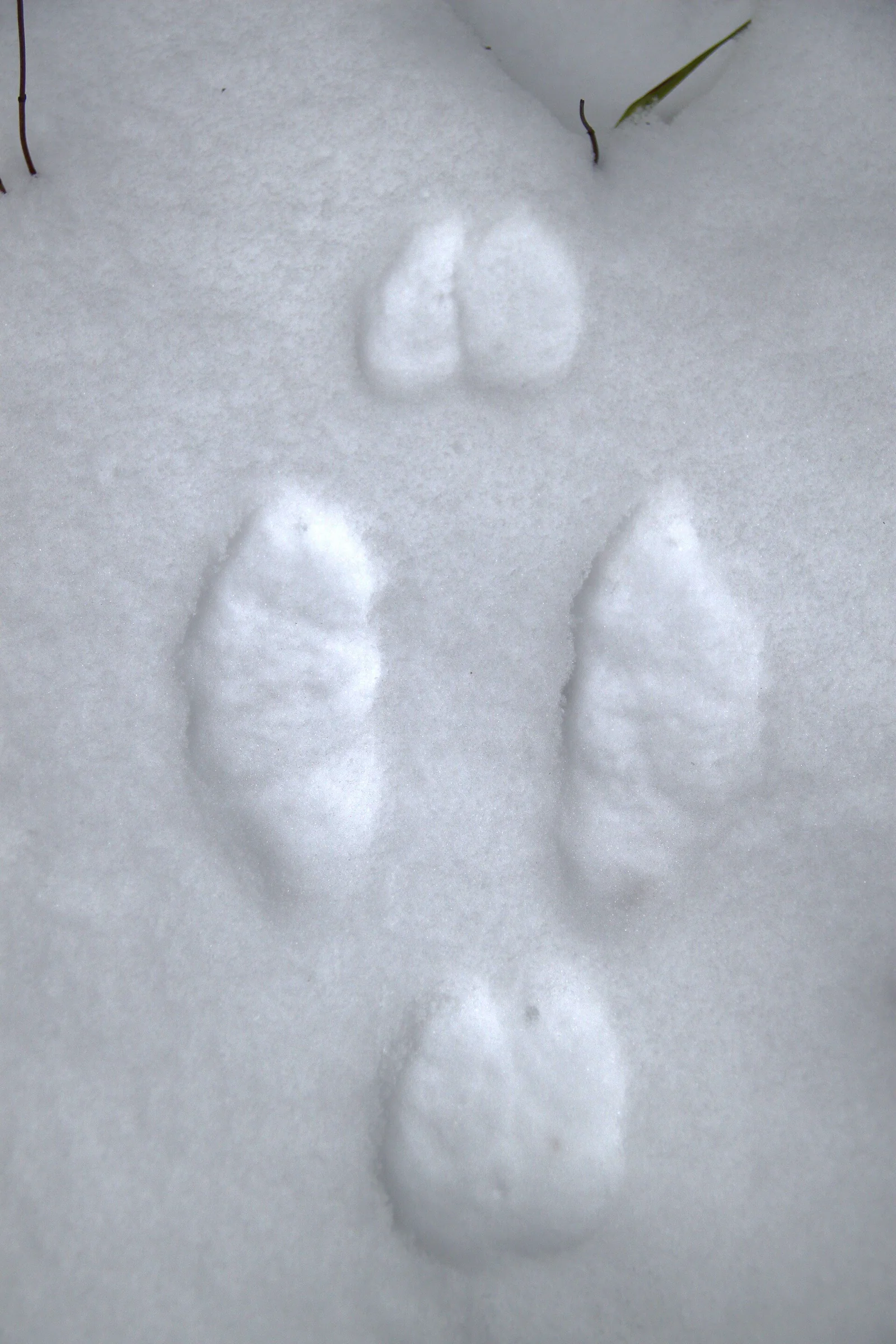
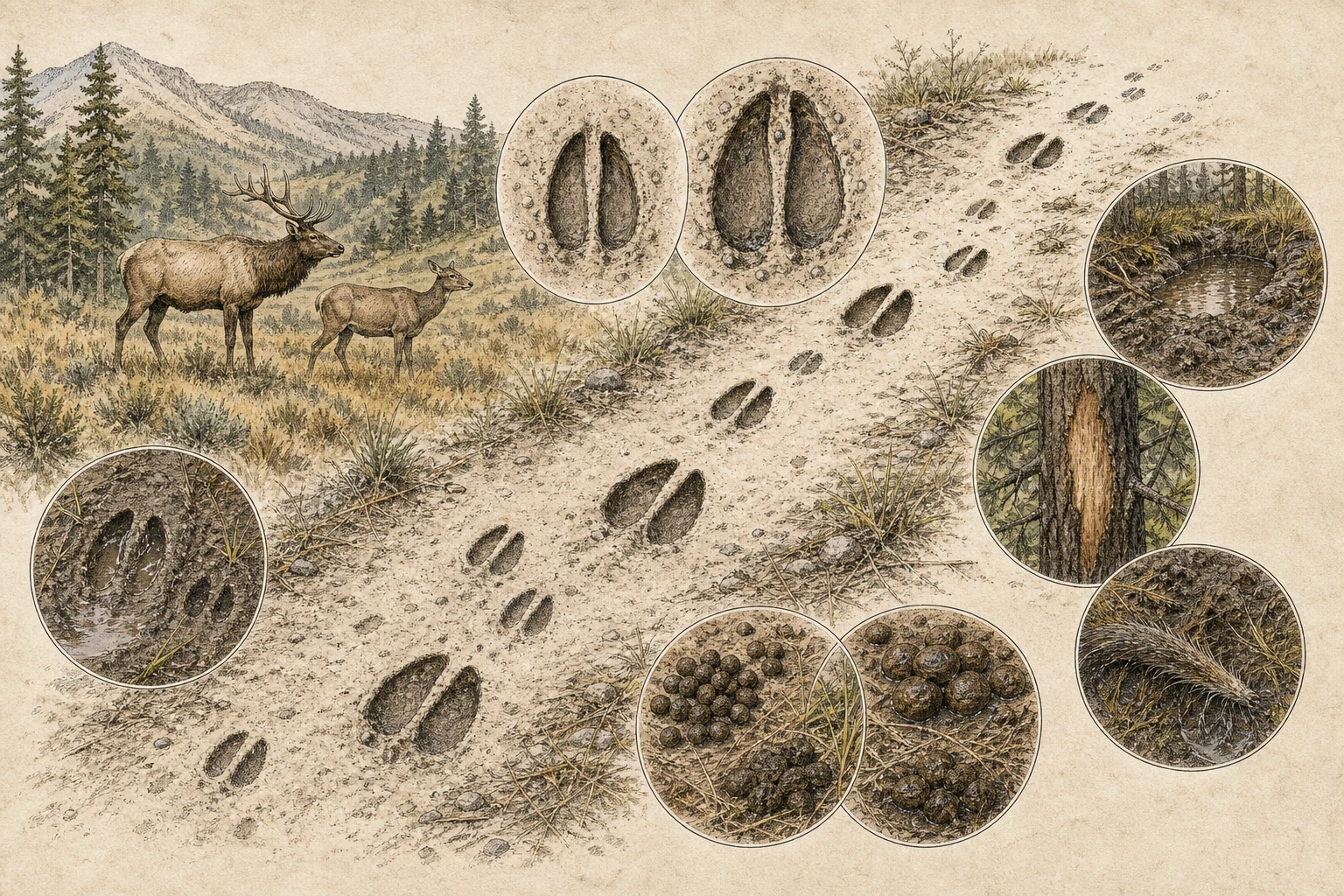
Both deer and elk walk on two main weight-bearing toes that leave cloven, split-heart impressions. Size and outline separate clean adult prints: in New Mexico State University Extension reference measurements, adult deer tracks measure roughly 2⅜–3¼ inches long with a narrower, more pointed heart shape, whereas adult elk tracks reach about 4–4¾ inches long with broader, blunter, more rounded toe tips. Because deep mud, wet snow, or a running gait can enlarge and splay either hoof and cause rear dewclaws to register behind the heel, always measure several firm, unmelted walking prints. [1][2][3]
Droppings
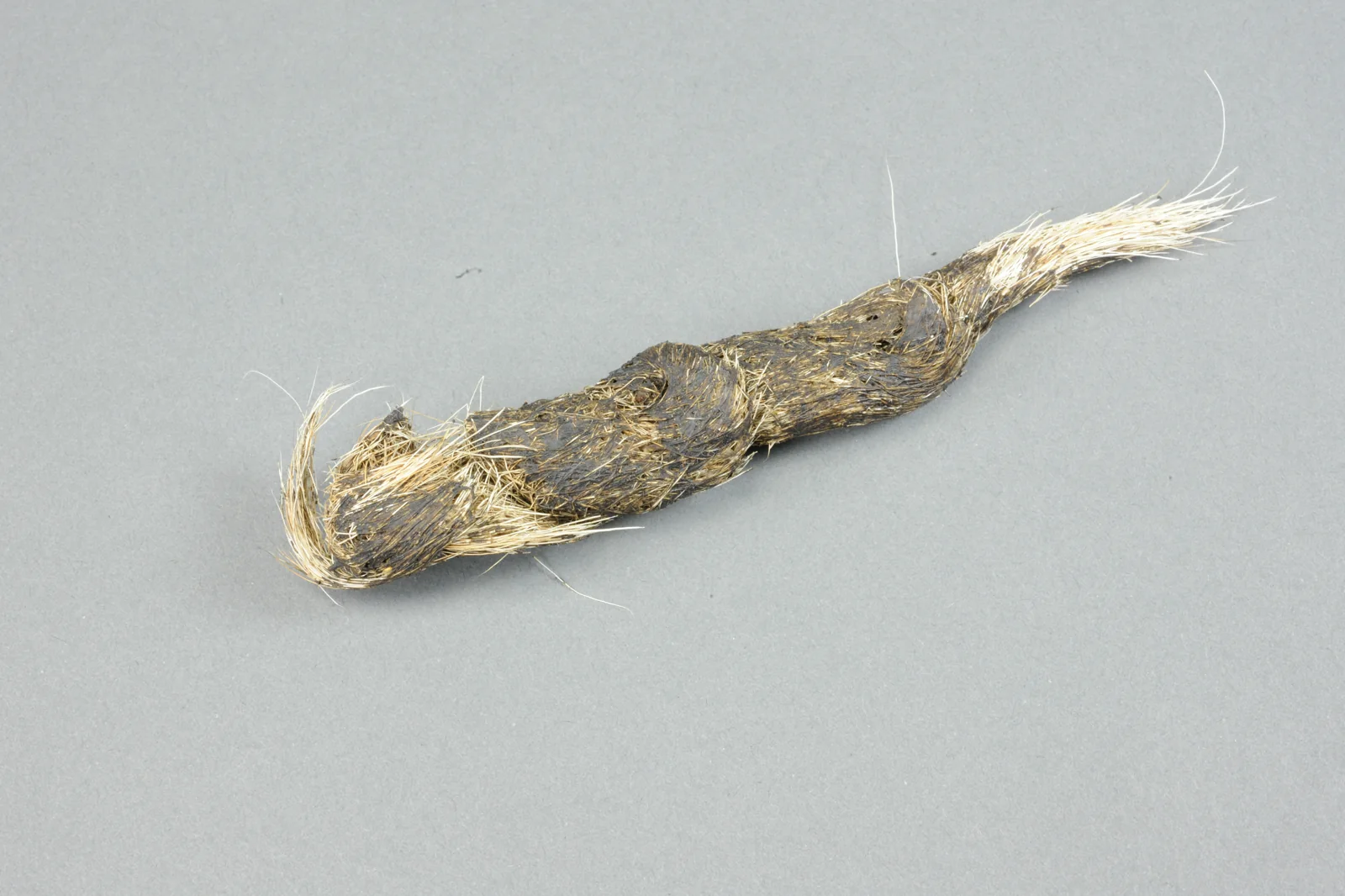
Scat along the trail adds a second independent check when hoofprints are weathered. Elk pellets are generally larger—often ¾ inch or more in length and barrel-shaped or dimpled at one end—compared with the smaller oval or pointed pellets of black-tailed, mule, or white-tailed deer. However, lush spring and summer forage high in moisture turns both species' droppings from discrete winter pellets into soft, clumped patties, so weigh pellet size alongside track dimensions and stride length rather than judging from form alone. [1][2]
- Compare average pellet size across a full scatter with a ruler beside it
- Expect moist spring and summer browse to produce softer, clumped droppings in both species
- Combine pellet evidence with nearby hoofprints and browse height before calling the species
Supporting elk sign
Look upward and along seep margins for larger-scale physical sign. During the late-summer and autumn rut, bull elk thrash saplings and higher branches with heavy antlers and excavate muddy, musky wallows in wet meadows and springs where they coat their hides in mud and urine; deer bucks also rub smaller stems and scrape ground, and a generic mud depression is not diagnostic by itself. A wallow ringed by 4-inch hoofprints, coarse buff-and-brown elk guard hair, strong musky odor, and large scat piles provides convergent proof. [1][2][4]
- Look for fresh hoofprints in and around the wallow
- Hair, odor, and nearby droppings add independent evidence
- Treat rub height and trail width as supporting context only
In the Pacific Northwest
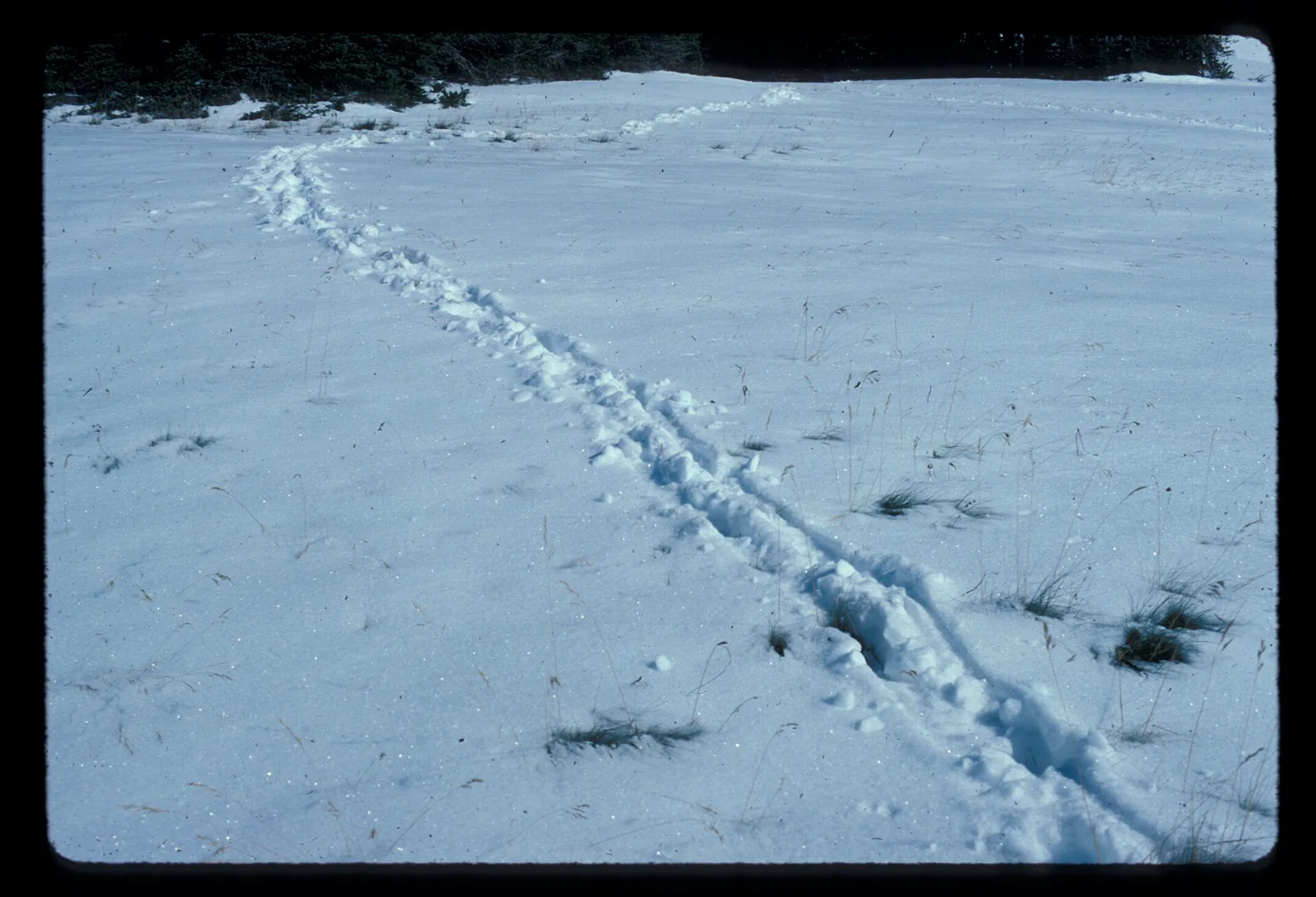
Regional body size sharpens the comparison in coastal rainforests and mountain valleys of Washington, Oregon, and Alaska. Adult Roosevelt elk are massive cervids whose bulls and cows leave deep, wide, unmistakable tracks and wide herd trails through sword fern and alder bottoms compared with the much smaller black-tailed deer sharing the same watersheds. Even there, however, summer elk calves and yearlings leave intermediate-sized prints, and rain-washed silt can blur outlines—so verify whether small tracks travel alongside adult cow elk prints. [1][4]
Related guides
Get Fauna and identify it in the field.
Where this guide comes from
Source-checked editorial guide. Last updated . This guide teaches identification and field skills; it is not a substitute for expert verification when it matters.